Sage
Salvia officinalis · common sage · garden sage · golden sage
At a Glance
| Botanical name | Salvia officinalis |
|---|---|
| Common name(s) | sage, common sage, garden sage, golden sage |
| Family | Lamiaceae |
| Plant type | perennial |
| Height × Spread | 60–152 cm × 60–152 cm |
| Hardiness | — |
| Position | Full sun, Partial shade |
| Soil | — |
| Flowering | April–July |
| Toxicity | — |
| Native range | Mediterranean region |
Overview
Salvia officinalis, commonly known as sage, common sage, garden sage, or culinary sage, is a perennial, evergreen subshrub with woody stems. It belongs to the mint family (Lamiaceae) and is native to the Mediterranean region. The plant has a long history of culinary and medicinal use, and is now widely cultivated as an ornamental garden plant. The common name 'sage' is also applied to closely related species and cultivars. It is the type species for the genus Salvia.
Botanical Description
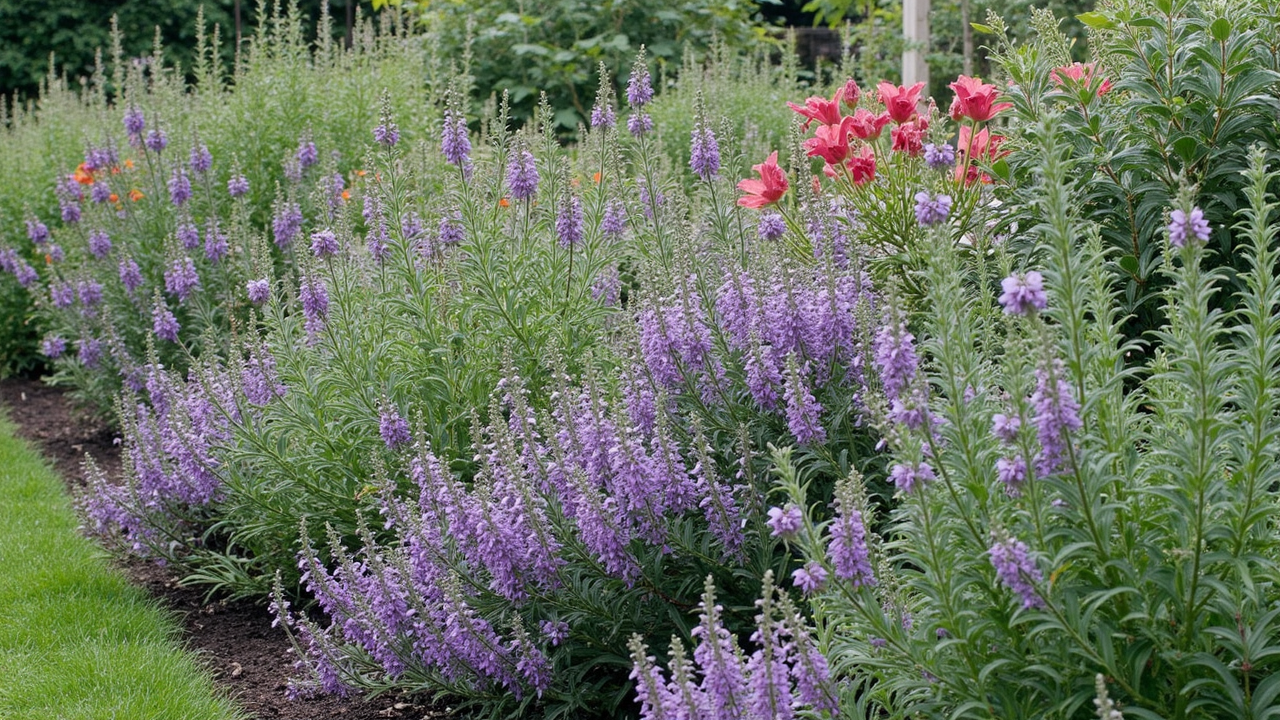
Sage is a perennial subshrub with woody stems, greyish leaves, and blue to purplish flowers. The Old World type typically grows to approximately 60 cm (2 ft) tall and wide. Leaves are oblong, up to 65 mm (2+1⁄2 in) long by 25 mm (1 in) wide, grey-green with a rugose upper surface and nearly white underside due to dense short soft hairs. Flower colour varies, with lavender most common but also white, pink, or purple. Modern cultivars exhibit significant variation in leaf and flower colour, including purple, rose, cream, yellow, and variegated combinations. The plant flowers in late spring or summer.
Origin and Habitat
Native to the Mediterranean region, Salvia officinalis has been naturalized in many parts of the world. It is a member of the Lamiaceae family and has been cultivated for centuries in the Old World.
Cultivation
In favourable garden conditions, S. officinalis can grow to a substantial size (1 square metre or more), though many cultivars are more compact and valued as ornamental flowering shrubs. It is suitable for sunny dry environments and can provide low ground cover. The plant requires well-drained soil to avoid winter damage from cold, wet conditions. Propagation is easily achieved through summer cuttings, with some cultivars also produced from seeds. Named cultivars include:
- 'Alba' (white flowers)
- 'Aurea' (golden sage)
- 'Berggarten' (large leaves, rarely blooms)
- 'Extrakta' (higher oil concentration)
- 'Icterina' (yellow-green variegated leaves)
- 'Lavandulaefolia' (small leaves)
- 'Purpurascens' (purple leaves)
- 'Tricolor' (white, purple, green variegation)
'Icterina' and 'Purpurascens' have received the Royal Horticultural Society's Award of Garden Merit.
Care and Maintenance
Prune after flowering to maintain shape and encourage new growth. Ensure well-drained soil to prevent winter rot. Sage is susceptible to damage in cold, wet winters, particularly if soil drainage is poor.
Uses
Historical uses include treatments for snakebites, fertility enhancement, and as a diuretic, hemostatic, emmenagogue, and tonic. It was referred to as the "holy herb" by the Romans and cultivated in monastery gardens during the Carolingian Empire. Sage appears in historical remedies such as Four Thieves Vinegar and was used for hair care, insect bites, and oral inflammation. Culinary uses are extensive; it is a traditional British herb alongside parsley, rosemary, and thyme. It is essential in Italian cuisine (e.g., saltimbocca, salvia fritta), British Christmas stuffing, and dishes like Sage Derby cheese. It pairs well with fall produce and is fried for garnish. It is not commonly used in French cuisine. Sage is grown in parts of Europe for essential oil distillation, though other Salvia species may also be used. The essential oil contains α and β-thujone, a neurotoxin requiring a daily limit of 6 mg for supplemental use. As of 2017, preliminary research explored its effects on cognitive performance in healthy individuals and those with cognitive decline.
#Sage #SalviaOfficinalis #MediterraneanHerb #Perennial #Lamiaceae #CulinaryHerb #OrnamentalPlant #HerbalMedicine #GardenSage #UKGardening
Cultivars and Varieties
| Cultivar | Height | Flower | Notes | AGM |
|---|---|---|---|---|
| 'Alba' | — | white | — | |
| 'Aurea' | — | golden | — | |
| 'Berggarten' | — | — | large leaves, rarely blooms, extending the useful life of the leaves | |
| 'Extrakta' | — | — | leaves with higher oil concentrations | |
| 'Icterina' | — | — | yellow-green variegated leaves | |
| 'Lavandulaefolia' | — | — | small leaved cultivar | |
| 'Purpurascens' | — | — | purple-leafed cultivar | |
| 'Tricolor' | — | — | white, purple and green variegated leaves |
Pests and Diseases
| Problem | Symptoms | Management |
|---|---|---|
| cold wet winter | can be killed by a cold wet winter, especially if the soil is not well drained | — |
Quick Care Summary
| Sunlight | Full sun, Partial shade |
|---|---|
| Soil | — |
| Hardiness | — |
| Sow | March–May |
| Plant | March–May |
| Prune | October–December |
Facts sourced from Wikipedia / Salvia officinalis (https://en.wikipedia.org/wiki/Salvia_officinalis)