
Red Campion
Silene dioica
At a Glance
| Botanical name | Silene dioica |
|---|---|
| Common name(s) | Red Campion |
| Family | Caryophyllaceae |
| Plant type | perennial (biennial or perennial; short-lived perennial) |
| Height × Spread | 30–90 cm × — |
| Hardiness | H6 (to -20.0 °C) |
| Position | Full sun, Partial shade |
| Soil | moist but well-drained, moderately fertile; dislikes waterlogging; tolerates acid, alkaline, and neutral pH |
| Flowering | May–October |
| Toxicity | — |
| Native range | Europe |
Overview
Red Campion (Silene dioica) is a hardy herbaceous perennial native to the British Isles, widely recognised by its bright pink-red flowers on woodland edges, roadside banks and damp hedgerows. The following quick-care table summarises the essentials for UK growers; the full article below covers each in detail.
Silene dioica is a short-lived herbaceous perennial in the family Caryophyllaceae (the carnation and campion family) and is one of the most familiar native wildflowers of lowland Britain. It is often found growing alongside White Campion (Silene latifolia), with which it hybridises freely, and the two will cross-pollinate where they grow in mixed colonies. The plant has a long flowering season, providing a reliable source of nectar and pollen across much of the UK beekeeping year, and it is widely used in wildlife-border plantings, meadow restoration schemes and cottage-garden designs. It is fully hardy throughout the United Kingdom and is rated H7 by the RHS, meaning it tolerates temperatures below -20 °C, so it can be grown with confidence from the Scottish lowlands to the south coast. Historically the species was used in herbal medicine as a treatment for a range of minor complaints, but it is grown today almost entirely for its ornamental and ecological value in the garden.
Appearance
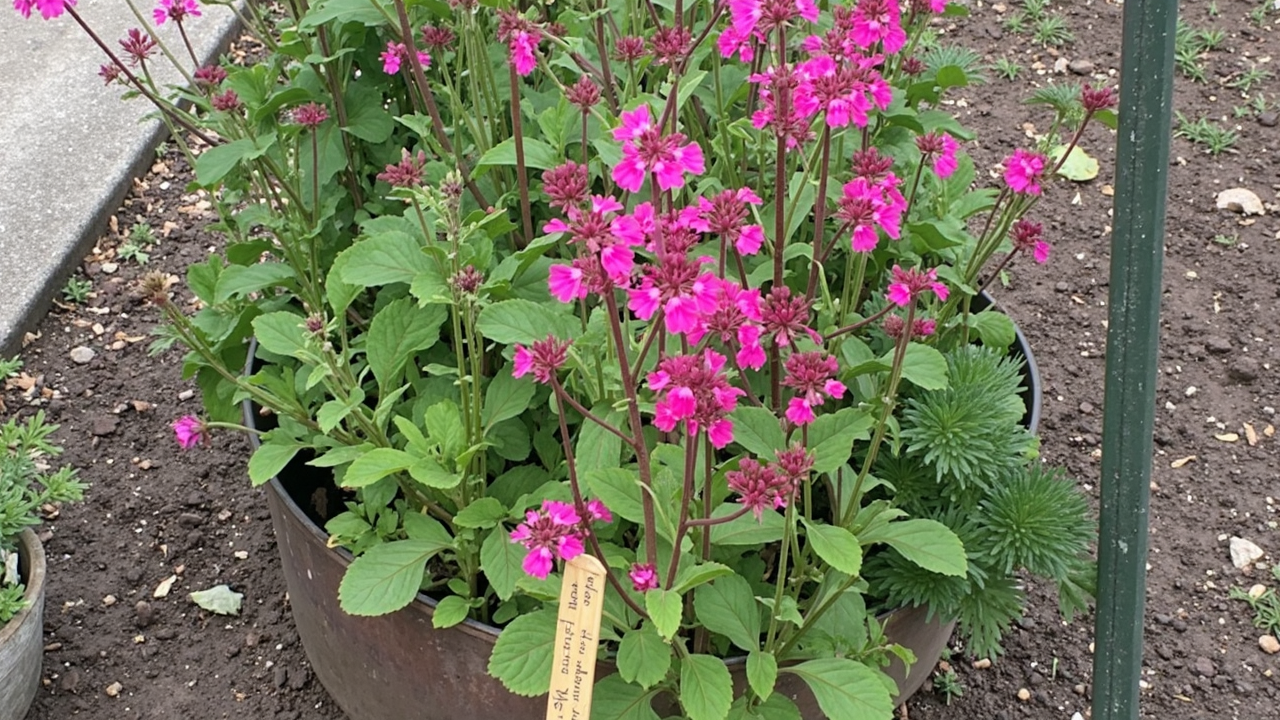
Red Campion forms a loose clump of softly hairy stems, typically 60 to 90 cm tall but occasionally reaching 1 m in rich, moist conditions. The stems are round in cross-section (distinguishing it from the swollen, jointed stems of some related campions), branched towards the top, and covered in short, soft hairs that give the whole plant a slightly downy feel. The leaves are arranged in opposite pairs along the stem, oval to lance-shaped (lanceolate), 2 to 7 cm long and 1 to 3 cm wide, with a pointed tip and softly hairy surface. The basal leaves form a loose rosette that overwinters in mild winters, while the upper leaves are narrower and clasp the stem more closely.
The flowers are the plant's most distinctive feature. Each bloom is 2.5 to 4 cm across, with five broad, deeply notched petals of a clear rose-pink to red-pink colour, and a greenish-pink calyx tube that is hairy and faintly veined. The flowers are dioecious: male and female blooms occur on separate plants, which is unusual among common British wildflowers. Male flowers are typically slightly larger, with broader petals and visible stamens, while female flowers have a more pronounced, bladder-like calyx that swells as the seed develops. The blooms open in succession from late April through to October, with a peak display in May, June and July. After pollination, the female calyces dry to form rounded, papery seed heads that release numerous small, grey-black seeds in late summer. The root system is a stout taproot with fibrous side roots, allowing established plants to draw moisture from deeper soil layers during dry spells.
Growing Conditions
Red Campion grows naturally on the woodland edge, in hedgerows, on damp roadside banks and in rough grassland, and the conditions of those habitats translate directly to a successful garden setting. It prefers a moist, moderately fertile soil — clay and heavy loam are both suitable, and the plant is one of the better native perennials for damp, slightly heavy ground where many sun-loving ornamentals struggle. It tolerates lime and is happy on soils of neutral to moderately alkaline pH; very strongly acid peats are the least suitable. Organic content is beneficial but not essential, and the plant will establish in plain garden soil that retains some summer moisture.
Light requirements are flexible. Red Campion performs best in dappled shade, light woodland or the partial shade of an east- or north-facing border, but it also flowers freely in full sun provided the soil does not dry out in summer. In dense, dry shade under evergreen trees it will become leggy and flower poorly. Its native climate range covers the whole of the British Isles, and it is fully hardy across the UK, rated H7 by the RHS (tolerating temperatures below -20 °C). It is suitable for exposed sites in coastal and upland gardens, although very exposed locations can shorten flowering stems and reduce seed set. In the garden, expect peak flowering from May to July, with a useful secondary flush in late summer and early autumn if the first flush is dead-headed or the season is mild.
Planting and Care
Sow Red Campion from seed in autumn (September to October) or in spring (March to May). Autumn sowings are generally more successful because the seed benefits from a cold period to break dormancy; scatter thinly onto a fine, weed-free seedbed, press the seed into the surface and rake lightly — the seed needs light to germinate and should not be buried. Spring sowings can be made directly where the plants are to flower or in modules under cold glass for planting out once roots fill the cell. Established plants can also be moved or divided in autumn or early spring; small divisions re-establish readily in moist ground.
Once planted, Red Campion needs little routine attention. Water young plants during their first summer if conditions are dry, but established clumps are deep-rooted and tolerate short periods of drought. Feeding is generally unnecessary in reasonable garden soil; on very poor ground a single light application of a general-purpose fertiliser in spring will support a stronger flower display. The plant self-seeds readily, and a single patch will usually populate a sizeable area over a few years — pull or hoe out unwanted seedlings in autumn or early spring. If self-seeding is not desired, cut the plants back by half after the main flush of flowers in July to encourage a tidy second display and reduce seed set.
Pruning is minimal. Cut the faded flower stems down to the basal rosette in late autumn, or leave the dead stems in place through winter for their seed-head interest and as cover for invertebrates. Propagation is straightforward from seed collected in late summer, or by division of established clumps in early autumn. For the most natural effect, sow or plant in groups of three to seven spaced 30 to 40 cm apart, and allow them to drift into one another over a couple of seasons.
Common Problems
Red Campion is, in general, a robust and trouble-free native plant with few serious pest or disease issues. The problems that do occur are usually minor and easily managed. Powdery mildew can affect the foliage in dry, hot summers where the plant is in too much sun or where soil moisture is limited; it shows as a white, dusty coating on the leaves and is best prevented by siting the plant where it receives some midday shade and by watering in prolonged dry spells. Aphids, particularly the green peach aphid, occasionally colonise young shoots in late spring, but populations are usually held in check by hoverflies, ladybirds and other predators and rarely need treatment. Slugs and snails will browse young seedlings in damp conditions, so protect newly germinated plants in spring with a coarse grit mulch or your usual control method. Rust fungi (Puccinia spp.) can cause orange-brown pustules on the leaves in humid weather, but affected foliage is best cut off and disposed of rather than sprayed; the plant usually outgrows the infection. Red Campion is not considered toxic to humans, dogs, cats or livestock, and it is not regarded as invasive in the UK under any current statutory framework, although, as noted above, it self-seeds freely and can spread further than intended if the seed heads are not removed.
Popular Varieties
The species Silene dioica is most commonly grown as the wild type, but several selected forms are available from British nurseries. The white-flowered Silene dioica 'Alba' is one of the longest-established cultivars, identical to the species in habit and size but with clear white blooms that are particularly useful for lighting up a shaded corner or for combining with blue and pink woodland perennials; it comes true from seed with occasional pink revertants. 'Rollie's Favourite' is a more recent compact selection, typically 40 to 50 cm tall, with a longer flowering season and brighter, slightly more salmon-pink flowers than the species; it is well suited to smaller gardens, the front of a wildlife border and container plantings. 'Firefly' is a vivid, deep pink-red form selected for the intensity of its flower colour, and it is widely planted in wildlife and meadow schemes where a brighter, more uniform display is required. Other named forms occasionally offered by specialist native-plant nurseries include 'Thelma Kay' and various double-flowered or variegated selections, though availability of these is limited and they are not always reliably distinct from the species; if a specific cultivar cannot be sourced with confidence, the wild type remains an excellent and freely available choice. None of the listed cultivars currently hold an Award of Garden Merit from the RHS, and any ratings should be verified against the current RHS listing before being quoted.
Pests and Diseases
| Problem | Symptoms | Management |
|---|---|---|
| Smut fungus | Flowers turn black and powdery as the fungus replaces floral tissues with spores. | Remove and dispose of infected flower heads to prevent spread, though damage is usually minor. |
| Slugs and snails | Irregular holes in leaves and seedlings may be eaten down to the ground at night. | Use beer traps, copper tape, or hand-pick at dusk; keep areas weed-free to reduce habitat. |
| Vine weevil | Notched leaf margins on young plants and wilting caused by root damage from grubs. | Check roots when buying potted plants and apply biological nematodes to soil in autumn. |
| Waterlogging | Yellowing leaves, stunted growth, and eventual plant collapse due to root rot. | Plant in well-drained soil and avoid heavy clay sites without improving drainage first. |
Quick Care Summary
| Sunlight | Full sun, Partial shade |
|---|---|
| Soil | moist but well-drained, moderately fertile; dislikes waterlogging; tolerates acid, alkaline, and neutral pH |
| Hardiness | H6 (-20.0 °C) |
| Sow | February, March, April, May, September, October, November |
| Plant | March–November |
| Prune | — |

As an Amazon Associate, GardenWizz earns from qualifying purchases made through the links above. This does not affect the price you pay. See our disclaimer for details.