
Strawberry 'Pegasus'
Fragaria ananassa 'Pegasus'
The Gardening Year
Best months in UK gardens · full planting calendar →
🖨 Printable care card (PDF)At a Glance
| Botanical name | Fragaria ananassa 'Pegasus' |
|---|---|
| Common name(s) | Strawberry 'Pegasus' |
| Family | Rosaceae |
| Plant type | perennial (stoloniferous perennials with leaves composed of three leaflets, and rounded white or pink flowers followed by edible red fruits) |
| Height × Spread | 10–50 cm × 10–50 cm |
| Position | Full sun |
| Soil | fertile, moist but well-drained soil |
| Flowering | April–August |
| Toxicity | No specific toxicity is listed by the RHS. This is not a guarantee of safety — check with a vet or the ASPCA before pets or children eat any plant. |
| Native range | — |
Overview
Strawberry 'Pegasus' (Fragaria × ananassa 'Pegasus') is a mid-season maincrop strawberry bred at East Malling Research in Kent and released in the 1980s, with 'Redgauntlet' in its parentage. It is grown chiefly for its reliable yields of large, firm, well-shaped berries on plants that show good tolerance of common UK strawberry diseases. The cultivar remains a useful choice for gardeners wanting a dependable June-bearing maincrop rather than an everbearer.
Distinctive Features
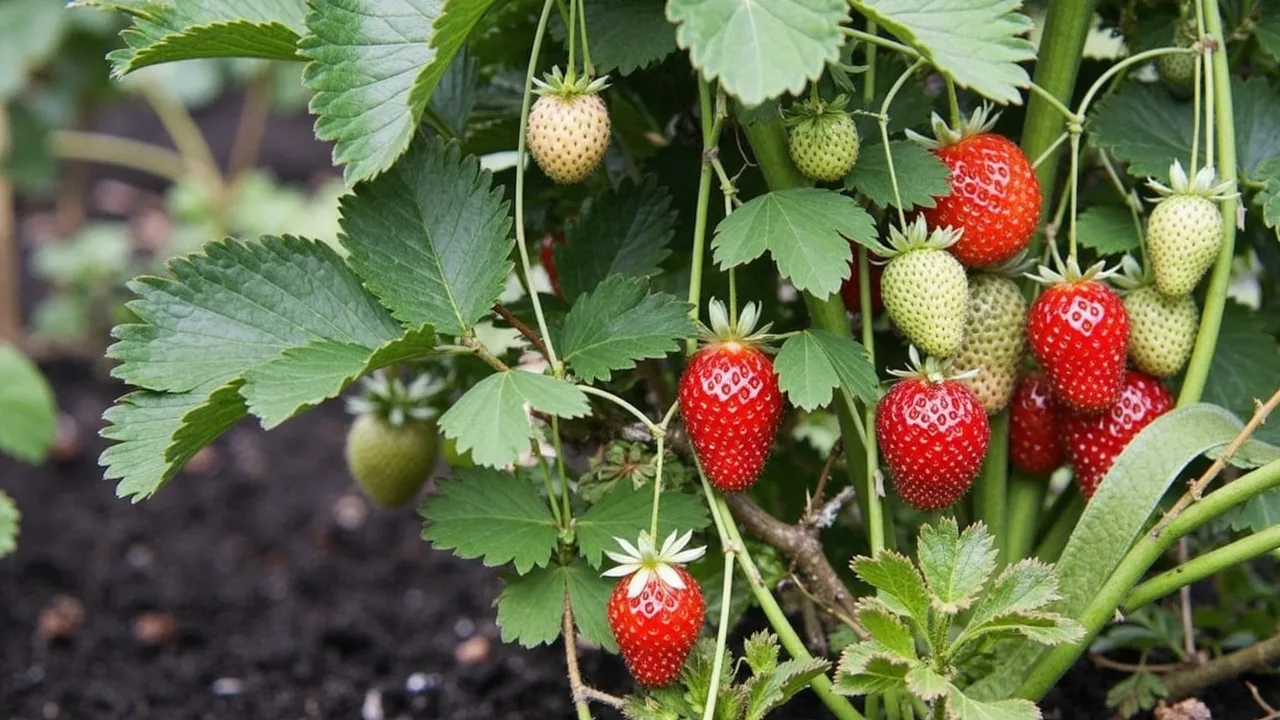
Compared with the species and with widely grown maincrops such as 'Honeoye' and 'Elsanta', 'Pegasus' is distinguished by its combination of fruit quality and disease tolerance. The berries are conical to wedge-shaped, regular in outline, and noticeably larger than average for a maincrop strawberry, with bright mid-red flesh and a glossy skin. Flavour is described as a balanced, moderately sweet dessert type — milder than 'Cambridge Favourite' but more aromatic than some modern commercial lines. The fruit is firm, with a tough skin that holds its shape well when picked, which also makes it serviceable for jam-making and freezing rather than purely for immediate eating.
Plants are vigorous and upright, forming a tidy crown with comparatively few runners in the first year, which suits closer spacing in matted-row systems. The flowers are typical of F. × ananassa, white with a yellow centre, and self-fertile, so a single cultivar will fruit without a pollination partner. 'Pegasus' has been recognised with the Royal Horticultural Society's Award of Garden Merit (AGM), reflecting its performance in UK trials.
Growing Notes
'Pegasus' shares the basic cultivation needs of any June-bearing strawberry: a sunny, sheltered site, free-draining but moisture-retentive soil enriched with organic matter, and a pH of around 6.0–6.5. It is hardy across the UK and suits the usual H6 hardiness band typical of garden strawberries in Britain, overwintering reliably in all but the coldest exposed sites if given a straw or fleece mulch once dormant.
Plant certified stock in late summer to early autumn, or in early spring, spacing plants about 40–45 cm apart in rows 75 cm apart. Because 'Pegasus' tends to crop heavily in its first full season, the usual advice is to remove the flowers in the planting year to build crown strength, then allow a full harvest the following summer. The cultivar is noted for above-average tolerance of verticillium wilt and of red core (Phytophthora fragariae), which is a useful trait on heavier or replant soils, though rotation is still advisable. As with all strawberries, renew the bed every three to four years by replacing old plants with new runners, and water consistently through flowering and fruit swelling to prevent split or misshapen berries. Netting against birds and protection from slugs are standard.
Best Used For
In a UK garden, 'Pegasus' fits well in a dedicated fruit patch, a raised bed on a productive allotment, or a large container on a sunny patio. Its firm, well-shaped fruit suits both dessert use and preserving, so it is a good pick for gardeners who want to freeze or jam a surplus. The combination of disease tolerance and AGM status also makes it a sensible option where soil has been used for strawberries before, and for growers in cooler, wetter regions such as the north and west of England, Scotland, and Wales, where red core pressure tends to be higher.
Pests and Diseases
| Problem | Symptoms | Management |
|---|---|---|
| Slugs and snails | Irregular holes in leaves and fruit, with slimy trails visible on foliage. | Use physical barriers like copper tape or beer traps, and hand-pick at night. |
| Grey mould (Botrytis) | Fruit becomes soft, brown, and covered in fuzzy grey spores. | Improve air circulation, avoid overhead watering, and remove affected fruit promptly. |
| Vine weevil | Notched leaf margins during the day and root damage causing plant collapse at night. | Apply biological nematodes to the soil in spring and autumn to control larvae. |
| Aphids | Clusters of small green or black insects on new growth, causing distorted leaves. | Squash by hand, blast with water, or use insecticidal soap for severe infestations. |
| Root rot | Plants wilt and yellow despite moist soil, often due to waterlogged conditions. | Ensure well-drained soil and avoid overwatering; remove severely affected plants. |
For step-by-step help, read Controlling Aphids Naturally and Dealing with Slugs and Snails. Or browse the full plant problem solver to diagnose an issue by symptom.
As an Amazon Associate, GardenWizz earns from qualifying purchases made through links on this page (including links within the article). This does not affect the price you pay. See our disclaimer for details.