
Strawberry 'Rhapsody'
Fragaria ananassa 'Rhapsody'
The Gardening Year
Best months in UK gardens · full planting calendar →
🖨 Printable care card (PDF)At a Glance
| Botanical name | Fragaria ananassa 'Rhapsody' |
|---|---|
| Common name(s) | Strawberry 'Rhapsody' |
| Family | Rosaceae |
| Plant type | perennial (stoloniferous perennials with leaves composed of three leaflets, and rounded white or pink flowers followed by edible red fruits) |
| Height × Spread | 10–50 cm × 50–100 cm |
| Position | Full sun, Partial shade |
| Soil | fertile, moist but well-drained soil |
| Flowering | March–May |
| Toxicity | No specific toxicity is listed by the RHS. This is not a guarantee of safety — check with a vet or the ASPCA before pets or children eat any plant. |
| Native range | — |
Overview
Strawberry 'Rhapsody' is a UK-bred junebearing strawberry cultivar, raised at East Malling Research in Kent and released in the early 1990s. It is grown for its reliable mid-season crop, tolerance of variable British summers, and a flavour profile that sits firmly in the traditional sweet-tart balance rather than the very sweet, low-acid types favoured by some modern breeding programmes. Commercial growers in cooler, wetter regions of the UK have valued it for its consistent yields, while gardeners appreciate that it performs steadily without demanding the meticulous overhead of more finicky dessert varieties.
Distinctive Features
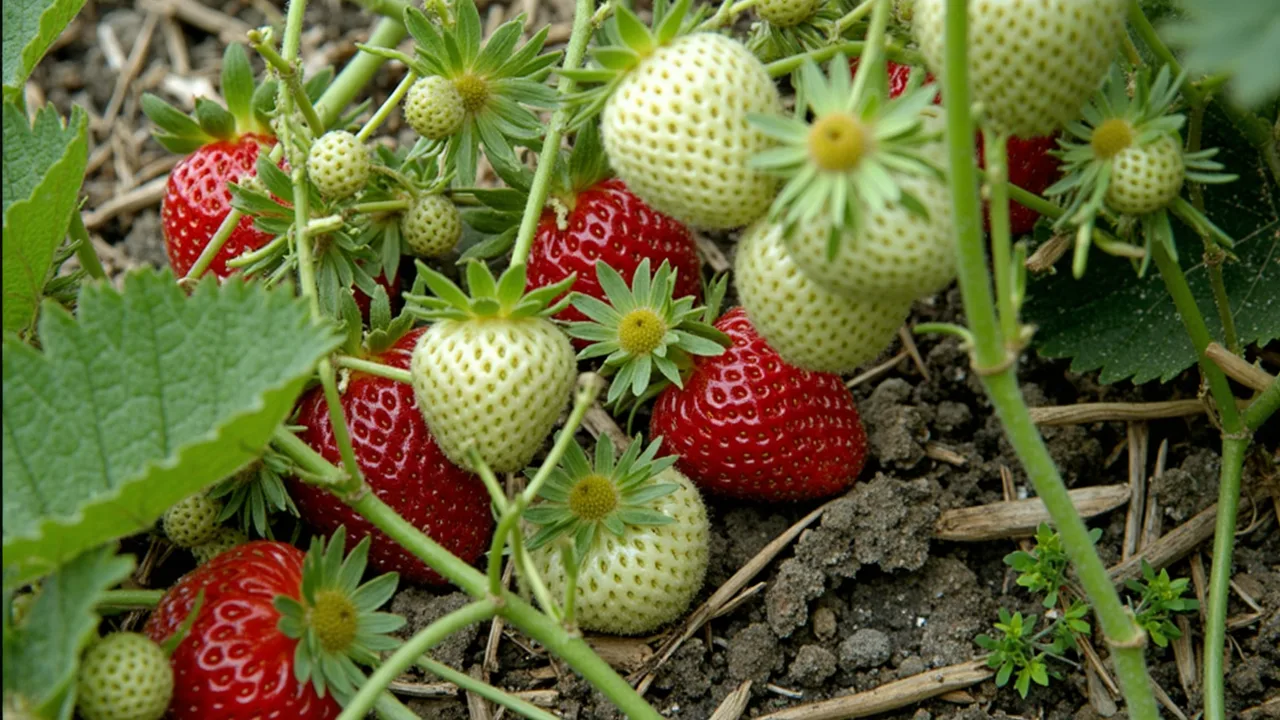
Unlike the species, which can vary considerably in fruit size and shape from seed, 'Rhapsody' produces uniformly conical, medium-to-large berries with a glossy mid-red skin and a firm, pale-red flesh. The fruit holds its shape well when picked, which makes it a practical choice for transport from plot to kitchen — a trait that distinguishes it from softer, more aromatic cultivars that bruise easily. The plant itself is moderately vigorous, forming a tidy crown with dark green, slightly rugose foliage and a compact habit that suits both open ground and matted-row systems. Flower stems generally sit just above the leaf canopy, keeping developing fruit clean and accessible. The flavour is reliably balanced: noticeably sweeter than older workhorse varieties such as 'Hapil', but with enough acidity to read as a true strawberry rather than a confection, which is one of the reasons it remains a fixture in many domestic gardens in northern England and Scotland.
Growing Notes
'Rhapsody' is a single-flush junebearer, producing one main crop typically from mid-June into early July in the south of England, and a little later further north. Like most modern strawberry cultivars, it is generally hardy across the UK, tolerating typical winter lows in most regions, though pot-grown plants benefit from protection during prolonged hard frosts. It is widely reported to have good resistance to Verticillium wilt and to show reasonable tolerance of red core (Phytophthora fragariae), though it is not immune to either — growers on heavy, poorly drained soils should still take standard precautions such as raised beds or mounded rows. First-year flowering is normal if plants are set out in late summer or early autumn; spring-planted cold-stored runners will usually crop the same season, though a lighter first harvest is common. The cultivar does not require staking, but a layer of straw or biodegradable mulch beneath the trusses helps keep fruit clean and reduces slug damage. Renew the bed every three to four years by replacing old plants with certified virus-tested runners to maintain fruit size and yield.
Best Used For
'Rhapsody' is well suited to the traditional British kitchen garden, allotment rows, and large patio containers where a steady, manageable crop of all-purpose berries is wanted through late June and early July. It is a strong choice for gardeners in cooler, wetter parts of the UK who find southern-favoured cultivars struggle to ripen. The fruit is firm enough for jam-making, freezing, and shortcake, while the balanced flavour also stands up well to fresh eating with cream. Pollinators benefit from the open white flowers in spring, and the compact plants slot easily into the front of a sunny border or a raised bed alongside other soft fruit.
Pests and Diseases
| Problem | Symptoms | Management |
|---|---|---|
| aphids | — | — |
| slugs and snails | — | — |
| glasshouse red spider mite | — | — |
| vine weevil | — | — |
| strawberry viruses | — | — |
| root rot | — | — |
| grey moulds | Fruit prone to grey moulds | — |
For step-by-step help, read Controlling Aphids Naturally and Dealing with Slugs and Snails. Or browse the full plant problem solver to diagnose an issue by symptom.
As an Amazon Associate, GardenWizz earns from qualifying purchases made through links on this page (including links within the article). This does not affect the price you pay. See our disclaimer for details.