Dill
Anethum graveolens
At a Glance
| Botanical name | Anethum graveolens |
|---|---|
| Common name(s) | dill |
| Family | Apiaceae |
| Plant type | annual |
| Height × Spread | 50–150 cm × — |
| Hardiness | — |
| Position | Full sun |
| Soil | rich, well-drained |
| Flowering | June–August |
| Toxicity | — |
| Native range | North Africa, Iran, Arabian Peninsula |
Overview
Dill (Anethum graveolens) is an annual herb belonging to the celery family Apiaceae. Native to North Africa and West Asia, it is widely cultivated across Eurasia for its culinary uses. The plant is grown for both its leaves and seeds, which serve as herbs or spices in food flavouring.
Botanical Description
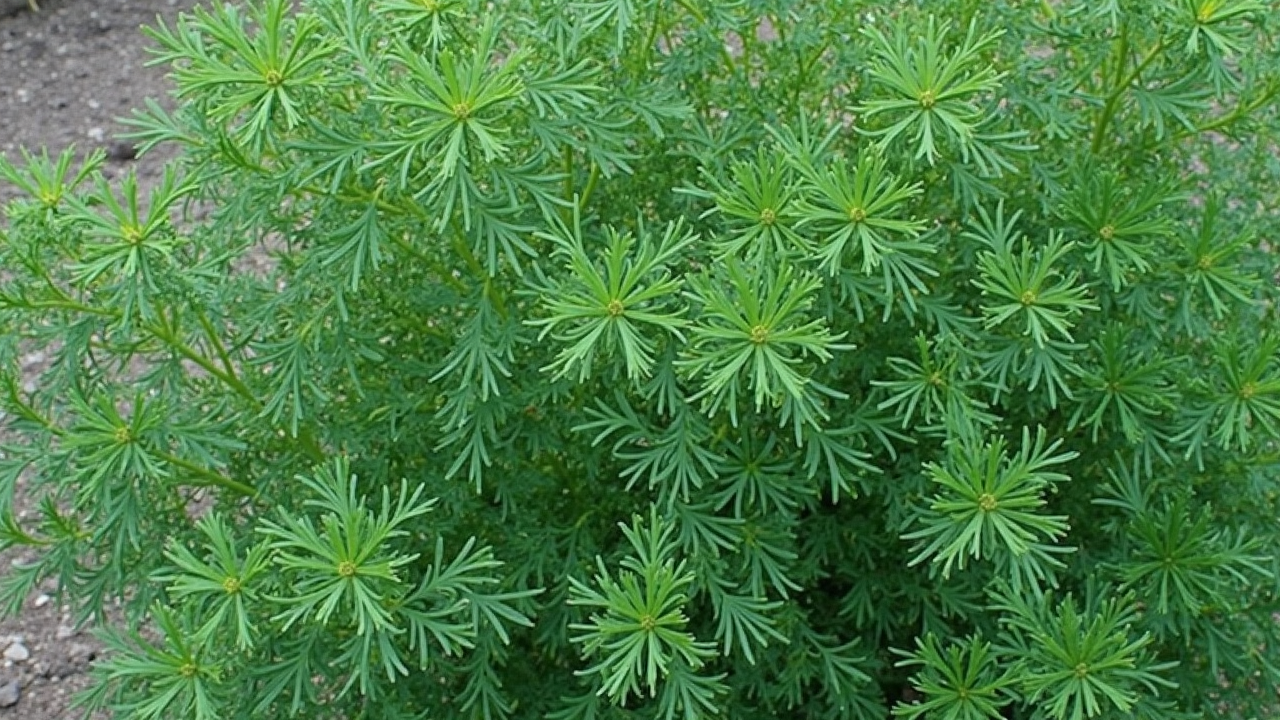
Dill grows from a taproot, reaching heights of 0.5–1.5 metres (1+1⁄2–5 feet). Its stems are slender and hollow. The leaves are finely divided, softly delicate, and alternately arranged, measuring 10–20 centimetres (4–8 inches) in length. The ultimate leaf divisions are 1–2 millimetres (1⁄32–3⁄32 in) broad, slightly wider than fennel leaves which are less than 1 mm (1⁄16 in) across and harder in texture. In hot or dry weather, small white to yellow scented flowers form in umbels 2.5–9 cm (1–3+1⁄2 in) in diameter on a single stalk. The seeds develop from dried fruit measuring 4–5 mm (3⁄16–3⁄16 in) long and 1 mm (1⁄16 in) thick, straight to slightly curved with a longitudinally ridged surface.
Origin and Habitat
Dill is native to North Africa, Iran, and the Arabian Peninsula. It has been widely cultivated in Eurasia since ancient times.
Cultivation
Dill requires warm to hot summers with high sunshine levels; partial shade substantially reduces yield. It prefers rich, well-drained soil. The plant is susceptible to black swallowtail caterpillars in areas where they occur, making it suitable for inclusion in butterfly gardens.
Care and Maintenance
Prune after flowering to encourage seed production. Harvest seeds by cutting flower heads when seeds begin to ripen. Place heads upside down in a paper bag in a warm, dry place for a week; seeds separate easily from stems for storage in an airtight container.
Uses
Fresh and dried dill leaves (dill weed) are used as herbs in Europe, central Asia, and south-eastern Asia. They flavour fish dishes, soups (including borscht), gravlax, and pickles, with dill being the eponymous ingredient in dill pickles. Dill oil is extracted from leaves, stems, and seeds for use in soap manufacturing. In central and eastern Europe, the Nordic countries, and Russia, dill is a staple herb used in soups, salads, with potatoes, in dairy mixtures, and for pickling. It is used in Polish cuisine for sauces, soups, and pickles; in Czech Republic for sauces and soups; in Germany for fish and pickles; and in the UK for fish pie. In the Middle East and Asia, it is used in Iranian rice dishes, Indian preparations (including as a digestive), and Lao cuisine as 'Lao coriander' in salads and curries. It is also used in traditional dishes across Bulgaria, Romania, Hungary, Serbia, Greece, and the Azores.
#Dill #Anethumgraveolens #HerbGardening #CulinaryHerbs #Apiaceae #UKGardening #GardenWizz #DillPickles #HerbUses #PlantDatabase
Quick Care Summary
| Sunlight | Full sun |
|---|---|
| Soil | rich, well-drained |
| Hardiness | — |
| Sow | April–June |
| Plant | April–June |
| Prune | — |
Facts sourced from Wikipedia / Anethum graveolens (https://en.wikipedia.org/wiki/Anethum_graveolens)
As an Amazon Associate, GardenWizz earns from qualifying purchases made through the links above. This does not affect the price you pay. See our disclaimer for details.