
Boxwood
Buxus sempervirens
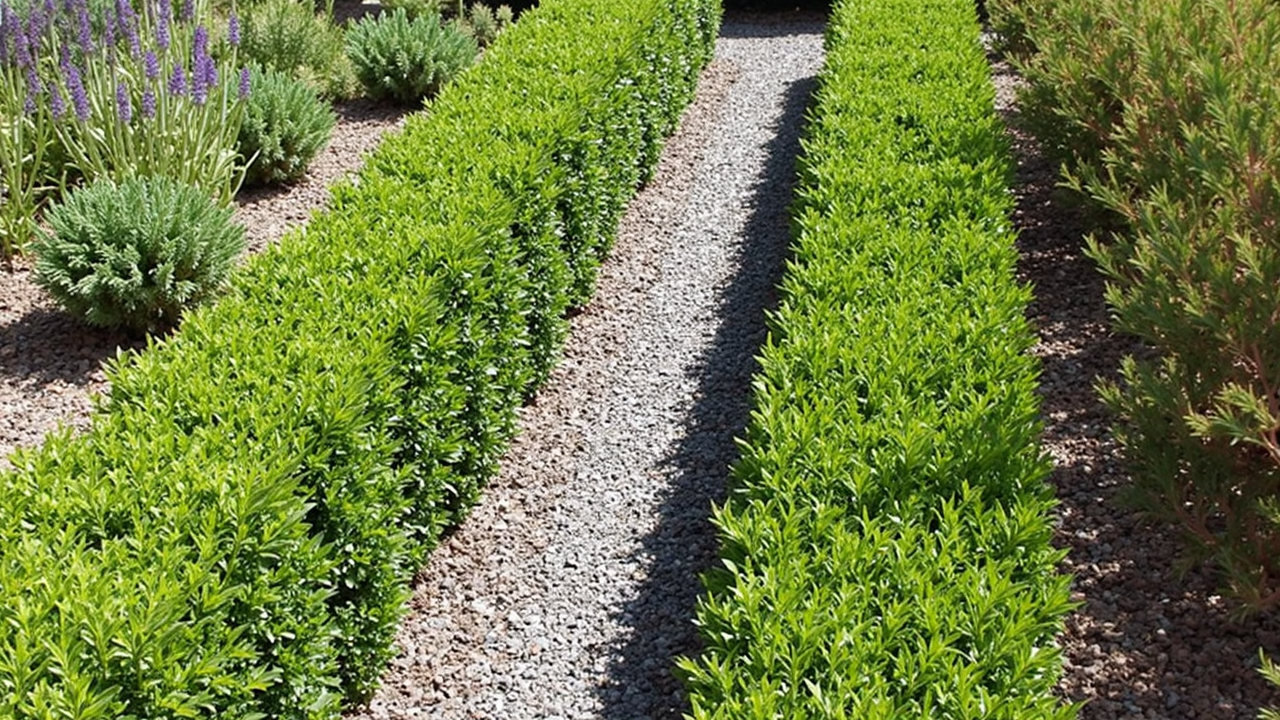
At a Glance
| Botanical name | Buxus sempervirens |
|---|---|
| Common name(s) | Boxwood |
| Family | Buxaceae |
| Plant type | shrub (Evergreen shrub or small tree) |
| Height × Spread | 100–900 cm × — |
| Hardiness | H6 (to -20.0 °C) |
| Position | Full sun, Partial shade, Full shade |
| Soil | Moist but well-drained; pH Acid, Alkaline, Neutral |
| Flowering | April–May |
| Toxicity | Harmful if eaten (Pets: dogs) |
| Native range | Western and southern Europe, northwest Africa, and southwest Asia |
Overview
Boxwood (Buxus sempervirens) is the classic evergreen shrub of British formal gardening, used for low hedging, parterre edging and topiary for at least four hundred years. The following quick-care table summarises the essentials for UK growers; the full article below covers each in detail.
Buxus sempervirens, in the family Buxaceae, is a dense, slow-growing evergreen native to western and southern Europe, north Africa and the Caucasus, and naturalised in parts of southern England. It is grown in British gardens primarily for its small, leathery, dark green leaves, its tight bushy habit, and its remarkable tolerance of close clipping, which together make it the dominant plant of the formal garden tradition. Mature specimens can reach 5 m or more in height, although most garden plants are kept considerably lower by annual trimming. Plants live for many decades and very old specimens in country-house gardens are often several hundred years old. The yellowish-green spring flowers are small, fragrant and bee-friendly, but are of little ornamental value; the plant is grown almost entirely for its foliage and form. Box blight and the box tree caterpillar have become serious problems in the twenty-first century, and the species is no longer planted as freely as it once was, but it remains a defining plant of the British garden, and many historic hedges and topiary pieces are still actively maintained.
Appearance
Buxus sempervirens is a bushy, densely branched evergreen with a rounded outline and short, stiff twigs. The leaves are opposite, oval to oblong, 1.5 to 3 cm long, leathery, and dark, glossy green on the upper surface with a distinctly paler, yellowish-green underside. New growth in spring is noticeably brighter green and darkens through the summer. The stems are unusual among garden shrubs in being square in cross-section rather than round, a useful identification point when the leaves are out of reach. The bark on older specimens is grey-brown, shallowly fissured and becomes corky with age.
Flowers appear in April and May in small, dense clusters nestled in the leaf axils. Each flower is a tiny, yellowish-green tuft of petal-like sepals, with the male and female parts borne in the same cluster. They are sweetly scented at close range and are visited by bees, hoverflies and other early-season pollinators. The fruit is a small, three-horned green capsule that ripens through summer and ejects shiny black seeds in late summer; seedlings are uncommon in well-kept gardens and are not a feature of the plant's appearance.
The overall habit is dense and compact, with foliage retained right down to the base when plants are clipped regularly. Left unclipped, mature plants develop a loose, rounded crown with a short, often multi-stemmed trunk and may take on a small-tree form. Several distinct growth habits are recognised in cultivation, from the low, tight dwarf used for edging to upright, fastigiate forms suitable for accent planting.
Growing Conditions
Box grows reliably across almost the whole of the United Kingdom, from the Highlands to the Channel Islands, and is rated H5 by the RHS, meaning it is hardy in most parts of the country, including colder inland and northern sites. It performs best in well-drained, fertile loam with a pH of roughly 6.5 to 7.5, but it is notably tolerant of both chalk and clay provided the ground is not waterlogged. Wet, badly drained soil is the most common cause of failure: roots sitting in cold, saturated ground through winter are vulnerable to Phytophthora root rot and the plant will turn bronze, defoliate and often die. Improve heavy soils with grit and organic matter, or plant on a slight mound, rather than working in a planting pit that holds water.
Aspect can range from full sun to light, dappled shade. In deep shade growth becomes thin and open, and the dense, tight outline that makes the plant so useful for clipping is lost. Shelter from cold, drying east and north-east winds reduces winter leaf scorch, particularly in exposed gardens in the north and east of the country. Once established, mature plants are reasonably drought-tolerant and cope well with the dry root-run conditions often found against south-facing walls and in paved courtyards. In very cold winters, even H5-rated plants can show some leaf browning at the margins; this is cosmetic and is usually shed in spring as new growth emerges.
Planting and Care
Plant container-grown box at any time of year when the soil is workable and the ground is neither frozen nor waterlogged, although autumn and early spring give the best establishment. For a low formal hedge, space plants 30 to 40 cm apart; for taller hedges or larger cultivars, 45 to 60 cm is appropriate. For parterre edging of dwarf box, 15 to 20 cm apart produces a continuous line within two to three seasons. Water in well and keep the soil just moist through the first growing season; thereafter, additional watering is rarely needed except in prolonged drought on very free-draining or container-grown specimens. A 5 to 8 cm mulch of well-rotted compost or bark, kept clear of the stems, conserves moisture and suppresses weeds.
Feeding should be modest. A single spring application of a balanced fertiliser such as blood, fish and bone, or a slow-release shrub feed, supports steady growth; high-nitrogen lawn or vegetable feeds produce soft, leafy flushes that are vulnerable to blight and to winter damage, and they should be avoided. Pruning is the principal task: trim 2 to 3 times per season, typically in late May, late July and again lightly in early September for formal hedges and topiary, to keep the outline sharp and the foliage dense. Avoid pruning after early autumn, as soft late growth has no time to harden before the first frosts.
Propagation is straightforward from semi-ripe cuttings taken in late summer: 8 to 10 cm heel cuttings, trimmed below a node and stripped of their lower leaves, root reliably in a 50:50 mix of peat-free compost and sharp sand under a cloche or in a cold frame. Larger, more mature cuttings, 20 to 30 cm long, can be pushed directly into a shaded nursery bed and will root within a year; this is the traditional method for raising parterre edging. Seed can be sown in autumn after a period of cold stratification, but germination is slow and seedlings are variable, so seed is used only for the species.
Seasonal care in the UK is light. In early spring, apply the feed, check for the first signs of box tree caterpillar and box blight, and tidy any winter-damaged tips. In summer, water container-grown plants freely and trim once or twice. In autumn, give a final trim where needed, refresh the mulch, and leave the plant alone for the winter; pruning late into autumn stimulates growth that will be cut back by frost.
Common Problems
Box tree caterpillar (Cydalima perspectalis) is now the most damaging pest in many areas of southern and central England. The pale, dark-striped caterpillars feed gregariously inside webbing spun between the leaves and twigs, and can defoliate a hedge in a matter of weeks. Inspect plants from April onwards, paying particular attention to the inner foliage; pick off caterpillars by hand on small plants, use pheromone traps to monitor moth activity, and treat larger infestations with Bacillus thuringiensis (Bt), which is approved for use in the UK and is harmless to bees and other non-target insects.
Box blight, caused by the fungi Cylindrocladium buxicola and, less commonly, Volutella buxi, is a serious disease that has spread rapidly through British gardens since the early 2000s. Symptoms include dark brown leaf spots, black streaks running down young stems, and sudden, extensive defoliation. The disease thrives in warm, humid, still air, so improve air circulation by thinning out congested plants, avoid overhead watering, and clean tools between hedges. Affected material should be removed and destroyed rather than composted. Where blight is recurrent, replacement with a resistant alternative such as Ilex crenata, Lonicera nitida or Taxus baccata may be the most practical option.
Other problems are mostly minor. Root rot caused by Phytophthora species follows waterlogging; improve drainage and avoid replanting box in the same spot. Yellowing leaves on alkaline ground usually indicate iron or manganese deficiency, corrected with a sequestered iron drench. Leaf-mining flies and various scale insects have been recorded but rarely do significant damage. Winter leaf scorch, caused by cold drying wind on frozen ground, is largely cosmetic.
Popular Varieties
Buxus sempervirens 'Suffruticosa' is the dwarf, very slow-growing form traditionally used for parterre and knot-garden edging, reaching only 60 to 90 cm with a tight, domed habit. It clips to a crisp, low line but is one of the forms most susceptible to box blight. B. sempervirens 'Handsworthiensis' is a vigorous, upright cultivar with larger, dark green leaves and a strong, conical outline to about 3 m, widely planted for taller hedges and as a small specimen tree; it is somewhat more blight-tolerant than 'Suffruticosa'. B. sempervirens 'Graham Blandy' is a narrowly fastigiate form with a tight, columnar habit, useful where a vertical accent is needed in a formal layout. B. sempervirens 'Elegantissima' has leaves edged and splashed with creamy white, providing year-round colour in containers and as a focal shrub. B. sempervirens 'Aureovariegata' is similar in habit to the type but with leaves marked in yellow rather than white. For very exposed or colder sites, several hybrids of B. sempervirens with B. microphylla (sometimes sold as Buxus 'Faulkner' or the 'Green' and 'Glencoe' series) have shown better blight resistance in UK trials, although reliable long-term data for the whole country is still limited.
Pests and Diseases
| Problem | Symptoms | Management |
|---|---|---|
| Box blight | Leaves turn brown or black with white fungal spores, and stems develop dark lesions causing dieback. | Prune out affected growth in dry weather, improve air circulation, and isolate new plants for four weeks. |
| Box tree moth | Caterpillars skeletonise leaves leaving only veins, often accompanied by visible webbing on the foliage. | Hand-pick caterpillars or use biological controls like nematodes; prune out heavily infested shoots. |
| Phytophthora root rot | Plants decline rapidly and fail completely with no obvious above-ground cause, often in waterlogged soil. | Ensure well-draining soil conditions and avoid overwatering to prevent root suffocation and fungal attack. |
| Box rust | Thickened, rusty blister-like pustules appear on both sides of the leaves, particularly in spring. | Clip off affected shoots during dry weather and dispose of them to reduce spore spread. |
| Volutella blight | Small pink fungal fruiting bodies appear on dead or dying leaves, often following stress or wet clipping. | Improve cultural conditions by pruning diseased branches in dry weather and removing fallen leaves. |
Quick Care Summary
| Sunlight | Full sun, Partial shade, Full shade |
|---|---|
| Soil | Moist but well-drained; pH Acid, Alkaline, Neutral |
| Hardiness | H6 (-20.0 °C) |
| Sow | — |
| Plant | January–December |
| Prune | May–September |


As an Amazon Associate, GardenWizz earns from qualifying purchases made through the links above. This does not affect the price you pay. See our disclaimer for details.