Hebe
Hebe pinguifolia
At a Glance
| Botanical name | Hebe pinguifolia |
|---|---|
| Common name(s) | Hebe |
| Family | Plantaginaceae |
| Plant type | shrub |
| Height × Spread | — × — |
| Hardiness | H5 (to -15.0 °C) |
| Position | Full sun |
| Soil | poor or moderately fertile, well-drained, neutral to slightly alkaline soil |
| Flowering | June–August |
| Toxicity | — |
| Native range | South Island of New Zealand |
Overview
Hebe (Hebe pinguifolia) is a small, hardy evergreen shrub from New Zealand, grown in British gardens for its neat dome of grey-blue foliage and short spikes of white flowers in early summer. The quick-care table below summarises the essentials for UK growers; the full article covers each point in detail.
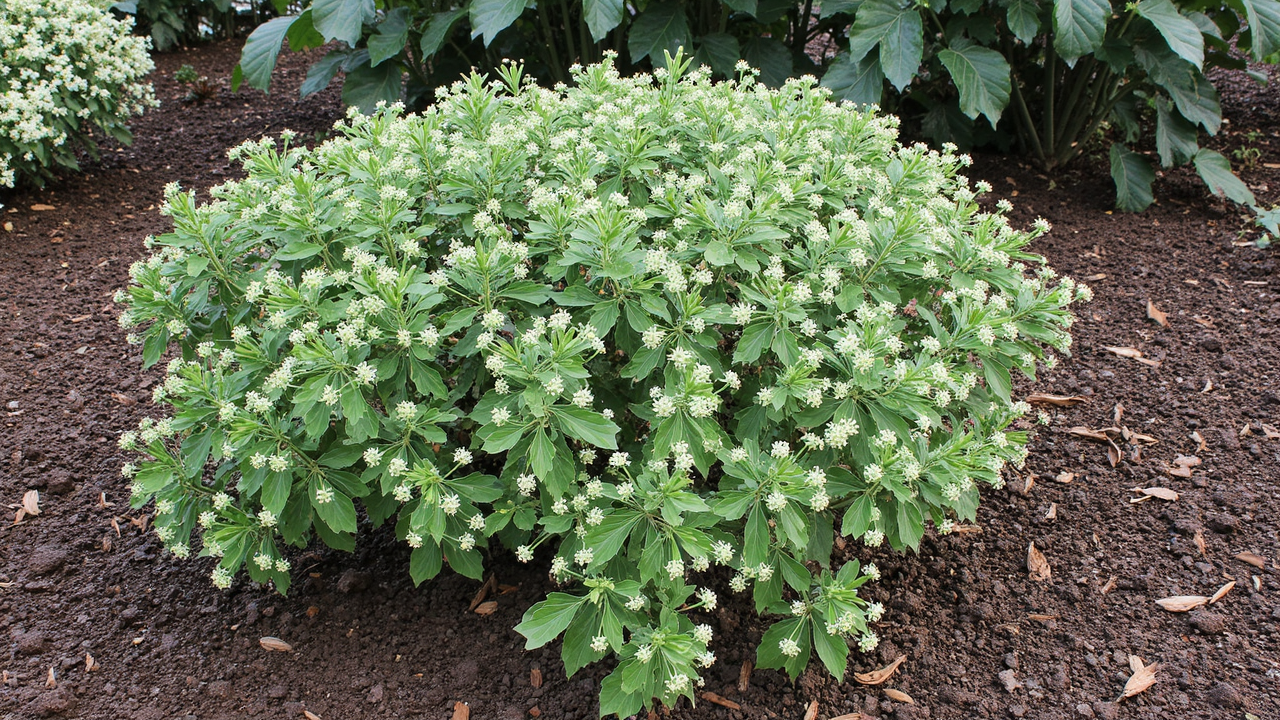
Hebe pinguifolia is a low, spreading evergreen shrub in the family Plantaginaceae, endemic to the South Island of New Zealand, where it grows on dry, rocky hillsides. It has been grown in British gardens since the late nineteenth century and is valued for its dense habit, its distinctive small blue-grey leaves arranged like overlapping scales along the stem, and its short, crowded spikes of small white flowers that open in late spring and early summer. Mature plants form a low mound 30 to 45 cm tall and considerably broader than they are high, often 60 to 90 cm across after several years. Botanists now place most hebes, including this one, in the genus Veronica (as Veronica pinguifolia), but the name Hebe remains the one used in UK horticulture and is retained throughout this article. It suits coastal gardens, gravel plantings, the front of a sunny border, and large containers, and combines well with other small-leaved evergreens such as lavender, rosemary and dwarf conifers.
Appearance
Hebe pinguifolia is a small, densely branched shrub with a prostrate to slightly mounding habit. The stems are short, woody at the base, and clothed in opposite pairs of small, thick, concave leaves. Each leaf is roughly 8 to 15 mm long, broadly oval to almost round, and a distinctive blue-grey or glaucous green, often described in old gardening texts as "disk-like" because of the way the pairs clasp the stem and overlap like the scales of a pine cone. The leaf surface is smooth and slightly fleshy, and the underside is usually paler than the upper surface. The flowers are carried in short, dense terminal spikes 2 to 4 cm long, each made up of many small four-lobed white blossoms, typically opening from the base of the spike upwards over several weeks in late May, June and into early July. Individual flowers are around 6 to 8 mm across and have a faint, slightly sweet scent. After flowering, the spent spikes turn pale brown and remain on the plant through summer; they can be trimmed off for neatness but are not usually attractive enough to leave for ornament. The overall impression of a healthy specimen is a tight, undulating dome of blue-grey foliage, broader than tall, with a brief but conspicuous display of white flowers in early summer.
Growing Conditions
Hebe pinguifolia performs best in full sun, in well-drained, moderately fertile soil with a neutral to slightly alkaline pH. It tolerates light dappled shade, particularly in the south of England, but flowering is more profuse and the foliage colour better in sun. The most important single condition is sharp drainage: cold, wet soil in winter is the usual cause of failure, especially on heavy clay or in low-lying parts of the garden where water sits. In such sites, plants are best grown on a raised bed, in a gravel garden, at the top of a wall, or in a large container filled with a loam-based potting mix with added grit. Once established, the plant is reasonably drought-tolerant and copes well with the dry conditions found against warm walls, over paving, and in coastal gardens where it is also notably salt-tolerant. Hebe pinguifolia is generally hardy across most of lowland Britain, including the Midlands, the south and the west, but can be cut back by hard frosts in cold inland or northerly gardens, particularly if planted in exposed positions or in wet ground. In colder areas, planting against a south- or west-facing wall and applying a dry mulch of coarse grit around the crown in late autumn improves winter survival. A formal RHS hardiness rating for this species is not widely published; gardeners should treat it as comparable to other small-leaved hebes, and give it the same sheltered, free-draining site that those species prefer.
Planting and Care
Plant container-grown specimens in spring or early autumn, setting them at the same depth they were in their pots and firming the soil around the rootball. Space plants 45 to 60 cm apart if a continuous low carpet is wanted, or 75 to 90 cm apart for individual specimens. Water in well after planting and keep the soil just moist for the first growing season; once the roots have spread into the surrounding ground, additional watering is rarely needed except in prolonged summer drought. Feeding should be modest: a single light application of a general-purpose fertiliser in early spring, or a thin top-dressing of garden compost, is sufficient. Over-rich, over-watered plants produce soft, leafy growth that is more vulnerable to winter damage. Pruning is light. After flowering, trim back the spent flower spikes with shears and, if the plant is becoming straggly, shorten the longest shoots by a few centimetres to keep the mound compact. Do not cut into old, leafless wood, which usually does not regenerate. A second, lighter tidy in early spring removes any frost-damaged or wind-scored tips. Propagation is straightforward from semi-ripe cuttings taken in mid- to late summer: 5 to 8 cm shoots root readily in a gritty, free-draining compost under a cold frame, in a shaded corner, or in a propagator with bottom heat. Seed can be sown in autumn or spring but produces variable offspring and is not the usual method for named forms. Seasonal care in the UK follows a simple rhythm: a light spring tidy, minimal summer watering, a trim after flowering in July, and a check on drainage as winter sets in.
Common Problems
The most frequent problem is winter die-back, caused by a combination of cold and wet conditions at the crown. Symptoms appear in late winter or early spring as the foliage turning grey-brown and whole sections of the plant failing to break into new growth; in many cases the lower, better-drained parts of the plant survive and regrow, while the worst-affected tips can be tidied away. Hebes, including H. pinguifolia, are also susceptible to leaf spot diseases, most notably the fungal infections Septoria and Phoma, which cause small dark spots on the leaves, premature leaf drop and, in severe cases, die-back of whole stems. Improving air circulation, avoiding overhead watering, and removing and disposing of affected leaves help to limit spread. Downy mildew can affect hebes in damp, shaded sites, producing yellow patches on the upper leaf surface and a greyish down beneath. Aphids, particularly the hebe aphid, sometimes colonise the soft shoot tips in late spring, distorting growth; they are usually controlled by natural predators, or by a careful spray of water, and only need insecticidal treatment in severe cases. Poor flowering or sparse foliage is almost always a sign of one of three causes: insufficient sun, soil that is too rich or too wet, or pruning at the wrong time. The plant is not considered toxic to humans or domestic animals, although it is not grown for culinary use and large quantities of any non-food plant may cause mild gastric upset if eaten.
Popular Varieties
Hebe pinguifolia is itself a distinct species and is most often sold simply under its botanical name. A well-known and widely planted selection is 'Sutherlandii' (sometimes listed as Hebe pinguifolia 'Sutherlandii' or under the related name Hebe 'Sutherland Gold'), a particularly compact, grey-leaved form noted for its tight dome of foliage and reliable flowering. 'Pagei' is a closely related, very low-growing hebe with small silver-grey leaves and white flowers, frequently sold alongside H. pinguifolia in garden centres and useful for the same role at the front of a border or in a gravel garden, although it is usually treated as a form of Hebe pinguifolia or as a near-relative in the H. pinguifolia group rather than a true cultivar of the species. Gardeners looking for a pink-flowered alternative with the same habit may consider Hebe 'Red Edge' or Hebe 'Youngii', both of which are small, hardy, blue-leaved hebes suitable for similar sites, though they are not cultivars of H. pinguifolia. As with all hebes, named forms are best bought from a reputable UK nursery, and gardeners should be cautious of plants offered under old or alternative names such as Veronica pinguifolia if they want a true, well-characterised specimen of Hebe pinguifolia.
Pests and Diseases
| Problem | Symptoms | Management |
|---|---|---|
| Downy mildew | Purple-red blotches on upper leaf surfaces with white fungal growth underneath. | Ensure good air circulation and water at the base to keep foliage dry. |
| Leaf spot fungi | Distinct dark spots appear on leaves, often during wet weather conditions. | Remove affected leaves and avoid overhead watering to reduce humidity. |
| Vine weevil | Notched edges on leaves above ground and root damage below soil level. | Check pots for grubs before planting and use biological controls if infested. |
| Aphids | Clusters of small soft-bodied insects on new growth causing leaf curling. | Encourage natural predators like ladybirds or spray with a strong jet of water. |
| Slugs and snails | Irregular holes chewed in leaves and silvery slime trails on foliage. | Use physical barriers, hand-pick at night, or apply iron phosphate pellets. |
Quick Care Summary
| Sunlight | Full sun |
|---|---|
| Soil | poor or moderately fertile, well-drained, neutral to slightly alkaline soil |
| Hardiness | H5 (-15.0 °C) |
| Sow | — |
| Plant | — |
| Prune | — |
As an Amazon Associate, GardenWizz earns from qualifying purchases made through the links above. This does not affect the price you pay. See our disclaimer for details.