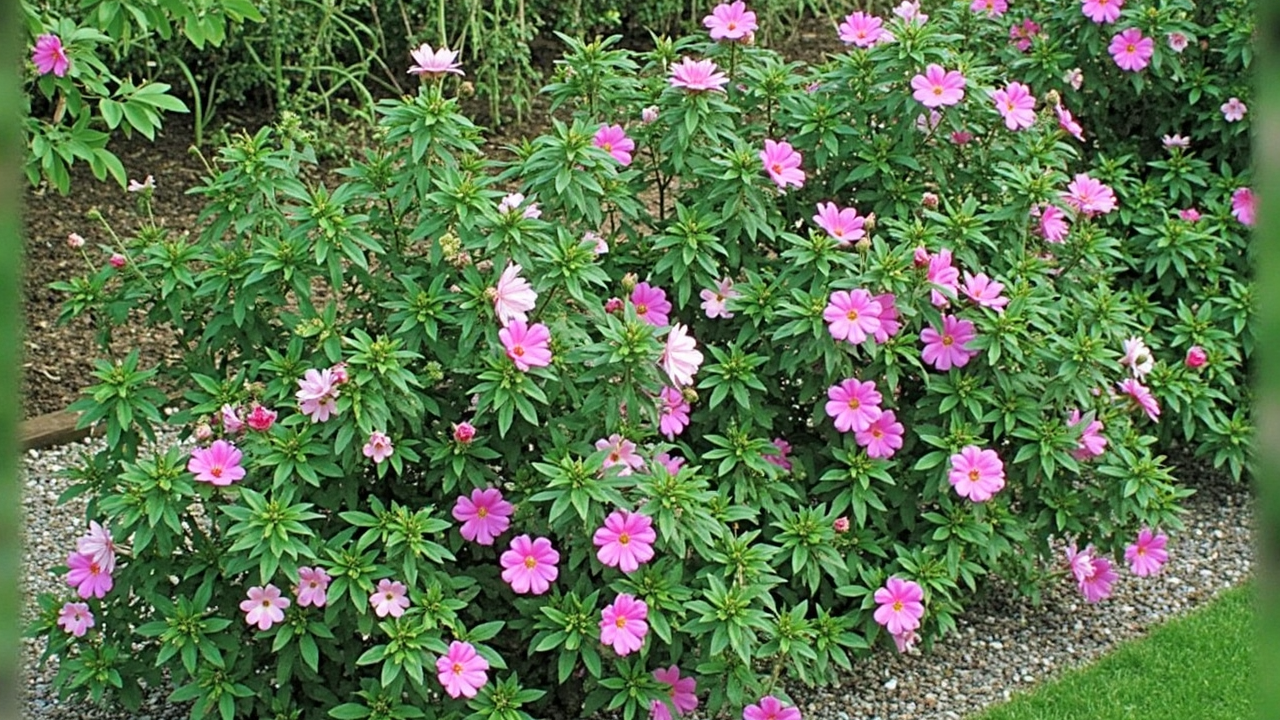
Dog Rose
Rosa rugosa
At a Glance
| Botanical name | Rosa rugosa |
|---|---|
| Common name(s) | Dog Rose |
| Family | Rosaceae |
| Plant type | shrub (Deciduous) |
| Height × Spread | 100–150 cm × — |
| Hardiness | H7 (to -20.0 °C) |
| Position | Full sun, Partial shade |
| Soil | moderately fertile, humus-rich, moist but well-drained; tolerant of poor soil and dry conditions; pH Acid, Alkaline, Neutral |
| Flowering | March–August |
| Toxicity | Fruit are ornamental - not to be eaten. Wear gloves and other protective equipment when handling. |
| Native range | eastern Asia, in northeastern China, Japan, Korea and southeastern Siberia |
Note on naming: in British horticulture the common name "dog rose" usually refers to the native wild rose Rosa canina. This article covers Rosa rugosa, which is also sold under the common names Japanese rose, Ramanas rose and, in some catalogues, dog rose. The two species are distinct, though both are vigorous, thorny, single-flowered shrub roses suited to UK gardens.
Overview
Rosa rugosa is a deciduous shrub rose native to the coastal regions of eastern Asia — Japan, Korea, north-eastern China, the Russian Far East and Sakhalin — that has become a familiar sight in British coastal gardens, on shingle beaches, and along motorway and railway embankments. Introduced to Europe in the late eighteenth century, it earned its botanical name from the Latin rugosa, meaning "wrinkled", a reference to the deeply veined, leathery surface of its leaflets. The species has earned a strong following in UK horticulture for its constitution: it tolerates salt spray, wind, sandy soil, drought and urban pollution, and it flowers and fruits prolifically in conditions that defeat most hybrid roses.
The shrub spreads by suckering rootstocks, so a single plant can colonise several square metres over time, making it a practical choice for stabilising banks and for wildlife hedging. It is fully hardy across the UK, generally listed as RHS hardiness H7 (the hardiest category, tolerating temperatures below −20 °C in northern Scotland), and is grown commercially for rose hip syrup and jam, particularly in Norfolk and Scotland. The large, tomato-shaped hips — among the biggest of any rose — are rich in vitamin C and remain on the plant well into winter, providing useful forage for thrushes, blackbirds, fieldfares and visiting waxwings.
Appearance
Rosa rugosa forms a dense, rounded shrub composed of stout, upright to arching canes densely clothed in straight, bristly thorns of mixed lengths. The thorns are noticeably finer and more numerous than those of most hybrid tea or floribunda roses, and they are a useful identification feature in winter when the plant is leafless. The bark of mature stems is a reddish-brown, often peeling slightly in vertical strips on older wood.
The leaves are pinnate, typically carrying five to nine leaflets (most often seven), each leaflet 2–5 cm long, oval to elliptical, with a finely serrated margin and the deeply impressed veins that give the species its name. The upper surface is a glossy, dark, slightly bluish green; the underside is paler, often downy when young. In autumn the foliage turns a clear, buttery yellow, occasionally flushed with orange, before falling cleanly. The leaflets are firm and almost leathery to the touch — another trait that helps the plant cope with coastal wind and drought.
Flowers are produced singly or in small clusters at the tips of the current season's shoots, from early June through August and frequently in a lighter second flush in September. Each bloom is 6–9 cm across with five broad, flat petals arranged around a boss of pale yellow stamens. Colour ranges from clear white through pale blush to deep magenta-pink, depending on the cultivar. The flowers are notably fragrant — a sweet, clove-and-apple scent that carries well in still summer air. They are followed by the hips, which swell rapidly from late July onwards: rounded to slightly flask-shaped, 2–4 cm across, ripening from yellow-orange to bright scarlet, and remaining on the bush through the first hard frosts.
Growing Conditions
Rosa rugosa succeeds in almost any reasonable garden soil, including the lean, free-draining substrates that defeat most hybrid roses. It prefers a moderately fertile loam with a pH between 6.0 and 7.5, but established plants tolerate sand, gravel, clay and slightly alkaline conditions provided the site is not waterlogged. Its tolerance of salt-laden wind is exceptional, which is why it dominates the planted dunes at places like Ainsdale and Holkham; it is equally at home on windy hill farms in the west of Ireland and on exposed sites in the Scottish Highlands.
Full sun produces the strongest flowering and the heaviest crop of hips, but the plant tolerates light, dappled shade for part of the day — performance simply drops slightly. In the UK the species is fully hardy at the most exposed inland sites (RHS H7, equivalent to USDA zone 2). It also tolerates urban pollution, compacted soil, and the dry root-run conditions found near walls and beneath mature trees, though flowering will be reduced under very dry, shaded conditions.
Planting and Care
Planting. Container-grown plants can be set out at any time of year when the ground is workable, but the best results come from bare-root planting between November and early March, when the shrubs are dormant. Space plants 90–120 cm apart if a continuous hedge is wanted, or 1.5–2 m apart for a free-standing specimen. Dig a hole wide enough to take the roots without bending, set the plant so the soil mark on the stem sits level with the surrounding ground, backfill with the original soil, firm in, and water thoroughly.
Watering. Water regularly through the first full growing season to establish a deep root system. After that, mature Rosa rugosa is highly drought-tolerant and will survive long dry spells on heavier soils. On very free-draining sandy soils, occasional deep watering during prolonged summer drought keeps the foliage from flagging.
Feeding. A single annual top-dressing in early March is usually sufficient: a 5 cm mulch of well-rotted garden compost or manure spread over the root zone, or a handful of granular rose fertiliser per square metre, lightly worked into the soil. Over-feeding produces soft, leafy growth at the expense of flowers and hips.
Pruning. Minimal intervention is needed. In late February or early March, remove any dead, damaged or crossing stems, and cut back up to one in three of the oldest canes to ground level to encourage fresh basal growth. Wear thick gloves — the bristly thorns are notoriously hard to handle. Suckers that appear outside the desired footprint should be severed at the root with a sharp spade; the species is grafted or own-root depending on supplier, but the parent rootstock is itself Rosa rugosa, so suckers are not a different rose.
Propagation. Easy by any of the standard methods. Semi-ripe cuttings taken in July or August root readily in a 50:50 mix of peat-free compost and sharp sand under a clear cover. Hardwood cuttings of pencil-thick winter prunings root well in a sheltered outdoor trench. Layering of low branches works in situ, and root suckers can be lifted in autumn with a section of attached root. Seed requires a period of cold stratification: clean the pulp from ripe hips, mix the seeds with damp sand, and leave them in a cold frame or refrigerator for 8–12 weeks before sowing.
Seasonal care. In May, watch for the first flush of aphids on the young shoots — they are usually held in check by birds and hoverfly larvae, but a strong jet of water or a single application of insecticidal soap deals with heavy infestations. In late summer, leave the hips in place for autumn colour and winter bird food; harvest any surplus in October for making syrup, jam or tea.
Common Problems
Rosa rugosa is markedly more disease-resistant than most modern hybrid roses, but it is not immune. Black spot (Diplocarpon rosae) can mark the foliage in wet summers, though it rarely defoliates the plant. Powdery mildew appears as a white, dusty coating on leaves in dry, still weather, particularly on stressed plants — improving air circulation and watering at the base rather than overhead reduces the risk. Rust (Phragmidium species) shows as bright orange pustules on the undersides of leaves in late summer and is most common in damp, sheltered sites. In all three cases, collecting and disposing of affected leaves in autumn and avoiding overhead watering are the main controls; fungicide is rarely necessary.
Aphids — particularly the rose aphid Macrosiphum rosae — colonise young shoots in May and June; Rosa rugosa is a noted secondary host. Rose leafhoppers, spider mites in hot dry conditions, and the caterpillar-like larvae of rose sawflies (sometimes called slugworms) may also appear, but rarely cause lasting damage. Deer and rabbits tend to leave established plants alone, though young growth can be grazed in spring.
The most common "problem" is enthusiastic suckering. In a mixed border this can be an asset, but in a small garden or next to a lawn, prompt removal of unwanted suckers in autumn or winter is part of routine care.
Popular Varieties
Cultivars of Rosa rugosa are limited compared with hybrid tea or floribunda roses, and many are sold as the straight species or as seed-raised mixes. The following are well-established, widely available in the UK trade, and reliably perform in British gardens.
- Rosa rugosa 'Alba' — the white form, with single, pure white, strongly fragrant flowers and the same scarlet hips. Slightly less vigorous than the pink type, and particularly effective in a sensory or moonlight garden.
- Rosa rugosa 'Rubra' — the deep pink to magenta form most often sold as plain "red" Rosa rugosa. Larger flowers than the species, reaching 8–9 cm across, and very free-flowering.
- Rosa rugosa 'Frau Dagmar Hastrup' — a compact selection, 1–1.2 m tall, with silvery-pink single flowers and notably large, flask-shaped hips that ripen early. Holds its foliage well into autumn and shows good yellow autumn colour.
- Rosa rugosa 'Roseraie de l'Haÿ' — a vigorous, semi-double cultivar with deep purple-pink flowers of heavy, clove-like scent. Often used in coastal planting schemes in East Anglia. (Worth noting: some catalogues list this selection as semi-double, others as fully double; performance varies with provenance.)
- Rosa rugosa 'Hansa' — a classic Dutch cultivar, double or semi-double purple-crimson flowers of intense fragrance, 1.5–2 m tall. Widely used as a hedging rose on light, sandy soils.
Two common white- and pink-flowered forms are sometimes sold as Rosa rugosa var. alba and var. rubra; the names describe the same plants as the 'Alba' and 'Rubra' cultivars above and are treated as synonyms here. Cultivars marketed under trade names (such as the Pavement series, 'Snow Pavement' and 'Purple Pavement') are hardy ground-cover selections of mixed Rosa rugosa parentage developed in Germany, but are not yet widely listed in UK garden centres; if a specific name is wanted, confirm its availability with the supplier before planting.
Pests and Diseases
| Problem | Symptoms | Management |
|---|---|---|
| Rose rust | Orange or black spore pustules appear on the undersides of leaves and distorted stems. | Prune out infected growth immediately and collect fallen leaves in autumn to reduce overwintering spores. |
| Rose black spot | Distinctive black spots with fringed edges develop on leaves, causing them to yellow and drop. | Improve air circulation, remove affected foliage, and avoid wetting the leaves when watering. |
| Powdery mildew | A white, dusty fungal growth covers young shoots, leaves, and buds, often causing distortion. | Ensure good air circulation and prune out affected growth; avoid overhead watering to keep foliage dry. |
| Rose dieback | Stems become discoloured, shrivel, and die back from the tips, often following physical damage or frost. | Prune affected wood back to healthy tissue at an angle and disinfect tools between cuts. |
| Aphids | Clusters of small green or black insects cluster on new growth, causing leaves to curl and sticky honeydew. | Encourage natural predators like ladybirds or blast off infestations with a strong jet of water. |
| Scale insects | Small, brown, limpet-like structures encrust the stems and branches, weakening the plant. | Scrape off visible scales by hand or use a horticultural oil spray during dormancy. |
Quick Care Summary
| Sunlight | Full sun, Partial shade |
|---|---|
| Soil | moderately fertile, humus-rich, moist but well-drained; tolerant of poor soil and dry conditions; pH Acid, Alkaline, Neutral |
| Hardiness | H7 (-20.0 °C) |
| Sow | — |
| Plant | — |
| Prune | — |


As an Amazon Associate, GardenWizz earns from qualifying purchases made through the links above. This does not affect the price you pay. See our disclaimer for details.