
Lavender 'Munstead'
Lavandula angustifolia 'Munstead'
The Gardening Year
Best months in UK gardens · full planting calendar →
🖨 Printable care card (PDF)At a Glance
| Botanical name | Lavandula angustifolia 'Munstead' |
|---|---|
| Common name(s) | Lavender 'Munstead' |
| Family | Lamiaceae |
| Plant type | shrub (Evergreen) |
| Height × Spread | 45 cm × 60 cm |
| Position | Full sun |
| Soil | well-drained neutral to alkaline soil; tolerates acidic conditions; chalky / alkaline / well drained / light / sandy |
| Flowering | June–August |
| Toxicity | No specific toxicity is listed by the RHS. This is not a guarantee of safety — check with a vet or the ASPCA before pets or children eat any plant. |
| Native range | — |
Overview
Lavender 'Munstead' (Lavandula angustifolia 'Munstead') is a compact, early-flowering cultivar of English lavender raised by the influential British gardener Gertrude Jekyll at her Munstead Wood garden in Surrey during the early twentieth century. It is one of the most widely planted lavenders in UK gardens, valued for its neat mounding habit, its tolerance of British winters, and its reliable flower production in smaller spaces where taller cultivars would look out of scale.
Distinctive Features
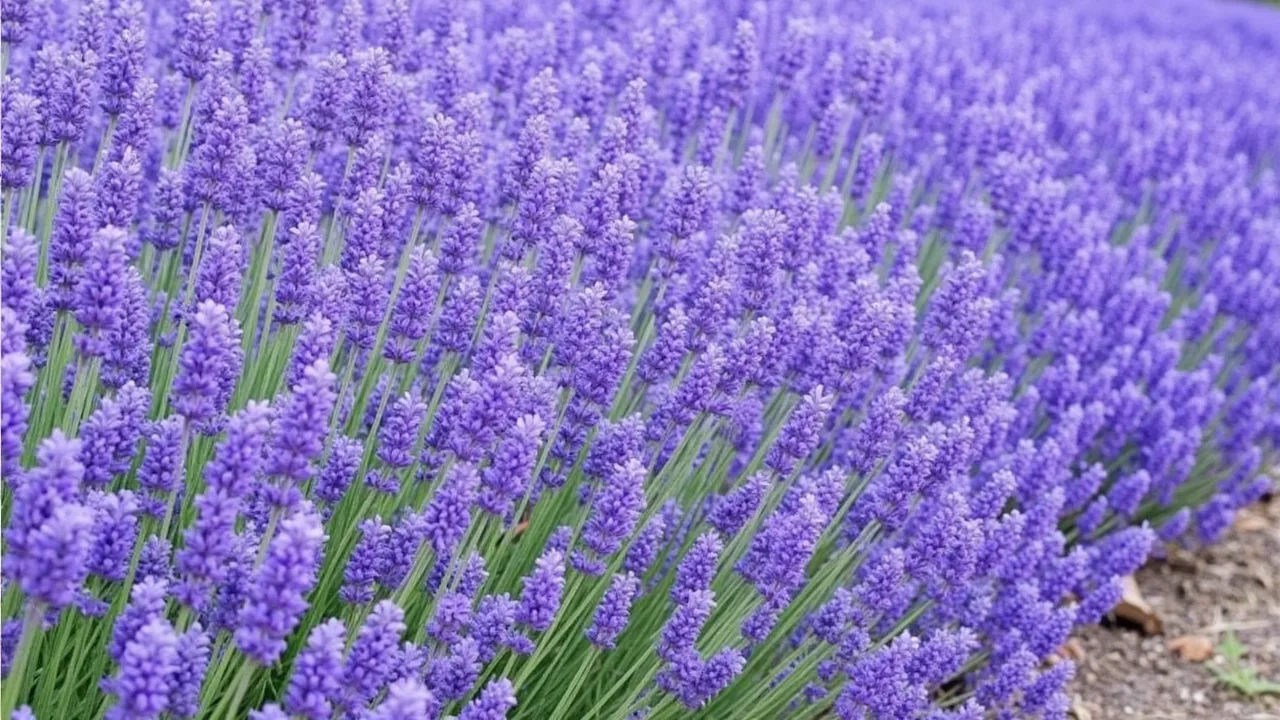
'Munstead' is distinguished from the species type of Lavandula angustifolia by its shorter, denser growth, typically reaching 30–45 cm in flower, where the species can pass 60 cm. The flower spikes are a clean, light violet-blue, carried on short stems above narrow, grey-green foliage that holds its colour well through winter in milder districts. Unlike cultivars bred primarily for oil yield, the flowers are not as intensely aromatic as some later angustifolia selections, but they dry well and retain colour for potpourri and sachets.
Among other named cultivars, 'Munstead' is often confused with 'Hidcote', the other classic English lavender in UK planting. The two are close in appearance, but 'Hidcote' tends to have a slightly deeper, more violet flower and a marginally broader, flatter-topped habit, while 'Munstead' is generally a touch paler and a touch more compact, with a slightly looser spike. 'Munstead' is widely listed in UK nursery catalogues, whereas formal RHS hardiness ratings and an Award of Garden Merit listing for this particular cultivar should be verified against the current RHS plant finder, as cultivar awards are reassessed periodically.
Growing Notes
'Munstead' is hardy across most of the UK and tolerates the poorer, free-draining soils that lavenders prefer, including chalky and slightly alkaline ground. It flowers reliably from late June into July, often throwing a useful, lighter second flush in late summer if the first spikes are cut back promptly just below the lowest flowers, never into old wood. Plants establish well from pot-grown stock planted in spring or early autumn, and unlike seed-raised angustifolia types they come true to type.
Like all lavenders, it dislikes winter wet around the crown, so sharp drainage and full sun are more important than feeding; mulching with compost is usually unnecessary and can in fact smother the base. A light trim in September, followed by a harder shape-up in mid-spring once new growth is visible, keeps plants from becoming leggy. It is generally left alone by rabbits and deer and is not regarded as toxic to humans or pets, though, as with all garden plants, ingestion of large quantities is unwise.
Best Used For
'Munstead' suits the front of a sunny mixed or herbaceous border, low hedging along a path, and knot-garden edgings where its compact habit and grey foliage set off darker-leaved herbs such as sage and rosemary. It is a dependable choice for cottage-garden planting combined with roses, hardy geraniums and catmint, and it scales well to containers on a south-facing patio or by a front door, where bees and hoverflies will work the flowers through midsummer. Cut stems also dry well for indoor use.
Pests and Diseases
| Problem | Symptoms | Management |
|---|---|---|
| Root rot (Phytophthora) | Foliage turns yellow or brown and wilts despite moist soil, often in heavy or waterlogged conditions. | Plant in free-draining soil and avoid overwatering; improve drainage with grit if necessary. |
| Powdery mildew | White, dusty fungal growth appears on leaves and stems, particularly in humid conditions. | Ensure good air circulation by pruning annually and avoid wetting foliage when watering. |
| Vine weevil | Semi-circular notches chewed into leaf margins during the day, with grubs damaging roots at night. | Apply nematodes to the soil in autumn or use biological controls like Steinernema feltiae. |
| Winter dieback | Stems become soft, brown, and mushy after exposure to cold, wet weather without adequate drainage. | Avoid pruning in autumn in cold regions and ensure the plant is sited in a sheltered, well-drained spot. |
| Slugs and snails | Irregular holes chewed into young leaves and flower buds, often accompanied by slime trails. | Use slug pellets, beer traps, or hand-pick pests at night to protect new growth. |
For step-by-step help, read Dealing with Slugs and Snails and Treating Powdery Mildew. Or browse the full plant problem solver to diagnose an issue by symptom.
Lavender 'Munstead' in our guides
As an Amazon Associate, GardenWizz earns from qualifying purchases made through links on this page (including links within the article). This does not affect the price you pay. See our disclaimer for details.