
Strawberry 'Hapil'
Fragaria ananassa 'Hapil'
The Gardening Year
Best months in UK gardens · full planting calendar →
🖨 Printable care card (PDF)At a Glance
| Botanical name | Fragaria ananassa 'Hapil' |
|---|---|
| Common name(s) | Strawberry 'Hapil' |
| Family | Rosaceae |
| Plant type | perennial |
| Height × Spread | 10–50 cm × 10–100 cm |
| Position | Full sun, Partial shade |
| Soil | fertile, moist but well-drained soil; Loam; pH Neutral or Acid |
| Flowering | March–May |
| Toxicity | No specific toxicity is listed by the RHS. This is not a guarantee of safety — check with a vet or the ASPCA before pets or children eat any plant. |
| Native range | — |
Overview
Strawberry 'Hapil' is a mid-season, June-bearing garden strawberry raised in Belgium in the 1960s and long established in UK fruit gardens. It is grown chiefly for its heavy crop of large, conical, glossy red fruits and its reliable performance on a wide range of UK soils. The variety remains popular with allotment holders and home growers who want a traditional flavour without the very early forcing requirements of modern alternatives.
Distinctive Features
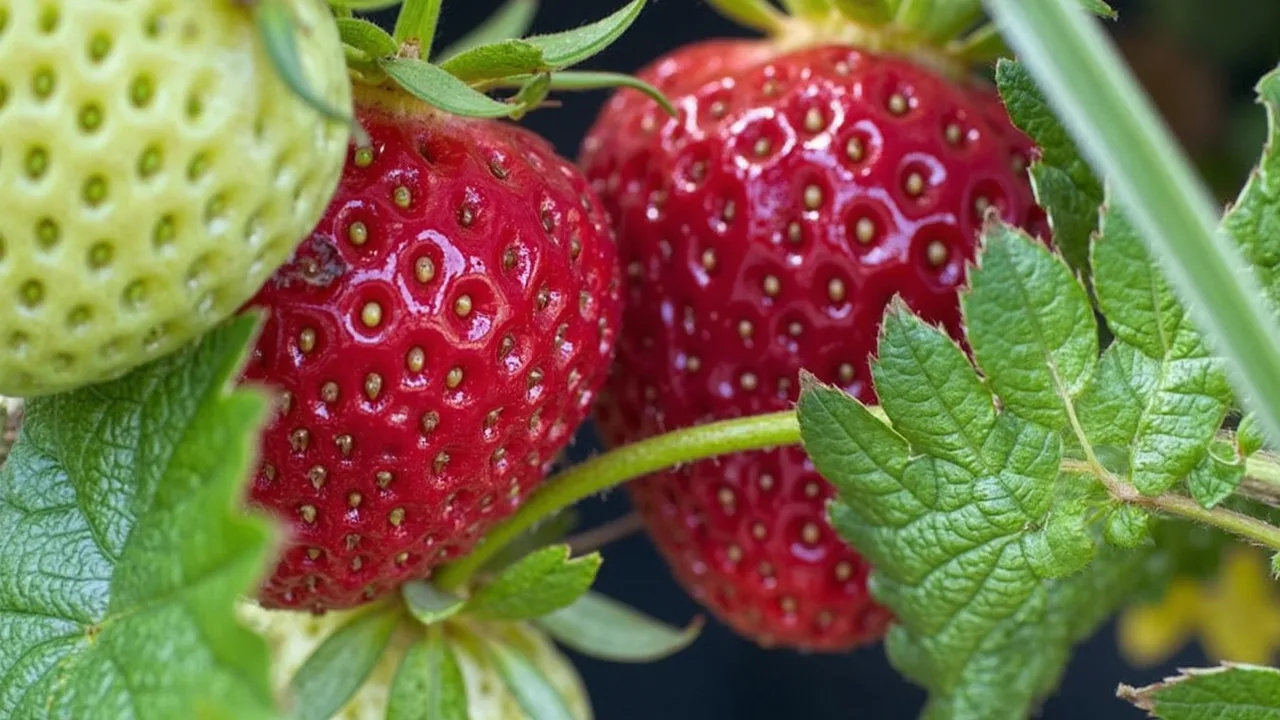
'Hapil' produces notably large, regular, conical to wedge-shaped berries with a bright scarlet skin and firm, juicy flesh. Flavour is typically described as balanced — sweeter than older varieties such as 'Cambridge Favourite' when fully ripened on the plant, with a mild acidity. Plants are vigorous and upright, reaching roughly 20–30 cm in height, with a denser crown than many heritage types, which helps keep the developing fruit off damp ground.
Flowers are white, typical of Fragaria × ananassa, and appear in mid-spring, with the main harvest falling in the second half of June into early July in most of England. The variety is self-fertile and a consistently heavy cropper, often yielding more fruit per plant than mid-season rivals in UK trials, though individual berries are not the largest available. Berries hold their size reasonably well through the picking season rather than tailing off sharply. The cultivar is reported to be more drought-tolerant than many older strawberries, owing to a relatively deep root system, but it is also known to be prone to powdery mildew in dry, sheltered sites.
Unlike ornamentals and alpine strawberries, 'Hapil' does not produce runners with variegated or coloured foliage; any growth sold as such is a different variety. It should not be confused with the perpetual-fruiting 'Mara des Bois' or with the very early 'Honeoye', which ripens several weeks earlier.
Growing Notes
'Hapil' is hardy across the UK and tolerates winter lows typical of British gardens without protection, though late frosts can damage the earliest flowers in northern or exposed sites. It performs best in full sun on a fertile, well-drained soil that has been enriched with well-rotted manure or garden compost the previous autumn. Plant with the crown just at soil level — burying the crown rots it, and exposing the roots lets the plant dry out.
Unlike species strawberries grown from seed, 'Hapil' is propagated by runners or bought as cold-stored runners or pot-grown plants; it will not come true from seed. First-year flowering is common on pot-grown plants planted in spring, with a lighter "maidens" crop in the first season and full cropping from the second year. Plants are usually replaced every three to four years to keep fruit size and yield up. Water well during fruit set and swelling, and mulch with straw or matting to keep the berries clean. In dry, still summers, watch for powdery mildew on the foliage and dispose of affected leaves rather than composting them.
Best Used For
'Hapil' is well suited to a dedicated strawberry bed in a kitchen or allotment garden, where its heavy June crop suits jamming, freezing and fresh eating in quantity. Its upright habit and clean fruit make it a good choice for growing under cloches or low polythene tunnels to bring the harvest forward slightly and protect it from rain. It also performs satisfactorily in large containers and growing bags on a sunny patio, provided watering is kept consistent. The flowers are attractive to bees and other pollinators in spring, and the dense plants suppress most annual weeds once established.
Pests and Diseases
| Problem | Symptoms | Management |
|---|---|---|
| aphids | — | — |
| slugs | — | — |
| snails | — | — |
| glasshouse red spider mite | — | — |
| vine weevil | — | — |
| strawberry viruses | — | — |
| root rot | — | — |
| grey moulds | Fruit prone to grey moulds | — |
For step-by-step help, read Controlling Aphids Naturally and Dealing with Slugs and Snails. Or browse the full plant problem solver to diagnose an issue by symptom.
As an Amazon Associate, GardenWizz earns from qualifying purchases made through links on this page (including links within the article). This does not affect the price you pay. See our disclaimer for details.