
Strawberry 'Symphony'
Fragaria ananassa 'Symphony'
The Gardening Year
Best months in UK gardens · full planting calendar →
🖨 Printable care card (PDF)At a Glance
| Botanical name | Fragaria ananassa 'Symphony' |
|---|---|
| Common name(s) | Strawberry 'Symphony' |
| Family | Rosaceae |
| Plant type | perennial (stoloniferous perennials with leaves composed of three leaflets, and rounded white or pink flowers followed by edible red fruits) |
| Height × Spread | 20–50 cm × 30–50 cm |
| Position | Full sun |
| Soil | fertile, moist but well-drained soil; loam; neutral pH; rich soil; well drained / light / sandy |
| Flowering | March–August |
| Toxicity | No specific toxicity is listed by the RHS. This is not a guarantee of safety — check with a vet or the ASPCA before pets or children eat any plant. |
| Native range | — |
Overview
Strawberry 'Symphony' is a late-season dessert cultivar of Fragaria × ananassa bred at the former Scottish Horticultural Research Institute (now the James Hutton Institute) in the 1970s, released commercially in 1979. It was developed specifically to extend the UK strawberry season into late July and August, pairing reliable yields in cooler, wetter conditions with a clean, sweet flavour. Gardeners typically grow it as a maincrop variety to follow on from earlier mid-season types.
Distinctive Features
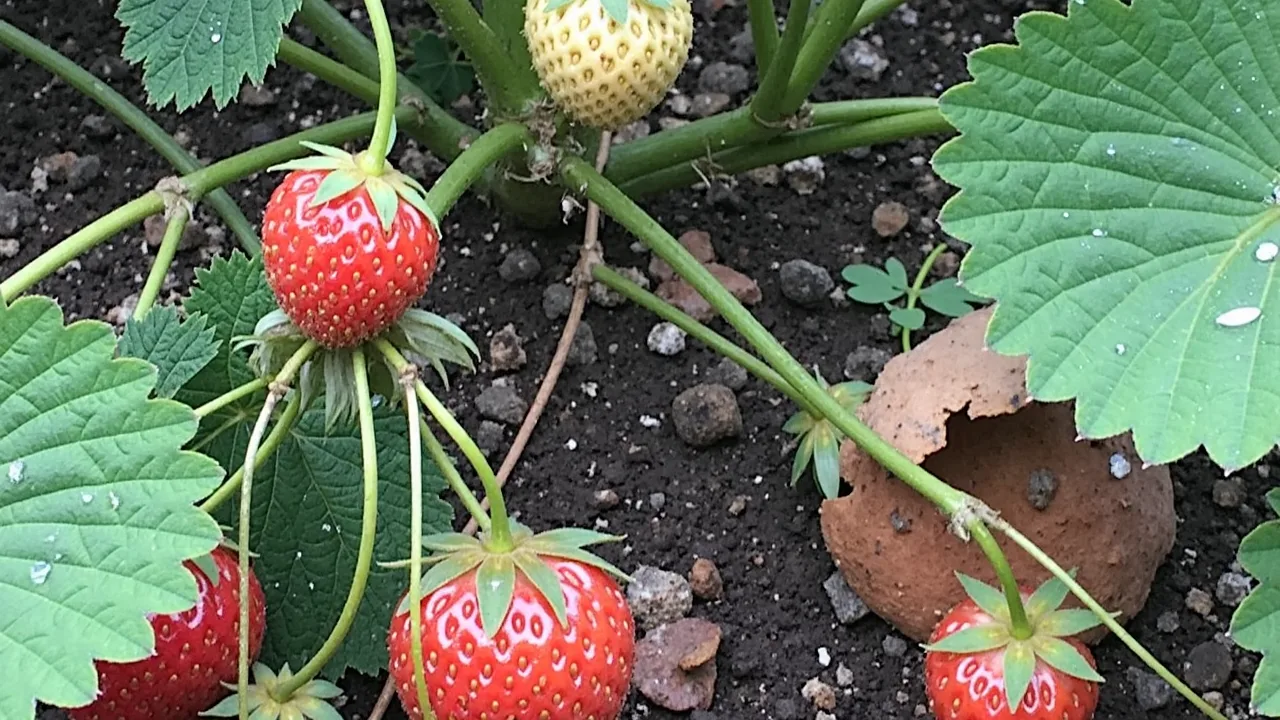
Unlike the typical mid-season garden strawberry, 'Symphony' carries its main crop noticeably later, with harvest usually beginning in late June in the south of England and running through July, and a week or two later still in the north. The berries are large, broadly conical to wedge-shaped, with a glossy mid-red skin and a paler, firmer flesh inside. Flavour is mild and well-balanced rather than intensely aromatic, which distinguishes it from strongly perfumed cultivars such as 'Cambridge Favourite' or 'Honeoye'.
Plants are vigorous and upright, producing plenty of runners, and the trusses hold the fruit clear of the foliage, which helps reduce rotting in damp spells. The flowers are the usual five-petalled white of F. × ananassa; there is nothing unusual in the blossom. It is generally regarded as moderately resistant to verticillium wilt and to red core (Phytophthora fragariae), though it is not immune. The Royal Horticultural Society has not awarded it an AGM in the current cultivar listing, and growers should treat any hardiness rating as unverified.
Growing Notes
'Symphony' is a June-bearer rather than an everbearer, so it produces one main flush of fruit per year on the previous season's crown. For the heaviest crop, plant cold-stored runners in July or August, or pot-grown plants in early spring, spacing them about 40 cm apart in rows 75–90 cm apart in well-drained, slightly acidic soil improved with plenty of well-rotted organic matter. Replace the bed every three to four years, as yields fall sharply on older crowns.
It is hardy across the UK and tolerates exposed northern sites better than many dessert cultivars, though fleece is still worthwhile over the flowers if late frosts threaten. Because it flowers and fruits late, it largely escapes the early spring frosts that can damage mid-season varieties, which is part of its northern-bred pedigree. Water consistently while the fruit is swelling, mulch with straw or proprietary mats to keep the berries clean, and net against birds and squirrels. After harvest, cut back the old leaves, remove weak runners, and feed with a balanced fertiliser in late summer to build the next year's crown.
Best Used For
'Symphony' is a good choice for a dedicated strawberry bed in a kitchen garden or allotment where the goal is a heavy, reliable late-summer harvest for jam-making, freezing, and puddings rather than the very earliest strawberries. It also performs well in larger containers and grow-bags on a sunny patio, provided the plants are renewed regularly. In the north of the UK, where many dessert cultivars struggle to ripen, its cooler-season tolerance makes it one of the more dependable maincrop options. Pollinators visit the flowers freely, and the bright fruit is attractive to birds, so netting is essentially a must in any open garden setting.
Pests and Diseases
| Problem | Symptoms | Management |
|---|---|---|
| Slugs and snails | Irregular holes in leaves and fruits, with slimy trails visible on plants. | Use physical barriers like copper tape or apply iron phosphate pellets around the base. |
| Grey mould (Botrytis) | Fruits develop a fuzzy grey-brown mould and rot, often starting from damaged areas. | Improve air circulation, avoid overhead watering, and remove affected fruit promptly. |
| Vine weevil | Notched leaf margins on young plants and wilting due to root damage underground. | Apply nematode treatments in warm soil or use biological controls like Steinernema carpocapsae. |
| Aphids | Clusters of small soft-bodied insects on new growth, causing leaf curling and sticky honeydew. | Encourage natural predators like ladybirds or spray with a strong jet of water. |
| Powdery mildew | White powdery fungal growth on leaves, leading to distortion and premature leaf drop. | Ensure good air circulation and apply sulphur-based fungicides at first sign of infection. |
| Root rot | Plants wilt and decline despite moist soil, with dark, mushy roots upon inspection. | Plant in well-drained soil and avoid waterlogging to prevent fungal buildup. |
For step-by-step help, read Controlling Aphids Naturally, Dealing with Slugs and Snails and Treating Powdery Mildew. Or browse the full plant problem solver to diagnose an issue by symptom.
As an Amazon Associate, GardenWizz earns from qualifying purchases made through links on this page (including links within the article). This does not affect the price you pay. See our disclaimer for details.