
How to Grow Brussels Sprouts in the UK
They want a long season, a firm soil, and protection from pigeons and cabbage white butterflies.
At a Glance
| Sow | March-April (modules) for November-January harvest; May (late varieties) for February-March |
|---|---|
| Sun | Full sun |
| Soil | Firm, fertile, pH 6.5-7.5 |
| Spacing | 60-75 cm apart in 75 cm rows |
| Hardiness | H5 — most UK gardens |
| Difficulty | Moderate |
| Time to harvest | 26-36 weeks; harvest October to March |
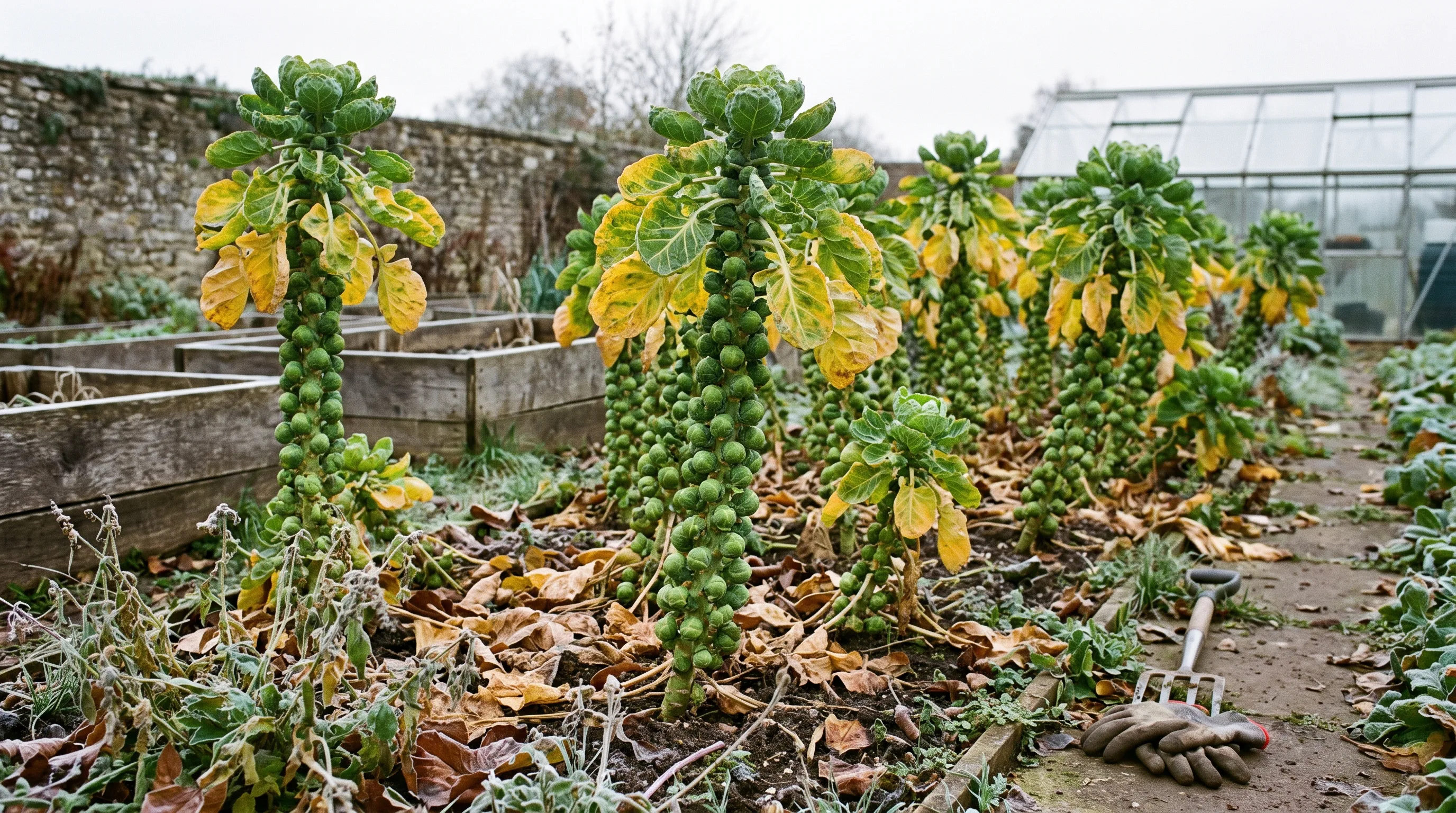
Brussels sprouts (Brassica oleracea, Gemmifera group) are the quintessential British Christmas vegetable, and for good reason: a few plants in late summer give you harvests from October right through to March. The flavour is transformed by frost — the cold converts starches in the sprouts to sugars — so a December picking is noticeably sweeter than one in October.
Sprouts have a reputation for being difficult, but they’re really not. They want a long season, a firm soil, and protection from pigeons and cabbage white butterflies. Get those three right and you’ll pull pounds of tight green buttons off tall stalks in midwinter.
When to sow Brussels sprouts in the UK
Sprouts are slow — they need 26–36 weeks from sowing to harvest depending on variety. There are three sowing windows:
- Early sowing (February to mid-March): under cover, in modules or a seed tray, for an August to October harvest of early varieties. Worth doing for the early crop but not essential.
- Main sowing (March to mid-April): the main window. Sow in modules under cover for transplanting in May, or direct into a seedbed from mid-April. These give the bulk of the crop from November to January.
- Late sowing (May): for a late winter to early spring harvest, sow late-season varieties like ‘Trafalgar’ or ‘Brenden’ in May. They won’t be ready until February or March.
Don’t sow before mid-February — cold, slow seedlings bolt the following spring. And don’t sow after late May — the plants won’t have time to mature before winter.
Choosing Brussels sprout varieties for the UK
Varieties fall into three groups based on when they mature. Pick by harvest window:
- Early (harvest August to October): ‘Evesham Special’, ‘Peer Gynt’. Quick to mature, but the sprouts are smaller and don’t stand as long.
- Mid-season (harvest October to December): the workhorses. ‘Maximus’ F1, ‘Nautic’ F1, ‘Clodius’ F1. Heavy yields, large firm sprouts, and good disease resistance.
- Late (harvest December to March): the hardiest. ‘Trafalgar’ F1, ‘Brenden’ F1, ‘Wellington’ F1. Tall plants, smaller but very firm sprouts that stand through hard weather.
For a single sowing, ‘Maximus’ F1 (mid-season) or ‘Trafalgar’ F1 (late) are reliable picks. ‘Trafalgar’ is the classic Christmas sprout — dense, sweet, and still good in February.
Sowing and growing on
Sow into modules or small pots, one seed per cell at about 1 cm deep. Use a peat-free seed compost and keep at 15–20 °C. Germination takes 5–10 days. Once the seedlings have two true leaves, thin to one per cell if you sowed more than one. Grow on in a bright, cool spot — a cold frame or unheated greenhouse is ideal — until they’re 10–15 cm tall with 4–5 true leaves.
For direct sowing, wait until the soil is 10 °C (mid-April in the south, late April further north). Sow in shallow drills 1 cm deep, thin to 7 cm apart in the row, and transplant to final positions 4–6 weeks later.
Planting out and spacing
Sprouts need a firm, fertile soil with a pH of 6.5–7.5. Like all brassicas, they benefit from a dose of lime in late winter if your soil is acidic. Don’t grow sprouts (or any other brassica) in the same bed for at least three years — clubroot disease builds up in the soil.
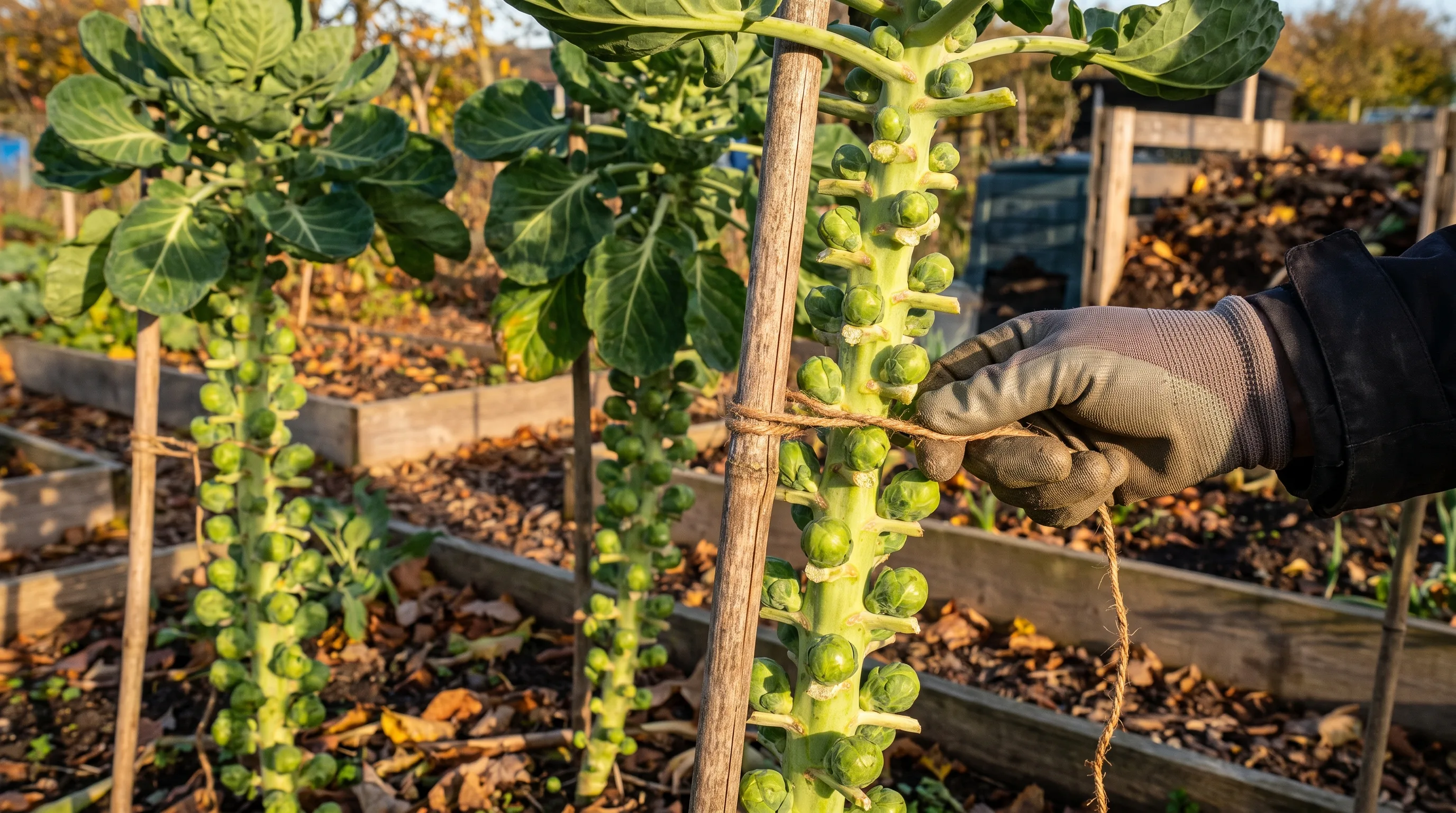
Plant out from late May to mid-June, when the seedlings are 10–15 cm tall. Space 60–75 cm apart in rows 75 cm apart. They grow tall (1–1.2 m), so they need the space. Firm the soil well around each plant — sprouts are top-heavy and need a tight root hold to keep them upright through winter gales. On exposed sites, stake each plant with a 1.2 m bamboo cane.
Water the seedlings in well and keep them watered every 3–5 days for the first 2–3 weeks until established. Mulch between the rows with compost or straw to retain moisture and keep the roots cool in summer.
Care through the year: water, feed, pests
Once established, sprouts are not demanding. Water in dry spells — the most critical time is during the first two months in the ground and again in early autumn when the sprouts are swelling. A weekly deep soak is plenty.
Feed once in mid-summer with a balanced organic fertiliser (blood, fish and bone, or a seaweed drench). Don’t over-feed with nitrogen: too much produces soft leafy growth and loose sprouts that won’t stand well.
Sprouts have two main pests:
- Cabbage white butterflies: caterpillars from May to September. Cover with fine insect mesh over hoops.
- Pigeons: will strip the plants bare in winter. Use a sturdier bird net, or grow under a permanent fruit cage.
Diseases to watch for are clubroot (rotate crops, don’t grow brassicas in the same bed for three years) and brassica white blister (worse in wet summers; remove infected leaves).
Harvesting sprouts
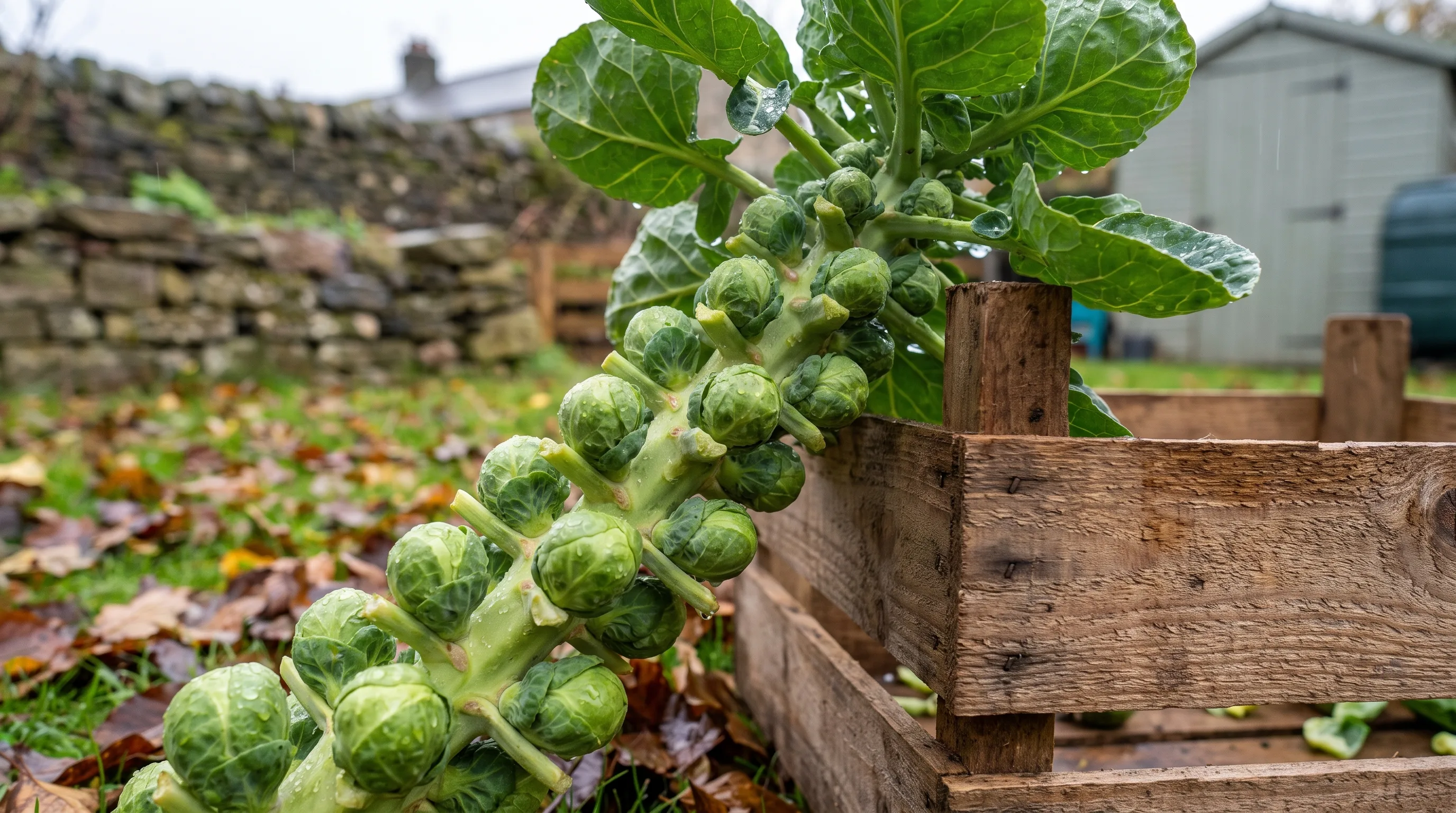
Start picking when the lowest sprouts are firm and about the size of a walnut, usually from late September for early varieties and November for maincrops. Pick from the bottom of the plant upwards — the lowest sprouts mature first, and the plant keeps producing new ones higher up.
Snap or cut each sprout off cleanly with a sharp knife, leaving the stalk in place. As you remove the lower leaves and sprouts, the plant diverts energy to the upper sprouts. A single plant can yield 1–1.5 kg of sprouts over a 2–3 month harvest window.
Once you’ve picked all the sprouts, don’t pull the stalk — the leafy tops (called “sprout tops”) are excellent eating, with a similar flavour to spring greens. Cut the top 10–15 cm of leafy growth and cook as you would cabbage.
Frequently asked questions
Why are my sprouts loose and open rather than tight? Usually a combination of over-feeding with nitrogen, dry conditions in summer, or harvesting too late. Aim for a single mid-summer feed, water deeply in dry spells, and pick when the sprouts are firm but not yet starting to open.
The sprouts have blown (flowered). What went wrong? Cold, slow-growing seedlings are most prone. Don’t sow before mid-February, and grow on in a cool, bright spot to keep plants stocky. Once a plant has bolted there’s nothing to do but pull it.
Can I grow sprouts in containers? Yes, but the plants are large. A 45 cm deep container will take one plant. Use a peat-free multi-purpose compost mixed with slow-release fertiliser, stake the plant, and water frequently. Yields are smaller than ground-grown but a single plant will still give 0.5–1 kg of sprouts.
How do I prevent clubroot? Rotation, rotation, rotation. Don’t grow any brassica (cabbage, sprouts, broccoli, cauliflower, kale, turnips, swede) in the same bed for at least three years. If your soil is already infected, raise young plants in modules and transplant once they have 4–5 true leaves — established plants are more tolerant. Liming to pH 7+ also helps.
When should I stop harvesting? Pick as long as the plant is producing firm sprouts. Late varieties like ‘Trafalgar’ will stand into March. Once the plant runs to seed in spring, the sprouts turn loose and bitter — pull the plant and compost it.
Recommended Products
GardenWizz earns a commission from qualifying purchases made through affiliate links on this page (including links within the article) — as an Amazon Associate, and from Thompson & Morgan via the Awin network. This does not affect the price you pay. See our disclaimer for details.
Related Articles
More →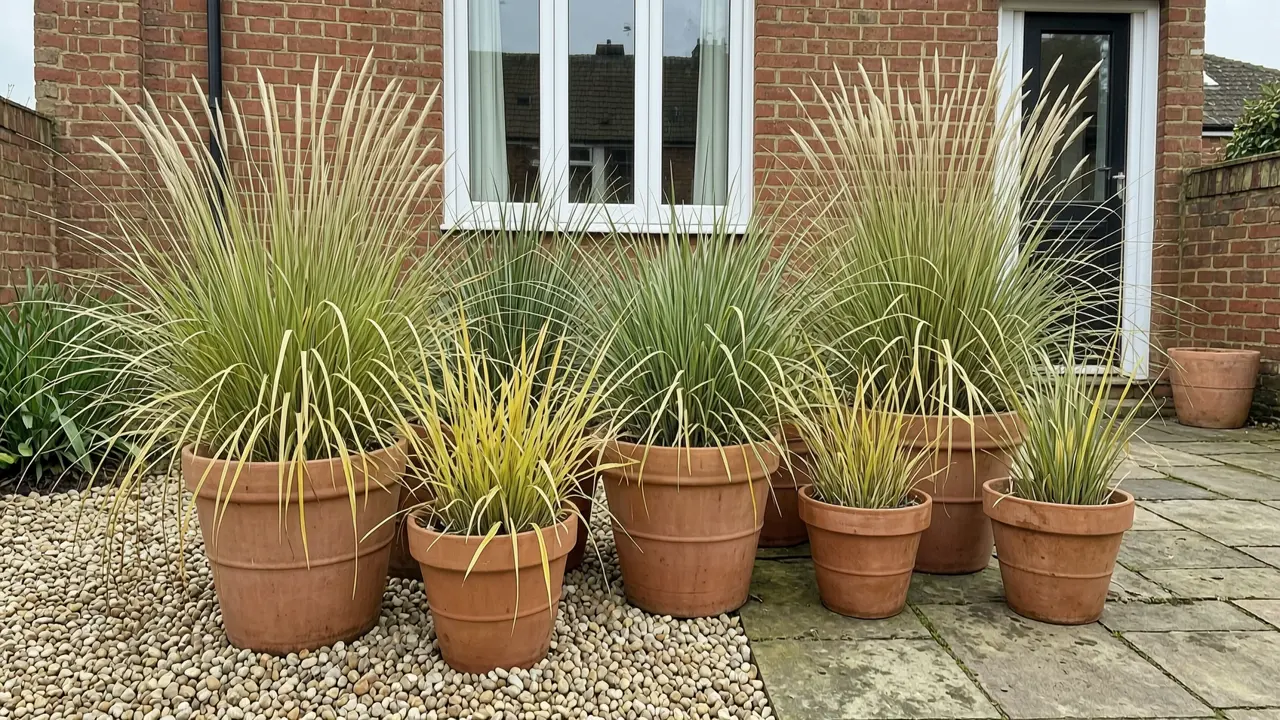 Growing Guide
How to grow ornamental grasses in pots
5 August 2026Grow ornamental grasses successfully in containers with advice on pot size, compost, watering, feeding, winter care and long-term maintenance.
 Growing Guide
How to plan a perennial border
5 August 2026Plan a balanced perennial border with practical guidance on position, colour, height, spacing, flowering succession and year-round structure.
 Growing Guide
How to take hardwood cuttings
29 July 2026Take hardwood cuttings from suitable dormant shrubs and climbers with this step-by-step guide to timing, preparation, rooting and aftercare.