
How to Grow Cabbage in the UK: A Complete Guide
They’re cheap to grow, store well, and a single 200 g portion covers your weekly vitamin C needs three times over.
At a Glance
| Sow | February (summer), July (spring), May (winter) |
|---|---|
| Sun | Full sun to partial shade |
| Soil | Firm, fertile, pH 6.5-7.5 |
| Spacing | 35-60 cm apart in 45-60 cm rows |
| Hardiness | H5 — most UK gardens |
| Difficulty | Easy |
| Time to harvest | Varies by type (8-30 weeks) |
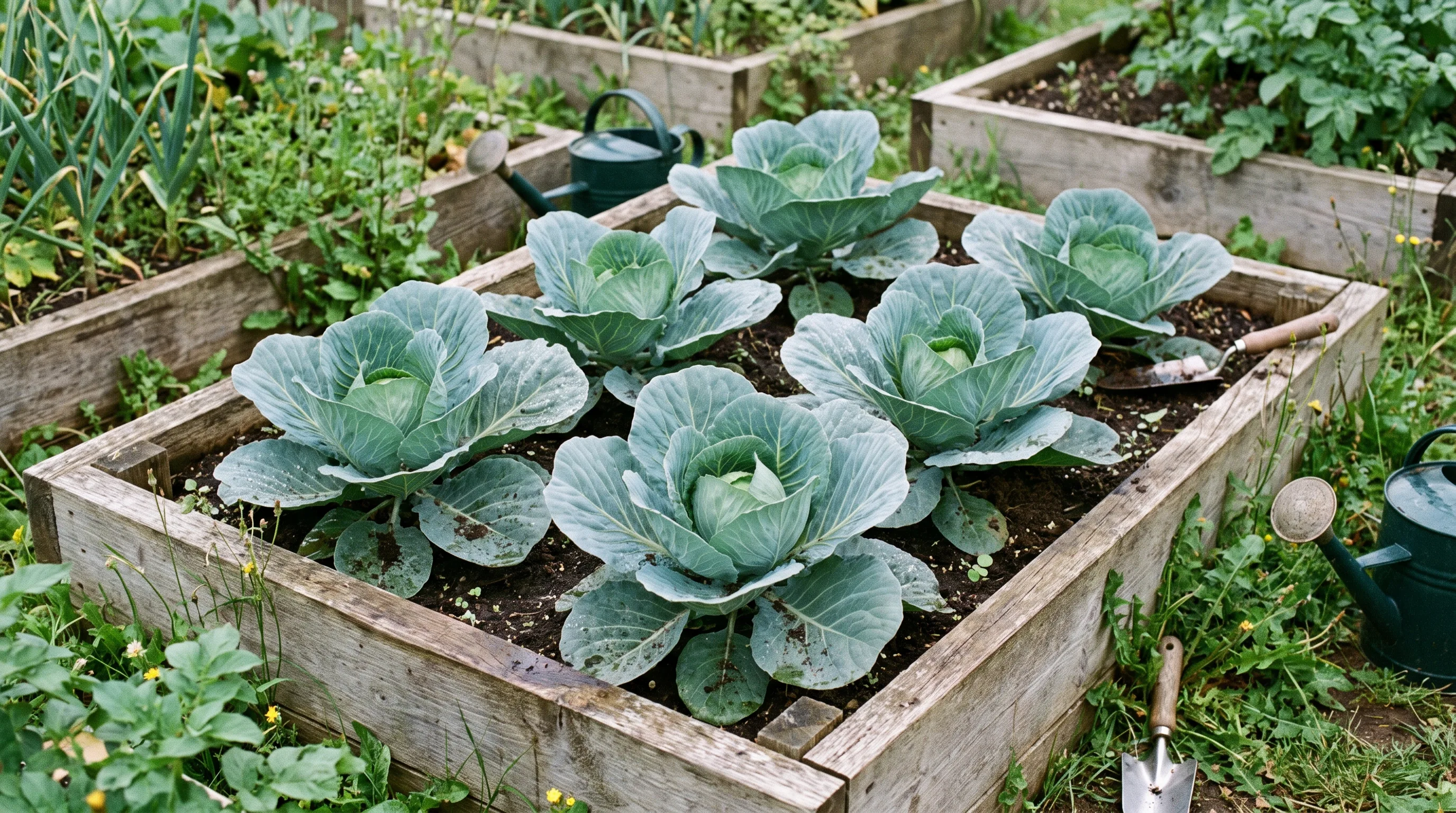
Cabbage is one of the most productive vegetables a UK gardener can grow. A single 3 m row of summer cabbages can produce 10–15 dense heads over a 6-week harvest window, and with careful variety choice and a little planning you can have cabbages to cut from June right through to March. They’re cheap to grow, store well, and a single 200 g portion covers your weekly vitamin C needs three times over.
They’re not difficult, but they’re not the easiest beginner crop either. The two main challenges are pests (cabbage white butterflies, pigeons, slugs and clubroot) and the timing — get either wrong and the heads bolt or don’t form at all.
When to sow cabbage in the UK
There are four main sowing windows, each tied to a harvest period. Unlike leeks, cabbages don’t all ripen together — the trick is to stagger sowings through the year.
- Spring cabbage (sown July to early August the previous year, harvested April to June): overwinters as small plants, ready to heart up in spring. Use hardy varieties like ‘Durham Early’ or ‘Spring Hero’ F1.
- Summer cabbage (sown February to early April under cover, harvested June to September): the easiest maincrop. ‘Greyhound’ is the classic pointed type, ‘Stonehead’ F1 and ‘Derby Day’ for round heads.
- Autumn cabbage (sown April to May, harvested September to November): larger, denser heads that stand well into winter. ‘Holland Late Winter’ (huge white heads), ‘Savoy King’ (a savoy type), ‘Langedijk’ for storing.
- Winter cabbage (sown May to June, harvested December to March): the hardiest. Savoy types like ‘January King’ (purple-tinged savoy) and ‘Tundra’ F1 (the hardiest of all) stand through hard frosts.
For a small garden, two sowings cover most of the year: a March sowing of a summer variety for July harvests, and a May sowing of ‘January King’ or ‘Tundra’ for winter into spring.
Choosing cabbage varieties
There are five main types, each with a different texture and use:
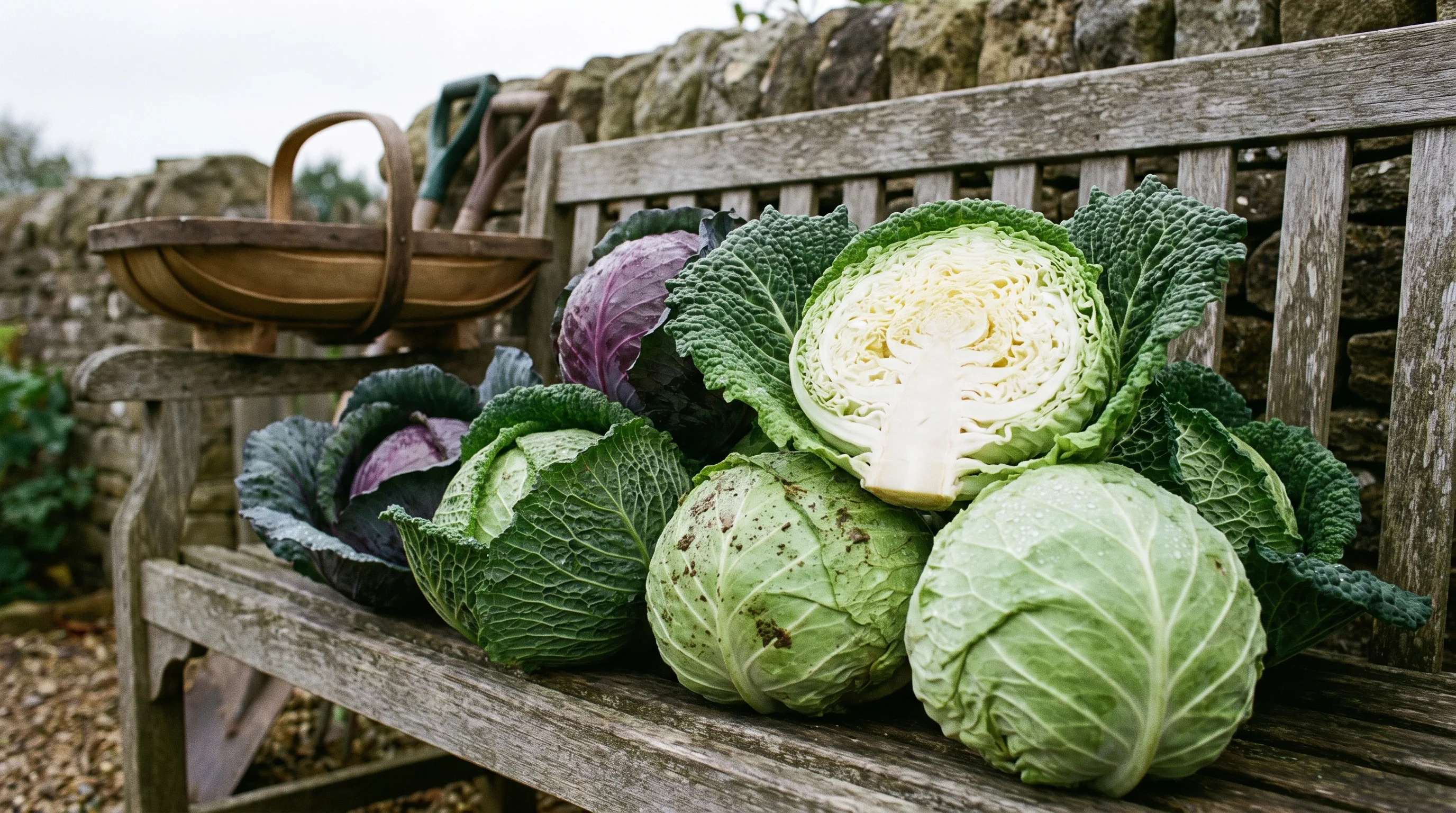
- Round white cabbages: the familiar supermarket type. Tight, dense heads, sweet flavour. ‘Stonehead’ F1 and ‘Derby Day’ are reliable.
- Pointed cabbages: conical heads, often sweeter and more tender. ‘Greyhound’ (heritage, fast-growing), ‘Hispi’ F1 (a classic pointed).
- Savoy cabbages: crinkled leaves, the hardiest of all. Sweet after frost. ‘January King’ (semi-savoy with purple tinge), ‘Tundra’ F1, ‘Wintessa’ F1.
- Red cabbages: tight purple-red heads, slow to run to seed. ‘Langedijk Red’ (heritage storing type), ‘Rookie’ F1 (early, sweet).
- Spring greens / collards: loose-leaf types harvested young. ‘Greensleeves’ F1, ‘Champion’ (a Collard type).
For an allotment or large garden, one variety from each group covers the whole year. For a small garden, focus on a summer pointed type (sweet, fast) and a winter savoy (stands longest).
Sowing cabbage
Sow into modules or small pots, one seed per cell at about 1 cm deep, using a peat-free seed compost. Germination takes 5–10 days at 15–20 °C. Once the seedlings have two true leaves, thin to one per cell. Grow on in a bright, cool spot until they have 4–5 true leaves and are 10–15 cm tall.
For summer sowings (July for spring cabbage), sow in a seedbed outside, thin to 7 cm apart, and transplant in September.
Planting out and spacing
Cabbage wants a firm, fertile soil with a pH of 6.5–7.5. Add lime in late winter if your soil is acidic. The previous autumn, dig in well-rotted manure or garden compost. Don’t grow cabbage (or any brassica) in the same bed for at least three years.
Plant out when the seedlings have 4–5 true leaves. Spacing depends on variety:
- Pointed summer cabbages: 35 cm apart in rows 45 cm apart
- Round summer cabbages: 45 cm apart in rows 50 cm apart
- Autumn and winter cabbages: 50–60 cm apart in rows 60 cm apart
- Spring greens: 30 cm apart in rows 30 cm apart (harvested small)
Firm the soil well around each plant. Water in well, and keep watered every 3–5 days for the first 2–3 weeks until established.
Care: water, feed, pests
Cabbage is a hungry crop. Water consistently — irregular watering causes the heads to split (crack open) just as they mature. A weekly deep soak is much better than a daily sprinkle. Mulch between the rows with compost or straw to retain moisture.
Feed once or twice during the growing season with a balanced organic fertiliser. For summer cabbages, a single mid-growth feed is enough. For autumn and winter types, an extra feed in late summer helps build large heads.
Three main pests:
- Cabbage white butterflies: caterpillars from May to September. The single most damaging pest. Cover with fine insect mesh over hoops — this is essential for spring and summer sowings.
- Pigeons:
- Slugs:
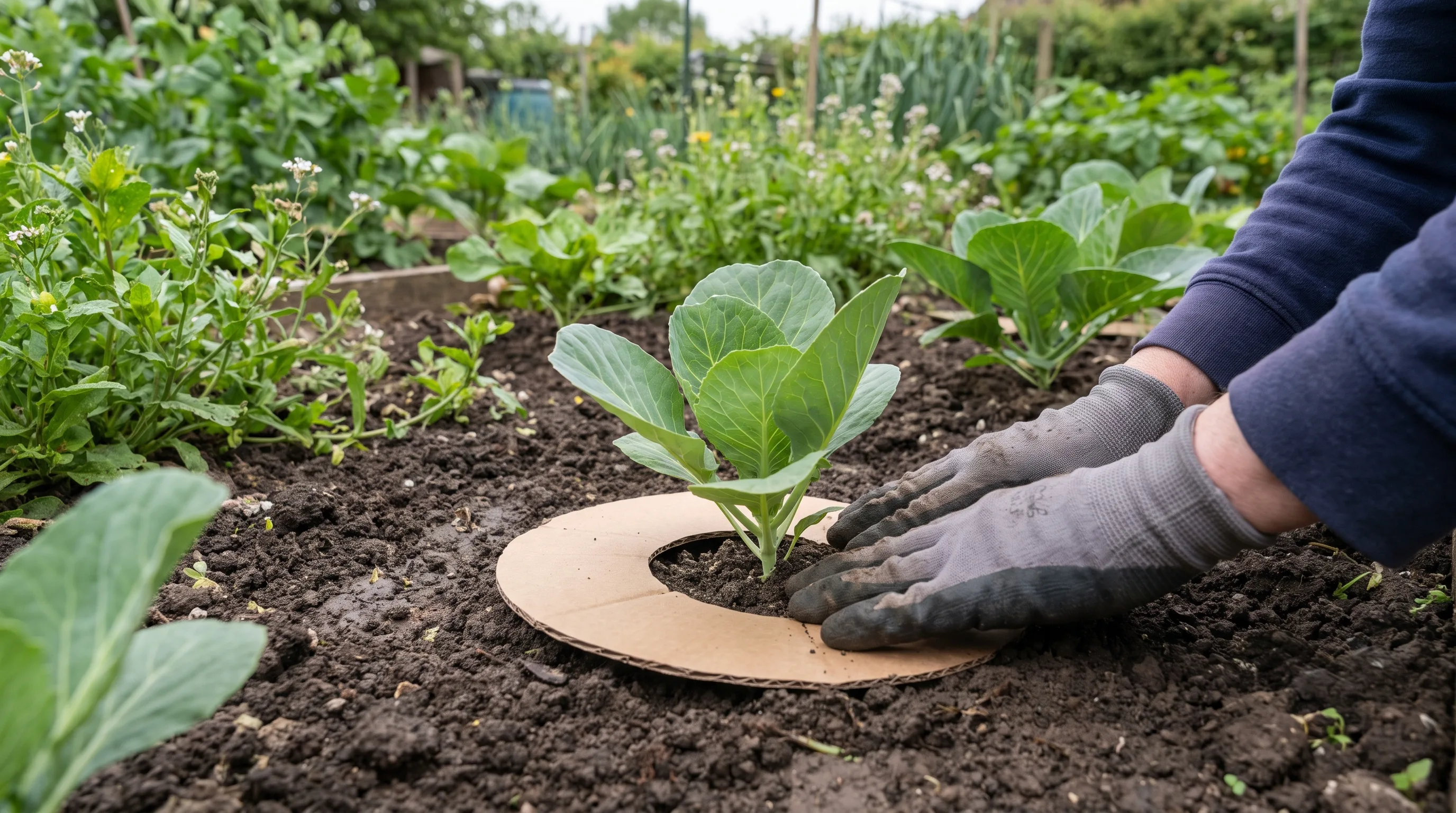
Diseases: clubroot (rotation is the only reliable prevention) and cabbage root fly (use brassica collars around the stem at planting).
Harvesting cabbage
Cut the heads when they feel firm and solid when squeezed, before they start to split. Use a sharp knife to cut just below the head, leaving the stalk and outer leaves in place. Many varieties will produce a second, smaller harvest of loose leaves from the cut stalk — useful for stir-fries or soups.
For storing, lift the whole plant in autumn, trim the outer leaves, and hang upside down in a cool, dry shed. White storing varieties like ‘Langedijk’ will keep for 3–4 months this way. Savoy and winter varieties are best left in the ground and harvested as needed.
Frequently asked questions
Why did my cabbages bolt (run to seed)? Most often a sudden cold spell on young plants, or a check in growth from drought. Spring cabbages are most prone. Don’t sow too early, harden off properly, and water consistently.
My cabbage heads split just before harvest. What went wrong? Irregular watering — usually a heavy rain after a dry spell. Water consistently in the last 4–6 weeks before harvest. Some varieties (‘Greyhound’ especially) are more prone than others.
Can I grow cabbage in containers? Yes — one plant per 30 cm deep container. Use a peat-free multi-purpose compost mixed with slow-release fertiliser, water frequently, and net against cabbage white butterflies. A single plant will produce one good head.
When should I harvest spring cabbage? From April to June, as soon as the heads feel firm. Don’t leave them too long — spring cabbages are more prone to bolting than summer types, and the quality drops quickly once they start to elongate.
Do I need to rotate cabbage? Yes — three years minimum between any brassica crops in the same bed. Clubroot fungus builds up in the soil and can survive 7–10 years without a host, so longer rotations are better if you’ve had problems.
Plants in this guide
Recommended Products
GardenWizz earns a commission from qualifying purchases made through affiliate links on this page (including links within the article) — as an Amazon Associate, and from Thompson & Morgan via the Awin network. This does not affect the price you pay. See our disclaimer for details.
Related Articles
More → Growing Guide
How to grow ornamental grasses in pots
5 August 2026Grow ornamental grasses successfully in containers with advice on pot size, compost, watering, feeding, winter care and long-term maintenance.
 Growing Guide
How to plan a perennial border
5 August 2026Plan a balanced perennial border with practical guidance on position, colour, height, spacing, flowering succession and year-round structure.
 Growing Guide
How to take hardwood cuttings
29 July 2026Take hardwood cuttings from suitable dormant shrubs and climbers with this step-by-step guide to timing, preparation, rooting and aftercare.