
How to Grow Strawberries in the UK: A Complete Guide
Yes — strawberries grow brilliantly across most of the UK, and a bed planted in August or September will give you your first proper crop the following June. Plant in fertile, slightly acidic soil in…
At a Glance
| Sun | Full sun |
|---|---|
| Soil | Fertile, well-drained, slightly acidic |
| Plant | August-September (runners) or March-April (cold-stored) |
| Spacing | 40 cm apart in 75 cm rows |
| Hardiness | H5 — most UK gardens |
| Difficulty | Easy |
| Time to harvest | Crops May-July; plants fruit for 3-4 years |
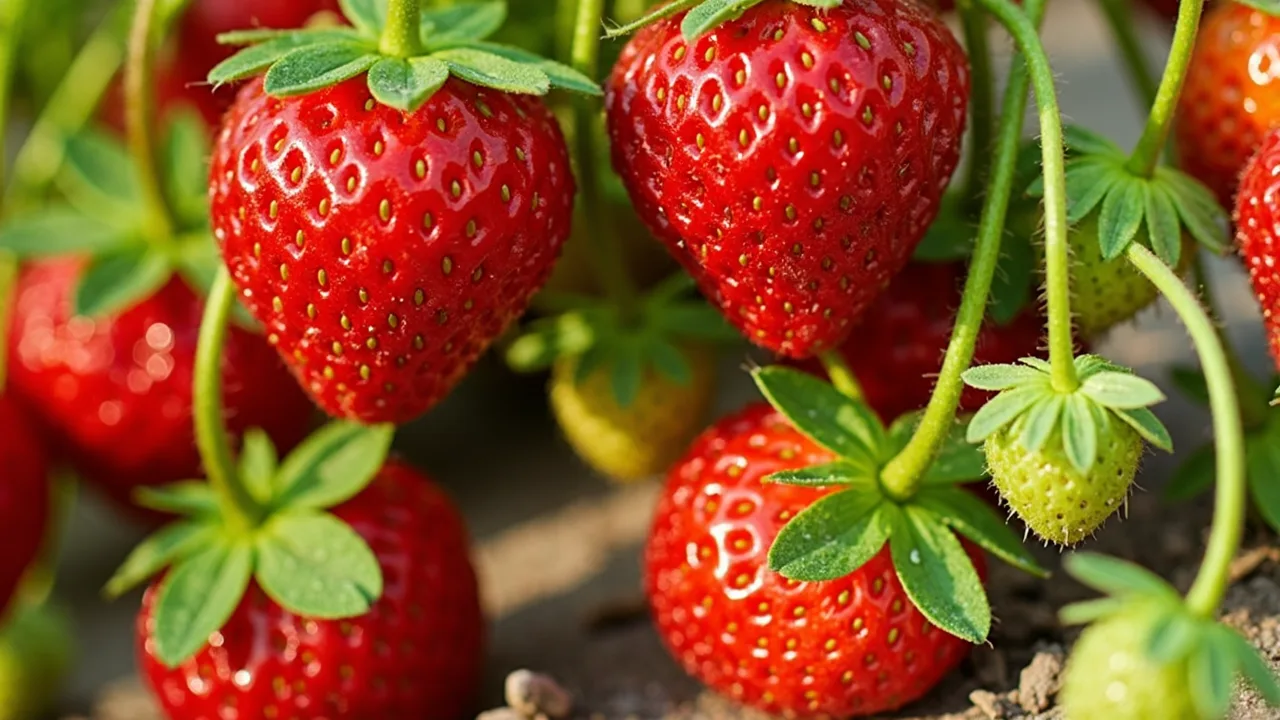
Yes — strawberries grow brilliantly across most of the UK, and a bed planted in August or September will give you your first proper crop the following June. Plant in fertile, slightly acidic soil in full sun, water well through dry spells, and net the fruit before the blackbirds find it.
| Difficulty | Easy |
| Time to harvest | Crops May–July; plants fruit for 3–4 years |
| Spacing | 40 cm apart in 75 cm rows |
| Sun | Full sun |
| Soil | Fertile, well-drained, slightly acidic |
| Hardiness | H5 — most UK gardens |
| Sow | August–September (runners) or March–April (cold-stored) |
| Harvest | May–July (summer-fruiting); July–October (perpetual) |
Overview
Strawberries are one of the easiest and most rewarding fruits for a UK home garden, but the difference between a disappointing first-year bed and a three-year supply of punnets usually comes down to timing. Plant at the right moment, in the right soil, and you'll be picking fruit from late May through July; pick the wrong month and you'll spend a year waiting on a plant that didn't settle. This guide walks through the three UK planting windows, the varieties that actually crop well here, and the small handful of problems — birds, slugs, grey mould, vine weevil — that catch almost every UK grower out at least once.
When to Start in the UK
Strawberries aren't a one-window crop in the UK — you've got three realistic planting seasons, and which one you pick changes what kind of harvest you'll get.
Late summer (mid-August to late September) is the best window for the South UK (Midlands, southern England, coastal Wales). The soil is still warm, there's usually enough rain to settle the plants in, and a runner planted now will establish a strong crown before winter. The trade-off: pinching off every flower the following spring so the plant puts its energy into roots. You'll lose one summer and gain three strong ones after that. Most gardeners I know consider this the "do it properly" window.
Autumn (October to early November) is the fallback for missed August planting, more reliable in the North UK (Scotland, north England, the Pennines) where late-summer heat is less reliable. Plants won't grow as much before winter, but a healthy crown still survives cold storage in the ground. You'll get a small first crop the following June and full cropping the year after.
Spring (March to mid-April) is when most gardeners actually plant, because that's when the garden centres have cold-stored runners on the racks. These have been held at low temperature since lifting the previous winter, and they fruit the same year — usually a lighter June crop, but a real one. Don't plant out before the soil has warmed to about 7°C; cold-stored runners sulk in cold, wet ground and rot at the crown.
If you're south of Birmingham, lean towards August planting. If you're in the North or on heavy clay, spring planting with cold-stored runners is the safer bet.
What You'll Need
- A bed in full sun — at least six hours a day, more is better
- Garden compost or well-rotted manure, a bucket per square metre
- A handful of bone meal or blood, fish and bone per square metre
- Straw or strawberry mats for May (about a bale per 4 m²)
- Bird netting on a frame — not draped over the plants, which snags birds
- A fork, a trowel, a watering can with a rose
- Slug pellets (ferric phosphate only — pet-safe) or beer traps
- 40 cm of space between plants, 75 cm between rows
- A pair of sharp scissors or secateurs for trimming runners
Step-by-Step Guide
- Prepare the bed in advance. Two weeks before planting, dig out perennial weeds, then fork in a bucket of garden compost and a handful of bone meal per square metre. Rake level and firm gently — strawberries hate a loose, airy bed.
- Soak bare-root runners. If you've bought mail-order runners, dunk the whole bundle in a bucket of water for 20 minutes before planting out. Pot-grown plants from a garden centre need a thorough watering at the pot first.
- Plant to the right depth. The crown — the thick bud where the leaves meet the roots — must sit exactly at soil level. Too deep and it rots. Too high and the roots dry out. Many gardeners I know lose their first bed to planting too deep.
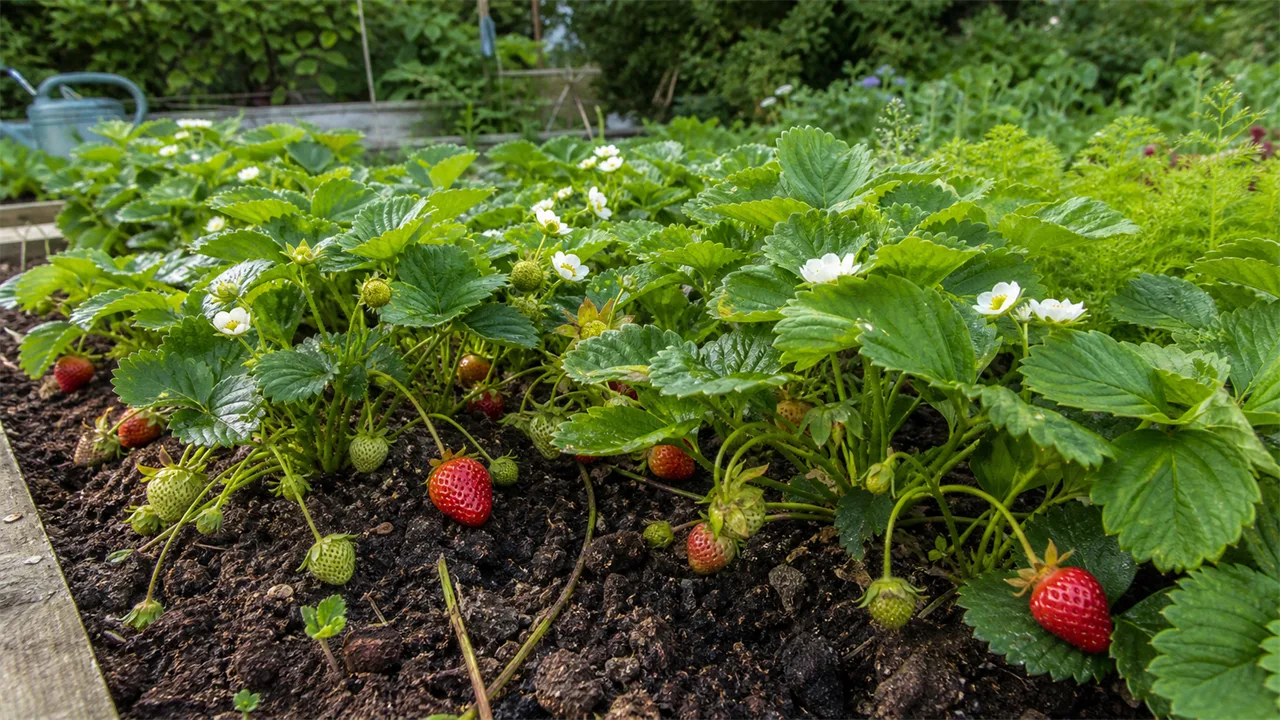
- Space 40 cm apart in rows 75 cm apart. Closer than this and grey mould takes hold in damp summers; wider and you'll waste bed space.
- Water in well. A full can per square metre, even if the soil looks damp. Then water every three or four days for the first two weeks.
- Cut off any flowers in the first six weeks after August or autumn planting. This is the hardest step for new growers — but a young plant that runs to fruit in its first spring will crop poorly for the next three years. Cold-stored spring-planted runners can keep their first flowers.
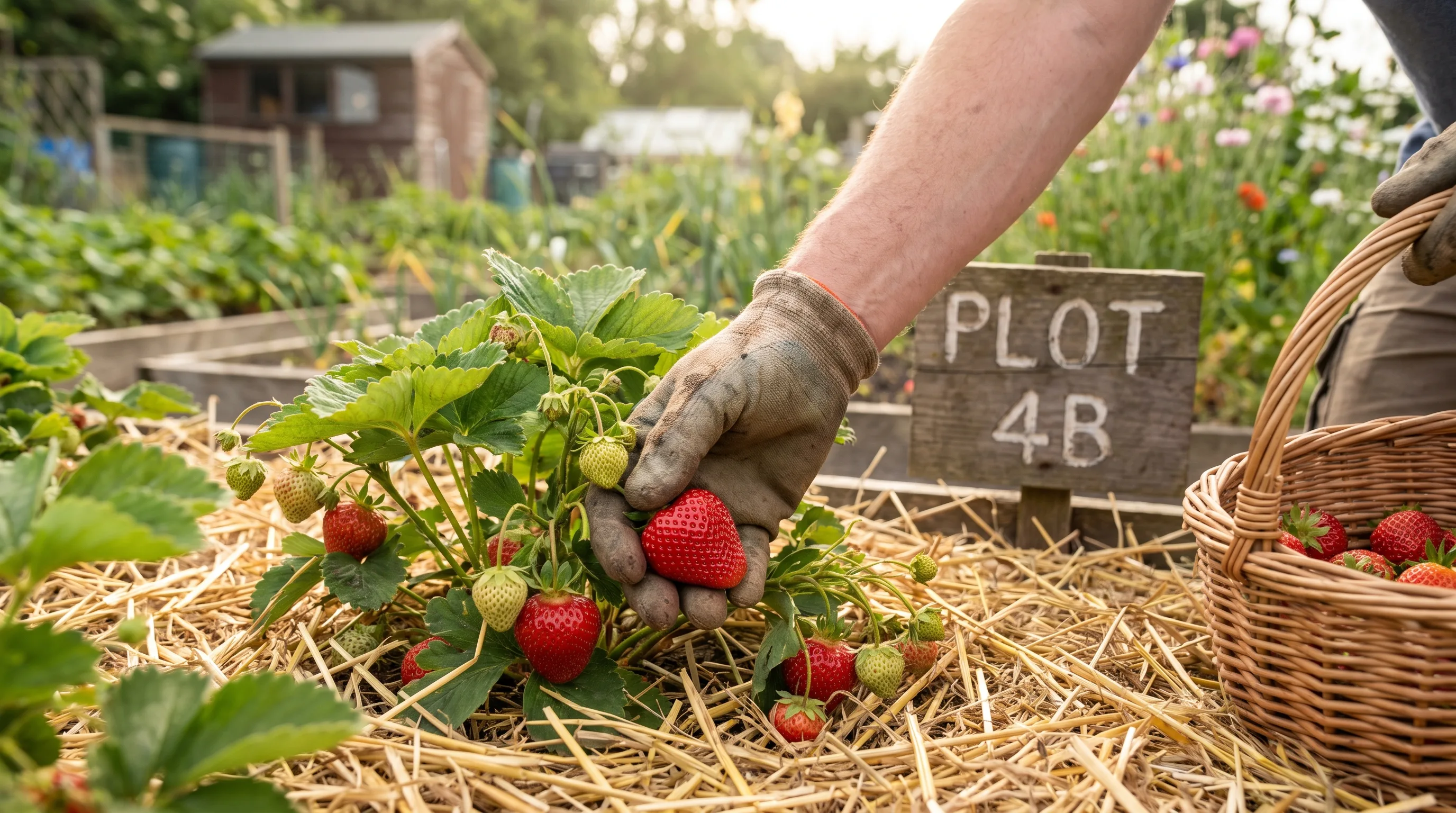
- Mulch with straw in mid-May. Tuck barley straw under the developing fruit trusses so the berries sit on dry material, not bare soil. This single step prevents most grey mould.
- Net before the fruit colours. Birds take a red berry in a single pass; once you see colour, the blackbirds have already found you. Put the netting on a frame a foot above the plants.
- Pick in the morning, with the calyx still on. Pinch the stem just above the hull rather than pulling the berry. They keep longer and the plant isn't damaged.
- Replace the bed every three to four years. Yield drops sharply in year four. Use the runners your best plants produce in July to start a fresh bed, then rotate the old bed to a different crop.
Common Problems
Birds
- Symptom: ripe berries disappear overnight, or you find a half-eaten strawberry with a beak-shaped hole.
- Cause: blackbirds, thrushes and starlings — all common across UK gardens. They spot colour faster than you do.
- Fix: drape netting over a frame (not the plants) before the first fruits turn pink. A simple hoop of plastic pipe or four canes with a net on top works fine. Check daily — birds can get tangled and need releasing.
Slugs
- Symptom: shallow, ragged holes in ripening fruit; sometimes the whole berry is hollowed out.
- Cause: slugs come up from the soil at night and rasp the fruit from underneath, where it sits on damp ground.
- Fix: the straw mulch helps, but in a wet year you'll want more. Use ferric phosphate slug pellets (the pet- and wildlife-safe option) scattered thinly around the bed. Beer traps work for small plots. Pick any slug-damaged fruit immediately — they go mouldy within a day.
Grey mould (Botrytis)
- Symptom: a fuzzy grey fluff on ripe or near-ripe fruit, spreading quickly through a cluster in damp weather.
- Cause: the fungus Botrytis cinerea, which thrives in damp, still conditions — exactly the microclimate under a tight canopy of leaves on wet ground.
- Fix: thin out leaves if the canopy is dense, mulch with straw to keep fruit off the soil, and water at the base in the morning rather than over the leaves. Remove any mouldy fruit straight away and bin it (don't compost).
Vine weevil
- Symptom: plants wilt in summer even when the soil is damp; when you lift them, the roots are chewed through and you see small, creamy C-shaped grubs.
- Cause: vine weevil larvae — a serious UK strawberry pest, especially in container-grown plants.
- Fix: in containers, drench with a biological control (nematodes, Steinernema kraussei) in September. In open ground, lift and burn badly affected plants and avoid replanting strawberries in the same spot for two seasons.
Powdery mildew
- Symptom: leaves curl upwards at the edges and develop a dusty white coating, especially in dry, warm spells from late June onwards.
- Cause: the fungus Podosphaera aphanis, common in the South UK after a hot, dry spring. Stressed plants are most vulnerable.
- Fix: keep plants well watered at the root during dry spells, thin out the oldest leaves after fruiting to improve airflow, and remove badly affected leaves. Avoid overhead watering — it splashes spores onto healthy foliage.
Frost damage to flowers
- Symptom: the black centres of open flowers in April or early May, no fruit set.
- Cause: a late frost — a particular problem in the North UK and in low-lying gardens where cold air pools.
- Fix: cover the bed with one or two layers of horticultural fleece on cold nights from late March through mid-May. Remove during the day so pollinators can reach the flowers.
Expert Tips
- Pinching the first-year flowers is the single biggest yield-booster for new August-planted beds. It feels brutal, but the three-year crop is much better for it.
- Replace plants every 3–4 years. A strawberry bed in year five produces a fraction of the fruit it did in year two — and disease pressure builds.
- Use runners to start a new bed for free. Peg down the strongest runners from your best plants in July, sever them from the parent in August, and plant out in their new bed by mid-September.
- Try a day-neutral or perpetual variety like 'Malling Ace' or 'Mara des Bois' if you want fruit past July. They crop in flushes from June into October.
- Water at the base, not over the leaves. Wet foliage on still, warm days is an open invitation to grey mould and powdery mildew.
- Feed in early spring with a handful of blood, fish and bone per square metre, scratched into the soil around the plants. A second light feed after fruiting helps the bed build crowns for next year.
- Rotate the bed. Don't replant strawberries where potatoes, tomatoes or roses have grown in the last three years — verticillium wilt and other soil-borne diseases linger.
- Netting height matters. A net draped flat across the plants will trap blackbirds and starlings; a net on a 30 cm frame lets you check the bed without releasing a bird every time.
FAQ
When is the best month to plant strawberries in the UK? Late August to mid-September in the South UK, with cold-stored runners in March or April as the easier alternative. Most gardeners I know plant in spring simply because that's when the garden centres have stock, and they do fine.
Can I grow strawberries in pots or growbags? Yes — they crop very well in containers. Use a peat-free multi-purpose compost, plant one strawberry per 20 cm pot, and water daily in summer. Vine weevil is a bigger risk in pots, so watch for wilting in July.
How long do strawberry plants fruit for? Three to four good years from a single crown. After that, replace the bed — either with new plants or by rooting your own runners from the strongest plants.
Why are my strawberries small or misshapen? Usually poor pollination (cold, wet weather at flowering, or a lack of bees), or the plant is in its third or fourth year and running out of steam. A spring feed with blood, fish and bone, and replacing old plants, fixes most of it.
What's the best variety for a UK garden? For reliability and flavour, 'Honeoye' (early) and 'Cambridge Favourite' (mid-season, an AGM holder) are hard to beat. 'Elsanta' is what you'll find in the supermarkets, but it does need a bit more care. For something different, try a perpetual like 'Mara des Bois'.
Varieties to Try
- 'Honeoye' — early, very hardy, reliable across the UK. The variety most allotment growers turn to for a guaranteed June crop. Widely available at garden centres and from Thompson & Morgan, Marshalls, and Blackmoor.
- 'Elsanta' — the UK supermarket standard, mid-season, AGM. Large, glossy berries, though it can be prone to grey mould in wet summers. Available from Ken Muir and most fruit specialists.
- 'Cambridge Favourite' — a heritage AGM variety, mid-season, dependable on almost any UK soil. A good first strawberry. Stocked by Pomona Fruits and Ashridge Trees.
- 'Malling Centenary' — a modern East Malling Research (EMR) variety bred specifically for UK growers. Sweet, firm, and a heavy cropper in June. Look for it at Ken Muir and Suttons.
- 'Florence' — late-season, extending your harvest into early July. Tolerant of wetter UK summers. Available from Thompson & Morgan and Blackmoor.
- 'Mara des Bois' — a perpetual French variety with an intense, wild-strawberry flavour. Smaller berries but fruits from June through to the first frosts. Sold by Ken Muir and most specialist fruit nurseries.
Sources & Further Reading
- Royal Horticultural Society — Fragaria × ananassa (garden strawberry) growing advice: rhs.org.uk
- Gardeners' World — How to grow strawberries: gardenersworld.com
- Garden Organic — strawberry cultivation factsheet: gardenorganic.org.uk
- East Malling Research (NIAB) — UK strawberry breeding and variety trials: niab.com
- Ken Muir — specialist UK strawberry nursery, variety notes and planting calendar: kenmuir.co.uk
- Which? Gardening — independent reviews of UK strawberry varieties: which.co.uk/gardening
Plants in this guide
Recommended Products
GardenWizz earns a commission from qualifying purchases made through affiliate links on this page (including links within the article) — as an Amazon Associate, and from Thompson & Morgan via the Awin network. This does not affect the price you pay. See our disclaimer for details.
Related Articles
More →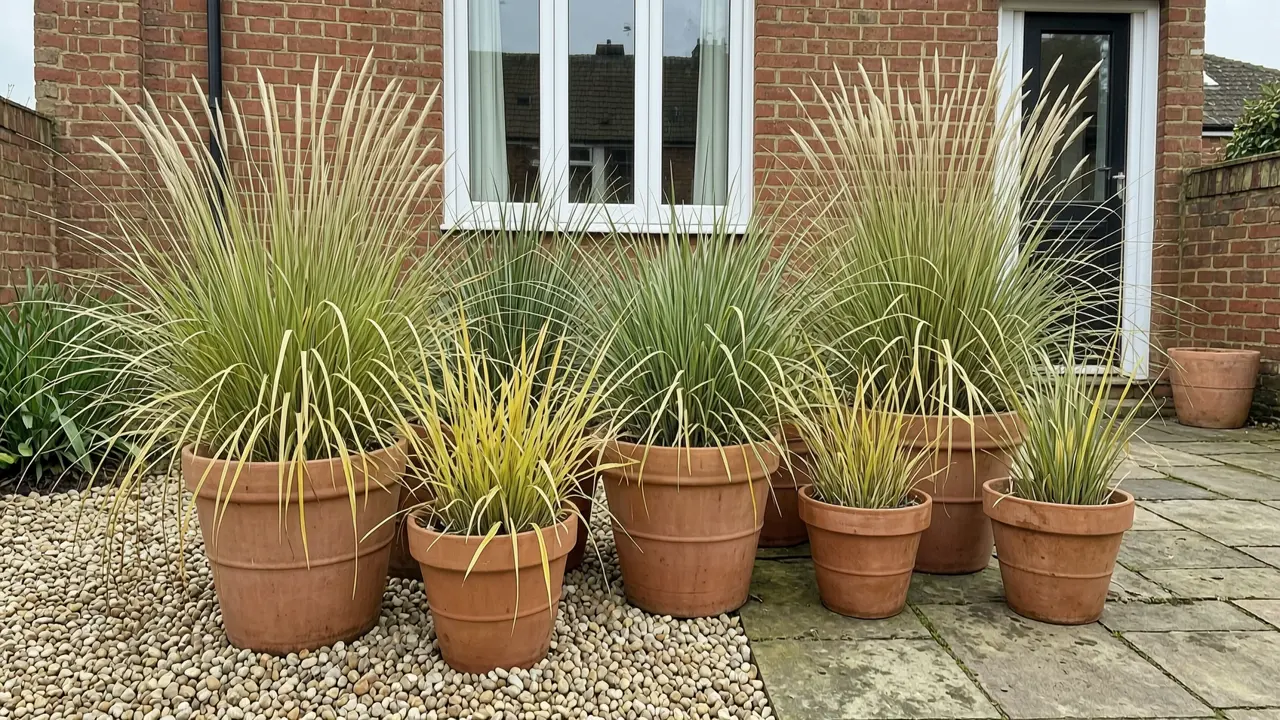 Growing Guide
How to grow ornamental grasses in pots
5 August 2026Grow ornamental grasses successfully in containers with advice on pot size, compost, watering, feeding, winter care and long-term maintenance.
 Growing Guide
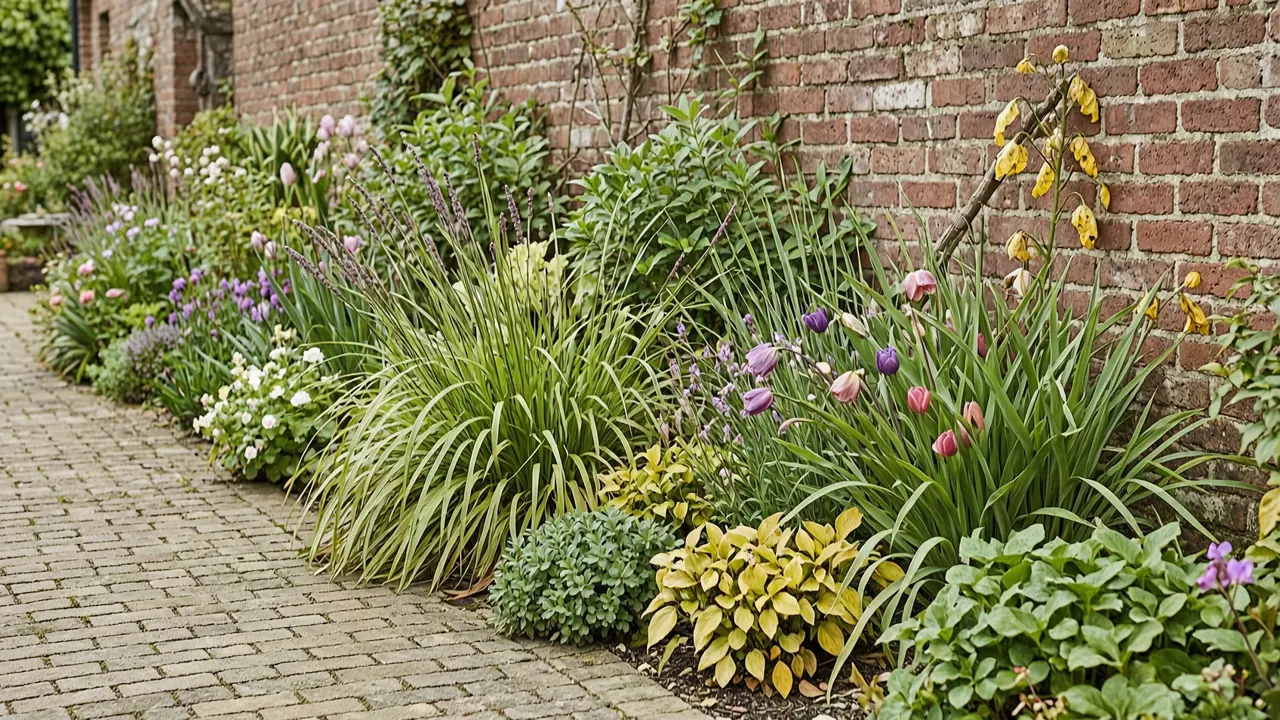
How to plan a perennial border
5 August 2026Plan a balanced perennial border with practical guidance on position, colour, height, spacing, flowering succession and year-round structure.
 Growing Guide
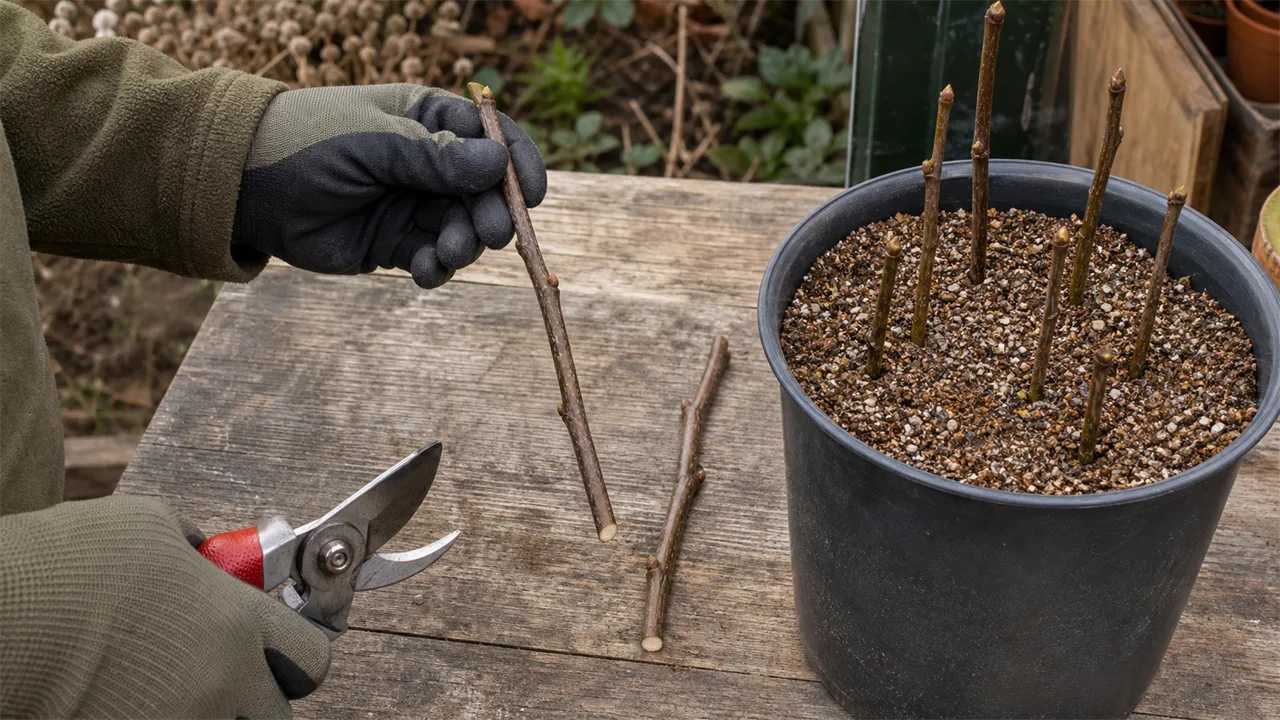
How to take hardwood cuttings
29 July 2026Take hardwood cuttings from suitable dormant shrubs and climbers with this step-by-step guide to timing, preparation, rooting and aftercare.