
Calathea
Calathea makoyana · Prayer Plant · Peacock Plant
🪴 Indoor Seasonal Care
How this houseplant's needs shift through the year indoors.
💡 Loves humidity and dislikes hard tap water - use filtered or rainwater and keep the air moist.
🖨 Printable care card (PDF)At a Glance
| Botanical name | Calathea makoyana |
|---|---|
| Common name(s) | Calathea, Prayer Plant, Peacock Plant |
| Family | Marantaceae |
| Plant type | perennial (Evergreen perennial grown for boldly patterned leaves that fold up at night (a prayer plant).) |
| Height × Spread | 30–60 cm × — |
| Position | Partial shade |
| Light (indoors) | Medium, indirect light; direct sun scorches and fades the markings. Tolerates lower light. |
| Humidity | High — the main challenge indoors. Use a humidifier or pebble tray; crispy edges mean the air is too dry. |
| Pet safety | Considered non-toxic to cats and dogs by the ASPCA — pet-safe. As with any plant, discourage pets from eating it to avoid mild stomach upset. |
| Soil | Peat-free houseplant compost kept evenly moist (not soggy); sensitive to hard tap water and let it dry slightly between waterings. |
| Flowering | — |
| Toxicity | Not known to be toxic; still, discourage children from eating houseplants. |
| Native range | — |
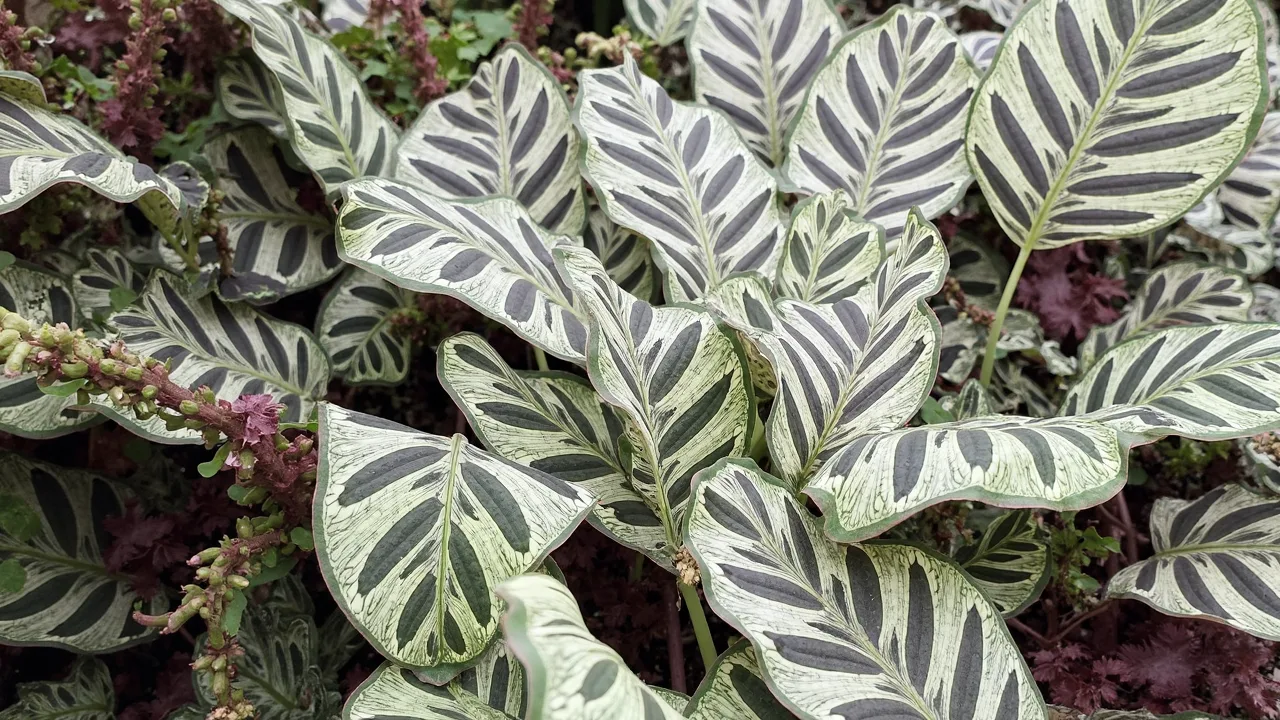
Calathea makoyana, the stunning 'Rattlesnake' plant, captivates with its bold, dark green leaves striped with creamy white and deep red veins. As a member of the prayer plant family, its leaves gracefully fold upwards at night, adding a touch of gentle movement to your indoor space. This evergreen perennial thrives on attentive care, particularly regarding humidity, making it a rewarding but sometimes demanding addition to your home.
Light
Calathea makoyana demands medium, indirect light to maintain its vibrant leaf patterns. Position it a few feet away from a west- or east-facing window, or place it under a sheer curtain if near a south-facing window. Direct sunlight, even for short periods, will scorch the leaves and cause the striking markings to fade, resulting in a washed-out appearance. While it tolerates lower light levels better than some tropical plants, avoid placing it in deep, dark corners; insufficient light will cause the leaves to lose their intensity and become smaller. Aim for consistent, diffused light throughout the day to keep the plant healthy and its colours vivid.
Watering
Water Calathea makoyana when the top inch of the peat-free houseplant compost feels dry to the fingertip, ensuring it remains evenly moist but never soggy. Overwatering is a common cause of root rot; allow the compost to dry slightly between waterings, typically every 7-10 days depending on your home's conditions. Crucially, this plant is highly sensitive to the minerals in hard tap water, which can cause leaf tip browning. Always use rainwater, filtered water, or distilled water for watering. If using tap water, let it sit out overnight to allow chlorine and minerals to dissipate. Avoid letting the plant sit in a saucer of water, as this encourages root rot.
Humidity and temperature
High humidity is the single most critical factor for Calathea makoyana's success indoors, as it naturally thrives in the humid understory of tropical forests. Aim for humidity levels of 50% or higher; levels below 40% will almost certainly cause the leaf edges to turn crispy and brown. Combat dry indoor air by using a dedicated humidifier placed near the plant, or create a simple pebble tray: fill a tray with pebbles, add water until it reaches just below the pebble tops, and place the pot on the pebbles (ensuring the pot doesn’t sit in water). Keep the plant away from draughty windows, heating vents, or air conditioning units, which drastically reduce humidity. Maintain a consistent room temperature between 18-24°C (65-75°F); avoid cold drafts or sudden temperature fluctuations.
Feeding and repotting
Feed your Calathea makoyana with a balanced, water-soluble houseplant fertiliser diluted to half strength during the active growing season (spring and summer), typically every 4-6 weeks. Do not feed during autumn or winter when growth slows. Repot only when the roots become pot-bound, usually every 2-3 years, using a pot only slightly larger than the current one. Choose a well-draining, peat-free houseplant compost. The best time to repot is in spring, just before the active growth period begins. Ensure the new pot has drainage holes to prevent waterlogging.
Propagation
Propagate Calathea makoyana through division during repotting. Gently remove the plant from its pot and carefully separate the root ball into smaller sections, each with a healthy set of roots and at least two or three leaves. Plant each section in a small pot filled with fresh, moist peat-free compost. Keep the newly potted divisions in a warm, humid environment with bright, indirect light and maintain consistent moisture in the compost until new growth appears. Avoid propagating from leaf cuttings alone, as this is generally ineffective for Calathea; division is the most reliable method.
Common problems and how to fix them
- Crispy leaf edges: This is almost always a sign of low humidity. Increase humidity immediately using a humidifier or pebble tray. Ensure you're using soft water for watering.
- Yellowing leaves: Typically indicates overwatering or poor drainage. Check the compost moisture level before watering next time; allow it to dry slightly more between waterings. Ensure the pot has adequate drainage holes.
- Leaves not folding at night: This usually means the plant isn't receiving enough light. Move it to a brighter spot with indirect light, avoiding direct sun.
- Fading leaf markings: Caused by direct sunlight. Relocate the plant to a position with medium, indirect light.
- Leaf curling: Can signal either insufficient light (leaves curl towards light) or excessive dryness (leaves curl inwards). Check light levels and humidity, adjusting as needed.
Is it toxic to cats and dogs?
According to the ASPCA, Calathea makoyana is considered non-toxic to both cats and dogs. This means ingestion is unlikely to cause severe poisoning. However, as with all houseplants, it’s still advisable to discourage pets from chewing or eating it, as it may cause mild stomach upset or discomfort. If your pet consumes a significant amount of the plant and shows signs of distress (such as vomiting or lethargy), contact your veterinarian or the Animal PoisonLine (01206 798223 in the UK) immediately for advice. Similarly, always keep houseplants out of reach of young children to prevent accidental ingestion, as even non-toxic plants can cause digestive issues if eaten.
As an Amazon Associate, GardenWizz earns from qualifying purchases made through links on this page (including links within the article). This does not affect the price you pay. See our disclaimer for details.