
Pilea
Pilea peperomioides · Chinese Money Plant
🪴 Indoor Seasonal Care
How this houseplant's needs shift through the year indoors.
At a Glance
| Botanical name | Pilea peperomioides |
|---|---|
| Common name(s) | Pilea, Chinese Money Plant |
| Family | Urticaceae |
| Plant type | perennial (Easy evergreen perennial with round, coin-like leaves that readily produces offsets (pups) to share.) |
| Height × Spread | 20–40 cm × — |
| Position | Partial shade |
| Light (indoors) | Bright, indirect light; turn it regularly for an even shape. Avoid harsh direct sun. |
| Humidity | Average room humidity is fine. |
| Pet safety | Considered non-toxic to cats and dogs by the ASPCA — pet-safe. Discourage pets from eating it to avoid mild stomach upset. |
| Soil | Peat-free houseplant compost; let the top dry between waterings. |
| Flowering | — |
| Toxicity | Not known to be toxic; discourage children from eating houseplants. |
| Native range | — |
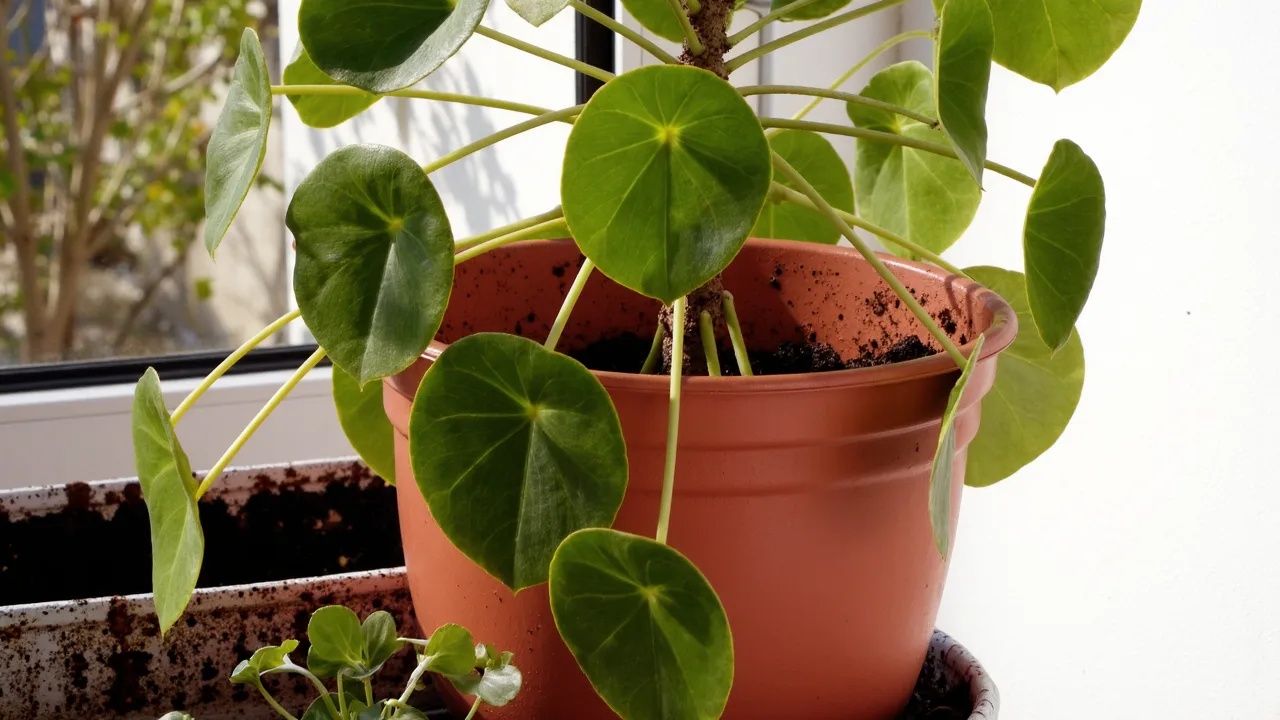
Pilea peperomioides, the charming Chinese Money Plant, is a delightful addition to any UK home, prized for its round, coin-like leaves and effortless charm. This easygoing perennial thrives on simple care, producing charming offsets (pups) that make sharing with friends a joyful task. Its low-maintenance nature and attractive appearance make it ideal for beginners and experienced plant parents alike.
Light
Place your Pilea in bright, indirect light for optimal growth and compact shape. A north or east-facing window is typically perfect, providing ample light without the intensity of direct afternoon sun. Avoid positioning it directly in front of south or west windows where harsh sunlight can scorch the delicate leaves, causing unsightly brown patches. Rotate the pot a quarter-turn every few weeks to ensure even growth and prevent the plant from leaning towards the light source, which can lead to an uneven, lopsided appearance over time. If leaves start to pale or lose their vibrant green, it may need slightly brighter light; conversely, deep green leaves with elongated stems indicate insufficient light.
Watering
Water your Pilea thoroughly when the top inch (2.5cm) of the peat-free houseplant compost feels dry to the touch, typically every 7-10 days during spring and summer, and less frequently in cooler months. Always check the soil moisture before watering – it’s far easier to overwater than underwater this plant. Overwatering is the most common cause of problems, leading to root rot, which manifests as yellowing leaves and a soft, mushy stem base. Ensure your pot has adequate drainage holes to prevent waterlogging; standing water in the saucer should be emptied promptly. In winter, reduce watering frequency significantly as the plant’s growth slows, allowing the compost to dry out more between sessions.
Humidity and temperature
Pilea peperomioides is remarkably adaptable to average UK indoor humidity levels, which typically range from 30-50% – well within its comfort zone. There’s no need to mist the leaves or use a humidifier; the plant thrives in standard room conditions. It prefers consistent temperatures between 15°C and 24°C (59°F-75°F), making it suitable for most living spaces. Avoid placing it near draughty windows, radiators, or heat vents, as sudden temperature fluctuations can stress the plant and cause leaf drop. It tolerates typical household conditions without requiring special humidity management.
Feeding and repotting
Feed your Pilea during its active growing season (spring to early autumn) with a balanced, dilute liquid houseplant fertilizer (half-strength) every 4-6 weeks. Do not feed during winter when growth naturally slows. Over-fertilising can cause salt build-up in the compost and damage roots. Repot only when the plant becomes rootbound, which usually occurs every 2-3 years, ideally in spring. Choose a pot only slightly larger than the current one (1-2cm wider) to prevent excess moisture retention. Use a fresh, well-draining peat-free houseplant compost mix, ensuring the new pot has drainage holes. Gently loosen the roots before placing in the new pot, filling in with compost to the same level as before.
Propagation
Propagating Pilea is simple and rewarding, primarily through its natural offsets (pups) that form around the base of the mother plant. Wait until a pup has developed its own roots (usually 2-3 leaves and visible roots) before separating it. Gently remove the pup from the soil, being careful not to damage the roots of the mother plant. Pot the pup into its own small container filled with fresh peat-free compost, keeping it in bright, indirect light. Keep the compost moist but not soggy until new growth appears, usually within a few weeks. This is the easiest and most reliable method; stem cuttings are less common for this species but can be attempted by placing a healthy stem section in water until roots form.
Common problems and how to fix them
Yellowing leaves are almost always a sign of overwatering. Check the soil moisture – if it’s still damp, reduce watering frequency and ensure the pot drains well. If the plant becomes leggy (stretched with long stems and sparse leaves), it’s not receiving enough light; move it to a brighter spot with indirect light. Brown leaf tips often indicate very dry air or inconsistent watering; while average humidity is fine, ensure consistent moisture levels (not dry out completely) and avoid placing near heating sources. If pests like spider mites appear (visible as fine webbing), wipe the leaves with a damp cloth or use a mild insecticidal soap solution, treating promptly to prevent spread.
Is it toxic to cats and dogs?
Pilea peperomioides is listed by the ASPCA as non-toxic to cats and dogs. However, while it is not poisonous, it’s still advisable to discourage pets from chewing or eating any houseplant, as ingestion can cause mild stomach upset, including vomiting or diarrhoea. Similarly, children should be reminded not to eat houseplants; although Pilea is non-toxic, consuming plant material is not recommended. If your pet or child ingests a significant amount and shows signs of distress, contact your veterinarian or the Animal PoisonLine (01206 798223) for advice.
As an Amazon Associate, GardenWizz earns from qualifying purchases made through links on this page (including links within the article). This does not affect the price you pay. See our disclaimer for details.