
Peace Lily
Spathiphyllum wallisii
🪴 Indoor Seasonal Care
How this houseplant's needs shift through the year indoors.
At a Glance
| Botanical name | Spathiphyllum wallisii |
|---|---|
| Common name(s) | Peace Lily |
| Family | Araceae |
| Plant type | perennial (Evergreen perennial grown for glossy leaves and white spathes; a classic forgiving houseplant.) |
| Height × Spread | 30–65 cm × — |
| Position | Partial shade, Full shade |
| Light (indoors) | Low to medium indirect light; tolerates shade well but flowers best in brighter spots. No direct sun. |
| Humidity | Prefers higher humidity; mist or group with other plants. |
| Pet safety | Toxic to cats and dogs (insoluble calcium oxalates) — per the ASPCA. Causes oral irritation, drooling, vomiting and difficulty swallowing. Keep out of reach; contact a vet if ingested. |
| Soil | Peat-free houseplant compost kept lightly moist; it droughts dramatically but recovers when watered. |
| Flowering | — |
| Toxicity | Harmful if eaten — irritates the mouth and throat. Keep away from children and pets. |
| Native range | — |
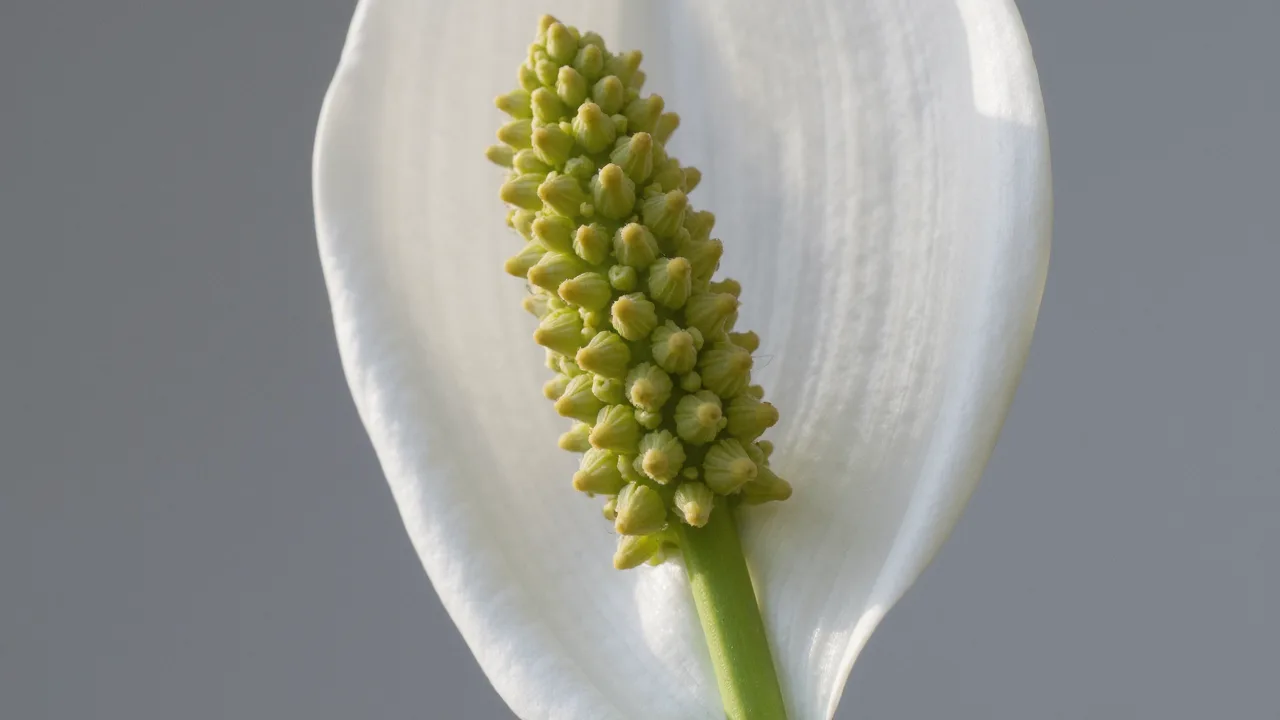
The Peace Lily (Spathiphyllum wallisii) is a cherished indoor plant celebrated for its glossy, dark green foliage and elegant white spathes, making it a staple for adding serene greenery to any room. As a resilient evergreen perennial, it thrives in typical household conditions, forgiving minor care oversights while rewarding owners with year-round beauty and occasional blooms. Its adaptability makes it an excellent choice for both novice and experienced plant parents seeking low-maintenance elegance.
Light
Peace Lilies thrive in low to medium indirect light, making them ideal for rooms without direct sunlight exposure. Position them a few feet away from north- or east-facing windows, or in areas shaded by larger furniture, to avoid harsh rays. While they tolerate lower light levels well, they will produce more abundant flowers when placed in brighter, indirect light—such as near a window with sheer curtains—without direct sun, which can scorch their leaves. Avoid south-facing windows without screening, as unfiltered sunlight will damage the plant.
If your Peace Lily isn’t flowering, gradually move it to a slightly brighter spot, but never into direct sun. In very dim rooms, the plant may focus energy on leaf growth rather than blooms, so rotating it 180 degrees every few weeks ensures even growth. For optimal health, keep it away from artificial light sources like desk lamps that emit heat, as this can dry out leaves.
Watering
Keep the peat-free houseplant compost lightly moist at all times, avoiding both prolonged dryness and waterlogging. Check the soil moisture by inserting your finger 2.5cm deep; water thoroughly when the top layer feels dry to the touch, but never let the plant sit in standing water. Peace Lilies will visibly wilt if the soil dries out, yet they recover rapidly within hours of watering—this dramatic wilting is normal and not a sign of distress.
Overwatering is the most common cause of problems, leading to root rot. Ensure pots have drainage holes, and empty saucers after watering to prevent water accumulation. During winter, reduce watering frequency as the plant’s growth slows, but never allow the soil to dry completely. If leaves turn yellow, it’s a sign of overwatering; adjust your schedule to let the top layer dry slightly between waterings.
Humidity and temperature
Peace Lilies prefer higher humidity levels, mimicking their natural tropical habitat. Boost humidity by misting the leaves daily with room-temperature water or grouping the plant with other moisture-loving species like ferns to create a shared humid microclimate. Avoid placing it near radiators, air vents, or drafty windows, as dry, hot air accelerates leaf browning.
Maintain temperatures between 18–24°C (64–75°F) year-round, as they are sensitive to cold drafts and sudden temperature shifts. Consistent warmth supports healthy growth and flowering, while exposure to temperatures below 15°C (59°F) can cause leaf drop. In dry indoor environments, especially during winter heating, brown leaf tips may appear—a clear signal to increase humidity through misting or a pebble tray.
Feeding and repotting
Feeding is optional but can encourage lush growth and flowering during the active growing season. Apply a balanced, water-soluble liquid fertilizer diluted to half-strength every 4–6 weeks from spring to early autumn. Reduce or omit feeding in winter when growth naturally slows. Over-fertilizing can cause salt buildup in the soil, leading to brown leaf tips, so always water well before applying fertilizer.
Repot only when roots become pot-bound, typically every 2–3 years in spring. Choose a pot one size larger than the current one, using fresh peat-free houseplant compost. Gently loosen the root ball before transferring to prevent root circling. Avoid repotting during flowering, as this can stress the plant. Ensure the new pot has drainage holes to prevent waterlogging, as Peace Lilies are prone to root rot in soggy soil.
Propagation
Peace Lilies are easily propagated by division during spring repotting. Carefully separate the root ball into sections, ensuring each has a healthy stem, leaves, and roots. Plant each section in fresh peat-free compost in a small pot, keeping the soil lightly moist. Place the new plants in bright, indirect light and maintain high humidity to encourage root development. Avoid propagating from leaf cuttings, as Peace Lilies do not root from leaves alone.
Common problems and how to fix them
Common issues include wilting (underwatering), yellow leaves (overwatering), brown leaf tips (low humidity), and lack of flowers (insufficient light). For wilting, water deeply until excess drains from the pot—recovery is usually quick. Yellow leaves indicate overwatering; reduce frequency and check drainage. Brown tips are resolved by increasing humidity through misting or grouping plants. To encourage flowering, move the plant to a brighter spot without direct sun.
Other problems may include slow growth (too little light) or leaf drop (temperature stress). Adjust light exposure and temperature accordingly, and avoid moving the plant frequently, as Peace Lilies prefer stable conditions. If pests like spider mites appear, wipe leaves with a damp cloth or apply insecticidal soap.
Is it toxic to cats and dogs?
Toxic to cats and dogs (insoluble calcium oxalates) — per the ASPCA. Causes oral irritation, drooling, vomiting and difficulty swallowing. Keep out of reach; contact a vet or the Animal PoisonLine (01206 798223) immediately if a pet ingests any part. Harmful if eaten — irritates the mouth and throat. Keep away from children and pets at all times. Do not assume it is safe; always supervise young children and pets around houseplants.
As an Amazon Associate, GardenWizz earns from qualifying purchases made through links on this page (including links within the article). This does not affect the price you pay. See our disclaimer for details.