Rough Feather Grass
Stipa calamagrostis
The Gardening Year
Best months in UK gardens · full planting calendar →
🖨 Printable care card (PDF)At a Glance
| Botanical name | Stipa calamagrostis |
|---|---|
| Common name(s) | rough feather grass |
| Family | Poaceae |
| Plant type | grass (Deciduous perennial ornamental grass) |
| Height × Spread | 60–120 cm × 50–100 cm |
| Position | Full sun |
| Soil | Moderately fertile, medium to light, well-drained soil |
| Flowering | July–September |
| Toxicity | No specific toxicity warning is listed by the RHS. |
| Native range | Europe, Asia and North Africa |
Overview
Stipa calamagrostis, known as rough feather grass, is a mid-sized deciduous ornamental grass that earns its place in a British garden by doing what many of the more fashionable grasses will not: it flowers heavily, holds its shape through a British summer, and dies back tidily in autumn without collapsing into a thatch of brown foliage. It comes from the dry, sunny slopes of southern and central Europe, and is hardy across most of the UK provided it has free-draining soil and a sunny spot. The tussock is larger and more upright than the better-known Stipa tenuissima, the flower spikes last several weeks longer, and the whole plant reads as a cleaner vertical line in the border than the soft mound that S. tenuissima makes. For UK gardeners who want the look of a naturalistic grass planting without the wind-blow or winter-collapse problems of the finer species, S. calamagrostis is often the better choice.
Appearance
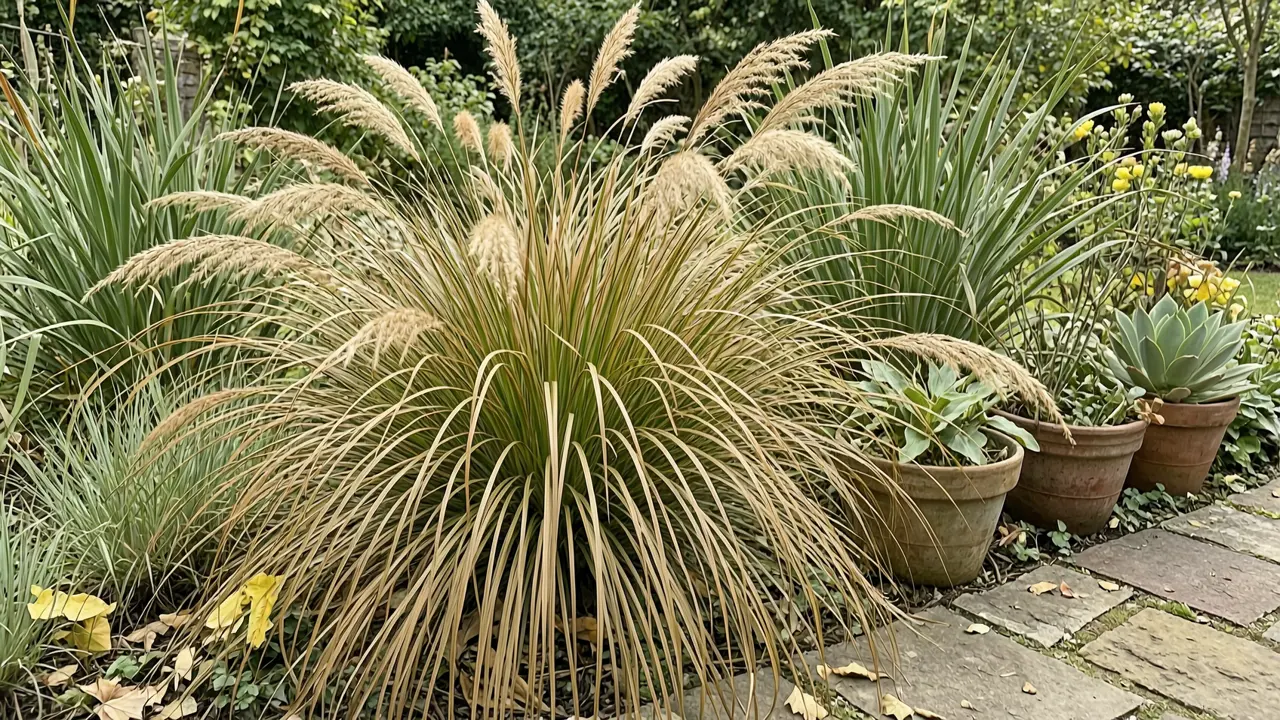
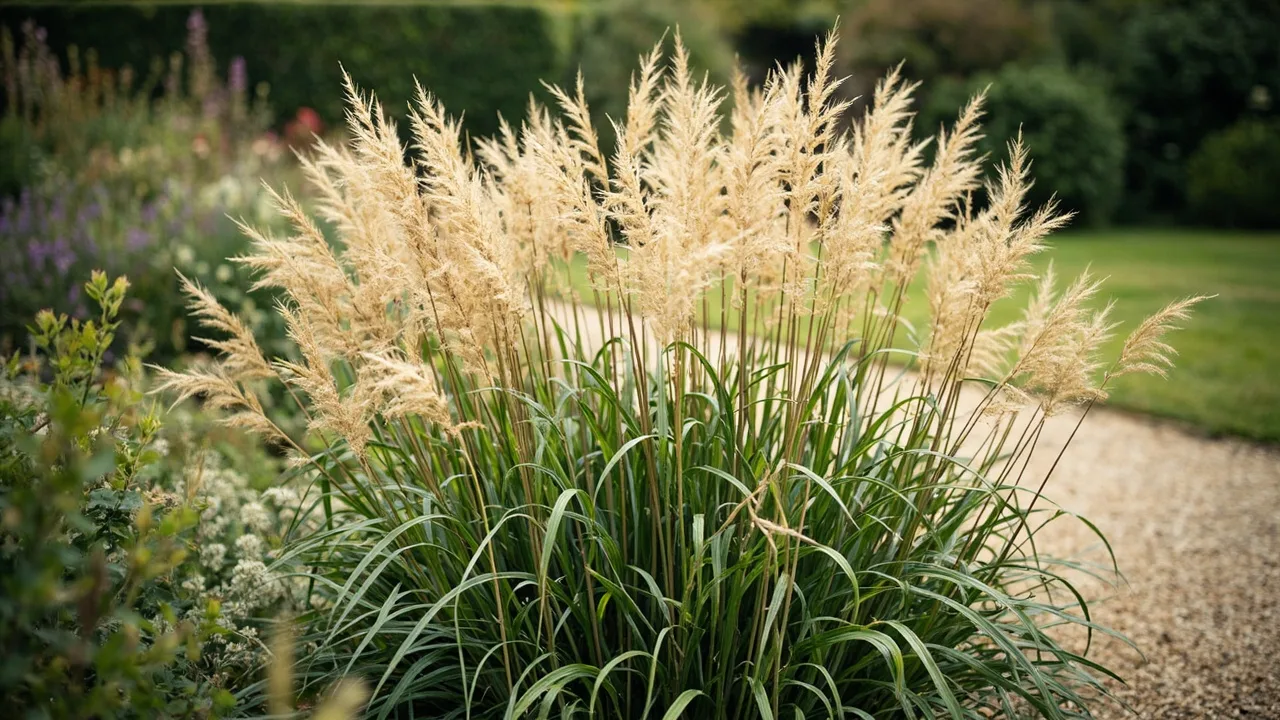
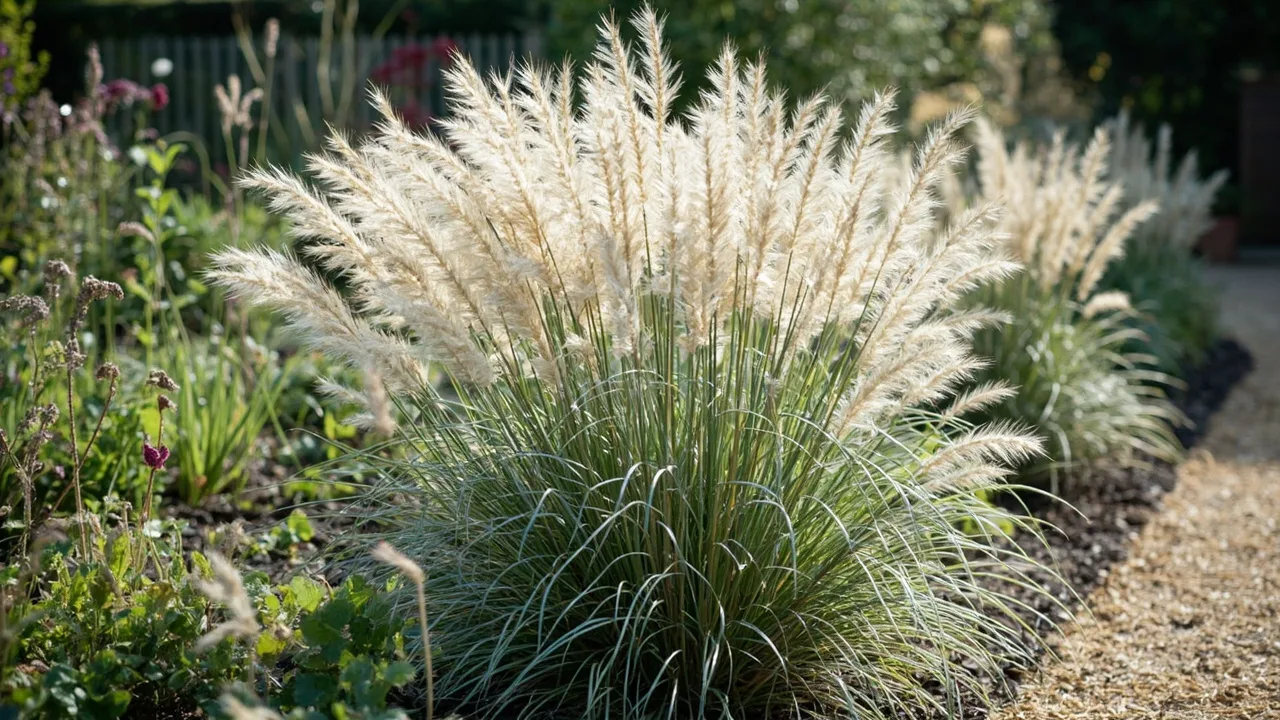
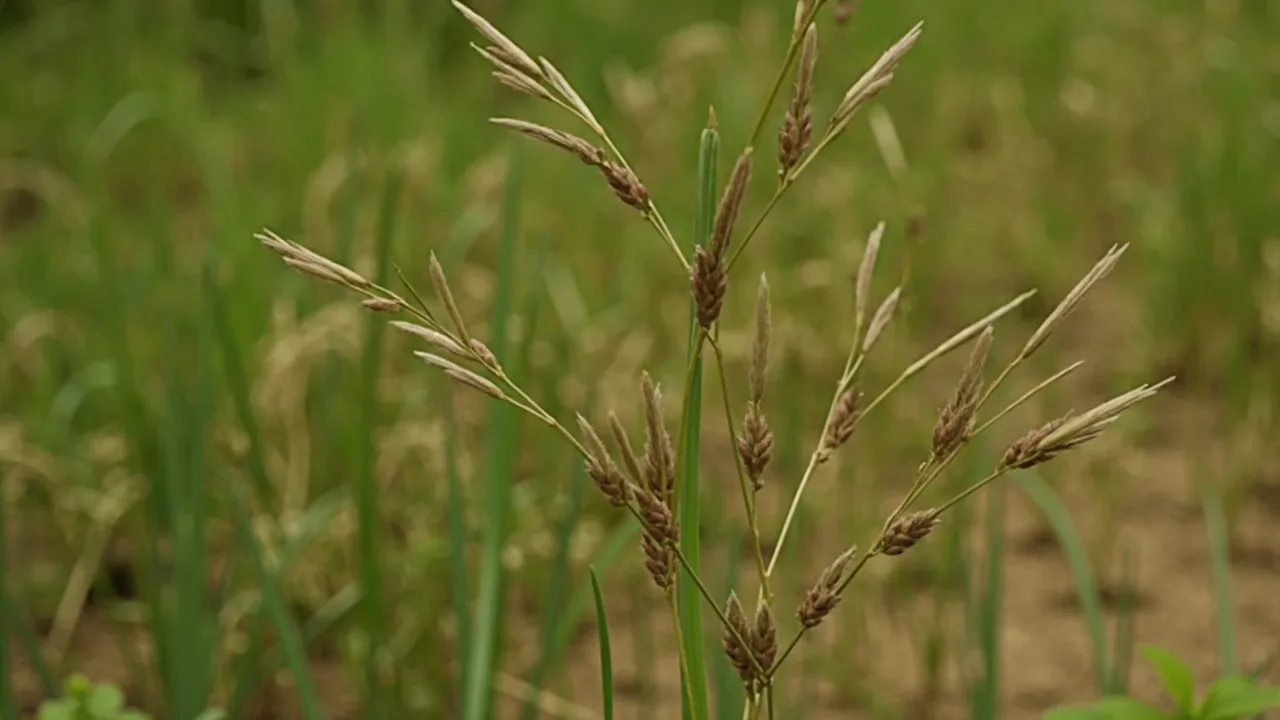
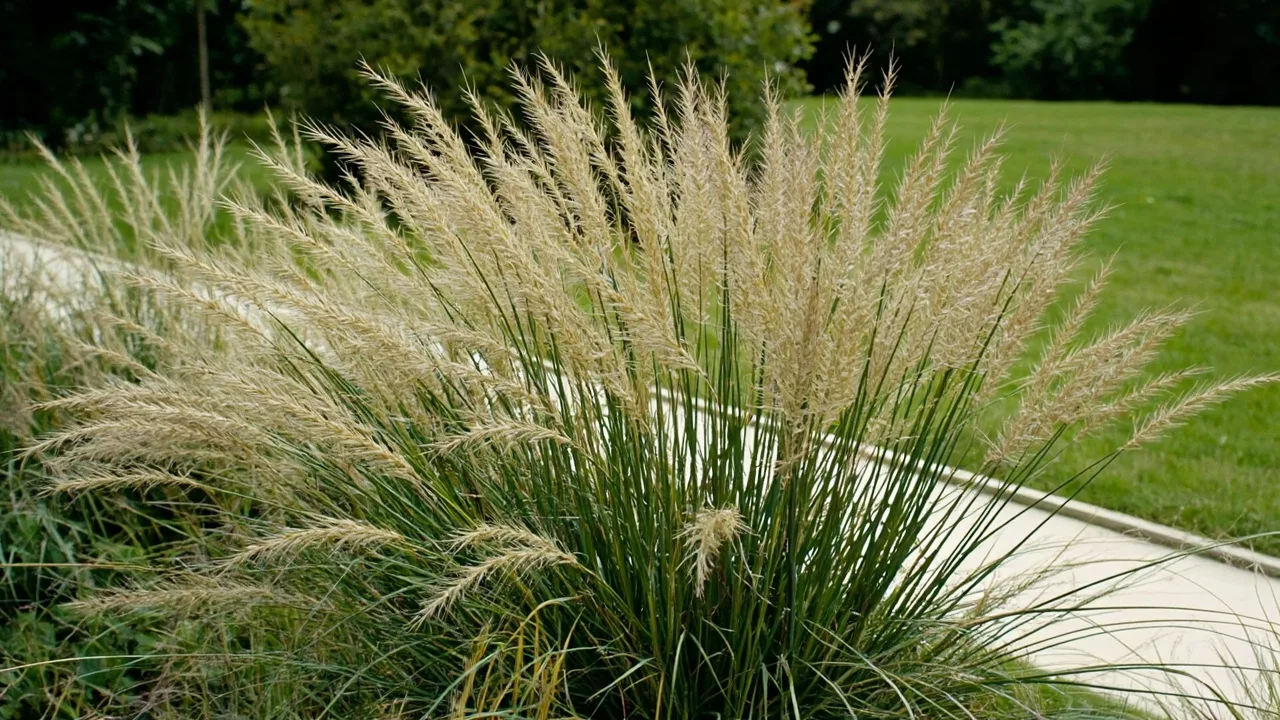
Stipa calamagrostis forms a tight, upright tussock of narrow green leaves about 60–90 cm tall, with flowering stems that lift the whole plant to 90–120 cm in mid- to late summer. The leaves are fine, almost bristle-like, and arch gently at the tips before the flowers appear, giving the plant a narrow, slightly bristly outline rather than the soft fountain shape of Anemanthele lessoniana. From July onwards it produces generous, branched panicles of pale green flowers that turn buff and straw-coloured as the seeds ripen, and the inflorescences catch the wind and move well in the border through to late September. The whole plant is deciduous: the foliage dies back to ground level after the first hard frost, leaving a low, straw-coloured crown that disappears cleanly under a winter mulch or is hidden by neighbouring perennials. By spring the new growth emerges from the base and the cycle starts again.
Growing Conditions
Stipa calamagrostis wants full sun and free-draining soil and will not forgive a damp, shady spot. It is hardy to RHS H4 (−10 to −5 °C), so cold is not the limiting factor in the UK; the failing combination is wet ground in winter combined with a heavy clay that holds water around the crown. On light, gritty or stony soils it is largely indestructible across most of the British Isles, but on flat heavy clay it can rot out in a wet winter unless the soil is improved with generous quantities of grit or the plant is sited on a slope or raised bed. Soil pH is unimportant — neutral to mildly alkaline suits it perfectly — and once established the plant tolerates summer drought with no trouble, sending up fresh flower spikes even after a dry August. Avoid planting in shade or anywhere that stays damp through winter; that is the single condition it will not survive.
Planting and Care
Plant container-grown Stipa calamagrostis in spring (April–May) or early autumn (September), setting the crown at the same depth it was in the pot and spacing plants about 60–80 cm apart for a naturalistic drift, or 90–100 cm apart if you want each tussock to read as a distinct specimen. Water in well during the first growing season and avoid any further intervention; the plant resents rich feeding and over-amended soil, both of which produce lush, floppy growth that collapses in summer. The single annual job is the spring tidy: in late February or March, comb out the old flower stems and dead foliage with your hands or a spring-tine rake, taking care not to damage the new green shoots emerging from the base. Mature clumps (four or five years old) can be divided in spring by lifting, splitting with two forks back-to-back, and replanting the vigorous outer pieces into freshly prepared ground; the woody centre is best discarded.
Common Problems
Winter rot on heavy clay is the only common cause of failure and shows up as a collapsed, mushy crown in early spring with no new growth; the remedy is to lift and replant in better-drained ground, or to start again in a raised bed or on a gritty slope. Self-supporting failure in rich soil — the tussock flopping open in late summer — is not a disease but a symptom of over-feeding or over-amended ground; cut back hard in spring, do not mulch, and accept a smaller, stiffer plant next year. Rust can mark the leaves in a damp, crowded planting in late summer, but is rarely serious and is best managed by improving air movement rather than spraying. The plant is largely unbothered by slugs and snails, which is one of its advantages over many larger ornamental grasses. Birds may use the seed heads as nesting material in late winter, but this is a feature rather than a problem in a wildlife-friendly garden.
Popular Varieties
The species itself, Stipa calamagrostis, is by far the most widely grown form in UK gardens and is the one to plant for a reliable mid-border grass with a long flowering season. The most often listed named selection is Stipa calamagrostis 'Lemperg', a slightly shorter and more compact form that holds its shape particularly well in exposed sites and is a good choice for smaller gardens or the front of a grass border. A closely related species sometimes seen for sale alongside it is Stipa tenuissima (now Nassella tenuissima), Mexican feather grass, which is much shorter at 30–50 cm, has finer thread-like leaves, and is more reliably evergreen in mild UK winters but more prone to thatch and self-seeding. For a layered grass planting in a small UK garden, the most useful companions are /plants/stipa-tenuissima at the front, /plants/stipa-gigantea for a 1.8–2.5 m see-through specimen at the back, and /plants/anemanthele-lessoniana for warm bronze evergreen foliage through the coldest months — together the four give a UK grass border structure and movement from ground level to head height across every season.
Recommended Products
GardenWizz earns a commission from qualifying purchases made through affiliate links on this page (including links within the article) — as an Amazon Associate, and from Thompson & Morgan via the Awin network. This does not affect the price you pay. See our disclaimer for details.