Mexican Feather Grass
Stipa tenuissima
The Gardening Year
Best months in UK gardens · full planting calendar →
🖨 Printable care card (PDF)At a Glance
| Botanical name | Stipa tenuissima |
|---|---|
| Common name(s) | Mexican feather grass |
| Family | Poaceae |
| Plant type | grass |
| Height × Spread | 40–70 cm × 30–45 cm |
| Position | Full sun |
| Soil | free-draining, moderately fertile |
| Flowering | June–July |
| Toxicity | — |
| Native range | south-western United States, northern Mexico and Argentina |
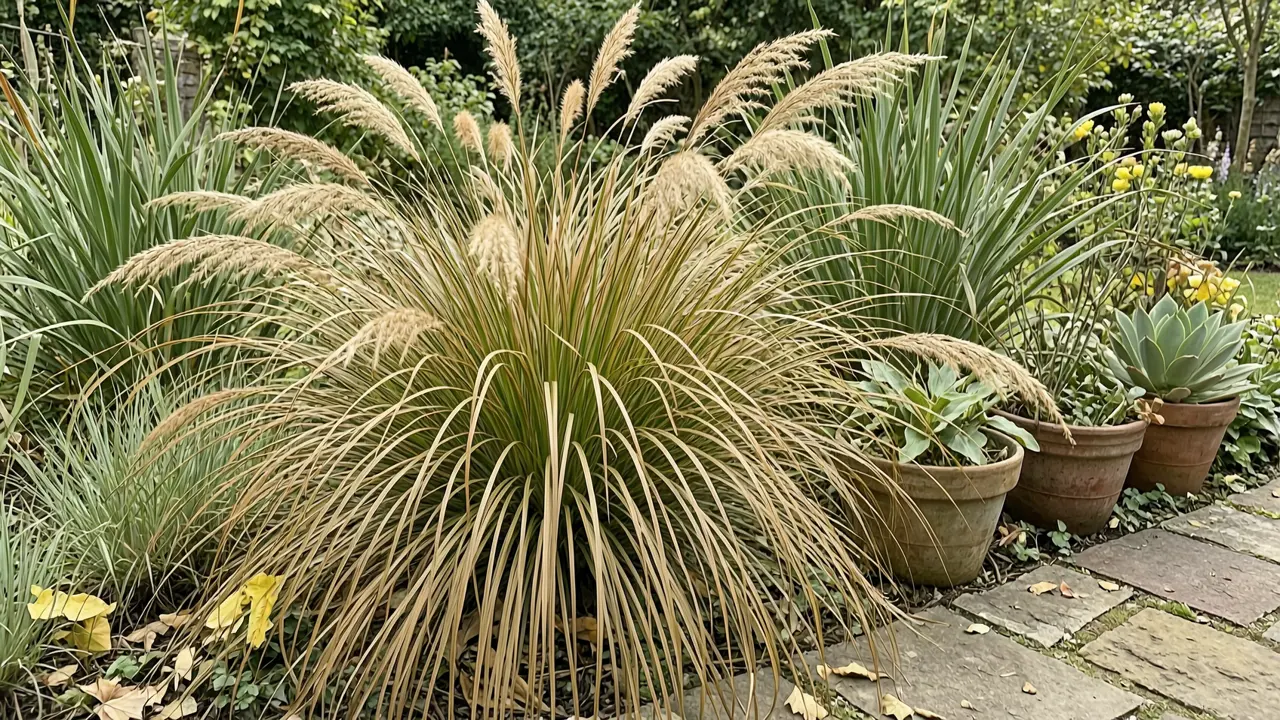
Stipa tenuissima (syn. Nassella tenuissima) is a semi-evergreen clump-forming ornamental grass from the Americas, ranging from the south-western United States through Mexico into South America. It is a signature plant of UK dry, gravel-style plantings, valued for hair-fine foliage and feathery plumes that bring movement to borders other grasses cannot match. The species holds the Royal Horticultural Society's Award of Garden Merit (AGM) and is one of the most popular ornamental grasses in British garden centres, though UK gardeners should be aware of its Schedule 9 status.
Overview
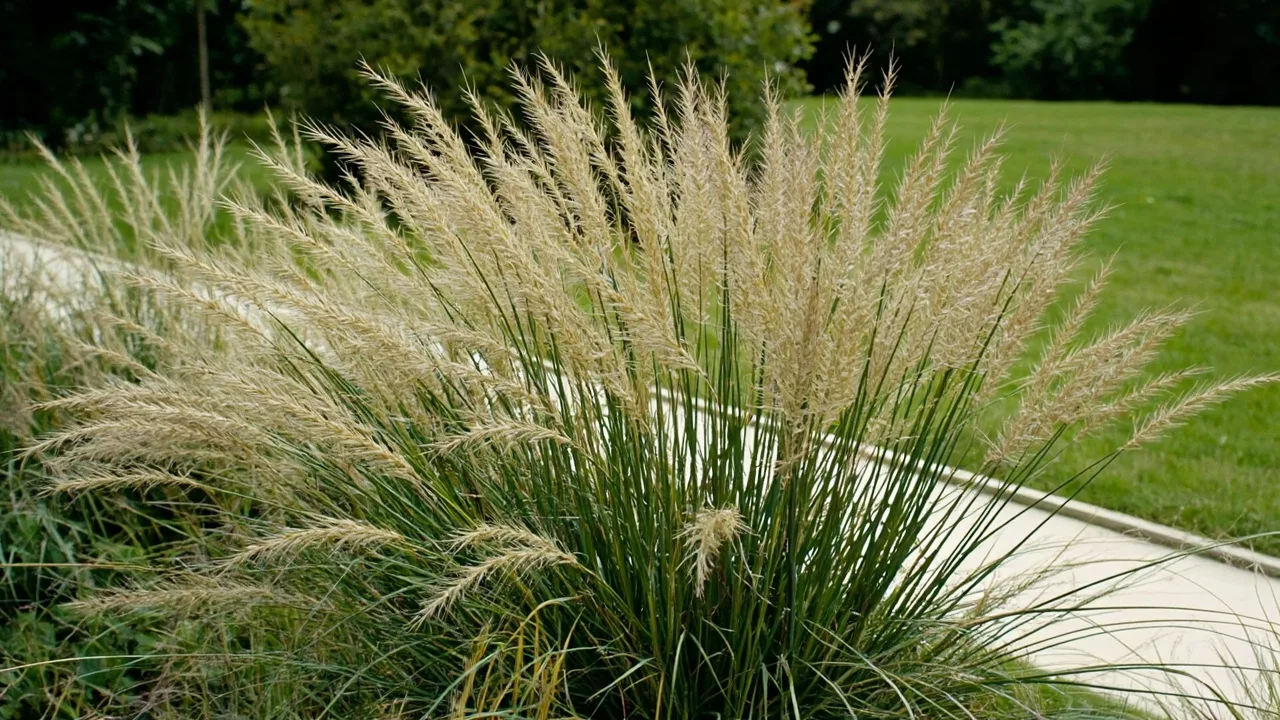
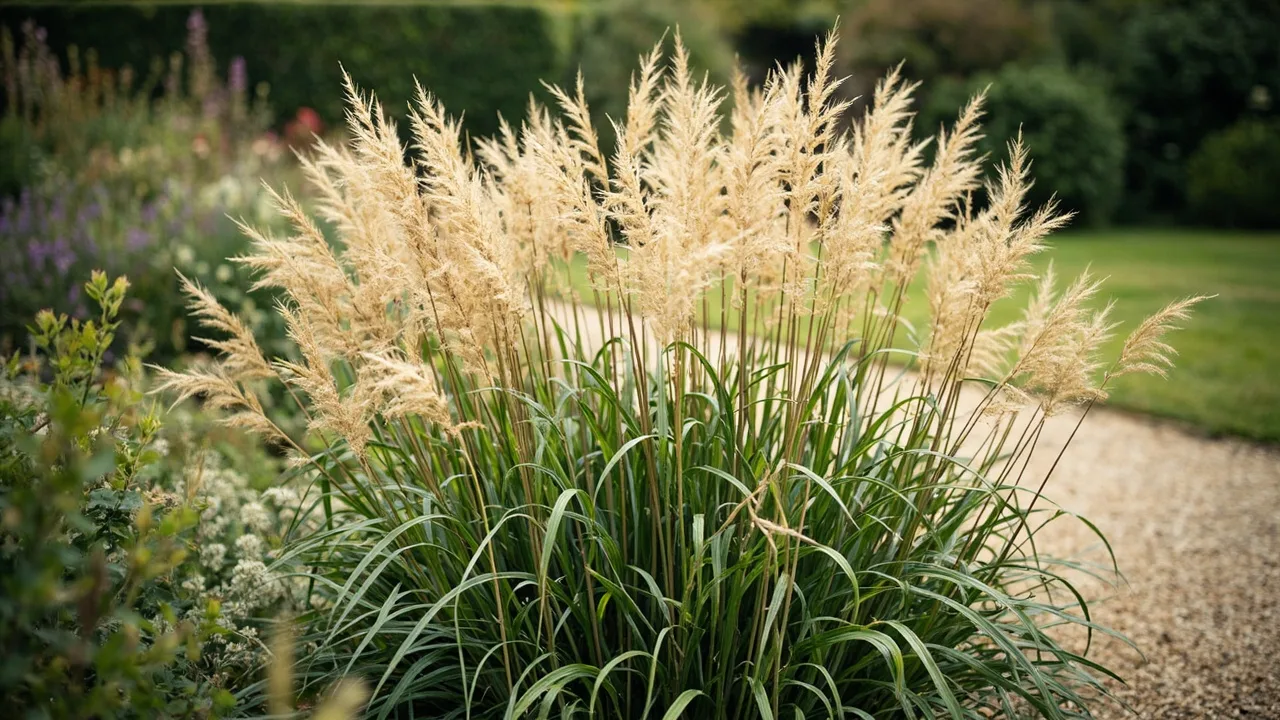
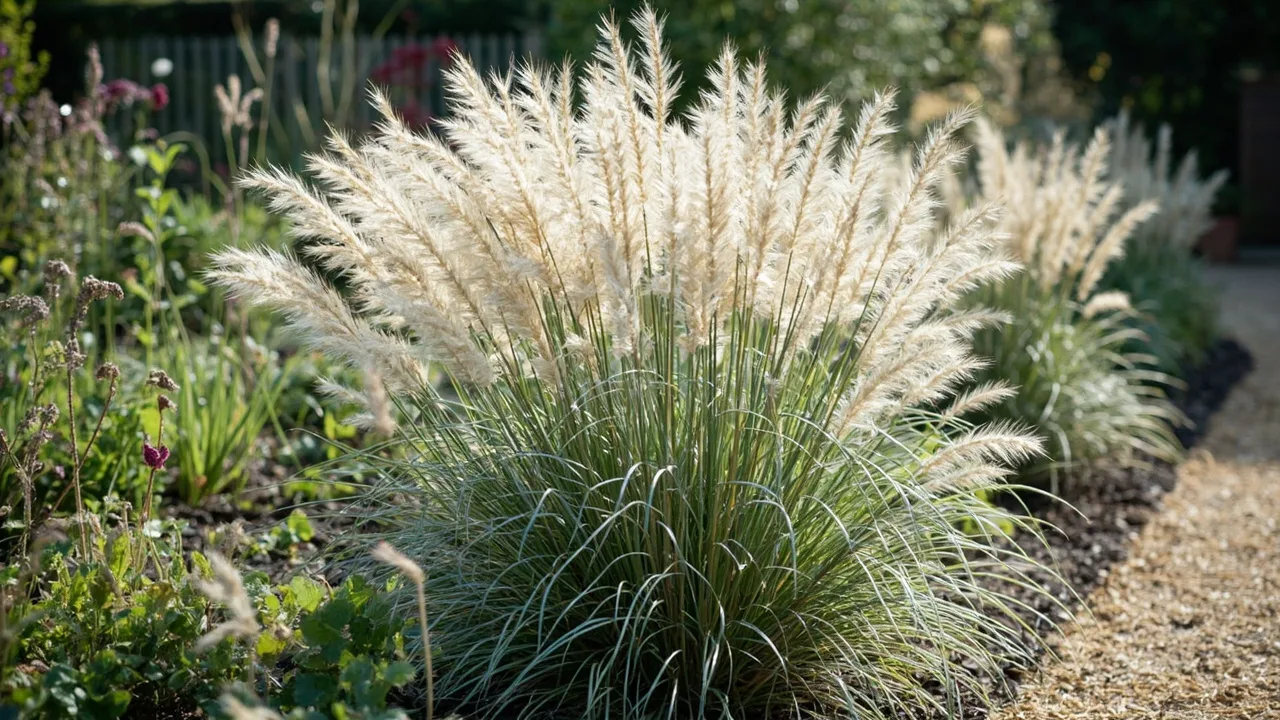
Stipa tenuissima is widely listed by UK nurseries as a reliable, low-maintenance perennial for sun and free-draining soil. The plant forms a neat, rounded mound of bright green, hair-thin foliage that arches softly from a tight central crown, and from early to mid-summer it produces delicate, feathery, pale silvery-green to buff plumes on slender stems held above the foliage. The plumes move in the slightest breeze. It reaches a mature spread of roughly 60 cm after two to five years and combines well with Mediterranean and prairie-style neighbours such as lavender, perovskia, Stipa gigantea and <a href="/plants/verbena">Verbena</a> bonariensis. UK gardeners should note that the species is listed on Schedule 9 of the Wildlife and Countryside Act 1981 in England and Wales: garden cultivation is permitted, but it is an offence to plant it in the wild or allow it to escape.
Appearance
The plant is built around a single ornamental feature: extremely fine, almost hair-like foliage that catches the light. The leaves are bright green, thread-thin, and arch outward from a tight central crown to form a neat, rounded mound roughly 30–60 cm tall and as wide once settled in. From a metre away the clump reads as a soft green tuft — the origin of the common name "pony tails".
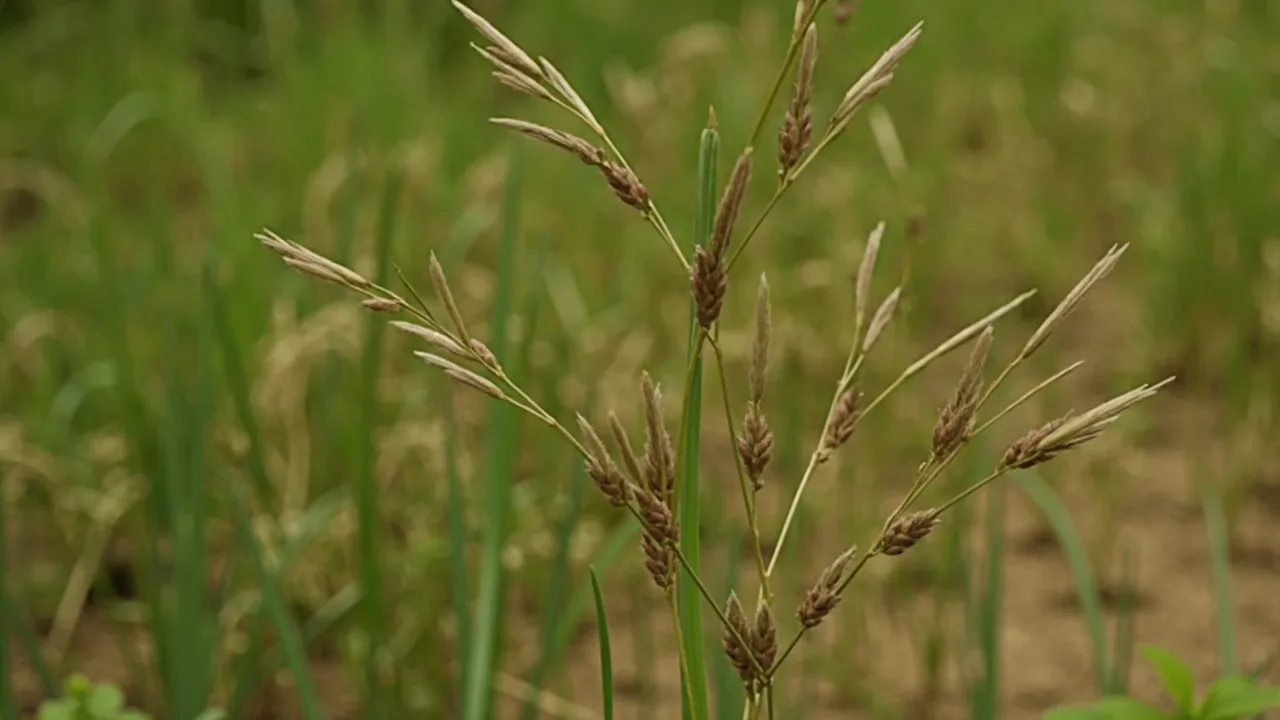
From early to mid-summer the clump produces feathery, pale silvery-green to buff plumes on slender stems held above the foliage, taking the total height to about 60–80 cm in full flower. The seed heads turn pale gold as they mature through July and August. The sharp-pointed seeds cling readily to gloves and animal fur, which is why self-sown seedlings appear in paving cracks, gravel, pots and stone walls. The base mound stays neat through winter in mild UK winters but may shed some foliage in cold, exposed northern or eastern gardens; the dead blades interlock with the new growth and are best combed out in spring rather than cut.
Growing Conditions
The plant requires full sun. Even partial shade causes the foliage to flop badly, with the mound splitting open in the middle — the cause is almost always insufficient light. Soil should be medium to light, well-drained, and only moderately fertile. The RHS plant profile notes tolerance of chalk, loam, sand and reasonably drained clay; what the plant will not tolerate is sitting wet over winter, especially in heavy clay. Where the ground is heavy clay, a raised bed with added grit or a large container is the standard UK solution.
Soil pH is broadly tolerant — acid, neutral or alkaline all work. Avoid over-feeding: rich soil and heavy mulch make the plant produce lush, floppy foliage at the expense of the fine, dry-garden texture that earned the species its AGM. Established plants are drought-tolerant; in a normal British summer rainfall is usually sufficient. The species is rated by the RHS for cultivation across the UK, including most severe winters.
Planting and Care
Plant in spring (April to early May) or early autumn (September). Spring planting gives the clump a full season to establish before its first UK winter; early autumn planting works in mild, free-draining sites. Plant at the same depth as the pot, backfill and firm gently, and allow 30–50 cm between individual clumps so each can reach its mature spread.
Watering: water regularly through the first growing season until established. Once established, water only in extended drought; in a normal UK summer rain is sufficient. Feeding: minimal — a light mulch of well-rotted compost in early spring is plenty. High-nitrogen feed or fresh manure cause the plant to flop.
Annual care: in late winter to early spring (February to April), comb out the dead foliage with a hand fork or a small rake. Do not cut the clump hard back to the ground — the crown sits above the growing point and hard cutting can damage or kill the plant. A light trim of the worst of the dead blades is acceptable if the mound is tatty. The comb-through method is the standard UK pruning technique recommended by the RHS and BBC Gardeners' World.
Propagation: by seed sown in pots in a cold frame in spring (March to April), or by division of established clumps in spring (March to May). Divide every few years to keep the centre vigorous.
Container growing: the plant works well in a large terracotta or stone pot in a loam-based compost with added grit at roughly 30 % by volume, and avoids the wet-ground problem.
Overwintering: in most UK gardens no protection is needed; in the coldest wettest sites, a top-dress of grit around the crown helps shed winter wet.
Common Problems
Crown rot in wet soil. The single most common cause of plant loss in the UK is sitting in damp, poorly drained ground over winter, rather than cold. Improve drainage with grit, plant on a mound, or grow in a container; do not mulch the crown.
Self-seeding and the Schedule 9 advisory. Stipa tenuissima self-seeds freely in the UK — seedlings appear in paving cracks, walls and gravel. The species is listed on Schedule 9 of the Wildlife and Countryside Act 1981 in England and Wales (and the equivalent schedule in Northern Ireland), which means it is an offence to plant it in the wild or allow it to escape. Garden cultivation is permitted; gardeners should deadhead seed heads before they shed if there is any risk of spread into adjacent wild ground. The UK pattern is far less aggressive than in California, but the legal responsibility is the same.
Floppy growth. Where the mound splits open in the middle, the cause is almost always too much shade, moisture, or fertility. The fix is more sun and leaner soil — do not feed.
Wind damage. In exposed sites the dense summer plumes can be flattened by strong winds. Site in a more sheltered spot, or use neighbouring perennials as a windbreak.
Pests and diseases. Generally pest- and disease-free in the UK. No routine treatment is needed. The plant is non-toxic to humans, dogs, cats and livestock in normal garden handling.
Popular Varieties
Cultivar development in Stipa tenuissima has been limited in the UK; the RHS-affiliated trade offers essentially two named selections alongside the straight species, and most garden stock is sold as the species itself.
'Pony Tails' — a compact, seed-reared British and European selection with the same fine, arching foliage and feathery plume character as the species. Widely sold in the UK trade through Crocus, Burncoose and Arboretum园艺 lists; the RHS Plant Finder lists it as a synonym of Stipa tenuissima (rhs.org.uk/plants/58857) and it appears on the RHS Tatton Park 2024 plant list, confirming active UK availability. Reaches roughly 60 cm in flower, identical in height and habit to the species.
'Wind Whispers' — a RHS-recognised cultivar with its own plant record (rhs.org.uk/plants/272829/stipa-tenuissima-wind-whispers/details). Similar in scale and character to 'Pony Tails' but selected for slightly more open, diffuse plume form. Also reaches approximately 60 cm in flower and shares the same garden tolerances.
Both cultivars are traded alongside the straight species and are not reliably distinct in garden performance; the practical difference for UK buyers is primarily naming and availability rather than any significant horticultural variation.
For gardeners who want a similar hair-fine texture without the Schedule 9 self-seeding concern, the New Zealand-native pheasant's tail grass (<em>Anemanthele lessoniana</em>) is a useful adjacent plant — semi-evergreen, finely textured, and tolerant of the same free-draining soils. Other related species worth considering for design contrast are <em>Stipa gigantea</em> (much taller golden oats, 1.5–2 m), <em>Stipa calamagrostis</em> (syn. Achnatherum calamagrostis, smaller alpine plume grass) and Stipa capillata (finer bristle grass, less commonly grown in the UK).
Sources & Further Reading
- RHS Plant Finder — Stipa tenuissima — rhs.org.uk/plants/58857/stipa-tenuissima/details (authoritative UK plant profile). Accessed 2026-07-22.
- BBC Gardeners' World — How to grow Stipa tenuissima — gardenersworld.com/how-to/grow-plants/how-to-grow-stipa-tenuissima (UK pruning technique; self-seeding note). Accessed 2026-07-22.
- Wildlife and Countryside Act 1981, Schedule 9 — legislation.gov.uk/ukpga/1981/69/schedule/9 (the legal basis for the invasiveness advisory). Accessed 2026-07-22.
- Crocus (RHS Plant Finder partner) — Stipa tenuissima — crocus.co.uk (UK trade availability; AGM listing). Accessed 2026-07-22.
- rhsplants.co.uk — Stipa tenuissima — rhsplants.co.uk (synonym note). Accessed 2026-07-22.
Cultivars and Varieties
| Cultivar | Height | Flower | Notes | AGM |
|---|---|---|---|---|
| 'Pony Tails' | 60 cm | soft feathery pale brown panicles in summer | Listed by RHS as a synonym of Stipa tenuissima on rhs.org.uk/plants/58857; widely grown UK cultivar with compact upright tuft of thread-like leaves. RHS Tatton Park 2024 plant list confirms UK availability. | |
| 'Wind Whispers' | 60 cm | soft feathery greenish-white panicles in summer | RHS-recognised cultivar with its own RHS plant record at rhs.org.uk/plants/272829/stipa-tenuissima-wind-whispers/details. Trade-pedigree selection of Mexican feather grass. |
Pests and Diseases
| Problem | Symptoms | Management |
|---|---|---|
| Root rot | The base of the plant becomes soft, mushy, and discoloured, often leading to sudden collapse. | Ensure excellent drainage by planting in gritty soil and avoid overwatering, especially in winter. |
| Slugs and snails | Irregular holes appear in new foliage and young shoots are chewed or destroyed. | Use slug pellets, beer traps, or copper tape barriers to protect emerging growth in spring. |
| Vine weevil | Notches appear on leaf margins during the day, while larvae damage roots underground causing wilting. | Apply nematodes to the soil in autumn and spring or use systemic insecticides if infestation is severe. |
| Powdery mildew | A white, dusty fungal growth appears on leaves, particularly in humid conditions with poor air circulation. | Improve air circulation by spacing plants adequately and avoid wetting foliage when watering. |
| Winter damage | Foliage turns brown, mushy, or dies back completely due to waterlogging or severe frost. | Plant in a sheltered, sunny spot with free-draining soil and avoid disturbing the crown in winter. |
For step-by-step help, read Dealing with Slugs and Snails and Treating Powdery Mildew. Or browse the full plant problem solver to diagnose an issue by symptom.
Recommended Products
GardenWizz earns a commission from qualifying purchases made through affiliate links on this page (including links within the article) — as an Amazon Associate, and from Thompson & Morgan via the Awin network. This does not affect the price you pay. See our disclaimer for details.