
Fiddle Leaf Fig
Ficus lyrata
🪴 Indoor Seasonal Care
How this houseplant's needs shift through the year indoors.
At a Glance
| Botanical name | Ficus lyrata |
|---|---|
| Common name(s) | Fiddle Leaf Fig |
| Family | Moraceae |
| Plant type | tree (Evergreen Ficus grown as a statement indoor tree with large violin-shaped leaves; dislikes being moved.) |
| Height × Spread | 0.6–3 m × — |
| Position | Partial shade |
| Light (indoors) | Bright, indirect light — a position near a bright window is ideal. Too little light causes leaf drop; acclimatise to any direct sun. |
| Humidity | Average to slightly raised humidity. |
| Pet safety | Toxic to cats and dogs (the milky sap) — per the ASPCA. Causes mouth and throat irritation, drooling and vomiting. Keep out of reach; contact a vet if ingested. |
| Soil | Peat-free houseplant compost; let the top few centimetres dry between waterings and avoid moving it around. |
| Flowering | — |
| Toxicity | The milky sap irritates skin and mouth — wear gloves when pruning and keep away from children and pets. |
| Native range | — |
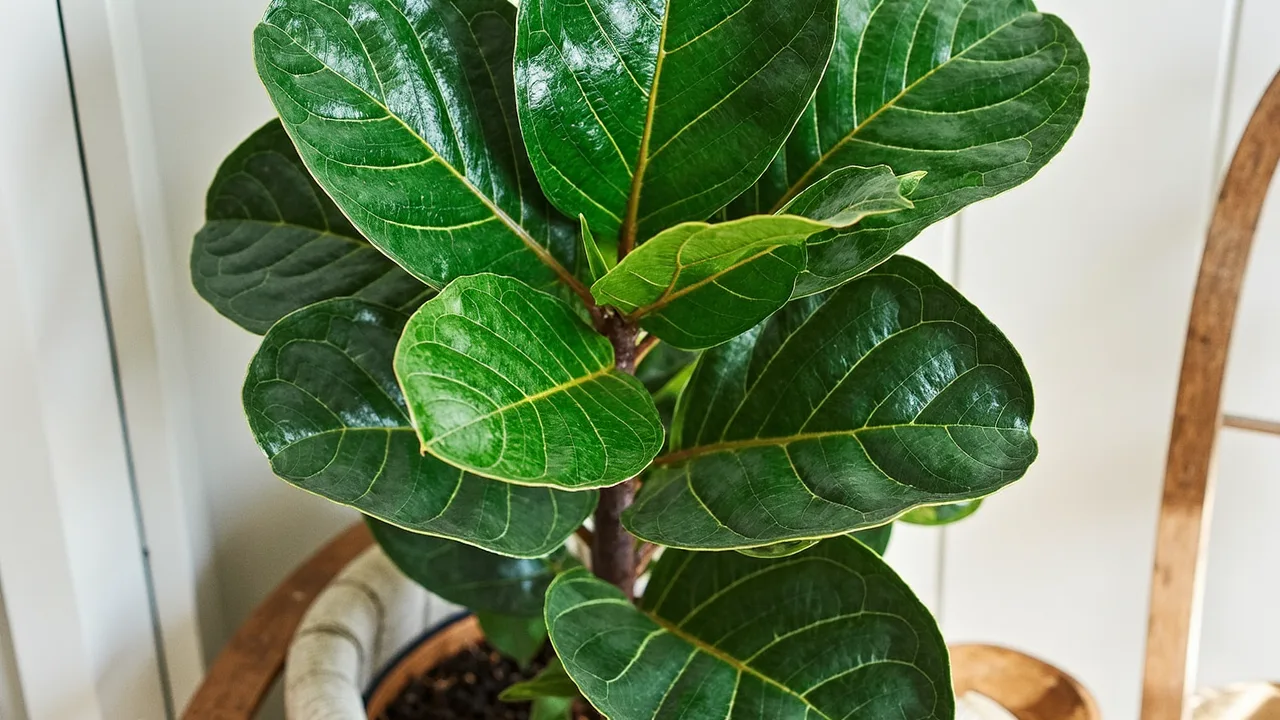
The Fiddle Leaf Fig (Ficus lyrata) is a striking statement plant prized for its large, violin-shaped leaves and elegant tree form, making it a popular focal point in UK living spaces. However, this evergreen tropical tree demands specific care to thrive indoors, particularly regarding light and its strong aversion to disturbance. Getting these fundamentals right is key to avoiding common issues like leaf drop.
Light
Bright, indirect light is essential for the Fiddle Leaf Fig to maintain its vibrant foliage and robust growth. Position it within 1-2 metres of a south or east-facing window where it receives ample, diffused light without direct sunbeams hitting its leaves. Direct sunlight, especially during peak summer hours, can scorch the large leaves, causing unsightly brown patches. Conversely, insufficient light is the most common cause of leaf drop; the plant will shed leaves rapidly if it doesn't receive enough brightness to sustain photosynthesis. Always acclimatise the plant gradually if you need to move it to a brighter spot, as sudden changes in light intensity can trigger stress and leaf loss. Avoid placing it in dim corners or rooms with only north-facing windows, as this will inevitably lead to poor health.
Watering
Consistent, appropriate watering is critical for the Fiddle Leaf Fig, as both overwatering and underwatering cause significant problems. Water thoroughly when the top 2-3 centimetres (about the depth of your finger) of the peat-free houseplant compost feel dry to the touch. This typically means watering every 1-2 weeks during the growing season (spring/summer) and less frequently in winter (every 3-4 weeks or when the soil feels dry). Crucially, never let the plant sit in standing water, as soggy roots lead to fatal root rot. The soil should feel moist but not waterlogged at the base. Avoid the common mistake of watering on a fixed schedule; always check the soil moisture level first. Remember, this plant dislikes being moved, so try to establish it in a permanent spot where you can consistently monitor its watering needs without relocating it.
Humidity and temperature
The Fiddle Leaf Fig thrives in average UK indoor humidity levels but appreciates a slight increase, particularly during drier winter months when central heating reduces moisture in the air. While it won't require a humidifier, placing it near a bathroom (with ventilation) or grouping it with other plants can create a beneficial microclimate. Avoid misting the leaves directly, as this can encourage fungal issues and isn't necessary. Temperature-wise, it prefers consistent warmth between 18-24°C (64-75°F). Protect it from cold drafts near windows or doors, and avoid placing it directly above radiators, which can cause excessive drying and leaf drop. Sudden temperature fluctuations are highly stressful for this sensitive plant.
Feeding and repotting
Feed the Fiddle Leaf Fig sparingly during its active growth period in spring and summer. Use a balanced, water-soluble houseplant fertiliser diluted to half-strength every 4-6 weeks. Do not feed during autumn or winter when growth naturally slows. Overfeeding can lead to salt build-up in the soil, causing leaf tip burn. Repot only when the roots have filled the current pot (typically every 2-3 years), using a slightly larger container (1-2 inches wider in diameter) and fresh peat-free compost. The plant dislikes being moved, so repotting should be done only when absolutely necessary, preferably in spring. Always handle the roots gently to avoid root disturbance, which can trigger leaf drop.
Propagation
Propagation of the Fiddle Leaf Fig is reliably achieved through stem cuttings. Take a 10-15cm (4-6 inch) cutting from a healthy stem, ensuring it has at least two leaf nodes (the small bumps where leaves attach). Remove the lower leaves, dip the cut end in rooting hormone (optional but recommended), and place it in a pot of moist, well-draining peat-free compost or water. Keep the cutting in bright, indirect light and maintain consistent moisture in the compost. Rooting can take several weeks to months. Avoid propagating from leaf cuttings, as this is ineffective for Ficus lyrata. Once roots are established (about 2-3 inches long), pot the cutting into its own container.
Common problems and how to fix them
Leaf drop is the most frequent issue, usually caused by inconsistent watering (either too dry or too wet), sudden changes in light, or moving the plant. To fix it, establish a reliable watering routine based on soil moisture, ensure it's in a stable location with bright, indirect light, and avoid relocating it. Yellowing leaves often indicate overwatering; reduce watering frequency and check that drainage holes are clear. Brown leaf tips or edges typically signal low humidity or inconsistent watering; increase humidity slightly (e.g., by placing the pot on a pebble tray) and ensure watering is thorough but not excessive. Pest infestations like spider mites or mealybugs can occur; treat with a mild insecticidal soap or neem oil solution, applying thoroughly to the undersides of leaves.
Is it toxic to cats and dogs?
The Fiddle Leaf Fig is toxic to cats and dogs according to the ASPCA. The plant contains a milky sap that can cause significant irritation to the mouth, throat, and digestive system if ingested. Symptoms include drooling, vomiting, and oral discomfort. It is also an irritant to human skin, so wear gloves when pruning or handling the plant to avoid contact with the sap. Crucially, keep the plant out of reach of all pets and children at all times. If you suspect your pet has eaten any part of the Fiddle Leaf Fig, contact your veterinarian or the Animal PoisonLine immediately (01206 798223 in the UK) for urgent advice.
As an Amazon Associate, GardenWizz earns from qualifying purchases made through links on this page (including links within the article). This does not affect the price you pay. See our disclaimer for details.