
Greater Bird's-foot-trefoil
Lotus corniculatus
The Gardening Year
Best months in UK gardens · full planting calendar →
🖨 Printable care card (PDF)At a Glance
| Botanical name | Lotus corniculatus |
|---|---|
| Common name(s) | Greater Bird's-foot-trefoil |
| Family | Fabaceae |
| Plant type | perennial |
| Height × Spread | 5–20 cm × 50 cm |
| Position | Full sun, Partial shade |
| Soil | Moist but well–drained, Poorly–drained; Clay Loam Sand; slightly acid |
| Flowering | June–September |
| Toxicity | Contains cyanogenic glycosides which release small amounts of hydrogen cyanide when macerated; not normally poisonous to humans due to low dose. |
| Native range | temperate Eurasia and North Africa |
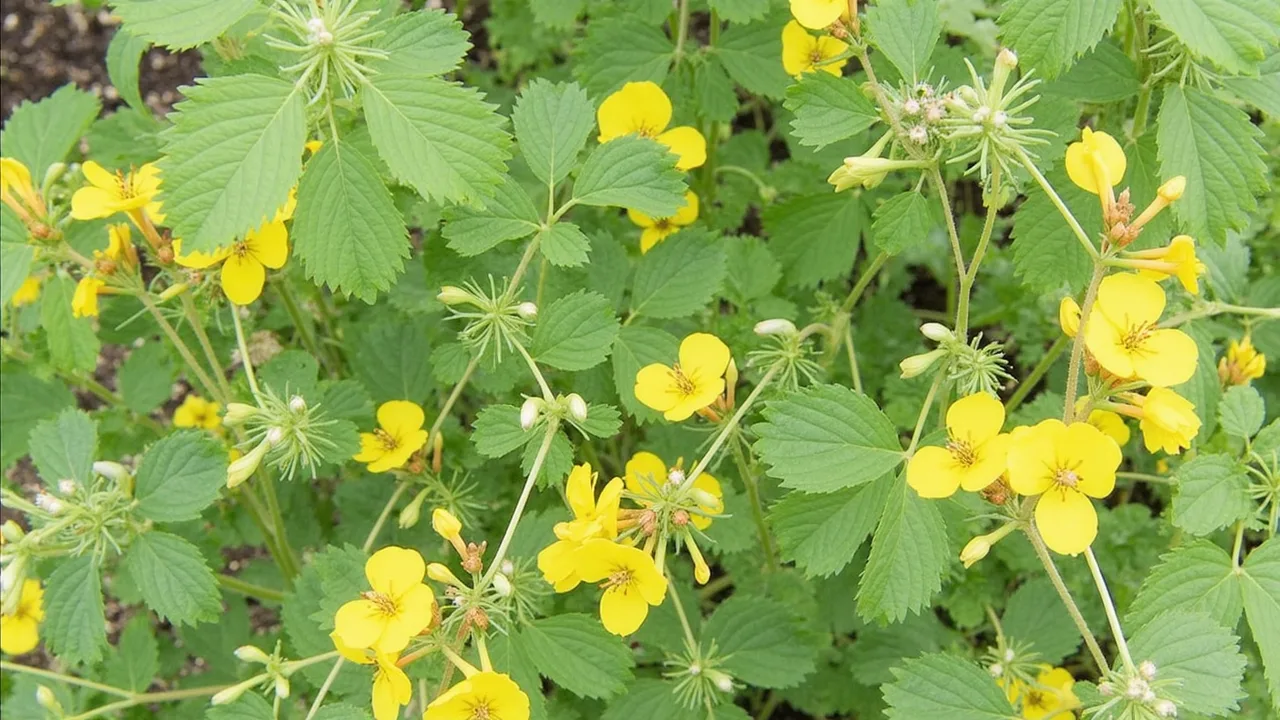
Greater Bird's-foot-trefoil (Lotus corniculatus) is a low-growing herbaceous perennial in the pea family (Fabaceae). Widespread across grasslands, meadows, roadside verges and coastal dunes throughout the British Isles, it is one of the most familiar native wildflowers of summer. Its clusters of small yellow pea flowers, often flushed with orange, give rise to the country names "eggs and bacon" and "bacon and eggs", while the slim, radiating seed pods that follow lend the plant its more common name. Valued as a nectar source for bees and butterflies and as a larval food plant for the Common Blue butterfly, it is equally useful in wildlife gardens, wildflower meadows and ecological restoration schemes, where its nitrogen-fixing roots improve poor soils.
Overview
Greater Bird's-foot-trefoil belongs to the genus Lotus, a group of around 150 species found across temperate regions. In the UK it is one of the most widespread native legumes, common on calcareous grassland, downs, clifftops, road verges and embankments. It is a perennial of short to medium swards, thriving where taller, more vigorous grasses are kept in check by grazing, mowing or naturally thin soils. The plant is a prolific nectar producer, and a single established patch will attract bumblebees, honey bees, solitary bees and hoverflies throughout the summer months. Ecologists value it as a larval food plant for several British butterfly species, particularly the Common Blue (Polyommatus icarus) and the Dingy Skipper (Erynnis tages).
Beyond its wildlife value, Greater Bird's-foot-trefoil has a long agricultural history. It was once widely sown as a fodder legume in mixed pastures, prized for its protein content and ability to thrive on land too poor for clover. Today it remains a staple of conservation seed mixes used to revert improved grassland back to species-rich meadow, and is a recommended component of pollinator borders, green roofs and low-maintenance amenity plantings.
Appearance
The plant forms a loose, sprawling mat of growth, usually 10–40 cm tall, with stems that creep along the ground and root at the nodes where conditions allow. Foliage is bright, fresh green. Each leaf is divided into five leaflets: two small stipule-like leaflets sit at the base of the leaf stalk, with three larger oval to lance-shaped leaflets above — a feature that distinguishes it from clovers (Trifolium), which have only three leaflets per leaf.
Flowers appear in small, flat-topped clusters of three to eight at the stem tips from late May through to September. Each individual flower is a typical pea flower (papilionaceous), around 10–15 mm long, deep yellow and often strongly flushed or veined with orange or brick-red, particularly as the flower ages. The clusters open a few at a time, giving a long, sustained display. Pollinated flowers develop into slender, straight seed pods, 2–3 cm long, held in radiating groups of five or six — the arrangement that gives the plant its "bird's foot" name. When ripe, the pods twist and split to scatter the small, hard-coated seeds.
Growing Conditions
Greater Bird's-foot-trefoil is at its best on well-drained, low-fertility soils where competition from rank grasses is limited. It shows a marked preference for calcareous ground and is abundant on chalk and limestone grassland across southern and central England, but it also grows happily on sandy soils, thin clays, road verge embankments and even moderately acidic heathy ground, provided the sward is kept open.
Full sun produces the most flowering, but the plant tolerates light partial shade, particularly in the warmer south and east of England. It is fully hardy throughout the UK, tolerating winter temperatures well below freezing, and is untroubled by exposure on coastal sites. While young plants benefit from regular moisture, established plants are notably drought-tolerant, with deep taproots and creeping stems that allow them to draw on sub-surface moisture during dry summer spells.
In garden terms, this translates to a plant that thrives where many ornamentals struggle: thin, stony soils, the dry border at the base of a wall, a south-facing slope, or a gravel garden. Rich, heavily fertilised ground encourages leafy growth at the expense of flower and shortens the plant's life.
Planting and Care
Sowing. The most reliable method in gardens and meadows is to sow seed directly into prepared, weed-free ground in early autumn (September–October) or in early spring (March–April). Autumn sowings generally perform better, as the seed overwinters and germinates with the first warm spell of spring. The seed has a hard coat and germinates more evenly if scarified lightly — rubbed between two sheets of sandpaper — or soaked in tepid water for several hours before sowing. Broadcast onto a fine, firmed tilth at a rate of roughly 1–2 g per square metre for meadow mixes, rake in lightly and water if conditions are dry. Seedlings are slow to establish and can be out-competed by annual weeds in the first year; keeping the seedbed tidy through the first summer is the single most important step.
Watering. Little is needed once plants are established. During the first growing season, water young plants during prolonged dry spells to help them develop a strong root system. After that, additional watering is rarely necessary except on the very driest sandy soils in prolonged drought.
Feeding. None required. In fact, applying nitrogen-rich fertiliser will produce lush foliage, reduce flowering and shorten the life of the plant. If the surrounding soil is very poor and growth is genuinely sparse, a light dressing of well-rotted garden compost in early spring is the most that is ever needed.
Pruning and sward management. In meadow plantings, cut the sward once flowering has finished — usually in late August or September — and remove the cuttings to keep soil fertility low. A second cut in late winter can be useful on vigorous sites. In border plantings, simply trim back sprawling stems with shears after the main flush of flower to keep plants tidy and encourage a smaller second flush later in the season.
Propagation. By seed, as described above, is the standard method. Named cultivars can be propagated from basal softwood cuttings taken in late spring or early summer and rooted in a gritty compost under cover. Established clumps can also be lifted and divided in early spring, though plants resent heavy disturbance and recover slowly.
Seasonal care. In the UK, expect the first flowers in late May in the south and early June further north, with flowering continuing through August and into September. Cut back in autumn, leave the seed heads in place over winter for birds if possible, and avoid mulching heavily around established plants, which can cause the crown to rot.
Common Problems
Greater Bird's-foot-trefoil is generally trouble-free, particularly in the open, low-fertility conditions it prefers. A small number of issues can arise:
- Slugs and snails. Young seedlings can be grazed in damp springs, particularly on heavier soils. Protection with wool pellets, beer traps or, on small plantings, night-time hand-picking usually suffices. Once plants have branched and produced tougher stems, slug damage ceases to be significant.
- Competition from grasses. On rich or neglected ground, vigorous grasses such as Yorkshire-fog and ryegrass can quickly outcompete bird's-foot-trefoil. Maintaining an open sward through annual cutting and avoiding fertiliser application are the main defences.
- Powdery mildew. A light dusting of white fungal growth may appear on foliage in late summer during hot, dry spells, particularly where plants have become crowded. Cutting back after flowering improves air circulation and is usually enough to resolve the issue; chemical treatment is rarely warranted in a wildflower context.
- Sparseness in the establishment year. New sowings often look patchy and thin in their first summer. This is normal: the plant is investing in a deep taproot. By the second year, growth typically fills out and flowering begins in earnest.
No significant diseases specific to this species are recorded in the UK, and the plant is not known to be toxic to humans, livestock or pets — it has historically been used as a forage crop, though modern grazing animals find it unpalatable in large quantities due to low tannins.
Popular Varieties
A small number of distinct forms are offered by British and Irish wildflower nurseries, though seed of the true species is by far the most widely grown. The following selections are commercially available:
- Lotus corniculatus 'Plenus'. A double-flowered form in which the usual single pea flowers are replaced by dense, frilly clusters of yellow petals flushed with orange. It is decorative rather than ecologically useful — the doubled flowers offer little nectar to pollinators — but makes an attractive low edging plant in cottage-garden borders.
- Lotus corniculatus var. sativus. A more upright, agronomic selection historically used in fodder leys and now occasionally included in commercial wildflower mixes. It is generally taller and more vigorous than the wild type.
- Lotus corniculatus 'Flore Pleno'. Another double-flowered form, very similar to 'Plenus' and sometimes sold under that name; treated by some nurseries as synonymous.
Plain Lotus corniculatus seed of British or Irish provenance is the best choice for wildlife and meadow plantings, where the straight species supports the greatest diversity of pollinators and butterfly larvae. Cultivar names beyond those above should be treated with caution; named varieties from overseas are not always reliably hardy in UK conditions, and some have been selected for forage yield rather than ornamental or ecological merit. No cultivar has been awarded an RHS Award of Garden Merit at the time of writing, and the straight species remains the form most widely recommended by British conservation organisations.
Pests and Diseases
| Problem | Symptoms | Management |
|---|---|---|
| Slugs and snails | Irregular holes chewed in young leaves and stems, often accompanied by silvery slime trails. | Use beer traps, copper tape barriers, or hand-pick at night to protect emerging seedlings. |
| Powdery mildew | White, dusty fungal growth appears on leaves and stems during hot, dry weather with humid nights. | Improve air circulation by thinning dense growth and avoid overhead watering to keep foliage dry. |
| Root rot | Plants wilt and yellow despite moist soil, often due to waterlogged conditions in heavy clay. | Ensure well-drained soil by incorporating grit or planting on a raised bed if drainage is poor. |
| Vine weevil | Notched edges on leaves during the day and wilting plants caused by larvae feeding on roots. | Apply nematodes to the soil in late summer or use biological controls like Steinernema carpocapsae. |
| Nutrient deficiency | Pale green or yellowing foliage indicating a lack of nitrogen or other essential nutrients. | Apply a balanced, slow-release organic fertilizer in spring if growth is stunted or discoloured. |
For step-by-step help, read Dealing with Slugs and Snails and Treating Powdery Mildew. Or browse the full plant problem solver to diagnose an issue by symptom.
As an Amazon Associate, GardenWizz earns from qualifying purchases made through links on this page (including links within the article). This does not affect the price you pay. See our disclaimer for details.