
Common Mint
Mentha spicata
The Gardening Year
Best months in UK gardens · full planting calendar →
🖨 Printable care card (PDF)At a Glance
| Botanical name | Mentha spicata |
|---|---|
| Common name(s) | Common Mint |
| Family | Lamiaceae |
| Plant type | perennial |
| Height × Spread | 30–100 cm × — |
| Position | Full sun, Partial shade |
| Soil | moist, humus-rich, well-drained, pH 6.0-7.5 |
| Flowering | July–September |
| Toxicity | — |
| Native range | Europe and southern temperate Asia |
Overview
Common Mint (Mentha spicata) is a vigorous herbaceous perennial in the Lamiaceae family, widely grown across the UK for its bright, sweetly aromatic leaves. Known variously as spearmint and garden mint, it is the traditional mint of British kitchens, the species behind mint sauce, mint jelly, and the leaves scattered over new potatoes and peas. It is fully hardy throughout the British Isles, undemanding in cultivation, and one of the easiest herbs for a beginner to keep productive. Its single drawback is also its strength: given open ground and moisture it spreads energetically via underground rhizomes, so most gardeners eventually choose to grow it in a container or a confined bed. As a foliage plant, pollinator plant and culinary herb in one, it earns a place in nearly every UK garden.
Quick-Care
Appearance
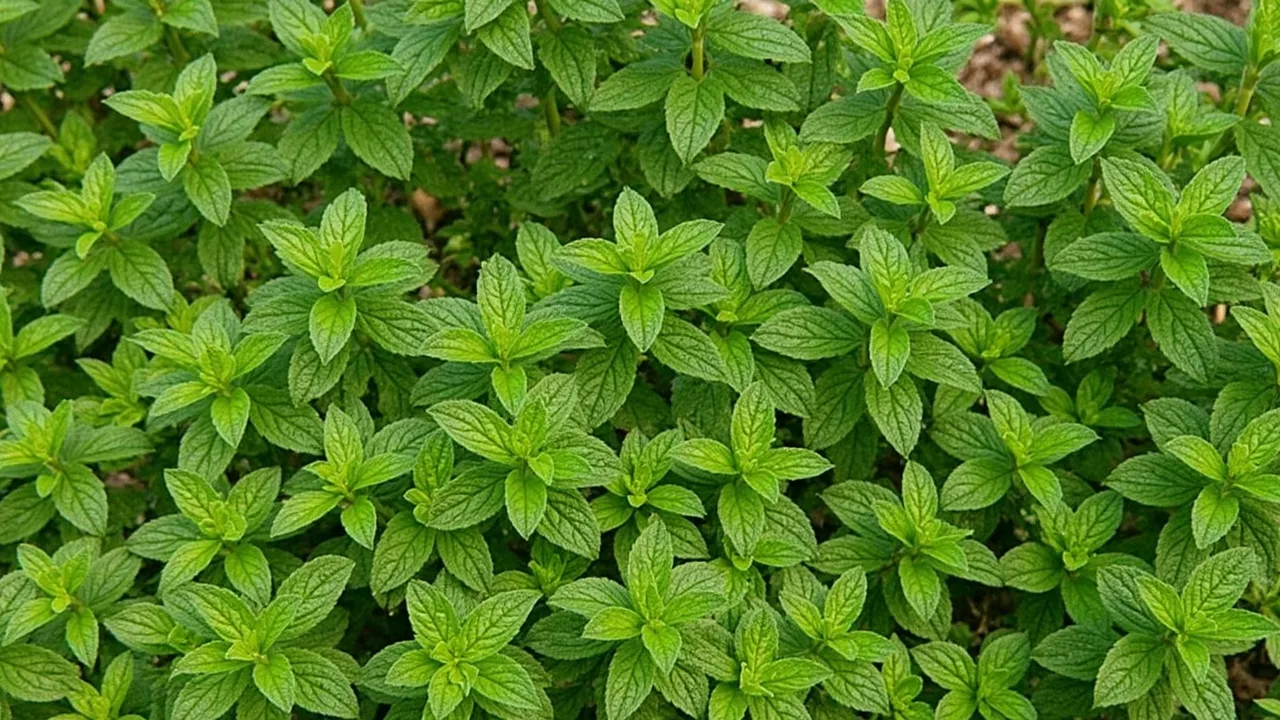
Common Mint forms an upright to slightly sprawling clump 30–90 cm tall, built from square stems typical of the mint family. The leaves are bright green, lance-shaped to narrowly oval, 3–7 cm long, with sharply serrated margins and a characteristically wrinkled, slightly puckered surface. They are arranged in opposite pairs along the stem and release a clean, cool, sweet scent — distinct from the sharper, more mentholated smell of peppermint — when bruised or crushed.
In high summer, usually from late June through August, the plant produces slender tapering flower spikes at the stem tips. The individual flowers are small, tubular and two-lipped, in shades of pale pink, lilac or white, and are very attractive to bees, hoverflies and other pollinating insects. Underground, the plant extends a network of pale rhizomes that send up new shoots at a distance from the parent, which is why an isolated clump can become a sizeable colony within a season.
Growing Conditions
Common Mint is one of the most accommodating herbs in UK cultivation. It is fully hardy, tolerating winter lows of roughly –15 °C to –20 °C (comparable to an RHS hardiness rating of H5 to H7, with established plantings surviving the worst British winters in well-drained soil). It grows in any reasonable garden soil provided it does not dry out for long periods: a moist, fertile loam is ideal, but it will also accept heavier clay better than most Mediterranean herbs. Soil pH from slightly acidic to neutral (about 6.0–7.5) suits it well.
In terms of position, it performs best in full sun, which gives the strongest aroma and the most compact growth, but it tolerates light or partial shade very well — useful on north-facing walls or in courtyards. Because it is a plant of damp ground by nature, sites that stay slightly moist through summer are preferable to free-draining hot borders. It grows readily across the whole of the UK, from the Highlands to the Channel Islands, and is not troubled by salt-laden coastal winds provided the soil is not parched.
Planting and Care
Plant pot-grown specimens from a garden centre or herb nursery in spring or early autumn, when the soil is workable and rainfall is reliable. Space plants 45–60 cm apart to allow for lateral spread, and water in well. Container growing is the simplest long-term strategy: a 20–30 cm pot filled with loam-based compost will keep a single plant productive for several years. If planting in open ground, either sink a bottomless bucket or large pot to contain the rhizomes, or use a sturdy root-barrier membrane to a depth of at least 30 cm.
Watering is the main summer task. Mint dislikes drying out, and the leaves quickly turn yellow and tough if the soil bakes. Water deeply once or twice a week in dry spells rather than little and often, and mulch in spring with garden compost to conserve moisture.
Feeding needs are modest. A single spring mulch of garden compost, or a liquid feed of seaweed or dilute comfrey every three to four weeks through the growing season, is plenty. Over-feeding produces lush but weakly flavoured leaves.
Pruning is best done hard. Cut the whole plant back to a few centimetres above ground after flowering finishes in late summer: this encourages a fresh flush of tender leaves for autumn picking and stops the plant from looking straggly. In late winter, cut any remaining dead stems before new shoots emerge in March or April.
Propagation is straightforward and can be done almost any time the plant is in active growth. Lift a clump in spring or autumn and divide it with a spade into smaller pieces, each with roots and shoots, replanting immediately. Alternatively, take 5–10 cm soft-tip cuttings in late spring and root them in a glass of water or a pot of moist compost; they root in two to three weeks.
Seasonal care in the UK is light. New growth appears from April, peak leaf production is from May to July, flowers open from late June to August, and the top growth dies back after the first hard frost in October or November, with roots safely dormant through winter. Top-dress containers each spring with fresh compost, and replace the plant entirely every three to four years when it begins to lose vigour.
Common Problems
The main problems of Common Mint in UK gardens are fungal and are usually the result of either drought stress or poor air circulation.
- Mint rust (Puccinia menthae) is the most distinctive disease: small orange, brown or yellow pustules on the undersides of leaves and sometimes stems, with corresponding pale spots above. It is worse in damp, crowded beds. Remove and bin (do not compost) badly affected plants, water at the base rather than over the foliage, and replace the soil or relocate new plants at least a metre away.
- Powdery mildew appears as a white, dusty coating on leaves in late summer, especially after a dry spell followed by humid weather. Improve airflow by thinning stems, water consistently, and clear fallen debris in autumn.
- Verticillium wilt causes leaves to yellow and stems to collapse despite moist soil. There is no cure; lift and destroy affected plants and avoid replanting mint in the same spot for at least three years.
- Aphids cluster on fresh shoot tips from late spring; a strong jet of water or a spray of insecticidal soap controls them without harming the leaves for kitchen use.
- Spider mites can be a problem in very hot, dry summers or on container plants under glass, causing fine pale mottling on leaves. Raising humidity by misting and watering the soil regularly usually keeps them in check.
- Spreading beyond its allotted space is the most frequent complaint: contain the rhizomes as described above, and dig out any escape shoots promptly.
Popular Varieties
Common Mint is most often grown as the species itself, but several named forms are widely available in UK nurseries and are worth seeking out.
- 'Tashkent' is a tall, vigorous form with larger, darker leaves and a particularly strong, sweet spearmint flavour; it is popular with cooks and is said to come from the Tashkent region of Uzbekistan.
- 'Moroccan' is a more compact, slightly smaller-leaved selection, traditionally preferred for tea-making in North Africa and increasingly sold in the UK for that purpose.
- 'Crispa' (sometimes listed as curled spearmint) has attractively waved or curled leaf margins and a milder flavour; it is grown mainly as an ornamental or for garnishes.
- 'Kentucky Colonel' is the classic American spearmint used in juleps and fruit cups, but it grows and flavours perfectly well in the UK and is a good choice for drinks.
- 'Variegata' (pineapple mint in some listings) is a form with cream-and-green splashed leaves and a softer, slightly fruity aroma; it is less vigorous than the type and useful in containers.
When buying, choose named cultivars from a reputable herb nursery to be sure of flavour and vigour, and avoid unnamed plants labelled simply "garden mint" where possible, as they can be seedlings or hybrids with weaker scent.
Pests and Diseases
| Problem | Symptoms | Management |
|---|---|---|
| Mint rust | Dusty orange, yellow, and black pustules appear on leaves and stems, causing shoot distortion and leaf loss. | Remove infected plants and rhizomes promptly; heat-treat healthy rhizomes in 44°C water for 10 minutes to eradicate spores. |
| Slugs and snails | Irregular holes chewed into leaves and stems, often accompanied by silky trails and slimy residue. | Use physical barriers like copper tape or crushed eggshells, and set out beer traps or nematodes for control. |
| Powdery mildew | A white, dusty fungal growth covers the leaves and stems, potentially causing yellowing and stunted growth. | Improve air circulation, avoid overhead watering, and apply a biological fungicide if infection is severe. |
| Blue mint beetle | Small metallic blue beetles and their larvae chew irregular holes in the foliage. | Hand-pick adults and larvae regularly; encourage natural predators like birds and ground beetles. |
| Sage leafhopper | Leaves become stippled with tiny white or yellow spots and may curl or distort as feeding progresses. | Monitor plants closely and use insecticidal soap or horticultural oil for heavy infestations. |
For step-by-step help, read Dealing with Slugs and Snails and Treating Powdery Mildew. Or browse the full plant problem solver to diagnose an issue by symptom.
As an Amazon Associate, GardenWizz earns from qualifying purchases made through links on this page (including links within the article). This does not affect the price you pay. See our disclaimer for details.