Mother Of Hundreds
Mammillaria compressa
The Gardening Year
Best months in UK gardens · full planting calendar →
🖨 Printable care card (PDF)At a Glance
| Botanical name | Mammillaria compressa |
|---|---|
| Common name(s) | Mother of hundreds |
| Family | Cactaceae |
| Plant type | succulent |
| Height × Spread | 50 cm × — |
| Position | Full sun |
| Soil | Loam Sand |
| Flowering | January, February, March, April, May, December |
| Toxicity | — |
| Native range | northern and southern Mexico |
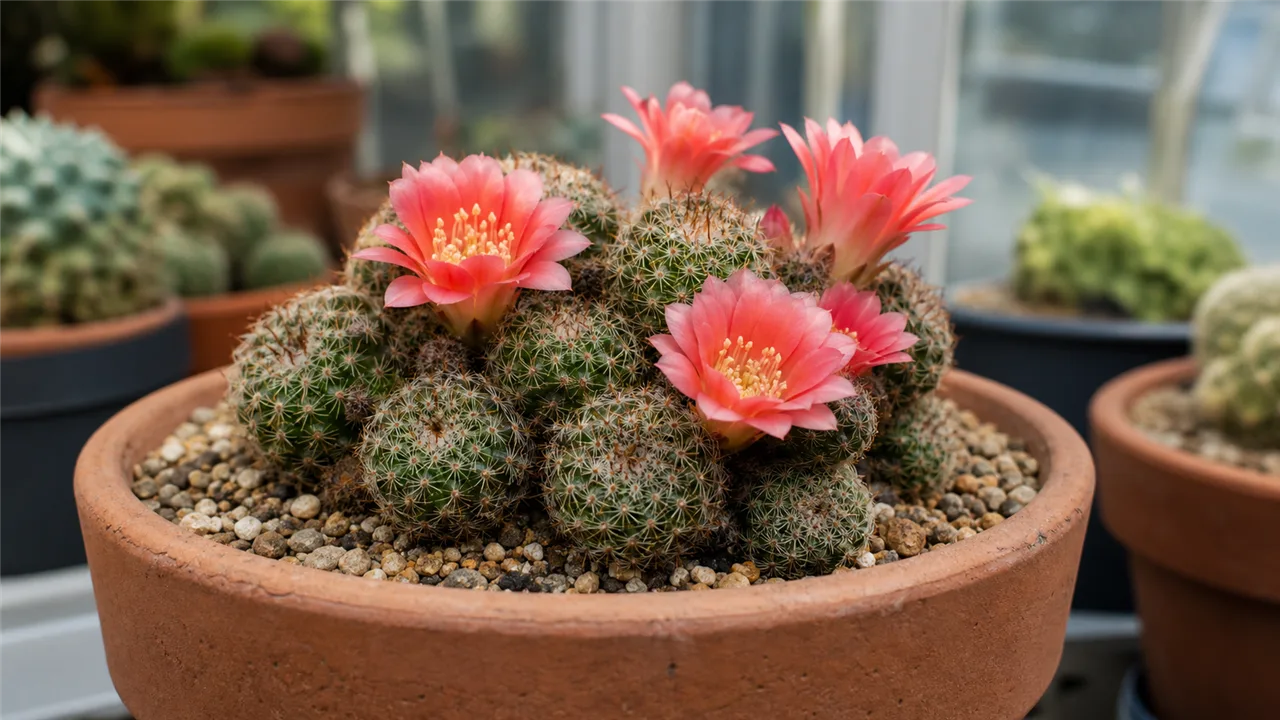
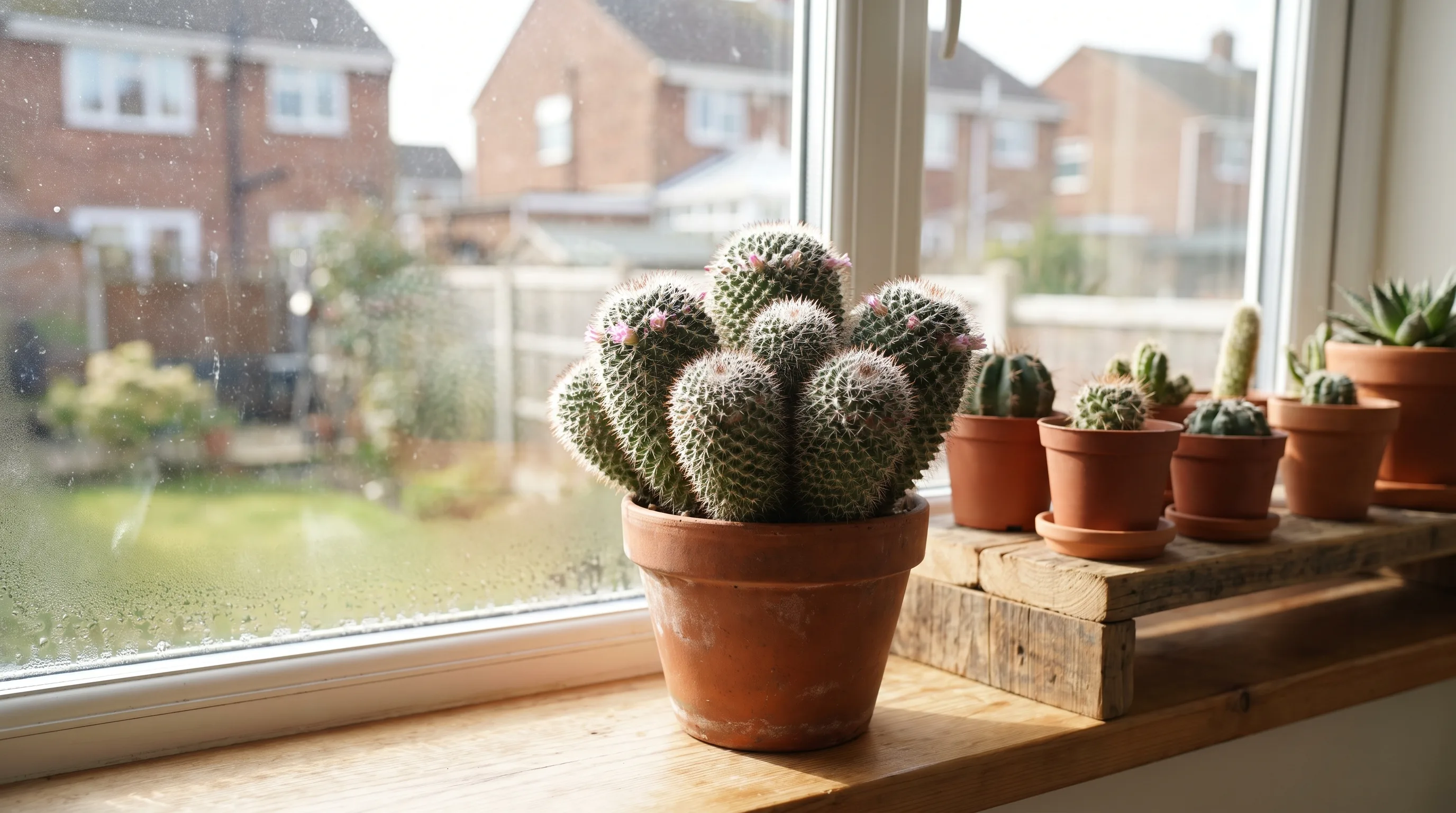
Mother of hundreds (Mammillaria compressa) is a clump-forming Mexican cactus with blue-grey stems, restrained spination and rings of pink flowers. Its freely produced offsets gradually make a broad specimen. In the UK it is best grown under glass or as a houseplant, where bright light, careful watering and a dry winter rest can be provided.
Overview
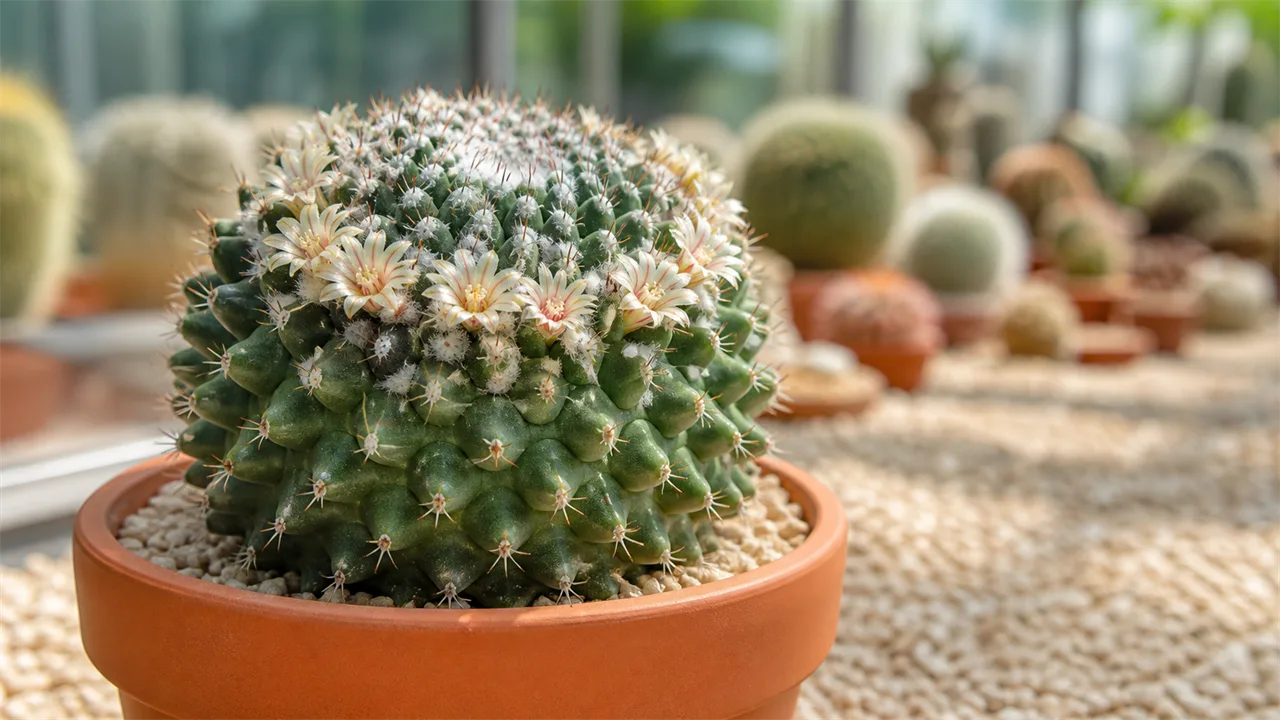
Mammillaria compressa belongs to the cactus family, Cactaceae, and is native to dry habitats in Mexico. Like other members of Mammillaria, it has no continuous ribs. Its surface is divided into spirally arranged tubercles, each ending in an areole with spines, while flowers arise from the axils between the tubercles. This structure gives the plant a neat, geometric appearance even when it is not in flower.
The species is particularly notable for producing offsets around the base and among older stems. A young plant may consist of one rounded or shortly cylindrical body, but an established specimen becomes a low colony of closely packed stems. This freely clumping habit explains the common name mother of hundreds. Its relatively sparse spines allow the grey-green to blue-grey stem colour to remain prominent.
British gardeners should treat mother of hundreds as a plant for protected cultivation. It suits a sunny windowsill, bright conservatory or well-ventilated greenhouse where rainfall and winter moisture can be controlled. A container can spend settled summer weather outdoors in a sunny, sheltered position, but it should return under cover before prolonged autumn rain. Strong light during active growth, thorough but infrequent watering and an almost dry winter rest promote compact stems and encourage flowering.
Although it is slow compared with many leafy houseplants, the colony can eventually become substantial. Its modest rate of growth and tolerance of a close-fitting pot make it suitable for a cactus collection, a greenhouse bench or a bright indoor display. The spines still demand careful handling, especially where children or pets might brush past the plant, but no additional toxicity or safety claim should be inferred from its cactus habit.
Appearance
Individual stems are compressed-globose to short-cylindrical and become crowded as the plant ages. Their waxy-looking grey-green or blue-grey surface is divided into firm tubercles rather than ribs. The tubercles form visible spirals, and their axils may carry a little wool, particularly around the growing point and on younger growth. Older plants often develop a gently irregular outline as offsets compete for space.
Each areole carries a modest cluster of stout, pale radial spines, often with brownish or darker tips. Central spines are usually absent. Spination can vary among seed-raised plants, so identification should consider the whole plant: its compressed-looking stems, muted colouring, sparse spines and marked tendency to form colonies. Dust should be removed with a soft artist's brush rather than by wiping, which can damage spines or skin.
Mature plants produce small pink to pinkish-red flowers from axils near the stem apex. Several opening together create a partial or complete ring around the upper stem. Under UK glass, the main display is normally in spring or early summer, often between April and June, provided the plant has received abundant light and a distinct winter rest. Flowers may be followed after successful pollination by elongated red fruits that stand out against the muted stems and may contain viable seed.
Growing Conditions
Give the plant the brightest practical position. Full sun encourages sturdy, compact stems, good colour, strong spination and flower-bud formation. A south- or west-facing greenhouse or conservatory position is suitable, while a houseplant should stand close to a sunny window rather than at the back of a room. Turn a windowsill pot periodically so that the clump develops evenly. Newly purchased plants and specimens moved outdoors should be acclimatised over a week or two, because an abrupt increase in direct sun can scorch previously shaded tissue.
Drainage matters more than fertility. The supported soil profile is well-drained loam and sand; in a pot, reproduce this with a peat-free cactus compost containing a substantial proportion of coarse horticultural grit, pumice, perlite or another stable mineral material. The finished mix should wet evenly but release surplus water quickly. Avoid undiluted garden soil, very fine sand and moisture-retentive multi-purpose compost, all of which can settle around the roots and remain wet for too long.
Choose a container with an unobstructed drainage hole. Terracotta dries readily and can help in a cool greenhouse, although it may require closer attention during hot weather. Plastic retains moisture longer and can work well in a warm, sunny position if the compost is especially open. A shallow, reasonably broad pot often suits the spreading root system and clumping habit better than a deep container. Do not place a small root ball in a greatly oversized pot, as unused wet compost increases the risk of decay.
Good airflow is valuable throughout the year. In summer, a sheltered outdoor position can provide excellent sunlight, but protect the pot from prolonged rain, slugs and accidental waterlogging. Bring it under cover during September or sooner if conditions turn persistently cool and damp. Through winter, provide maximum available light, excellent ventilation and almost dry compost. Avoid placing it immediately above a radiator, where fluctuating heat and poor light may distort growth.
Planting and Care
Repot in spring, usually only when offsets crowd the rim, roots fill the container or the compost has broken down. Wear sturdy gloves and use a folded strip of paper, padded tongs or a cardboard loop to support the clump without crushing stems. Ease away loose, exhausted compost and inspect the roots for rot or root mealybug. Set the plant at its previous depth because burying green stem tissue encourages decay. After repotting into dry mix, wait several days before the first light watering so minor root damage can callus.
From about April, as longer days stimulate growth, water thoroughly until surplus runs from the drainage hole. Empty saucers and decorative outer pots immediately, then allow the compost to dry all the way through before watering again. The interval may be short in a hot greenhouse and much longer on a cool windowsill, so a fixed weekly schedule is unreliable. Water early in the day and aim at the compost rather than repeatedly wetting the woolly stem axils.
Reduce watering during September as growth slows. From late autumn through winter, keep the compost almost completely dry. A resting plant in cool, bright conditions generally needs no routine watering. In a warmer room, a very small drink may be justified if the stems become severely shrivelled, but regular winter watering greatly increases the risk of root and basal rot. Mild seasonal contraction is normal and should not automatically prompt irrigation.
Feed sparingly during active growth. Apply a diluted, low-nitrogen cactus fertiliser after watering once in late spring and once or twice more by midsummer. Do not feed dry roots, recently repotted plants or resting specimens. Excess nitrogen combined with generous watering produces soft, distorted tissue that is more vulnerable to pests and rot.
Routine pruning is unnecessary. Remove only spent flowers, dried fruit or a badly damaged or diseased stem, using a clean blade and allowing any cut to dry fully. Crowded clumps can instead be divided by detaching offsets in late spring or summer. Select a healthy offset with roots if possible. Leave a rootless or freshly cut offset in a dry, airy place until the wound forms a firm callus, then stand it on gritty compost. Keep the medium only barely moist until new roots establish.
Propagation from seed is also possible, though it is slower and seedlings may vary. Sow fresh seed in spring on the surface of sterilised, fine, free-draining cactus compost. Cover the container to maintain gentle humidity during germination, provide bright filtered light, and ventilate progressively once seedlings appear. Keep young plants slightly more evenly moist than adults but never saturated, then pot them individually only when they are large enough to handle safely.
Seasonal care centres on gradual transitions. In March and April, improve ventilation and increase direct light carefully before resuming water. From May to August, check compost dryness frequently, feed lightly and shade only if exceptional heat behind glass risks scorching. In September, stop feeding and lengthen the interval between waterings. From October to February, prioritise light, dryness, airflow and cleanliness, removing fallen flowers and debris that could harbour pests.
Common Problems
Rot is the most serious problem. Soft, dark, translucent or collapsing tissue at the base usually follows excess moisture, especially when light is poor and conditions are cool. Stop watering, unpot the plant and remove affected tissue with a sterile blade. Healthy offsets may be salvaged above the damage, callused and rooted separately, but advanced rot spreading through the clump is difficult to reverse. An open compost, correctly sized pot and dry winter regime are the best prevention.
Mealybugs appear as white waxy deposits among tubercles, axillary wool and tightly packed offsets. Root mealybugs are less obvious and may reveal themselves as white residue around roots or drainage holes, accompanied by stalled growth. Isolate an affected plant, remove visible insects carefully and inspect neighbouring cacti. A serious or recurring infestation may require replacing the compost, cleaning the pot and following current UK label directions for a treatment approved for ornamental plants.
Red spider mites can cause fine pale stippling, bronzing and loss of colour, especially in a hot, dry greenhouse with little airflow. Examine the plant closely with a hand lens and check nearby specimens. Improve ventilation, isolate the affected plant and use only a control authorised for the crop and setting, following its label exactly. Avoid indiscriminate misting as a remedy, because water held within a dense colony can encourage decay.
Brown or bleached patches on the sunny side are often scorch, particularly after an abrupt move outdoors or closer to glass. Damaged tissue will not regain its colour, although healthy growth may gradually make the blemish less prominent. Introduce stronger sun in stages. Conversely, elongated pale stems and widely spaced tubercles indicate insufficient light; improve the position gradually and do not try to correct weak growth with additional fertiliser.
Failure to flower is commonly associated with inadequate light, overfeeding or the absence of a distinct winter rest. A plant may also be too young or recovering from root disturbance. Correct the growing conditions and allow time rather than forcing growth with water. Corky tissue confined to the oldest stem bases can be a natural result of ageing, but rapidly spreading softness, discolouration or an unpleasant smell points instead to disease or rot.
Popular Varieties
No widely established named cultivars of Mammillaria compressa are consistently documented or commonly offered in the UK trade. Plants are generally sold under the species name, and natural differences in stem colour, spine number and clumping habit are often seed-raised variation rather than recognised cultivar characters.
Labels such as ‘blue form’, ‘short-spined form’ or ‘cluster form’ should therefore be treated as descriptive nursery wording unless accompanied by a traceable botanical or cultivar name. They do not necessarily represent stable, formally named selections. Where the article specification normally calls for three cultivars or varieties, reliable named choices are not applicable to this species; inventing names would be misleading. A healthy plant with an accurate species label is more valuable than an unsupported variety claim.
EXCERPT: Mother of hundreds is a blue-grey, clump-forming cactus for bright, protected UK cultivation. Learn its watering, soil and seasonal care needs. SEO_TITLE: Mother of hundreds (Mammillaria compressa) care guide
Pests and Diseases
| Problem | Symptoms | Management |
|---|---|---|
| Mealybugs | White, cottony fluff appears in stem joints and around the base of the plant. | Isolate the plant and treat with a systemic insecticide or dab spots with alcohol-soaked cotton wool. |
| Root mealybugs | Plant shows signs of decline, stunted growth, or wilting despite adequate watering. | Repot into fresh compost and treat the root ball with a systemic insecticide drench. |
| Vine weevil | Semi-circular notches on stem margins and grubs found in the compost when tipped out. | Check new arrivals by tipping out pots and apply a systemic insecticide granule to prevent infestation. |
| Root rot | Stems become soft, mushy, and discoloured, often starting from the base. | Ensure well-draining cactus compost and water sparingly in winter to avoid waterlogging. |
| Sunburn | Stems develop bleached, brown, or scorched patches on the side facing direct light. | Acclimate gradually to full sun and provide shade from intense midday summer heat. |
Or browse the full plant problem solver to diagnose an issue by symptom.
Recommended Products
GardenWizz earns a commission from qualifying purchases made through affiliate links on this page (including links within the article) — as an Amazon Associate, and from Thompson & Morgan via the Awin network. This does not affect the price you pay. See our disclaimer for details.