
How to Get Rid of Speedwell in Lawns
Creeping speedwells (Veronica species, including the common field and slender speedwells) are low-growing weeds that spread across UK lawns and the front of borders, forming dense mats studded with…

Creeping speedwells (Veronica species, including the common field and slender speedwells) are low-growing weeds that spread across UK lawns and the front of borders, forming dense mats studded with small blue flowers in spring. They are a particular nuisance in turf because they creep along the ground, rooting at the stem joints, and — crucially — they shrug off most of the selective lawn weedkillers that deal with other broadleaf weeds. Control therefore relies more on physical methods and lawn care than on chemicals. This guide explains how.
How to identify it
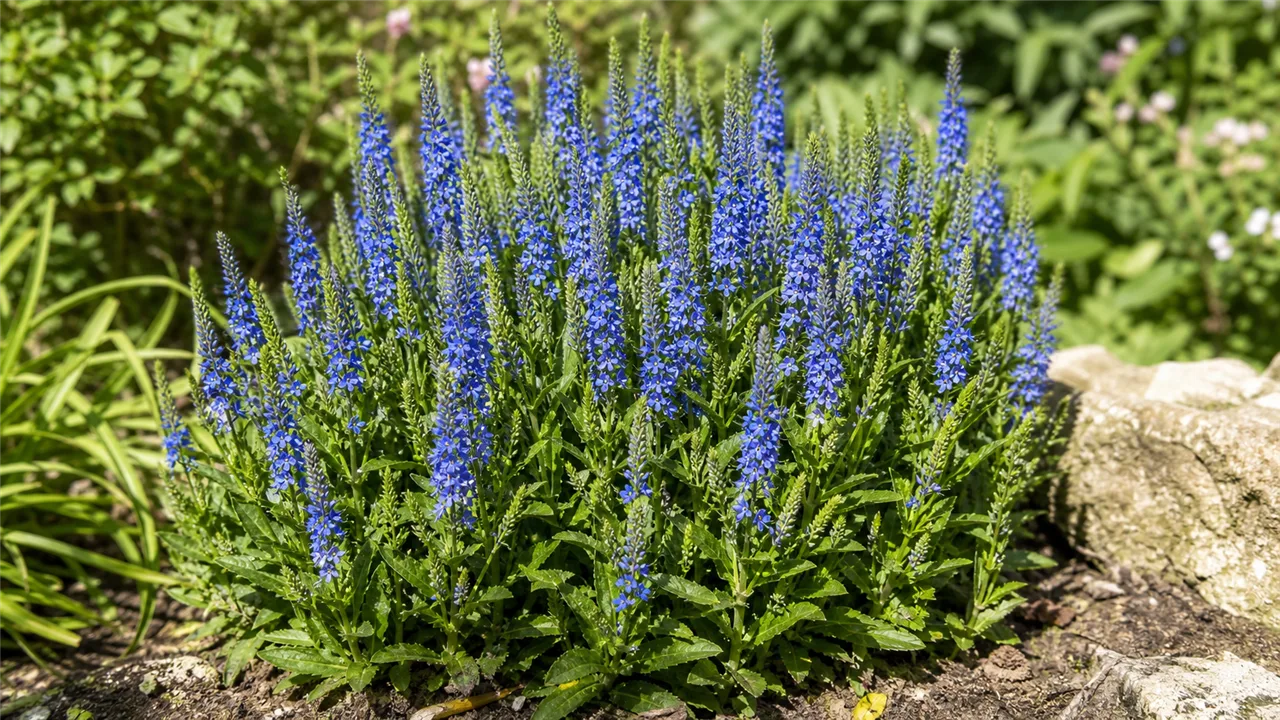
Speedwells form low, spreading mats of small, rounded or oval, scalloped leaves on creeping stems that root where they touch the soil. In spring they are covered in tiny, four-petalled flowers, usually sky-blue with a white eye. In a lawn they appear as flat, slightly darker patches that the mower passes straight over; in borders they spread quietly across bare soil between plants.
How to get rid of speedwell
Rake before mowing. A useful trick in lawns is to vigorously rake or scarify the area before mowing, which lifts the creeping stems up off the ground so the mower cuts and removes them. Repeated over the season this steadily weakens the mat.
Hand-weed and scarify. In borders and small lawn patches, pull or scrape out the mats by hand — they are shallow, though stems left behind will re-root, so be thorough. In turf, autumn scarifying to remove the creeping growth and thatch is one of the most effective treatments.
Strengthen the lawn. Speedwell exploits thin, undernourished turf, so feeding the grass, overseeding bare patches and mowing at a sensible height to thicken the sward all help the grass out-compete it.
Why weedkiller often fails. Unlike most lawn weeds, speedwell is resistant to many standard selective lawn weedkillers, so spraying frequently disappoints. There is no reliable amateur selective product for it, which is why the physical methods above — raking, scarifying and lawn vigour — are the mainstay. For borders, a glyphosate spot-treatment will kill it but will also kill any grass or plants it touches.
Stopping it coming back
A dense, well-fed lawn is the best defence, as speedwell cannot establish in thick turf. Scarify annually to keep creeping stems and thatch in check, overseed thin areas, and in borders keep soil mulched so the trailing stems find no bare ground to root into.
When to call a professional
A lawn-care service is worth considering only if speedwell has taken over a tired lawn that needs full renovation — scarifying, aerating, feeding and overseeding — rather than spot treatment, since no quick chemical fix exists for this particular weed.
Plants in this guide
Recommended Products
GardenWizz earns a commission from qualifying purchases made through affiliate links on this page (including links within the article) — as an Amazon Associate, and from Thompson & Morgan via the Awin network. This does not affect the price you pay. See our disclaimer for details.
Related Articles
More → Problem Solver
Apple Scab: How to Identify and Treat It
22 July 2026Apple trees in your garden can be a source of joy, but apple scab can turn your harvest into a disappointing mess of distorted, blackened fruit. This common fungal disease, caused by Venturia…
 Problem Solver
How to Get Rid of Burdock
21 June 2026Lesser burdock (Arctium minus) is a large biennial weed of UK hedgerows, waste ground and the neglected corners of gardens. In its first year it builds a broad rosette and a deep taproot; in its…
 Problem Solver
How to Get Rid of White Bryony
21 June 2026White bryony (Bryonia dioica) is a fast-growing perennial climber found scrambling through UK hedges, fences and shrubs, mainly in England. It is Britain's only native member of the cucumber family,…