Small Yellow Onion
Allium flavum
The Gardening Year
Best months in UK gardens · full planting calendar →
🖨 Printable care card (PDF)At a Glance
| Botanical name | Allium flavum |
|---|---|
| Common name(s) | Small Yellow Onion |
| Family | Amaryllidaceae |
| Plant type | bulb |
| Height × Spread | 10–40 cm × 0–50 cm |
| Position | Full sun |
| Soil | fertile well-drained soil |
| Flowering | June–July |
| Toxicity | — |
| Native range | lands surrounding the Mediterranean, Black, and Caspian Seas, from areas like France and Morocco to Iran and Kazakhstan |
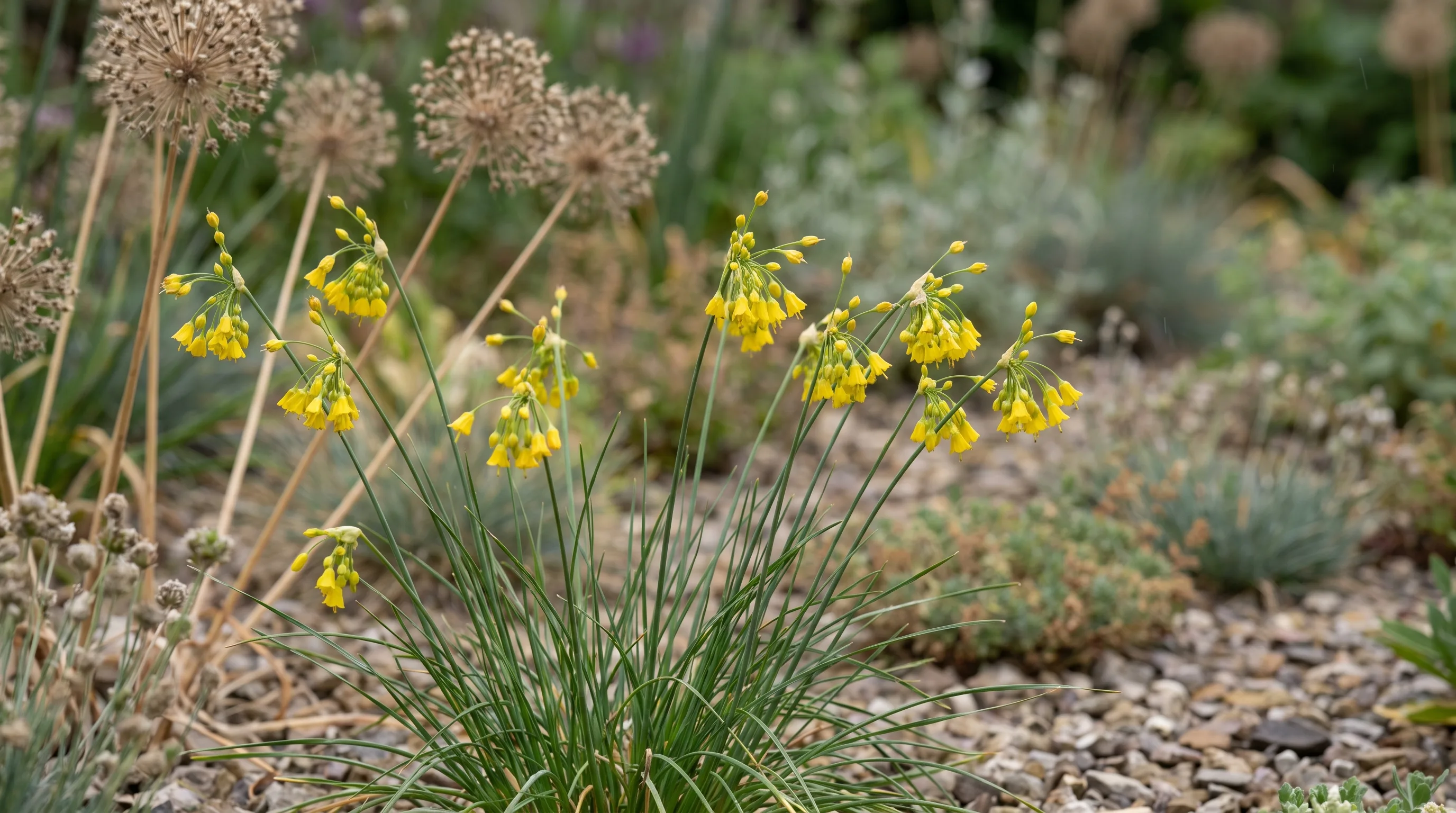
Allium flavum, commonly known as yellow-flowered garlic or small yellow onion, is a compact ornamental bulb valued for loose heads of nodding yellow flowers. Its fine texture and preference for sun-baked, freely drained ground make it particularly useful in gravel gardens, rock gardens and troughs.
Overview
Allium flavum is a relatively small member of the onion genus, part of the Amaryllidaceae family. It occurs naturally across parts of southern and central Europe and western Asia, principally in dry, open places where the soil is thin, stony and quick to shed water. Those origins explain both its ornamental character and its main cultivation requirement: abundant sunlight combined with excellent drainage.
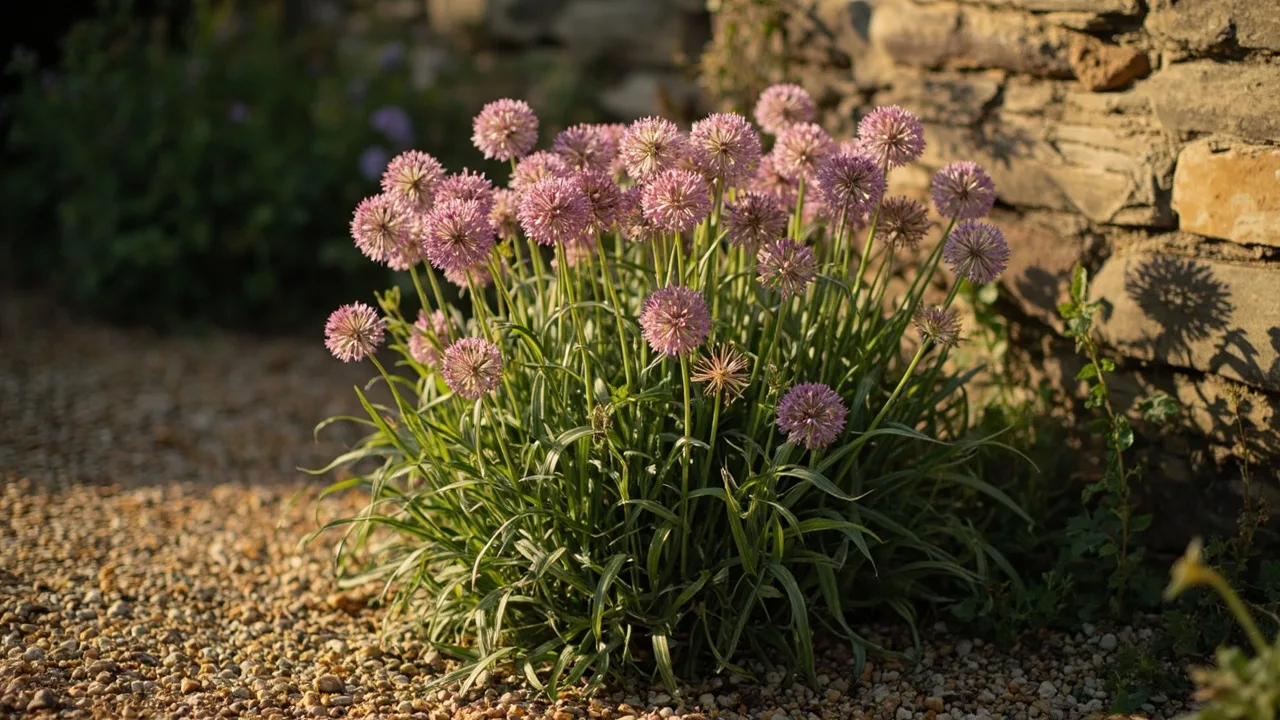
Unlike the large ornamental alliums grown for dense, almost architectural spheres, this species produces loose, airy umbels. The individual flowers hang or spread on unequal, fine stalks, giving each flower head a light, mobile quality. The clear yellow colouring is also unusual among garden alliums and shows particularly well against gravel, dark stone, blue-grey foliage or purple-flowered companions.
In the UK, yellow-flowered garlic is best suited to a sunny rockery, alpine bed, raised border, gravel garden or a container kept on the dry side. It can remain in the ground where winter wet is not a problem. In gardens with heavy clay or high rainfall, a raised position or pot offers more reliable control over drainage. It is deciduous: growth emerges from the bulb, flowers in early to midsummer, then dies back as the bulb enters dormancy.
This is chiefly an ornamental species rather than a culinary crop. Its flowers are useful to visiting insects, while its small stature makes it easiest to appreciate near a path, at the front of a border or in an elevated trough.
Appearance
The plant grows from a small underground bulb and forms a low tuft of narrow, linear leaves. The foliage is typically grey-green rather than bright green, contributing a restrained, drought-adapted appearance. Leaves and bulbs release the characteristic onion or garlic scent of the genus when bruised. As with many ornamental alliums, the leaves may begin to yellow or collapse while the flowers are opening; this is a normal stage in the plant's annual cycle.
Slender, upright, usually leafless flowering stems lift the umbels above the foliage. Mature plants generally reach about 20–45 cm in height, although local conditions influence vigour. Rich, moist ground can encourage softer growth, whereas strong light and leaner soil tend to maintain the compact habit that suits the species.
Flowering normally falls in June and July. Each loose umbel contains numerous small, bell-shaped yellow flowers, often nodding rather than facing directly upwards. Their unequal stalks create an informal spray instead of a solid globe. This open structure allows nearby planting to remain visible through the flower head and makes A. flavum effective among low grasses, silver-leaved plants and other drought-tolerant perennials.
After pollination, dry seed capsules develop. These can add a modest textural effect, but the spent stems may be removed if seedlings are not wanted. Once the leaves have fully yellowed, the visible plant disappears below ground. Marking the planting position can prevent accidental disturbance during dormancy.
Growing Conditions
Full sun is essential for sturdy stems and dependable flowering. Choose the warmest open position available, avoiding shade cast by shrubs, walls or taller perennials during the growing season. A south- or west-facing rock garden, raised bed or gravelled border edge is often suitable. Good air movement also helps foliage dry promptly after rain.
The soil should be sharply drained. A gritty, sandy or stony medium reflects the plant's natural habitat, while neutral to alkaline conditions are generally preferable. Moderate fertility is sufficient; heavily enriched soil can produce lush, weak growth without improving the display. On clay, simply adding a little grit to a planting hole rarely solves wider drainage problems. A properly raised bed, substantial mineral amendment across the whole growing area, or container cultivation is safer.
Bulb rot is much more likely in persistently wet soil, especially while the plant is dormant. Winter drainage therefore matters as much as summer warmth. Avoid low points where rain collects and do not position the bulbs beneath an automatic irrigation line. Established plants cope well with dry summer spells after the foliage has died down.
For containers, use a pot with generous drainage holes and a free-draining, peat-free compost mixed with horticultural grit. A terracotta pot can help excess moisture evaporate, though any container must be raised so its holes remain unobstructed. Pots need occasional watering during active spring growth because their compost dries faster than open soil, but they should never stand in a water-filled saucer.
Planting and Care
Plant dry bulbs from September to November, while the soil is workable, with the pointed end uppermost. A useful general depth is about three times the bulb's own height. Allow enough space for offsets to form a small clump rather than packing bulbs tightly. In containers, several bulbs can be grouped for effect, but each still needs surrounding compost and an unobstructed route for drainage.
Water once after planting to settle soil around the bulbs. Thereafter, established plants in open ground usually need little additional water. During prolonged dry weather in spring, water sufficiently to moisten the root zone, then allow the surface to dry before watering again. Reduce watering as the leaves turn yellow. Dormant bulbs should be kept comparatively dry, particularly in pots under winter rainfall.
Feeding should be restrained. In ordinary garden soil, an annual rich feed is unnecessary. Where bulbs have remained in the same container for several years, a light application of a balanced fertiliser as growth begins can support flowering. Avoid high-nitrogen feeds, which favour leaves at the expense of compact stems and flowers.
Routine pruning is neither necessary nor appropriate for this bulb. If seed is not required, remove a faded flower stem at its base once flowering has finished. Leave all green foliage untouched until it has yellowed naturally, because the leaves are replenishing the bulb for the following season. Cutting them down early can weaken future growth. The structured bulb calendar should show autumn planting and June–July flowering; it should not show a pruning or sowing event.
Propagation is most reliable by separating offsets from an established clump. Lift and divide only when plants have become congested or flowering has declined, working during dormancy after the foliage has died back. Ease the bulbs apart, discard any that are soft or damaged, and replant sound offsets promptly at the original depth. There is no need to lift healthy clumps annually in a suitably drained UK site.
Seed propagation is possible but slow. Allow selected capsules to ripen and collect the seed before it is scattered. Raise seedlings in pots of free-draining compost and protect them from excessive wet; several years may pass before they reach flowering size. Seed-raised plants may also vary, so offsets are preferable when preserving the character of a named selection.
Seasonal care is mainly a matter of respecting dormancy. Protect emerging spring shoots, water only during genuine drought, let foliage fade naturally after flowering, and keep wet leaf litter away from the bulbs in winter.
Common Problems
Bulb rot is the most significant cultural problem. Poor emergence, soft bulbs and collapse at the base often follow prolonged waterlogging. Prevention is more effective than treatment: improve drainage across the bed, use raised planting or move container-grown specimens under shelter from relentless rain. Remove rotten bulbs and do not replant sound stock into the same persistently wet pocket.
Onion white rot can affect members of the onion family. Plants may become yellow and stunted, with decay and pale fungal growth around the bulb. The organism can persist in contaminated ground, so badly affected material should be removed and not composted. Avoid moving suspect soil or bulbs to clean parts of the garden, and choose a different growing site.
Downy mildew is encouraged by damp, still conditions and can cause discoloured or distorted foliage. Provide an open, sunny position, space plants so air can circulate and direct irrigation towards the soil rather than repeatedly wetting the leaves. Remove severely affected material and clear dead foliage once it has detached naturally.
Allium leaf miner and onion fly may occur where these pests are established. Their larvae damage leaves or bulbs, sometimes leading to distorted growth and secondary rotting. Inspect plants that decline unexpectedly and dispose of seriously infested bulbs. Fine insect mesh can protect valuable container collections during adult activity, provided it is secured before eggs are laid.
Slugs and snails sometimes graze tender emerging leaves. Hand-picking after dark, reducing nearby hiding places and using wildlife-conscious barriers can limit damage. Minor holes seldom justify intervention. Yellow foliage during or shortly after flowering is normally seasonal dieback, not automatically a sign of disease; investigate only if yellowing begins unusually early or is accompanied by soft tissue, distortion or collapse.
Popular Varieties
The straight species, Allium flavum, is the form most often described and is a sound choice for its clear yellow, nodding flowers. Named selections are uncommon and not consistently available in UK nurseries. The RHS plant database records the following names, but some have unresolved name status, so buyers should check current nursery descriptions rather than assume that every name represents a stable, widely distributed cultivar.
- Allium flavum 'Apricot' is a recorded named selection. Detailed, authoritative descriptions are limited, and its name status is unresolved in the RHS database.
- Allium flavum 'Blue Leaf', also recorded under the synonym 'Glaucum', is associated by name with particularly glaucous foliage. Its name status is likewise unresolved in the RHS database.
- Allium flavum 'Golden Showers' is another recorded selection of the species, though it is far less commonly encountered than the straight yellow-flowered form.
Botanical variants may also appear in specialist collections, including subsp. tauricum and var. nanum. These are taxonomic forms rather than interchangeable marketing names. Their identity, dimensions and flower colour should be checked against a reliable supplier before purchase, as stock sold simply as A. flavum may represent the typical species.
Pests and Diseases
| Problem | Symptoms | Management |
|---|---|---|
| Slugs and snails | Irregular holes chewed in leaves and flowers, often accompanied by silky trails. | Use physical barriers like copper tape or apply iron phosphate pellets around the base. |
| Vine weevil | Notched edges on leaves above ground and root damage causing wilting below. | Apply nematodes to the soil in autumn or use biological controls for larvae. |
| Powdery mildew | White, dusty fungal growth on leaves and flower stems. | Improve air circulation and spray with a sulphur-based fungicide if severe. |
| Bulb rot | Bulbs become soft, mushy, and may emit an unpleasant odour. | Ensure well-drained soil and avoid overwatering to prevent waterlogging. |
| Rust | Orange or brown pustules appearing on the undersides of leaves. | Remove affected foliage and improve airflow around plants. |
For step-by-step help, read Dealing with Slugs and Snails and Treating Powdery Mildew. Or browse the full plant problem solver to diagnose an issue by symptom.
Recommended Products
GardenWizz earns a commission from qualifying purchases made through affiliate links on this page (including links within the article) — as an Amazon Associate, and from Thompson & Morgan via the Awin network. This does not affect the price you pay. See our disclaimer for details.