Hybrid Squill
Scilla × allenii
The Gardening Year
Best months in UK gardens · full planting calendar →
🖨 Printable care card (PDF)At a Glance
| Botanical name | Scilla × allenii |
|---|---|
| Common name(s) | Hybrid squill |
| Family | Asparagaceae |
| Plant type | bulb |
| Height × Spread | 10–50 cm × 0–10 cm |
| Position | Full sun, Partial shade |
| Soil | Chalk Loam Sand, well-drained, Acid or Alkaline or Neutral |
| Flowering | March–May |
| Toxicity | Potentially harmful. Ornamental bulbs - not to be eaten. Wear gloves and other protective equipment when handling. |
| Native range | — |
Overview
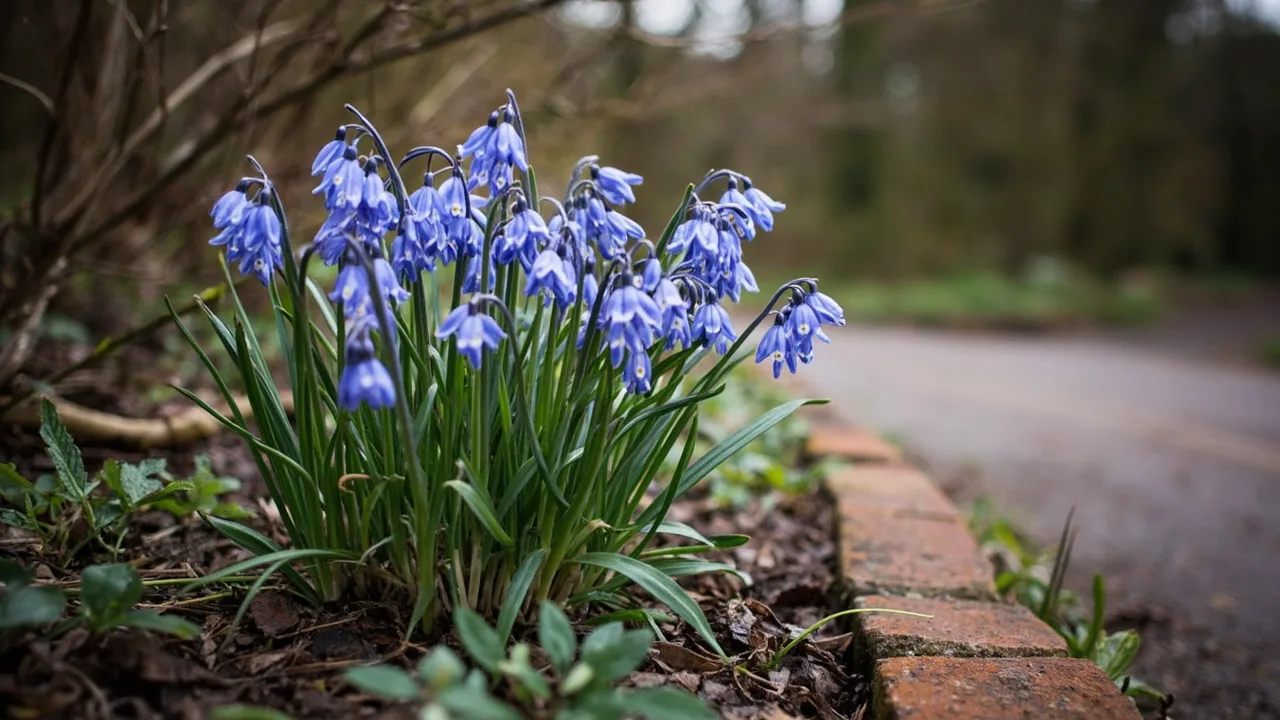
Scilla × allenii, commonly called the hybrid squill or Allen's squill, is one of the most quietly remarkable little blue bulbs a UK garden can carry in late winter and early spring. The "×" in the middle of the name is not a mistake or a stylism: it is part of the correct botanical name, signifying that the plant is a nothogenus hybrid, a naturally occurring cross between two closely related genera that have since been reunited. The formal description, by George Nicholson in 1897, honours James Allen of Park House, Shepton Mallet, Somerset, the celebrated "Snowdrop King" who noticed the hybrids self-seeding freely in his own garden in the late nineteenth century. Although the plant is technically a hybrid between glory-of-the-snow (formerly treated as Chionodoxa) and a Scilla, modern taxonomy places both parents within a single genus, so the cross is recorded as Scilla × allenii rather than as × Chionoscilla allenii. Compact, early, and reliably perennial, it sits naturally alongside snowdrops and winter aconites in any border or grass planting that is allowed a quiet moment in March.
Scilla × allenii belongs to the family Asparagaceae (subfamily Scilloideae). It is sometimes confused with the more familiar Siberian squill (Scilla siberica) or with alpine squill (Scilla bifolia), but both are pure species rather than this intergeneric hybrid.
Appearance
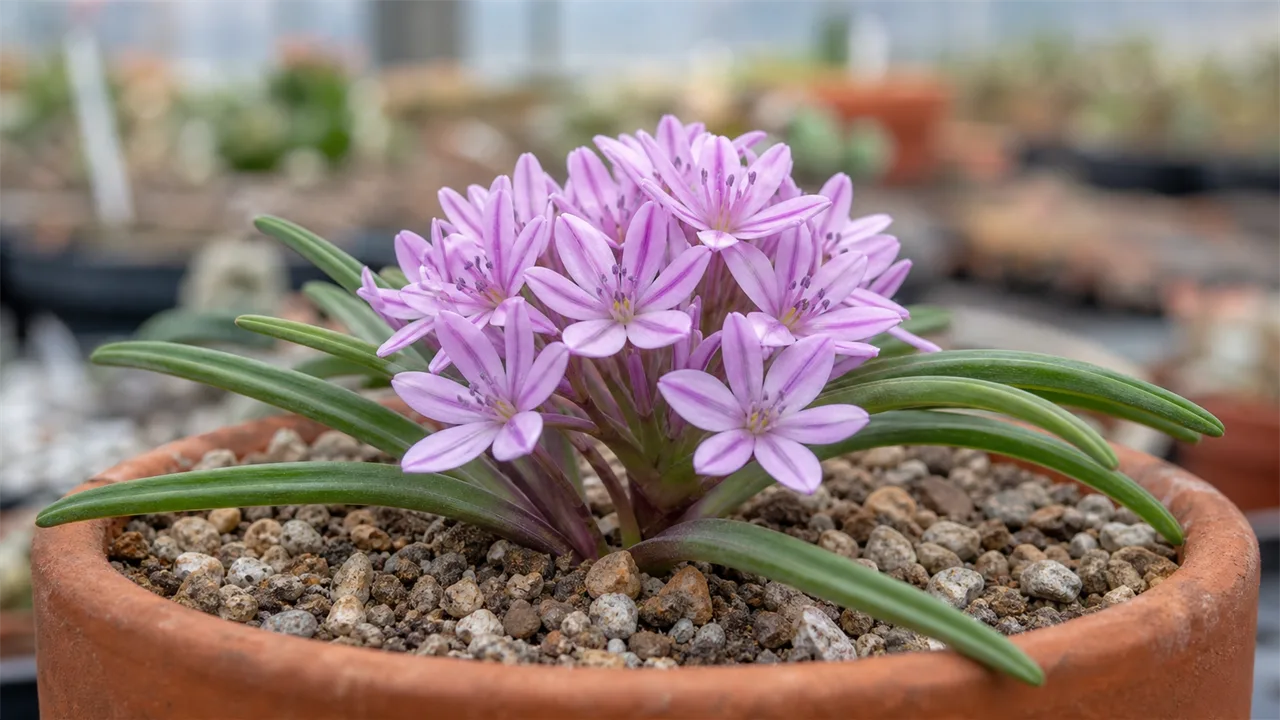
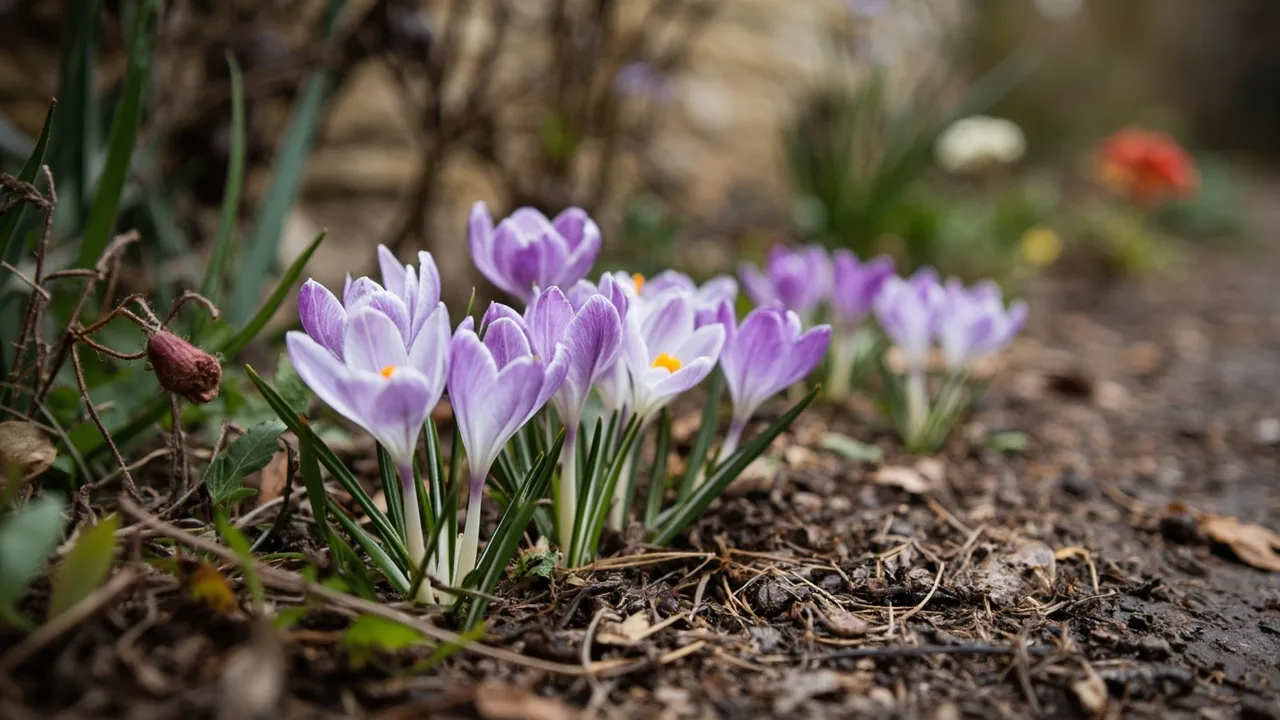
A flowering clump of Scilla × allenii in mid-March is a small, dense show of colour: each bulb sends up two or three strap-shaped, glossy mid-green leaves to about 10 cm long, held upright or becoming lax as they elongate. The flowers appear with or just after the leaves on short stems held just above the foliage, each stem carrying between two and six blooms in a loose, spreading raceme. Individual flowers are starry to shallowly bowl-shaped and around 2.5 cm across when fully open, with tepals (the six petal-like segments) divided right down to their base. That detail matters: in a true Chionodoxa the segments are fused at the base into a small tube, while in a true Scilla the segments are free to the base. Scilla × allenii is, in effect, intermediate between its two parents and shows the free tepals of its Scilla parent.
Colour ranges from pale to a fairly deep violet-blue, often with a slightly paler eye at the centre. A single established clump reads as a pool of blue at a distance and as a constellation of small stars close-to. The foliage dies back naturally by late spring, the bulb returning to dormancy well before summer border plants have filled in.
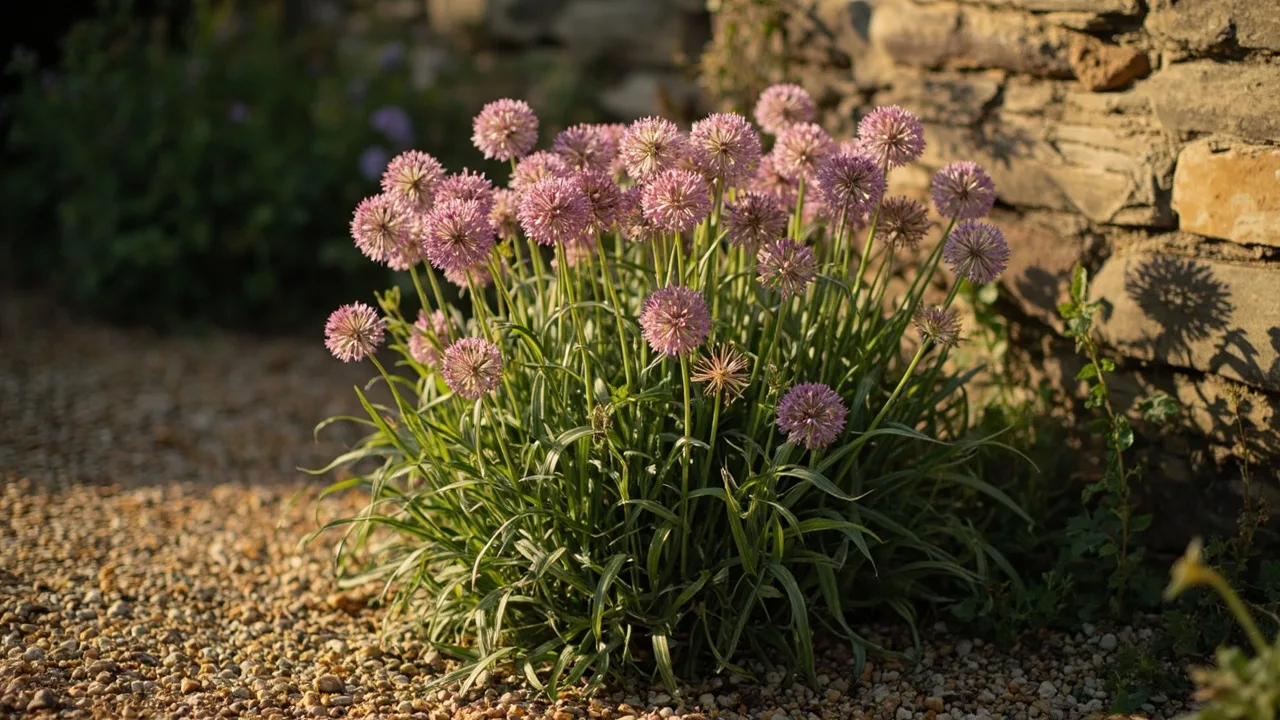
Plants bulk up slowly but steadily. A single bulb offsets to form a small cluster within three or four seasons; established clumps spread further by self-seeding where conditions suit. Self-sown seedlings are largely true to type because the hybrid is mostly sterile, although occasional reversions towards one parent are possible.
Growing Conditions
Scilla × allenii is rated by the RHS as hardy across all of the UK, and the Society describes it as taking any well-drained soil in sun or partial shade. It is happy in chalk, loam or sandy ground and tolerates acid to slightly alkaline pH, conditions inherited from the Chionodoxa parent. The one combination to avoid is wet, slow-draining ground: like most small bulbs it will rot if its neck sits in cold, saturated soil through winter.
The most successful plantings follow a few simple principles. Site the bulbs where they will receive winter and early-spring sun, which encourages a strong display, but where the foliage can be left to die back undisturbed afterwards. Short grass, the edge of a deciduous shrub border, a rock or gravel garden, and patio containers all suit it. The RHS specifically lists city and courtyard gardens, cottage and informal plantings, flower borders, the underplanting of roses and shrubs, and patio containers as appropriate. A sheltered aspect is helpful in colder inland and northern gardens but is generally not required in the south or near the coast; frost pockets and any position that has been cultivated at the expense of drainage should be avoided.
Companion plantings that share the same cool-spring window extend the season. Scilla × allenii pairs well with snowdrops, winter aconites, Cyclamen coum and dwarf narcissus such as 'Tête-à-tête'. Few of these will overshadow the squill at its peak, but together they give a layered display.
Planting and Care
Plant Scilla × allenii bulbs in autumn, any time from September to November while the soil is workable. Set each bulb at two to three times its own depth, roughly 8–10 cm. Space bulbs 5–8 cm apart for a tight carpet, or scatter 75–100 per square metre for a naturalised drift. Containers can go closer: about 10 bulbs in a 15 cm pot of peat-free multipurpose compost with grit above for drainage.
Water the bulbs in once at planting if the ground is dry. No routine winter irrigation is needed. In a dry spring an occasional soak during active growth helps the clump build up reserves, but established plantings rarely need supplementary water in the UK.
Feeding is unnecessary in average garden soil. On poor ground, a light top-dressing of leaf mould or well-rotted compost in late autumn is sufficient. High-nitrogen feeds are best avoided.
Pruning is not required. Leave the foliage to die back naturally after flowering; the bulb needs this period of photosynthesis to build up the next year's flower. If the squills are growing in short grass, set the mower blades high until mid-June or delay the first cut. A light trim of spent stems is fine where tidiness matters.
Propagation is straightforward. Lift offsets in summer once the foliage has died back, replant at the same depth and water in. Alternatively, collect ripe seed and sow in pots in a cold frame, keeping the compost shaded and just moist; seedlings flower in their second or third spring. Divisions are rarely needed more than once every four or five years.
Like many ornamental bulbs, Scilla × allenii is potentially harmful if eaten; wear gloves when handling a large quantity of bulbs, and site plantings where pets are unlikely to dig them up.
Common Problems
The RHS describes Scilla × allenii as "generally pest-free", and in practice it is one of the easier small bulbs to grow. The main issues in UK gardens are cultural rather than infectious.
In heavy or winter-wet ground, bulbs may fail to emerge in spring because the corms have rotted. Improving drainage, planting on a slope or in raised beds, or moving to containers with added grit, resolves this.
Slugs and snails can damage emerging shoots and young flowers in damp weather, particularly in shaded borders. Damage is rarely catastrophic for a mature clump but is conspicuous in a small new planting. Hand-picking at dusk, beer traps or copper tape around pots are usually enough; iron-phosphate slug pellets are an option where pressure is high.
A light infestation of aphids may appear on flower stems in late spring but is generally self-limiting as predators move in. Where heavy, a strong jet of water or insecticidal soap is enough.
The hybrid is occasionally noted by the RHS as susceptible to anther smuts and to virus diseases, but neither is routine in UK gardens. Anther smut shows as black spore masses on the anthers; affected plants should be removed and not composted. Virus symptoms (distorted or streaked foliage) are usually best dealt with by lifting and discarding the clump.
Self-seeding can be prolific in a cool, moist spring. This is useful where naturalising is wanted, but remember that mowing prevents seed ripening and so limits spread.
Popular Varieties
Scilla × allenii 'Frà Angelico' - the best-known selection in UK gardens, with pale to mid-blue flowers. It received the RHS Award of Garden Merit (AGM) in 2017 and remains the form most widely offered by UK nurseries. A reliable performer in sun or partial shade and the variety to seek first.
Scilla × allenii 'Beatrix' - a registered cultivar listed by the RHS, selected for its colour and habit. Stock is generally confined to specialist bulb growers and may need to be ordered rather than found on a garden-centre bench, but it is the second most likely named form to be encountered in collections.
Scilla × allenii (un-named hybrid stock) - the bulk of plants sold in the UK are un-named hybrid seedlings raised from open-pollinated parents. These are vigorous, well-coloured, and perfectly suited to naturalising, but the flowers vary slightly from one seedling to another. Where uniformity matters in a designed planting, seek out a named cultivar.
The species Hyacinthoides non-scripta (bluebell) shares a similarly coloured flower but is unrelated and a much larger, taller bulb; Scilla × allenii is also distinct from Chionodoxa forbesii despite their similar appearance and overlapping flowering time.
Sources & Further Reading
- Source: https://www.rhs.org.uk/plants/90067/scilla-allenii/details, accessed 2026-07-23
- Source: https://www.rhs.org.uk/plants/370261/scilla-allenii-fr-angelico/details, accessed 2026-07-23
- Source: https://www.rhs.org.uk/plants/370260/scilla-allenii-beatrix/details, accessed 2026-07-23
- Source: https://en.wikipedia.org/wiki/Scilla_%C3%97_allenii, accessed 2026-07-23
- Source: https://www.sheptonsnowdrops.org.uk/james-allen-snowdrop-king-galanthophile/, accessed 2026-07-23
- Source: https://www.rhs.org.uk/plants/90620/scilla-bifolia/details, accessed 2026-07-23
Pests and Diseases
| Problem | Symptoms | Management |
|---|---|---|
| Slugs and snails | Irregular holes in leaves and stems, with slimy trails visible on foliage. | Use physical barriers like copper tape or apply iron phosphate-based pellets. |
| Vine weevil | Notched leaf margins above ground and root damage causing wilting below. | Apply systemic insecticides to the soil or use biological controls like nematodes. |
| Powdery mildew | White, powdery fungal growth on leaves and stems, often causing distortion. | Improve air circulation and spray with a fungicide containing myclobutanil if severe. |
| Root rot | Yellowing, wilting foliage despite moist soil, indicating waterlogged roots. | Ensure well-draining soil and avoid overwatering to prevent fungal attack. |
For step-by-step help, read Dealing with Slugs and Snails and Treating Powdery Mildew. Or browse the full plant problem solver to diagnose an issue by symptom.
Recommended Products
GardenWizz earns a commission from qualifying purchases made through affiliate links on this page (including links within the article) — as an Amazon Associate, and from Thompson & Morgan via the Awin network. This does not affect the price you pay. See our disclaimer for details.