Pink Lily Leek
Allium oreophilum
The Gardening Year
Best months in UK gardens · full planting calendar →
🖨 Printable care card (PDF)At a Glance
| Botanical name | Allium oreophilum |
|---|---|
| Common name(s) | Pink lily leek |
| Family | Amaryllidaceae |
| Plant type | bulb |
| Height × Spread | 20 cm × 10–50 cm |
| Position | Full sun |
| Soil | fertile well-drained soil |
| Flowering | May–June |
| Toxicity | — |
| Native range | Western China to Turkey and the Caucasus |
Overview
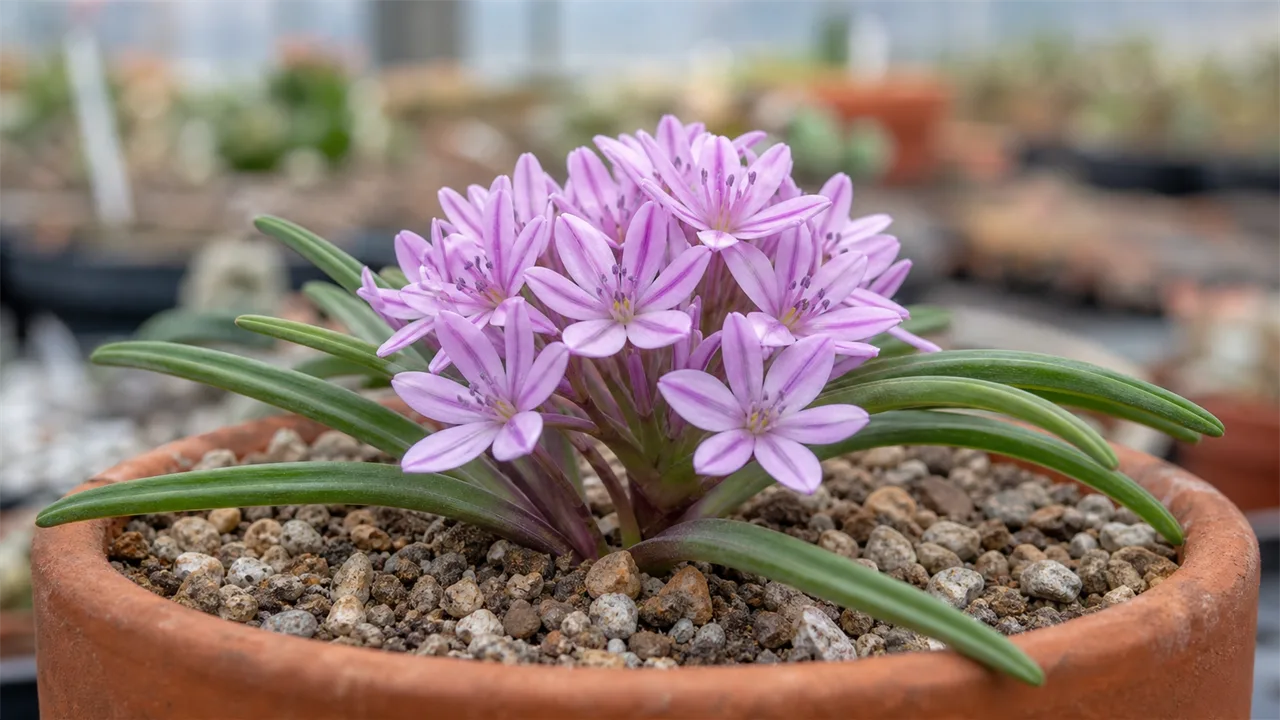
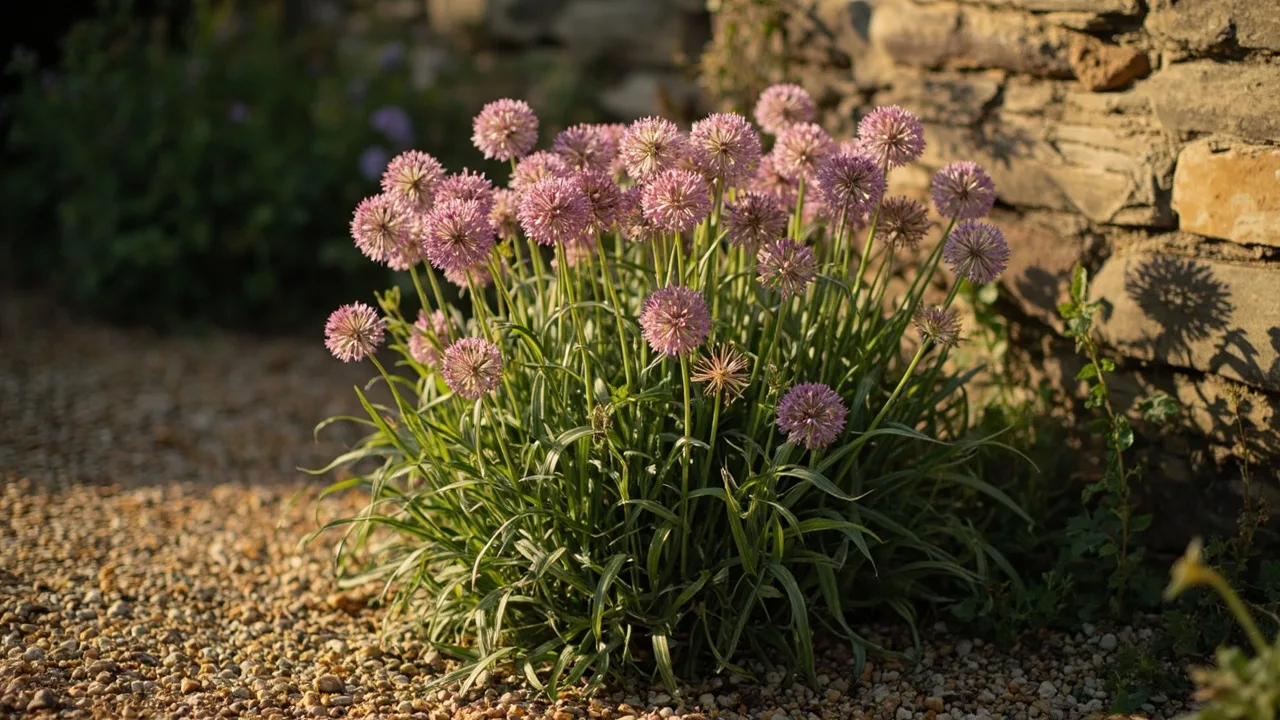
Allium oreophilum, the pink lily leek, is a compact bulbous perennial from the rocky slopes and steppe of Central Asia — ranging across the eastern Caucasus (including Daghestan), the Alborz mountains, northeast Afghanistan, north Pakistan, and the Central Asian ranges of Kyrgyzstan, Tajikistan, and Uzbekistan. First described by the German-Russian botanist Carl Anton von Meyer in 1831 (Verzeichniss der Pflanzen des Kaukasus), it remains one of the smallest and most freely flowering ornamental onions in general cultivation, reaching little more than 10–20 cm at the top of its scape and forming low tufts of narrow leaves. Its loose, domed umbels of rosy-pink to carmine flowers in May and June earn it a place in rock gardens, alpine troughs, the front of sunny borders, and naturalised drifts through thin grass. It is reliably hardy across the British Isles and reproduces both by bulb division and generously by seed, which is why established clumps can colonise a sunny bank within a handful of seasons.
Appearance
A. oreophilum grows from a small, ovoid bulb, typically 1–2 cm across, with a papery tunic. In late winter or early spring two to four narrow, mid-green, channelled leaves emerge, each around 10–15 cm long and only a few millimetres wide. The leaves remain shorter than or roughly equal to the flowering stem and begin to yellow as the flowers open, which is normal for the genus — the bulb has finished its season's work by then.
The scape rises to 10–20 cm tall (RHS gives a height range of 0.1–0.5 m and a similar spread), leafless and rounded in cross-section, and carries a loose, dome-shaped umbel of 10–30 starry, six-tepalled flowers around 1.5–2 cm across. In the wild type these are a clear rose-pink with a darker mid-vein on each tepal; improved cultivars deepen this to carmine or rosy purple. The seed capsule that follows is small, three-valved, and blackens as it ripens in midsummer, at which point the whole plant goes fully dormant, retreating below ground until the following spring.
Because the foliage dies back early, A. oreophilum is best planted where neighbouring perennials (geraniums, hardy geraniums, low nepeta, or emerging Hemerocallis foliage) will mask the gap in July.
Growing Conditions
Light. Full sun is essential. The species grows on exposed, sun-baked slopes in the wild and only flowers freely when the bulb receives several hours of direct light during the spring growing period. Light dappled shade under a deciduous shrub is tolerable, but deep shade under evergreens will produce foliage but no flowers.
Soil. Sharply drained, moderately fertile, loam-based or sandy soil suits it best. The bulb rots quickly in cold, heavy clay that holds winter wet, so on clay sites either improve the planting area with 5–10 cm of coarse grit and well-rotted organic matter worked into the top 20–25 cm, or plant on a raised, gritty bed. It tolerates a wide pH range from roughly 6.0 to 8.0 and is content on chalk. Avoid sites where the ground stays damp through summer — A. oreophilum expects a dry resting period once the leaves have died down.
Aspect and microclimate. A south- or west-facing slope, the top of a rock garden, the planting pockets between paving stones, or a sunny gravel garden are all ideal. Cold easterly winds in spring do no lasting damage to a hardy bulb but can scorch emerging foliage; a sheltered but open position is preferable to a fully exposed one in northern and eastern Britain.
Hardiness. Rated as hardy across the UK by the RHS, coping with typical British winters without protection. In colder inland districts of Scotland and the north-east of England a light mulch of coarse grit after planting helps keep the bulb from sitting in saturated soil during its dormancy.
Planting and Care
When to plant. Bulbs are sold dry in late summer and should be in the ground by mid-autumn to allow a good root system to form before winter. The RHS recommends planting ornamental alliums in early autumn; Crocus and other UK suppliers give September to November as the workable window. Bulbs lifted from established clumps are best replanted immediately and not allowed to dry out.
Depth and spacing. Plant the bulb roughly three to four times its own height deep — about 7–10 cm below the soil surface for a typical 1.5 cm bulb — with the base resting on undisturbed soil. Space smaller-growing alliums, including A. oreophilum, 7.5–10 cm apart. For naturalised drifts, scatter bulbs in irregular groups of 7–15 and plant each where it falls. In pots, use a loam-based compost such as John Innes No. 2 mixed with a third by volume of coarse grit, and plant at the same depth with bulbs almost touching for a dense spring show.
Watering. Through autumn and spring the natural rainfall of most UK regions is sufficient. Water only during extended spring droughts and never during the summer dormant period — additional moisture at that stage is the most common cause of losses. Container-grown bulbs should be kept just moist until foliage dies back, then moved out of the rain.
Feeding. A single top-dressing of bone meal or a general-purpose slow-release fertiliser scratched into the soil in early spring, just as growth emerges, is ample. Over-feeding produces lush leaves at the expense of flowers.
Pruning. No pruning is required. The withering foliage can be cleared once it has yellowed and detached easily; the spent flower stems may be removed once seeds have set, or left in place if self-sown seedlings are wanted.
Propagation. Established clumps lift and divide readily every three to four years, immediately after flowering while the leaves still mark the bulb's position. Replant the largest offsets at the recommended depth and growing point uppermost. A. oreophilum also sets copious seed; sow fresh seed in late summer in a gritty seed compost and overwinter outdoors in a cold frame. Seedlings flower in their second or third year.
Seasonal care. Mulch lightly with grit on heavy soils. Watch for slug damage to young spring shoots in damp sites, and consider protective cloches only where pigeon or squirrel disturbance is severe — these animals rarely trouble the species, but newly planted dry bulbs may be lifted by squirrels in some gardens. In containers, repot every two to three years in late summer while the bulbs are dormant.
Common Problems
Onion white rot (Stromatinia cepivora). The most serious disease of any Allium, including this ornamental one. Symptom: foliage yellows and collapses from late spring onwards, the bulb base shows a fluffy white mycelium studded with small black sclerotia, and the whole plant lifts easily from the ground. Once soil is contaminated the pathogen persists for many years — avoid planting any allium, onion, garlic, or shallot in the same spot, and buy only from reputable suppliers. There is no effective chemical cure available to UK gardeners.
Downy mildew (Peronospora destructor). Causes pale, elongated lesions on the leaves with a greyish-purple downy growth in damp weather. Less damaging than white rot and rarely fatal; improving air circulation and avoiding overhead watering limits its spread. Remove and dispose of affected leaves rather than composting them.
Slugs. Young shoots can be grazed in mild, wet springs, particularly in clay soils. A. oreophilum is otherwise unpalatable to slugs once the leaves toughen.
Blindness (failure to flower). Usually caused by one of: bulbs planted too shallow and lifted out of the soil by frost; bulbs sited in too much shade; bulbs repeatedly mown or cut back while still in leaf; or exhausted clumps that need lifting and dividing. Lift, grade, and replant only sound bulbs of flowering size at the correct depth in full sun.
Squirrel and rodent damage. Dry dormant bulbs are sometimes dug up and scattered. Loosen and re-cover disturbed bulbs promptly; a handful of thorny prunings over a newly planted drift deters most casual disturbance.
Popular Varieties
A. oreophilum 'Zwanenburg'. The most widely planted cultivar, raised at the Zwanenburg nursery in the Netherlands and long associated with the Tubergen bulb house. It produces slightly larger, deeper lilac-purple umbels than the species, with pronounced darker mid-veins on each tepal, on stems to about 20 cm. Reliable and freely available from UK bulb merchants in autumn.
A. oreophilum 'Samur'. A selected clone from the mountains of northeast Afghanistan, with rich purple-pink flowers on a compact plant around 10–20 cm tall. Offered by Dutch wholesale bulb growers and a frequent choice for collectors of small ornamental alliums.
A. oreophilum 'Agalik's Giant' (syn. 'Torch'). A robust selection from the Agalik area of the Saravshan range in Uzbekistan, with a taller scape (to roughly 30 cm) and noticeably larger umbels than the type. Useful where a little extra height is wanted at the front of a sunny border.
A. oreophilum (species, wild form). Still widely sold and an excellent garden plant in its own right, particularly for naturalising on a thin, stony bank where it can seed freely without becoming a nuisance.
Sources & Further Reading
- Royal Horticultural Society — Allium oreophilum plant profile. Source: https://www.rhs.org.uk/plants/846/allium-oreophilum/details, accessed 2026-07-23.
- Royal Horticultural Society — How to grow alliums. Source: https://www.rhs.org.uk/plants/allium/growing-guide, accessed 2026-07-23.
- Royal Horticultural Society — Onion white rot: prevention guide. Source: https://www.rhs.org.uk/disease/onion-white-rot, accessed 2026-07-23.
- Crocus (UK garden centre) — When to plant allium bulbs. Source: https://www.crocus.co.uk/features/advice/when-to-plant-allium-bulbs/, accessed 2026-07-23.
- BBC Gardeners' World — How to grow alliums. Source: https://www.gardenersworld.com/how-to/grow-plants/alliums-grow-guide/, accessed 2026-07-23.
- Fritsch, R.M. et al. — Checklist of ornamental Allium species and cultivars currently offered in the trade (IPK Gatersleben, 2015). Source: https://www.ipk-gatersleben.de/fileadmin/content-ipk/Infrastruktur/Genbank/Allium_Database/150312_OrnamAlliumCheckl_FritschMR.pdf, accessed 2026-07-23.
Pests and Diseases
| Problem | Symptoms | Management |
|---|---|---|
| Allium leaf miner | White maggots tunnel through leaves and stems, causing distortion, white blotches, and eventual rotting. | Cover plants with fine insect-proof mesh during peak fly activity in spring and autumn. |
| Onion downy mildew | Yellowing leaves covered in a greyish-purple fuzzy mould, often starting at the leaf tips. | Ensure good air circulation and avoid overhead watering to keep foliage dry. |
| Onion white rot | Bulbs develop a white cottony growth and roots turn brown and decay, causing plants to wilt. | Remove infected plants immediately and do not replant alliums in that soil for at least 10 years. |
| Onion fly | Leaves turn yellow and wither as larvae feed on the bulb, often accompanied by a foul smell. | Use insect-proof netting from early spring to prevent adult flies from laying eggs. |
| Slugs and snails | Irregular holes chewed into young leaves and shoots, often accompanied by slimy trails. | Apply iron phosphate pellets or use beer traps around the base of the plants. |
For step-by-step help, read Dealing with Slugs and Snails and Treating Powdery Mildew. Or browse the full plant problem solver to diagnose an issue by symptom.
Recommended Products
GardenWizz earns a commission from qualifying purchases made through affiliate links on this page (including links within the article) — as an Amazon Associate, and from Thompson & Morgan via the Awin network. This does not affect the price you pay. See our disclaimer for details.