Pink Lily Leek
Allium insubricum
The Gardening Year
Best months in UK gardens · full planting calendar →
🖨 Printable care card (PDF)At a Glance
| Botanical name | Allium insubricum |
|---|---|
| Common name(s) | Pink Lily Leek |
| Family | Amaryllidaceae |
| Plant type | bulb |
| Height × Spread | 25 cm × — |
| Position | Full sun |
| Soil | free-draining soil |
| Flowering | March–June |
| Toxicity | — |
| Native range | Lombardy region in northern Italy |
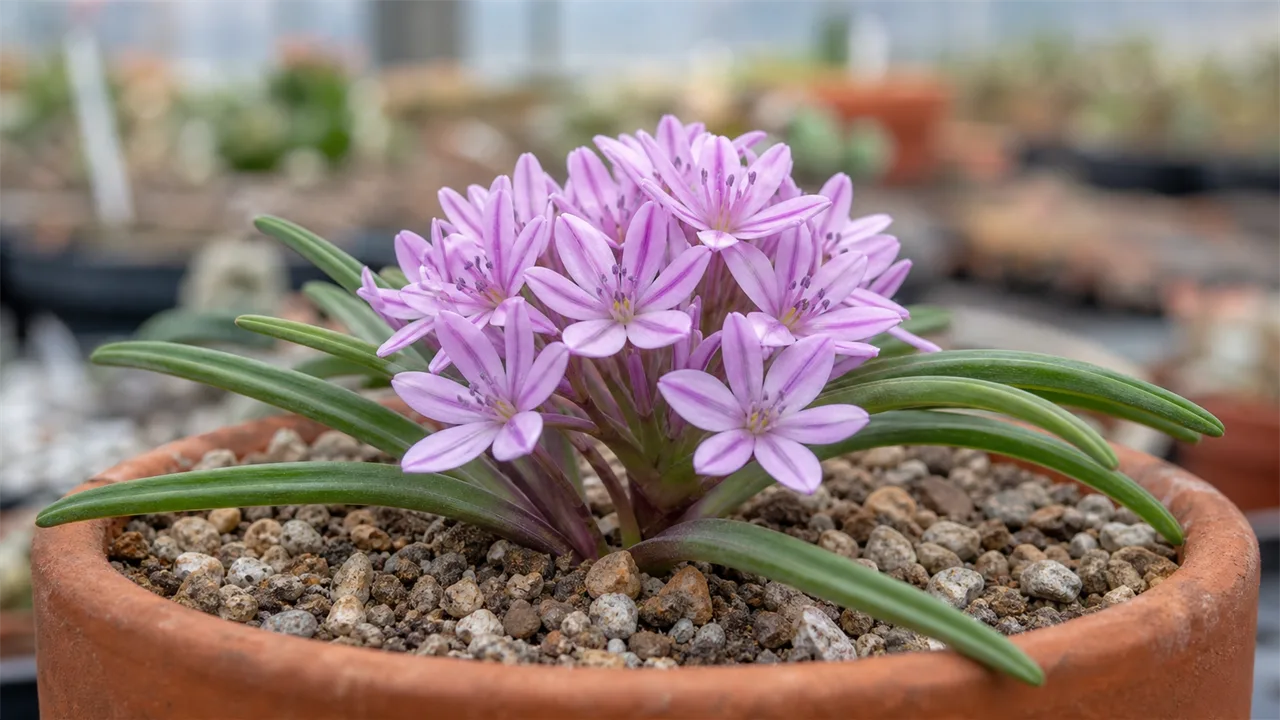
A diminutive alpine allium from a small pocket of northern Italy, Allium insubricum rewards gardeners with disproportionately large, vividly coloured flowers held low over grassy tufts of grey-green foliage. Compact enough for a rock garden or alpine trough yet showy enough to anchor the front of a sunny border, it is one of the most appealing small alliums available to UK gardeners, having earned the Royal Horticultural Society's Award of Garden Merit (AGM).
Overview
Allium insubricum is a small, clump-forming bulbous perennial in the family Amaryllidaceae (subfamily Allioideae), native to rocky, sun-baked hillsides in the Lombardy region of northern Italy — the "Insubria" of classical geography, from which the species takes its name. It was long treated as part of the closely related Allium narcissiflorum, but is now recognised as a distinct species on morphological and geographical grounds, with a more easterly Italian distribution and slightly different floral details.
The plant is fully deciduous in British gardens. The narrow leaves emerge in late winter, the flowers carry through late spring and into early summer, and the clump then dies back to the bulb for a true summer dormancy before re-appearing the following year. That Mediterranean rhythm — active in the cool, moist months and asleep through hot, dry summers — is the key to keeping it healthy in UK cultivation and reflects the climate of its native hillsides.
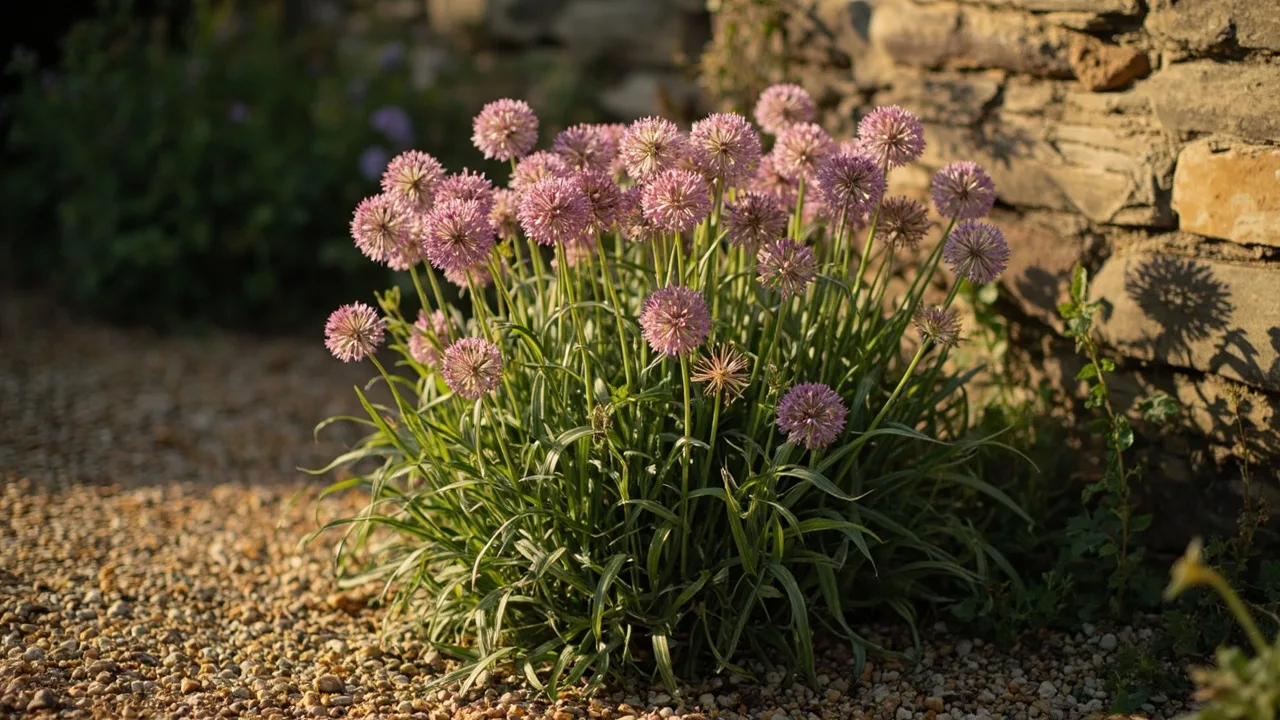
It is well suited to UK rock gardens, raised alpine beds, the tops of drystone walls, the gravel garden and containers of gritty mix. Given a sunny, well-drained position it is straightforward and long-lived, although it has no named cultivars in general commerce and is usually grown as the wild type.
Appearance
A neat, slowly expanding clump of narrow, grey-green, slightly channelled leaves that arise directly from a small underground bulb. The foliage reaches roughly 15–20 cm at maturity and has the characteristic mild onion scent of the genus when bruised. The leaves are typically held rather upright in spring and tend to flop and yellow as flowering finishes.
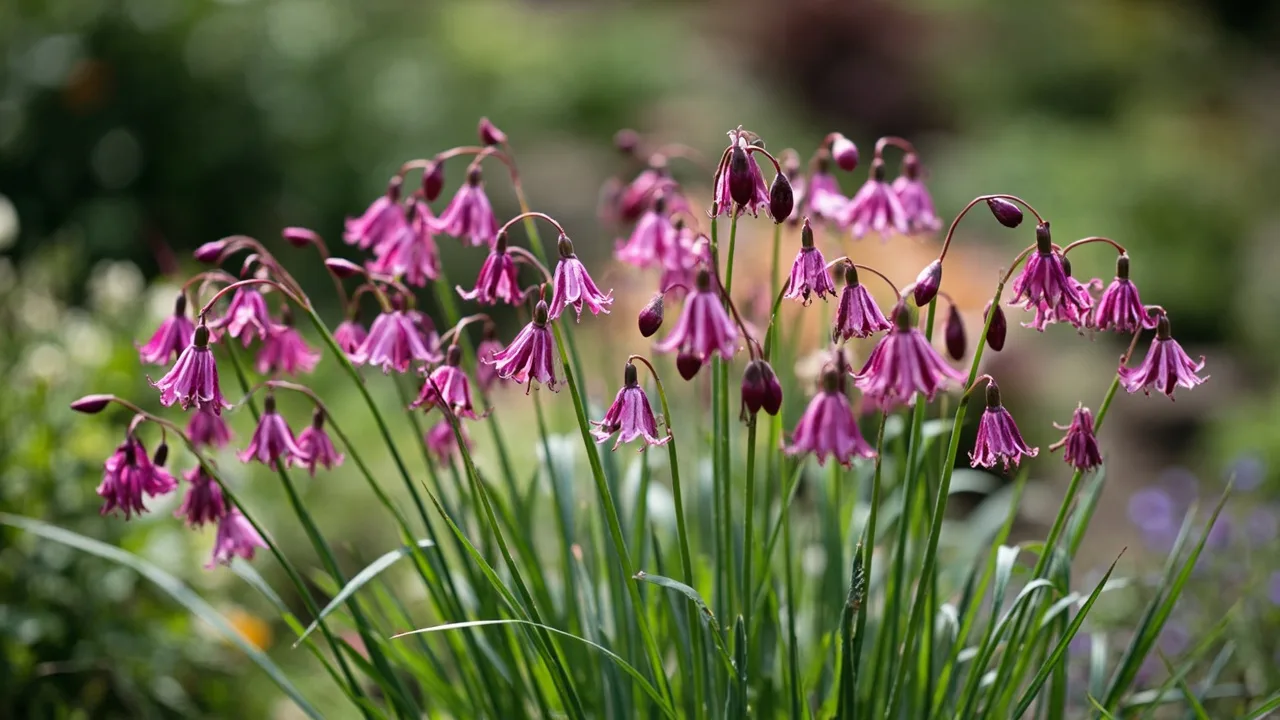
From late May into June in most parts of the UK (sometimes earlier in a sheltered, south-facing site), each mature bulb sends up several short, leafless stems 18–25 cm tall. Each stem is topped by a tight, slightly nodding-to-upright umbel of between roughly five and fifteen bell-shaped, starry flowers, each floret about 2 cm across and a clear, saturated rose-purple to pinkish-purple. The stamens protrude noticeably from each flower, giving the head a slightly ragged, wild quality rather than the tight, geometric look of many larger ornamental alliums.
Because the individual florets are large in relation to the size of the plant, the flower heads have a distinctive, almost showy impact unusual for an alpine-scale allium. Once the flowers fade, papery seed capsules form and remain decorative for some weeks before the whole clump retreats underground. In a typical UK summer the foliage has fully yellowed and collapsed by midsummer, leaving a bare patch in the border that should be planned around — see Planting and Care below.
Growing Conditions
Allium insubricum grows best in full sun on sharply drained, gritty or sandy soil. In the wild it colonises rocky slopes and stony ground where moisture drains away quickly through the dry summer months, and replicating that dryness at the bulb is the single most important condition for success in the UK.
The plant is fully hardy across most of the British Isles when grown in well-drained soil, but it resents two conditions: heavy clay that stays wet, and cold combined with winter waterlogging. Both cause the bulb to rot during dormancy. Sandy loam, a stony scree mix, or a raised bed of two parts loam to one part sharp grit will all work. A slightly alkaline to neutral pH is ideal; very acidic peat beds are not suitable.
Established clumps tolerate dry summers very well and in fact need them, because wet summer soil combined with warm temperatures is the usual cause of failure. Good companions in the same bed — other Mediterranean-climate alpines that share the dry-summer, wet-winter rhythm — include saxifrages, dwarf thymes, aubrieta, arabis, dwarf irises and sedums. Avoid planting it next to moisture-loving perennials or in the same bed as thirsty shrubs.
Shelter matters less than drainage: an exposed, breezy site is fine if the soil is gritty, whereas a sheltered but heavy-soil corner will lose the bulbs within a couple of seasons.
Planting and Care
Plant bulbs in autumn, from September through November. Set them roughly 8–10 cm deep and 10–15 cm apart, in small groups of at least five for a meaningful display. A handful of grit placed directly beneath each bulb improves drainage at the basal plate, and a top-dressing of coarse grit around the neck keeps the slug-vulnerable new shoots clean and the bulb's collar dry in winter.
Water sparingly during the growing season if the weather is genuinely dry — a thorough soak every couple of weeks in spring is usually plenty. Once the foliage has yellowed, withhold water altogether and let the bed dry out for the summer. In a gravel garden this happens naturally; in a rock garden bed it may mean skipping the irrigation you give neighbouring alpines.
Feeding should be modest. A single low-nitrogen, high-potash feed (such as a tomato fertiliser at half strength) in early spring, just as the new leaves push through, is sufficient if the soil is reasonably fertile. Over-feeding with nitrogen produces lush, floppy leaves and weakens the bulb.
No pruning is needed or appropriate for this species. Do not cut back the leaves before they have yellowed naturally — the foliage feeds the bulb for the following year's flowers. If the dying leaves offend the eye in early summer, the simplest solution is to plant a low carpet of aubrieta, thyme or saxifrage over the clump to mask the gap.
Propagation is by careful division of established clumps immediately after flowering, while the bulbs are still in active growth, or in early autumn as the bulbs break dormancy. Lift the clump, tease the bulbs apart, and re-plant the largest offsets immediately at the same depth. Seed can be sown in autumn in a gritty, well-drained compost, but germination can be slow and erratic; division is the more reliable route.
The plant generally needs no staking, no over-winter protection in the UK, and no routine spraying.
Common Problems
The single most common problem in UK gardens is bulb rot caused by waterlogged soil, particularly through the summer dormancy or a wet winter. Clumps that fail to re-appear in spring, or that emerge weakly and collapse, have almost always sat wet at the bulb. The remedy is relocation rather than treatment: lift any surviving bulbs promptly, improve the bed with sharp grit, and re-plant in a drier, sunnier spot. Heavy clay should be raised as a mound or replaced with a free-draining mix to a depth of at least 20 cm.
Slugs and snails can damage emerging shoots in late winter, especially in damp, sheltered corners. A coarse grit top-dressing and a few slug controls — night-time hand-picking, ferric phosphate pellets, or a beer trap — will see the plants through their vulnerable stage. Birds occasionally peck at the flower buds but rarely cause lasting harm.
Alliums are generally unaffected by the major Allium diseases, including white rot (Sclerotinia cepivorum) and downy mildew, although Allium insubricum can harbour leek rust (Puccinia allii) if planted close to infected onion-family crops such as leeks, chives or overwintering onions. Rotation and a sensible distance from any kitchen-garden alliums are sensible precautions rather than strict requirements in an ornamental setting.
No significant insect pests are routinely reported on this species in British gardens, and disease pressure is low when the basic drainage requirement is met. As with all Allium species, the foliage has a faint onion smell when bruised, and the plant is toxic to dogs and cats if ingested; it is normally ignored by grazing wildlife such as deer and rabbits.
Popular Varieties
Allium insubricum is unusual among ornamental alliums in that it has no widely cultivated named cultivars. The species itself is the plant gardeners grow, and bulbs sold under this name are seed-raised or offset-raised stock of the wild type. Below are the related forms sometimes grouped with it in catalogues, none of which is a true cultivar of A. insubricum but all of which may be of interest to gardeners who enjoy the species:
- Allium insubricum (species form). The AGM-holding wild type described in this article; widely available from specialist bulb suppliers in the UK.
- Allium narcissiflorum. The closest relative, formerly confused with A. insubricum, native to south-west France and northern Spain. Slightly taller (to 30 cm) with paler pink flowers, and a useful companion if you cannot source A. insubricum.
- Wild-collected Italian seed strains. Specialist alpine nurseries occasionally offer seedlings raised from wild-collected Lombardy seed under the plain species name; these are not distinct cultivars but may show subtle variation in flower size and depth of colour from one batch to the next. They are the closest the trade comes to a "variety" of A. insubricum.
For gardeners wanting something distinct in flower colour or form, the broader Allium group offers far more choice than A. insubricum alone, but as a refined, low-growing, late-spring allium for the rock garden it is hard to improve on.
Pests and Diseases
| Problem | Symptoms | Management |
|---|---|---|
| Allium leaf miner | White winding trails and holes appear in leaves, causing them to wither and die prematurely. | Bag foliage after flowering to trap emerging flies or lift bulbs in autumn to remove pupae. |
| Onion white rot | Bulbs become soft and rotten, often surrounded by a white fungal growth resembling cotton wool. | Remove and burn infected plants immediately; avoid replanting alliums in the same soil for many years. |
| Onion downy mildew | Yellowish patches on leaves develop into a grey-purple fuzzy mould, stunting growth. | Improve air circulation and avoid overhead watering; remove severely affected foliage promptly. |
| Onion fly | Leaves turn yellow and wilt as larvae feed on the bulb base, potentially killing the plant. | Use insect-proof netting over plants during peak flight times in spring and late summer. |
| Bulb rot | Bulbs become soft, mushy, and discoloured due to waterlogged soil conditions. | Ensure planting sites have excellent drainage and avoid watering during dry spells if soil is heavy. |
For step-by-step help, read Treating Powdery Mildew. Or browse the full plant problem solver to diagnose an issue by symptom.
Recommended Products
GardenWizz earns a commission from qualifying purchases made through affiliate links on this page (including links within the article) — as an Amazon Associate, and from Thompson & Morgan via the Awin network. This does not affect the price you pay. See our disclaimer for details.