Irises
Iris
The Gardening Year
Best months in UK gardens · full planting calendar →
🖨 Printable care card (PDF)At a Glance
| Botanical name | Iris |
|---|---|
| Common name(s) | Irises |
| Family | Iridaceae |
| Plant type | perennial |
| Height × Spread | 30–100 cm × — |
| Position | Full sun, Partial shade |
| Soil | moist but well-drained soil; neutral, well-drained soil; peat-free aquatic soil for water irises |
| Flowering | May–June |
| Toxicity | — |
| Native range | — |
Overview
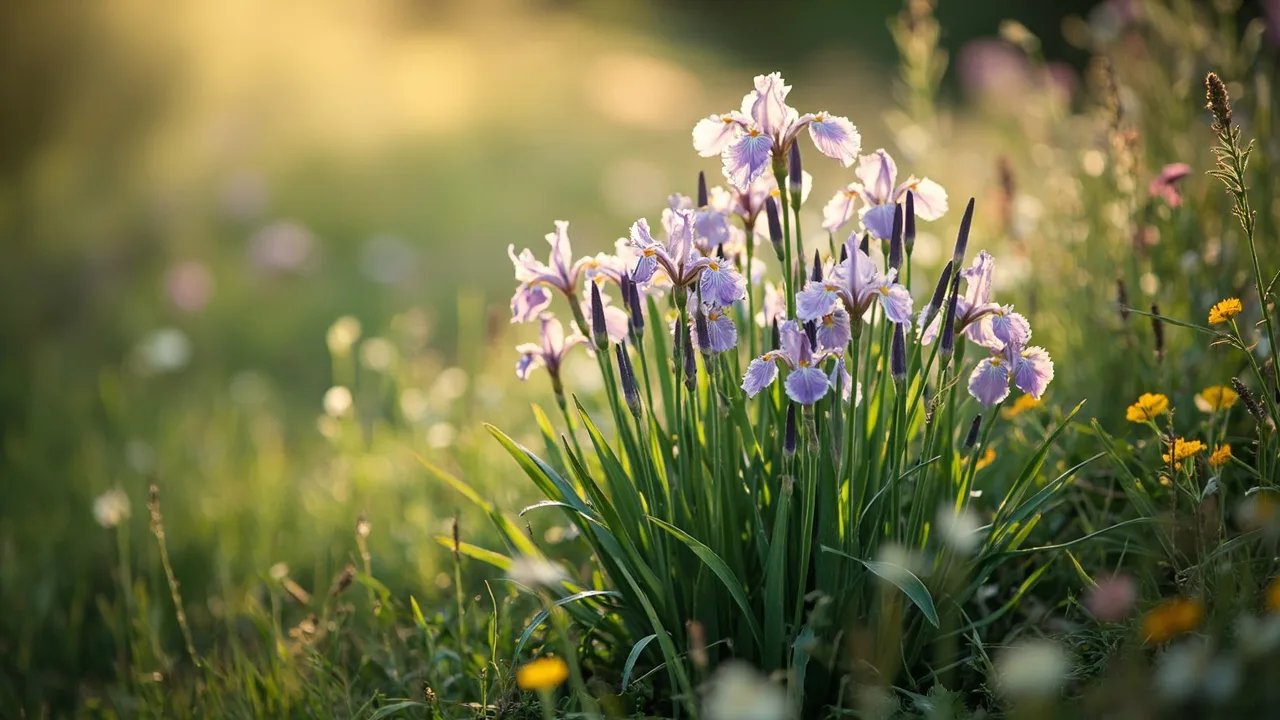
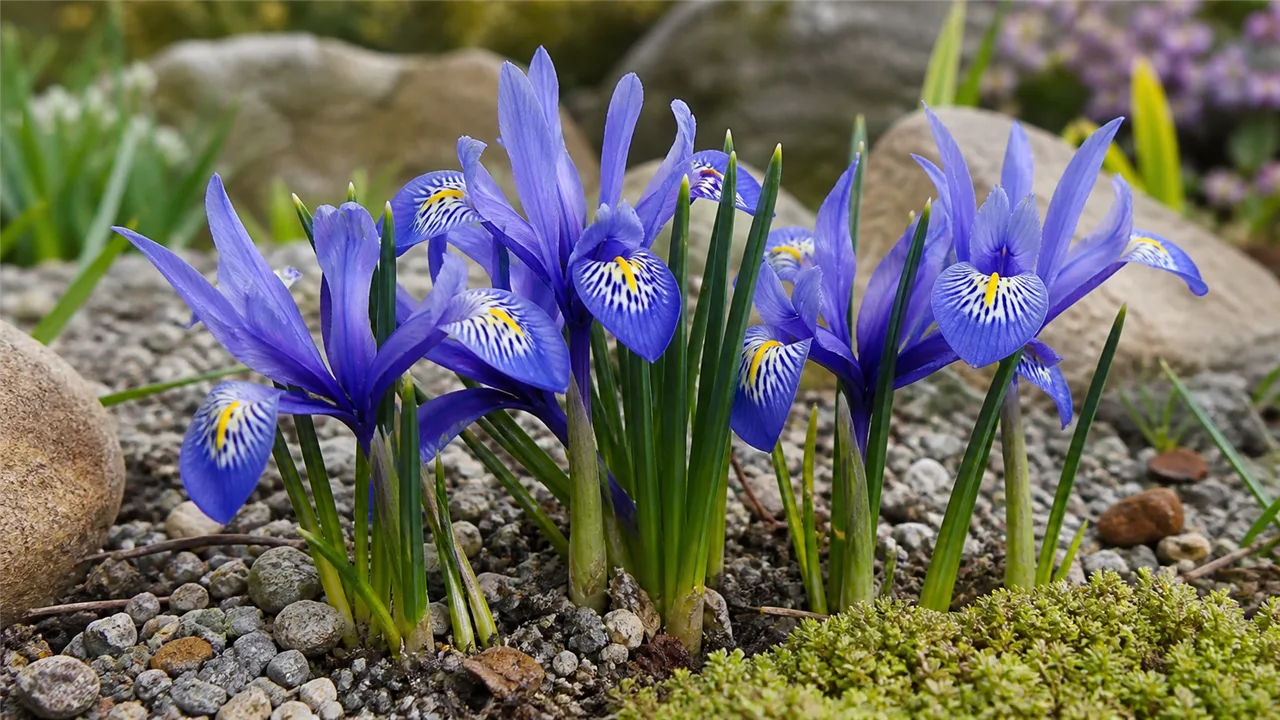
Iris is a large and widely-grown genus of herbaceous perennials in the family Iridaceae, distributed across the temperate regions of the Northern Hemisphere. The genus gives its name to a recognisable flower form: six-petalled blooms built from three outer "falls" and three inner "standards", available in a colour range that runs from deep purples and blues through yellow, white, pink and rusty brown. Garden irises fall into two principal groups: rhizomatous kinds, which include the bearded and beardless species, and bulbous kinds such as the reticulata irises of late winter and early spring. Heights span roughly 15 cm in dwarf rock-garden forms to over 1 m in tall bearded types. The genus is the source of orris root, the dried rhizome of Iris germanica used as a fixative in traditional perfumery. In UK gardens irises are grown for their flower form, their often architectural foliage, and their reliability across a wide range of soils and situations, from dry sunny borders to damp pond margins.
Appearance
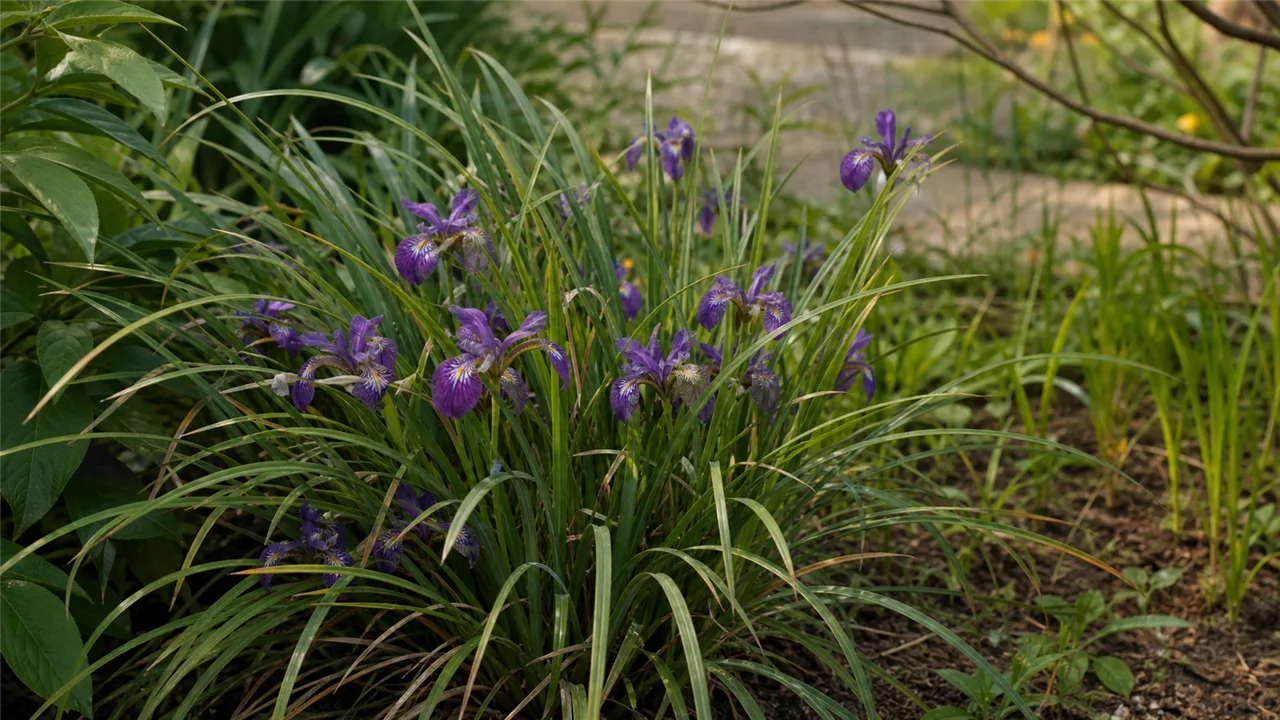
Iris foliage is unmistakable. The leaves are sword-shaped, linear, and arranged in flattened, fan-shaped clumps that splay out from a central rhizome or, in bulbous kinds, from a buried bulb. Leaf colour is typically a fresh to slightly glaucous green, and the blades can stand upright or arch gracefully outwards depending on species and site. In bearded irises the foliage is broad and substantial, often 2.5-4 cm across at the base; in many beardless species such as Iris sibirica and Iris ensata it is narrower and more grass-like, generally under 1 cm wide. The vertical lines of iris foliage give the plant a strong architectural presence in the border, holding its shape well after the flowers have faded.
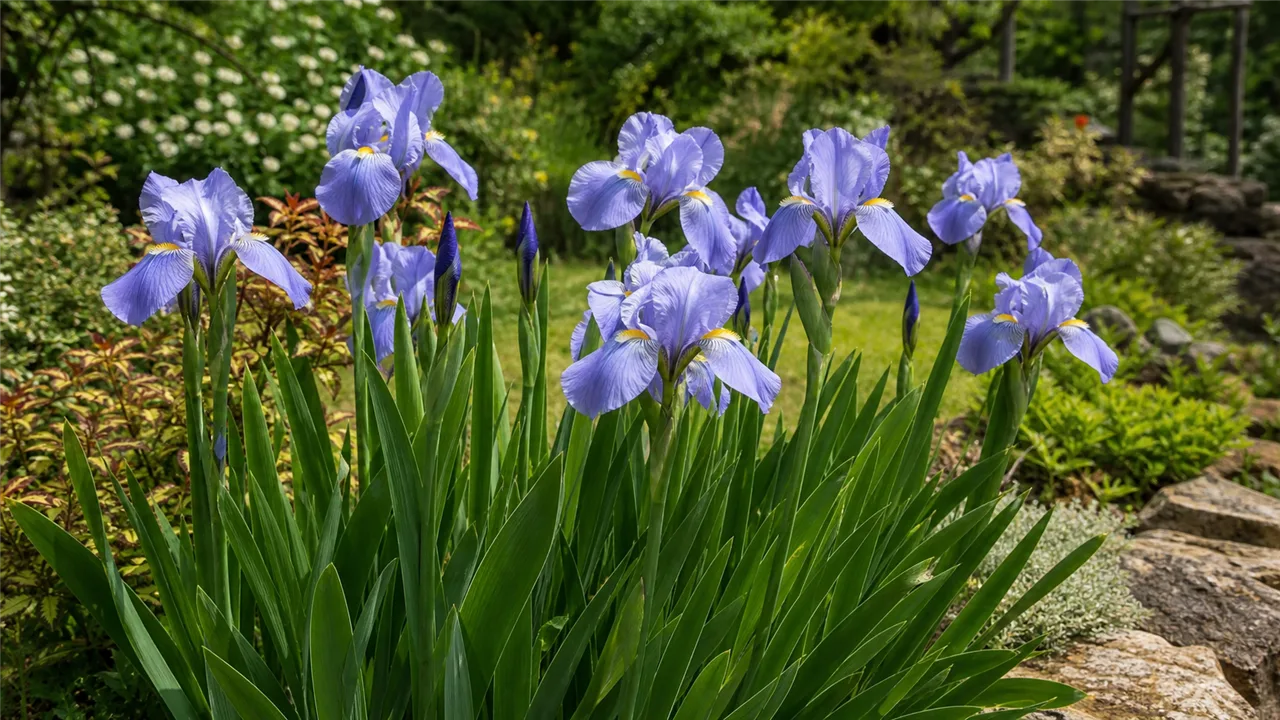
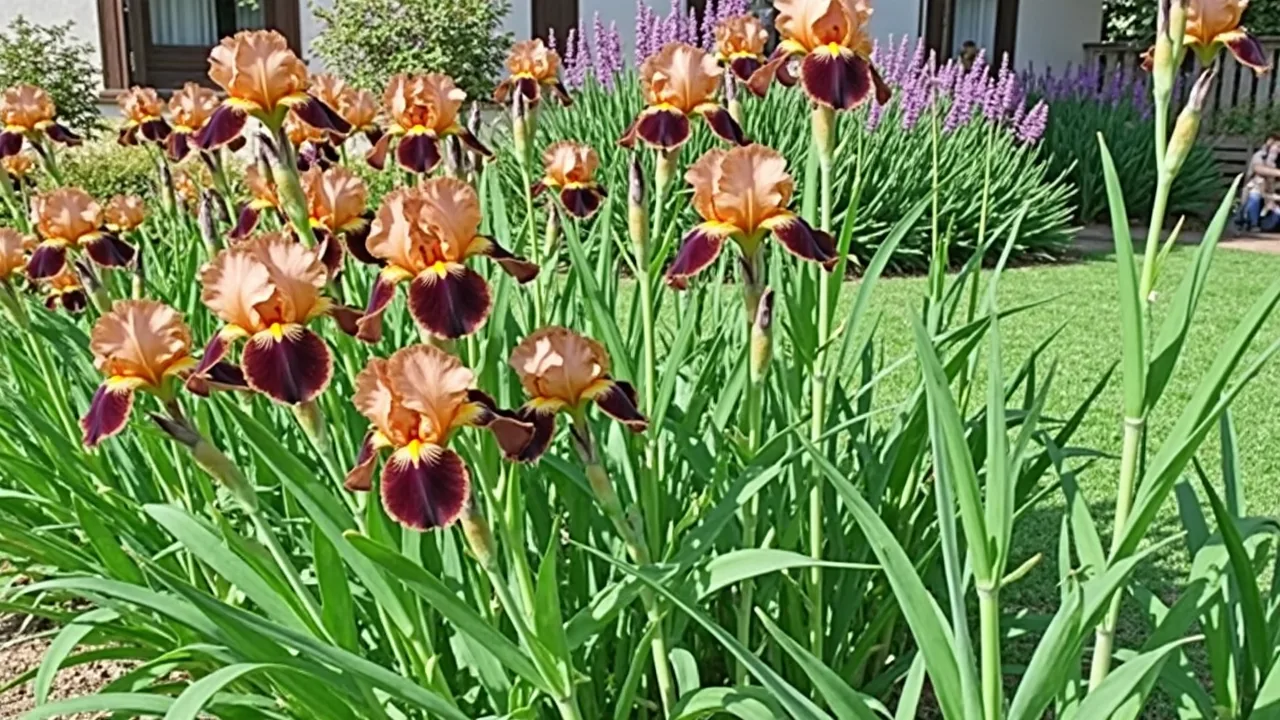
The flower is the diagnostic feature of the genus. Each bloom carries six perianth segments arranged in two whorls of three. The outer three are the "falls", which in most species arch outwards or droop downwards; in bearded irises each fall carries a soft, caterpillar-like beard along its centre, while in beardless and crested kinds the falls instead bear a smooth ridge, a frilled crest, or a plain signal patch. The inner three are the "standards", usually held more or less upright. Colour varies enormously: purples and blues dominate, but clear yellows, ivory whites, pinks, peach tones and coppery browns are all well represented, and modern hybrids have extended the range further. Individual flowers are short-lived — often only two to four days per stem — but a well-grown clump carries many stems in succession, extending the display across two to three weeks.
Heights depend on group and cultivar. Dwarf bearded and reticulata irises may flower at 10-20 cm, intermediate bearded kinds typically reach 45-70 cm, and tall bearded irises commonly top 90 cm with flowering stems pushing to 1 m or a little beyond. Siberian, Japanese and many spuria irises fall in a similar mid-to-tall range, generally 60-90 cm, while Iris pseudacorus in damp ground can reach 1.2-1.5 m in leaf and flower.
Growing Conditions
Most irises prefer a sunny, open position with good drainage, and bearded irises in particular flower most freely in full sun. Many beardless kinds, including Iris sibirica and Iris ensata, will tolerate partial shade but produce stronger growth and better flowering with at least half a day of direct light. Pond-edge species such as Iris laevigata and Iris pseudacorus thrive in boggy ground and can be grown with their roots standing in shallow water through the growing season, often with 5-10 cm of water above the crown. A position sheltered from strong, prevailing wind is worthwhile, particularly for tall bearded kinds whose flowering stems can be rocked or snapped in exposed sites.
Soil requirements vary by group. Rhizomatous bearded irises do best in a well-drained, neutral to slightly alkaline soil that is not over-rich; they flower poorly in damp or heavily mulched ground and resent root competition from neighbouring plants. Beardless rhizomatous irises such as Iris sibirica accept a wider range of soils, including moisture-retentive loams, and are more tolerant of slightly acidic conditions. Iris ensata, the Japanese water iris, prefers neutral to acid soil and will not thrive in strongly alkaline ground. Bulbous irises prefer a gritty, free-draining soil that dries out in summer, the dormant season for many of them; this matches conditions at the foot of a south-facing wall or in a raised bed.
The Royal Horticultural Society assigns hardiness ratings to many cultivated irises at species and cultivar level; growers should consult the published RHS rating for the specific plant they are buying, as ratings vary across the genus. Container cultivation is straightforward for smaller bearded, reticulata and intermediate kinds, using a loam-based compost with added grit to keep the rhizome or bulb on the dry side through the dormant months. In deep containers, Iris sibirica and Iris ensata also perform well as long as they are kept reliably moist through the growing season.
Planting and Care
Planting time depends on the type. Rhizomatous irises are best planted from late summer into early autumn, typically August through September in most UK regions, when the summer dormancy is ending and new root growth begins; this gives the rhizome time to anchor before winter. Bulbous irises are planted in autumn, with reticulata kinds going in during September and October for flowers the following late winter or spring. Set rhizomes so that the upper surface sits at or just below soil level — deep planting is a frequent cause of rot and poor flowering in bearded kinds, and the rhizome should ideally be visible on the soil surface with roots fanning down into it. Bulbs are typically planted at roughly twice their own depth, which works out to around 8-10 cm for most garden-sized iris bulbs and closer to 5 cm for the smaller reticulata kinds. Space tall bearded rhizomes about 30-45 cm apart to allow for the vigorous offsets they will produce in their first two seasons.
Watering is most important in the first growing season. Keep the soil just moist until new growth confirms establishment, then allow bearded and bulbous kinds to dry out between waterings. Beardless and moisture-loving kinds appreciate steady moisture through spring and early summer; Iris sibirica in particular flowers more freely when the soil does not dry out in May. Feeding should be modest: a light application of a balanced general fertiliser in early spring is usually sufficient, and high-nitrogen feeds should be avoided as they encourage soft, rot-prone growth at the expense of flower. A second, low-nitrogen feed straight after flowering helps rhizomatous types rebuild for the following year.
Pruning in irises is minimal and largely a matter of tidying. Remove spent flower stems at the base after flowering, and cut away any leaves blackened by winter weather once fresh growth begins in spring. Do not cut healthy foliage back hard in autumn, as the leaves feed the rhizome or bulb for the following year's display; in herbaceous perennial irises the foliage dies back naturally and is best cleared in late autumn or early winter once it has turned brown. Do not mulch over rhizomes, which can trap moisture and encourage rot; if a top-dress is needed, keep it well clear of the rhizome crown.
Propagation is by division. Rhizomatous irises should be lifted and divided every three to four years, immediately after flowering — usually July in southern England, slightly later further north — to maintain vigour and flowering. Discard old, woody centres and replant only vigorous outer sections with healthy fans of foliage and visible roots. Trim leaves back to about 15 cm on replanted divisions to reduce water loss while they re-establish. Bulbous irises are lifted and separated while dormant in late summer, with offsets grown on in a nursery row until they reach flowering size, typically one to two seasons.
Common Problems
The most damaging pest of bearded irises in North America is the iris borer, a caterpillar that tunnels into leaves and rhizomes; it is less commonly encountered in UK gardens but is established in some areas and should be watched for, particularly on plants imported from abroad. Bacterial soft rot, caused by Erwinia species, is a more frequent UK problem, particularly in wet seasons or on heavy soils. It turns rhizomes into a foul-smelling mush and is best dealt with by lifting, cutting back to clean white tissue with a sharp knife, dipping the cut surfaces in dilute bleach or allowing them to dry in the sun for an afternoon, and replanting in improved drainage. Slugs and snails attack young growth and flowers in damp conditions, and leaf spot — a fungal disease producing brown marks on the foliage — can disfigure plants in wet springs; clearing affected leaves in autumn reduces carry-over. Aphids occasionally colonise the emerging flower spikes of bearded irises. Poor flowering in established clumps is usually caused by overcrowding, planting the rhizome too deeply, or insufficient sun; relief comes from lifting, dividing and replanting in a sunnier, better-drained spot.
Popular Varieties
The bearded iris group contains the widest range of named garden hybrids, divided by height into miniature dwarf, standard dwarf, intermediate, border and tall bearded classes. Tall bearded cultivars in deep blues, ruffled whites and rich purples have long been garden mainstays; well-known older kinds include 'Ola Kala' (rich yellow), 'Jane Phillips' (pale blue) and 'White City' (cool ivory), while modern cultivars such as 'Stepping Out' (purple and white plicata) and 'Edith Wolford' (yellow standards, violet falls) remain widely available from UK iris specialists. Among bulbous irises, Iris reticulata and its hybrids provide late-winter colour at the front of borders and in containers, with cultivars such as 'Harmony' (sky blue), 'J.S. Dijt' (deep red-purple) and 'George' (rich violet) all reliable; Iris histrioides and the yellow-flowered Iris danfordiae flower even earlier in mild seasons. For damp ground, Iris sibirica cultivars such as 'Perry's Blue' (clear sky blue), 'Caesar's Brother' (deep violet) and the white-flowered 'Snow Queen' are reliable, and Iris ensata (Japanese iris) offers large, flat flowers in purples, pinks and whites for acid to neutral bog conditions, with cultivars such as 'Rose Queen' and 'Variegata' commonly listed. Native to British gardens, Iris foetidissima is grown chiefly for its bright orange seed pods that split open in autumn, while Iris pseudacorus, the yellow flag, is the tall marginal iris of pond and stream. Iris germanica and its relatives remain the traditional source of orris root for perfumery.
Cultivars and Varieties
| Cultivar | Height | Flower | Notes | AGM |
|---|---|---|---|---|
| 'Adrienne Taylor' | — | — | RHS AGM (H7) | ✓ |
| 'Alizes' | — | — | RHS AGM (H7) | ✓ |
| 'Allison Elizabeth' | — | — | RHS AGM (H7) | ✓ |
| 'Ambroisie' | — | — | RHS AGM (H7) | ✓ |
| 'Among Friends' | — | — | RHS AGM (H7) | ✓ |
| 'Andalou' | — | — | RHS AGM (H7) | ✓ |
| 'Annemarie Troeger' | — | — | RHS AGM (H7) | ✓ |
| 'Apricot Drops' | — | — | RHS AGM (H7) | ✓ |
| 'Arnold Sunrise' | — | — | RHS AGM (H5) | ✓ |
| 'Banbury Beauty' | — | — | RHS AGM (H4) | ✓ |
| 'Bangles' | — | — | RHS AGM (H7) | ✓ |
| 'Berlin Ruffles' | — | — | RHS AGM (H7) | ✓ |
| 'Berlin Tiger' | — | — | RHS AGM (H7) | ✓ |
| 'Bibury' | — | — | RHS AGM (H7) | ✓ |
| 'Big Money' | — | — | RHS AGM (H4) | ✓ |
| 'Blackbeard' | — | — | RHS AGM (H7) | ✓ |
| 'Blue Bossa' | — | — | RHS AGM (H4) | ✓ |
| 'Blue Magic' | — | — | RHS AGM (H5) | ✓ |
| 'Bournemouth Beauty' | — | — | RHS AGM (H7) | ✓ |
| 'Brave New World' | — | — | RHS AGM (H7) | ✓ |
| 'Breakers' | — | — | RHS AGM (H7) | ✓ |
| 'Broadleigh Carolyn' | — | — | RHS AGM (H5) | ✓ |
| 'Brown Lasso' | — | — | RHS AGM (H7) | ✓ |
| 'Bumblebee Deelite' | — | — | RHS AGM (H7) | ✓ |
| 'Cambridge' | — | — | RHS AGM (H7) | ✓ |
| 'Cameo Queen' | — | — | RHS AGM (H7) | ✓ |
| 'Carolyn Rose' | — | — | RHS AGM (H7) | ✓ |
| 'Caterina' | — | — | RHS AGM (H7) | ✓ |
| 'Cee Jay' | — | — | RHS AGM (H7) | ✓ |
| 'Chance Beauty' | — | — | RHS AGM (H7) | ✓ |
| 'Chickee' | — | — | RHS AGM (H7) | ✓ |
| 'Clyde Redmond' | — | — | RHS AGM (H5) | ✓ |
| 'Cranapple' | — | — | RHS AGM (H7) | ✓ |
| 'Cranbrook' | — | — | RHS AGM (H7) | ✓ |
| 'Dawning' | — | — | RHS AGM (H7) | ✓ |
| 'Delicate Lady' | — | — | RHS AGM (H7) | ✓ |
| 'Destination' | — | — | RHS AGM (H7) | ✓ |
| 'Diabolique' | — | — | RHS AGM (H7) | ✓ |
| 'Dover Castle' | — | — | RHS AGM (H7) | ✓ |
| 'Early Light' | — | — | RHS AGM (H7) | ✓ |
| 'Eileen Louise' | — | — | RHS AGM (H7) | ✓ |
| 'Elegant Lass' | — | — | RHS AGM (H7) | ✓ |
| 'El Torito' | — | — | RHS AGM (H7) | ✓ |
| 'Enriched' | — | — | RHS AGM (H7) | ✓ |
| 'Eyebright' | — | — | RHS AGM (H7) | ✓ |
| 'Feu du Ciel' | — | — | RHS AGM (H7) | ✓ |
| 'Fierce Fire' | — | — | RHS AGM (H7) | ✓ |
| 'Flashlight' | — | — | RHS AGM (H6) | ✓ |
| 'Flight of Butterflies' | — | — | RHS AGM (H7) | ✓ |
| 'Flirting Again' | — | — | RHS AGM (H7) | ✓ |
| 'Floating World' | — | — | RHS AGM (H5) | ✓ |
| 'Florentina' | — | — | RHS AGM (H6) | ✓ |
| 'Fritillary Flight' | — | — | RHS AGM (H7) | ✓ |
| 'Frosted Biscuit' | — | — | RHS AGM (H7) | ✓ |
| 'Going Home' | — | — | RHS AGM (H7) | ✓ |
| 'Green Spot' | — | — | RHS AGM (H7) | ✓ |
| 'Gwyneth Evans' | — | — | RHS AGM (H7) | ✓ |
| 'Gypsy Romance' | — | — | RHS AGM (H7) | ✓ |
| 'Handshake' | — | — | RHS AGM (H7) | ✓ |
| 'Harmony' | — | — | RHS AGM (H7) | ✓ |
| 'Harpswell Happiness' | — | — | RHS AGM (H7) | ✓ |
| 'Headcorn' | — | — | RHS AGM (H7) | ✓ |
| 'Helen Dawn' | — | — | RHS AGM (H7) | ✓ |
| 'Hello Darkness' | — | — | RHS AGM (H7) | ✓ |
| 'Hever Castle' | — | — | RHS AGM (H7) | ✓ |
| 'Hohe Warte' | — | — | RHS AGM (H7) | ✓ |
| 'Holden Clough' | — | — | RHS AGM (H7) | ✓ |
| 'Holidaze' | — | — | RHS AGM (H7) | ✓ |
| 'Honeyplic' | — | — | RHS AGM (H7) | ✓ |
| 'Ice Dancer' | — | — | RHS AGM (H7) | ✓ |
| 'Iced Tea' | — | — | RHS AGM (H7) | ✓ |
| 'I Feel Good' | — | — | RHS AGM (H7) | ✓ |
| 'Ila Crawford' | — | — | RHS AGM (H7) | ✓ |
| 'Impetuous' | — | — | RHS AGM (H7) | ✓ |
| 'Innocent Heart' | — | — | RHS AGM (H7) | ✓ |
| 'Jane Phillips' | — | — | RHS AGM (H7) | ✓ |
| 'Janine Louise' | — | — | RHS AGM (H7) | ✓ |
| 'Katharine Hodgkin' | — | — | RHS AGM (H7) | ✓ |
| 'Katie-Koo' | — | — | RHS AGM (H7) | ✓ |
| 'Kiss of Summer' | — | — | RHS AGM (H7) | ✓ |
| 'Langport Wren' | — | — | RHS AGM (H7) | ✓ |
| 'Lark Rise' | — | — | RHS AGM (H7) | ✓ |
| 'Lion King' | — | — | RHS AGM (H6) | ✓ |
| 'Loose Valley' | — | — | RHS AGM (H7) | ✓ |
| 'Lucky Devil' | — | — | RHS AGM (H7) | ✓ |
| 'Macaron' | — | — | RHS AGM (H7) | ✓ |
| 'Mary Constance' | — | — | RHS AGM (H7) | ✓ |
| 'Mary McIlroy' | — | — | RHS AGM (H7) | ✓ |
| 'Maui Moonlight' | — | — | RHS AGM (H7) | ✓ |
| 'Maui Surf' | — | — | RHS AGM (H7) | ✓ |
| 'Medway Valley' | — | — | RHS AGM (H7) | ✓ |
| 'Mer du Sud' | — | — | RHS AGM (H7) | ✓ |
| 'Michael Paul' | — | — | RHS AGM (H7) | ✓ |
| 'Midnight Web' | — | — | RHS AGM (H7) | ✓ |
| 'Morwenna' | — | — | RHS AGM (H7) | ✓ |
| 'Noctambule' | — | — | RHS AGM (H7) | ✓ |
| 'Norfolk Belle' | — | — | RHS AGM (H7) | ✓ |
| 'Orinoco Flow' | — | — | RHS AGM (H7) | ✓ |
| 'Paul Black' | — | — | RHS AGM (H7) | ✓ |
| 'Perfect Vision' | — | — | RHS AGM (H7) | ✓ |
| 'Peter Hewitt' | — | — | RHS AGM (H7) | ✓ |
| 'Philippa Baughen' | — | — | RHS AGM (H7) | ✓ |
| 'Phil Keen' | — | — | RHS AGM (H7) | ✓ |
| 'Pixie' | — | — | RHS AGM (H7) | ✓ |
| 'Plissée' | — | — | RHS AGM (H7) | ✓ |
| 'Princess Bride' | — | — | RHS AGM (H7) | ✓ |
| 'Professor Blaauw' | — | — | RHS AGM (H5) | ✓ |
| 'Prudy' | — | — | RHS AGM (H7) | ✓ |
| 'Prussian Blue' | — | — | RHS AGM (H7) | ✓ |
| 'Pure Allure' | — | — | RHS AGM (H7) | ✓ |
| 'Purple Magic' | — | — | RHS AGM (H6) | ✓ |
| 'Rain Dance' | — | — | RHS AGM (H7) | ✓ |
| 'Raspberry Blush' | — | — | RHS AGM (H7) | ✓ |
| 'Regal Surprise' | — | — | RHS AGM (H7) | ✓ |
| 'Regency Belle' | — | — | RHS AGM (H7) | ✓ |
| 'Reg Wall' | — | — | RHS AGM (H7) | ✓ |
| 'Ruffled Velvet' | — | — | RHS AGM (H7) | ✓ |
| 'Salamander Crossing' | — | — | RHS AGM (H7) | ✓ |
| 'Sanctification' | — | — | RHS AGM (H7) | ✓ |
| 'Sarah Taylor' | — | — | RHS AGM (H7) | ✓ |
| 'Severn Side' | — | — | RHS AGM (H7) | ✓ |
| 'Shall We Dance' | — | — | RHS AGM (H7) | ✓ |
| 'Shelford Giant' | — | — | RHS AGM (H7) | ✓ |
| 'Sherbet Lemon' | — | — | RHS AGM (H7) | ✓ |
| 'Shirley Chandler' | — | — | RHS AGM (H7) | ✓ |
| 'Shirley Pope' | — | — | RHS AGM (H7) | ✓ |
| 'Shurton Princess' | — | — | RHS AGM (H7) | ✓ |
| 'Silver Edge' | — | — | RHS AGM (H7) | ✓ |
| 'Silvery Beauty' | — | — | RHS AGM (H6) | ✓ |
| 'Sindpers' | — | — | RHS AGM (H7) | ✓ |
| 'Soft Blue' | — | — | RHS AGM (H7) | ✓ |
| 'Spring Blush' | — | — | RHS AGM (H7) | ✓ |
| 'Staplehurst' | — | — | RHS AGM (H7) | ✓ |
| 'Starwoman' | — | — | RHS AGM (H7) | ✓ |
| 'Stepping Out' | — | — | RHS AGM (H7) | ✓ |
| 'Stinger' | — | — | RHS AGM (H7) | ✓ |
| 'Strawberry Fair' | — | — | RHS AGM (H7) | ✓ |
| 'Strongold' | — | — | RHS AGM (H6) | ✓ |
| 'Sun Doll' | — | — | RHS AGM (H7) | ✓ |
| 'Sunrise in Sonora' | — | — | RHS AGM (H7) | ✓ |
| 'Sunset Colors' | — | — | RHS AGM (H7) | ✓ |
| 'Superstition' | — | — | RHS AGM (H7) | ✓ |
| 'Tango Music' | — | — | RHS AGM (H7) | ✓ |
| 'Teasaucer Hill' | — | — | RHS AGM (H7) | ✓ |
| 'Templecloud' | — | — | RHS AGM (H7) | ✓ |
| 'Thornbird' | — | — | RHS AGM (H7) | ✓ |
| 'Thruppence' | — | — | RHS AGM (H7) | ✓ |
| 'Tom Johnson' | — | — | RHS AGM (H7) | ✓ |
| 'Wealden Butterfly' | — | — | RHS AGM (H7) | ✓ |
| 'Welfenprinz' | — | — | RHS AGM (H7) | ✓ |
Pests and Diseases
| Problem | Symptoms | Management |
|---|---|---|
| Iris leaf spot (Cladosporium iridis) | Small, circular purple or brown spots appear on the leaves, often surrounded by a yellow halo. | Remove and dispose of all leaf debris at the end of the year to reduce overwintering spores. |
| Bacterial soft rot | The base of the plant and rhizome become soft, mushy, and collapse, often with a foul smell. | Plant bearded iris rhizomes partially exposed on well-drained soil to prevent waterlogging. |
| Iris rust | Orange or rust-brown spore pustules develop on the leaves, causing associated yellowing. | Pick off lightly infected leaves as soon as they are seen to slow the spread of the disease. |
| Ink disease | Bulbous irises show black, inky patches on the scales and general decay of the bulb. | Dispose of affected plants immediately and rest the soil from bulbous irises for several years. |
| Virus infection | Young leaves display mottling, streaking, or distortion, reducing plant vigour. | Dispose of virus-affected plants if performance is impaired to prevent transmission to neighbours. |
Or browse the full plant problem solver to diagnose an issue by symptom.
Recommended Products
GardenWizz earns a commission from qualifying purchases made through affiliate links on this page (including links within the article) — as an Amazon Associate, and from Thompson & Morgan via the Awin network. This does not affect the price you pay. See our disclaimer for details.