Dryopteris affinis
Dryopteris affinis
The Gardening Year
Best months in UK gardens · full planting calendar →
🖨 Printable care card (PDF)At a Glance
| Botanical name | Dryopteris affinis |
|---|---|
| Common name(s) | Dryopteris affinis |
| Family | Dryopteridaceae |
| Plant type | fern (Semi evergreen) |
| Height × Spread | 60–160 cm × 30–40 cm |
| Position | Full shade, Partial shade |
| Soil | Moist but well-drained; moisture retentive; tolerates dry soils in shade once established; Chalk, Clay, Loam, Sand; Acid or Alkaline or Neutral pH |
| Flowering | — |
| Toxicity | — |
| Native range | western and southern Europe and southwestern Asia |
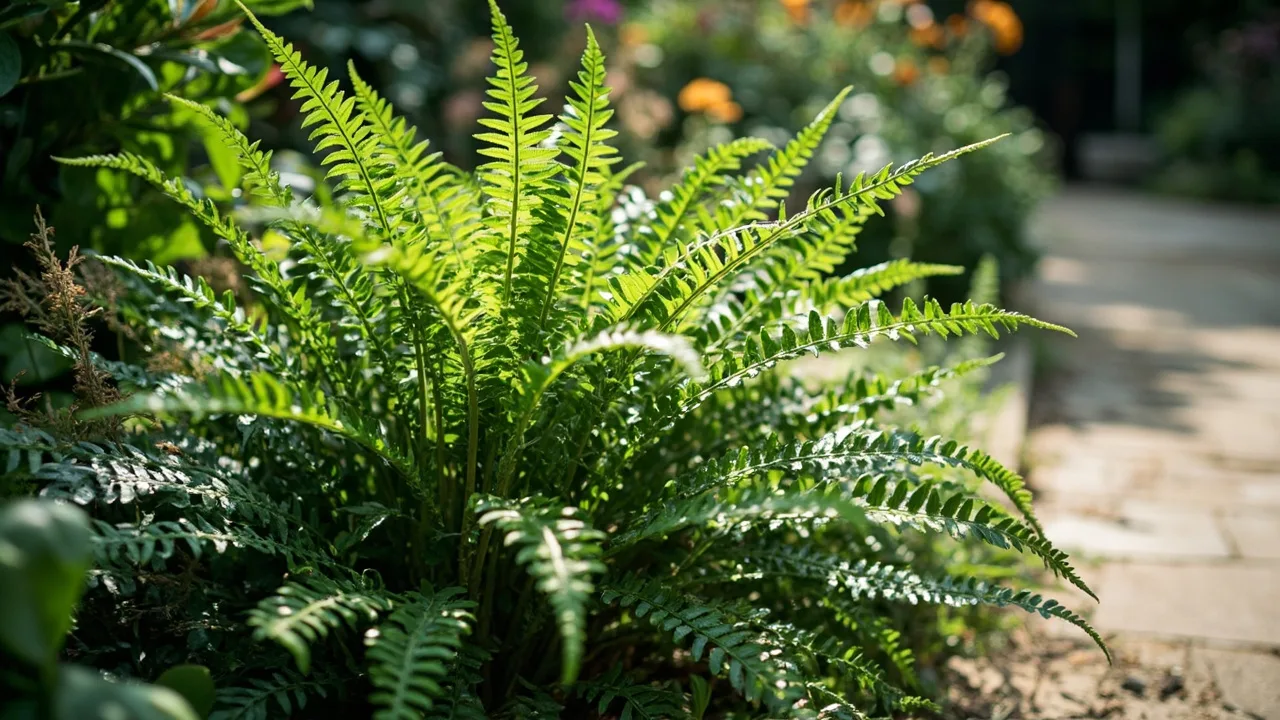
A stout, shuttlecock-shaped rosette of upright fronds dusted with golden scales can give a damp, shaded border a year-round backbone in UK gardens. Dryopteris affinis is one of the most reliable British native ferns, valued for its sturdier habit and longer-lasting fronds than the closely related male fern and its tolerance of a wide range of soils, including dry shade once established.
Overview
Dryopteris affinis belongs to the wood fern family, Dryopteridaceae, and is native to western and southern Europe, Macaronesia and southwest Asia. In the UK it is one of the most widespread ferns, especially common in the wetter west and north, in Welsh and Cumbrian woodland and across Ireland. The species is a polyploid aggregate of closely related microspecies, historically grouped under names such as Dryopteris borreri and D. pseudomas, which is why older gardening books may list it under a different Latin name.
In UK gardens it is valued for occupying the structural mid-layer of a shaded planting. A mature clump can anchor a border from late spring through to the following March, while the bright golden scales on the unfurling croziers and stems make the new fronds conspicuous in a way that few other ferns can match. Its tolerance of dry shade once established, combined with sturdier fronds than the related lady fern, makes it a sensible default for difficult north- or east-facing borders or for ground beneath established shrubs and <a href="/plants/rose">roses</a>.
The plant is non-flowering and reproduces by spores. Spore-bearing sori mature on the underside of fertile fronds in mid- to late summer. Established clumps increase slowly from a stout, upright rhizome, producing a tighter, more vertical rosette than the spreading male fern. For a UK gardener, this means planting at the correct spacing is important from the start, because individual crowns seldom need lifting and dividing.
Appearance
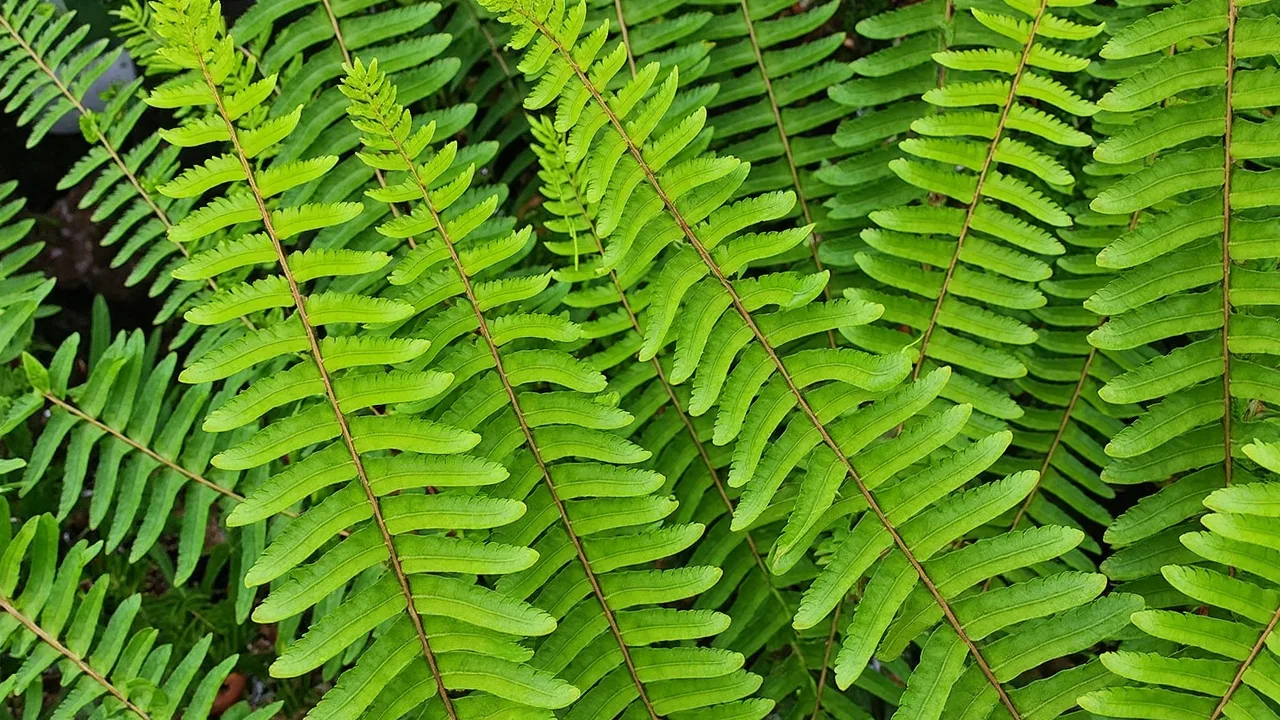
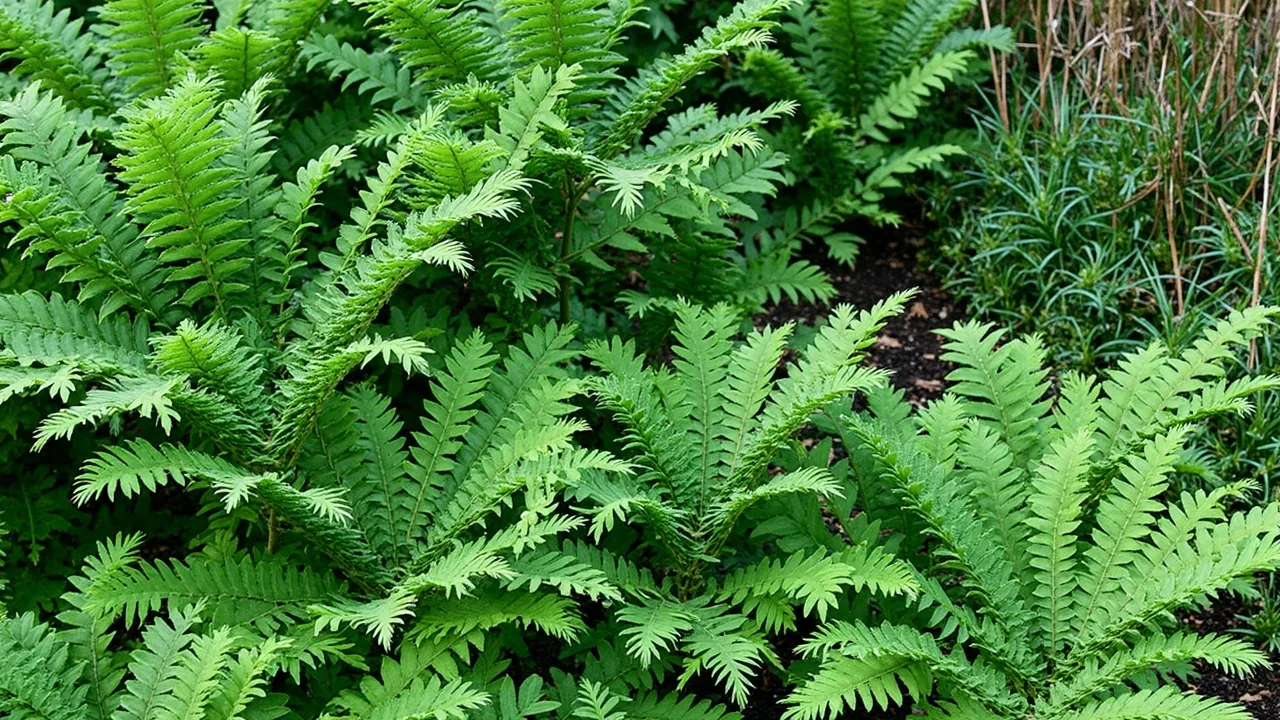
The fronds arise in a tight shuttlecock or vase shape from a short, stout, ascending rhizome. Each frond can reach 60-150 cm in length depending on soil and cultivar, and is bipinnate to bipinnate-pinnatifid, with the lowest pair of pinnae slightly shorter than those above. The blade is a clear, slightly yellower green than the related Dryopteris filix-mas, and the stipe (stalk) and rachis are densely covered in golden-brown scales that give the species its common name.
The most distinctive feature in spring is the unfurling crozier. The young fronds emerge densely coated in shaggy, golden-brown scales, which can be very conspicuous when backlit by low morning sun. As the frond expands, the scales spread along the underside of the rachis and the lower surface of the pinnae. Mature scales remain a useful identification marker, particularly in winter when the small dark spot where the lowest pinnae meet the rachis is also visible on close inspection.
Sori appear on the underside of the upper pinnae from July onwards, arranged in two regular rows either side of the midrib of each pinnule. They are rounded, initially pale, then ripening to a warm brown as the spores mature. The species is largely apomictic in the UK, which is why spores will not always produce plants identical to the parent. This is also why established cultivars are propagated by division rather than by spore.
Growing Conditions
Choose a site in light to medium shade for the most reliable performance. Dryopteris affinis tolerates deeper shade than many ferns, but growth becomes looser and the fronds less upright in heavy shade. It will also accept several hours of direct sun if the soil remains reliably moist through summer, and many UK gardeners report sun-tolerant performance in morning or late-afternoon light in well-prepared ground.
The ideal soil is moist but well drained, humus-rich and slightly acidic to neutral. It performs well in loam, improved clay and woodland soil. Very dry, poor sandy soil produces shorter, less impressive fronds unless mulched generously each spring. Cold, waterlogged ground in winter can rot the rhizome, especially in heavy clay that has not been opened up with organic matter.
Wind exposure is less of a problem than for many ferns because the fronds grow upright and leathery. Coastal and exposed inland sites are acceptable provided the soil does not dry out completely. In drier eastern and south-eastern gardens, retain moisture through the main growing season with a 5-7 cm mulch of leaf mould or well-rotted garden compost kept clear of the crown.
UK conditions suit this fern throughout the country. It is one of the most reliable evergreen foliage plants for damp, shady gardens in the west and north, and established clumps also thrive in cooler corners of London and south-east gardens. The profile's structured hardiness badge carries the verified rating; rely on that rather than on temperature claims in third-party listings.
Planting and Care
Plant pot-grown Dryopteris affinis in spring or early autumn when the soil is workable and neither frozen nor waterlogged. Spring planting gives the crown a full season to establish before the first winter. Autumn planting works in well-drained soils but should be finished by mid-October in colder inland districts so the roots can anchor before hard frosts. Space plants about 60-90 cm apart, allowing room for the mature crown.
Prepare the whole root area by removing perennial weeds, especially couch grass and bindweed, and digging in two or three bucketfuls of leaf mould or well-rotted compost per square metre. Set the crown so the top of the root ball sits level with the surrounding soil. Burying the crown deeply encourages rot, while leaving it too proud can dry out the roots. Water thoroughly after planting and keep the soil moist during the first growing season.
Water established border plants during prolonged dry spells from late spring to early autumn. The fronds will not collapse dramatically, but growth slows and the next year's croziers will be smaller if the soil dries out repeatedly. Apply water to the root zone rather than watering over the foliage, which can mark the new fronds. In normal UK summers, supplementary watering is only needed in the driest south-eastern gardens.
Feeding is light. An annual spring mulch of leaf mould or well-rotted compost is usually enough. Avoid high-nitrogen feeds, which can produce soft, pale growth that is more vulnerable to vine weevil and slugs. Container-grown plants benefit from a single application of slow-release fertiliser in spring, or a dilute liquid feed every two to three weeks during active growth.
Pruning is minor. As a fern, this is not a plant to be pruned in the shrub sense; scheduled care should be recorded under the GardenWizz Cut back calendar event, never Prune. In late February or early March, remove any fronds that have been badly damaged by winter weather, cutting them off at the base with clean secateurs. Leave sound green fronds in place: they will give the new season's croziers a windbreak and are a real asset in the months before the new growth unfurls.
Propagation is straightforward by division. Lift a mature clump in early spring as the new croziers begin to emerge, separate the crown into pieces with at least two or three growing points each, and replant immediately at the original depth. Water thoroughly and keep the soil moist while the divisions re-establish. As a herbaceous perennial, this work should be recorded under the GardenWizz Divide event. Never add a Sow event to this fern's calendar.
Seasonal care is light: cut back damaged fronds in early spring, mulch with leaf mould, water during prolonged dry spells, and divide mature clumps every four to five years. For a month-by-month reminder, use the gardening calendar alongside notes from the local garden.
Common Problems
Vine weevil is the most damaging UK pest on container-grown and stressed ferns. Adults chew scalloped notches in the edges of fronds, while the cream-coloured larvae live in the compost and eat the roots. Stressed or pot-bound plants can collapse suddenly. Knock plants out of their pots to check for larvae, use nematode biological control in late summer, and avoid leaving containers in saucers of water.
Slugs and snails eat fresh spring growth and can disfigure the new croziers before they unfurl. Look for irregular holes and slime trails on the stipes. Reduce hiding places, scatter wildlife-friendly ferrous phosphate pellets around the crown in early spring, and check plants after dark during damp weather. Damage is largely cosmetic on mature plants, but seedlings and recent divisions are at greater risk.
Rust can appear on the underside of fronds as orange or brown pustules, sometimes followed by yellowing and premature leaf drop. Remove badly affected fronds promptly and dispose of them rather than composting them. Improve airflow around the crown, avoid overhead watering late in the day, and clear old foliage each spring. Persistent outbreaks may justify replacing a badly affected plant.
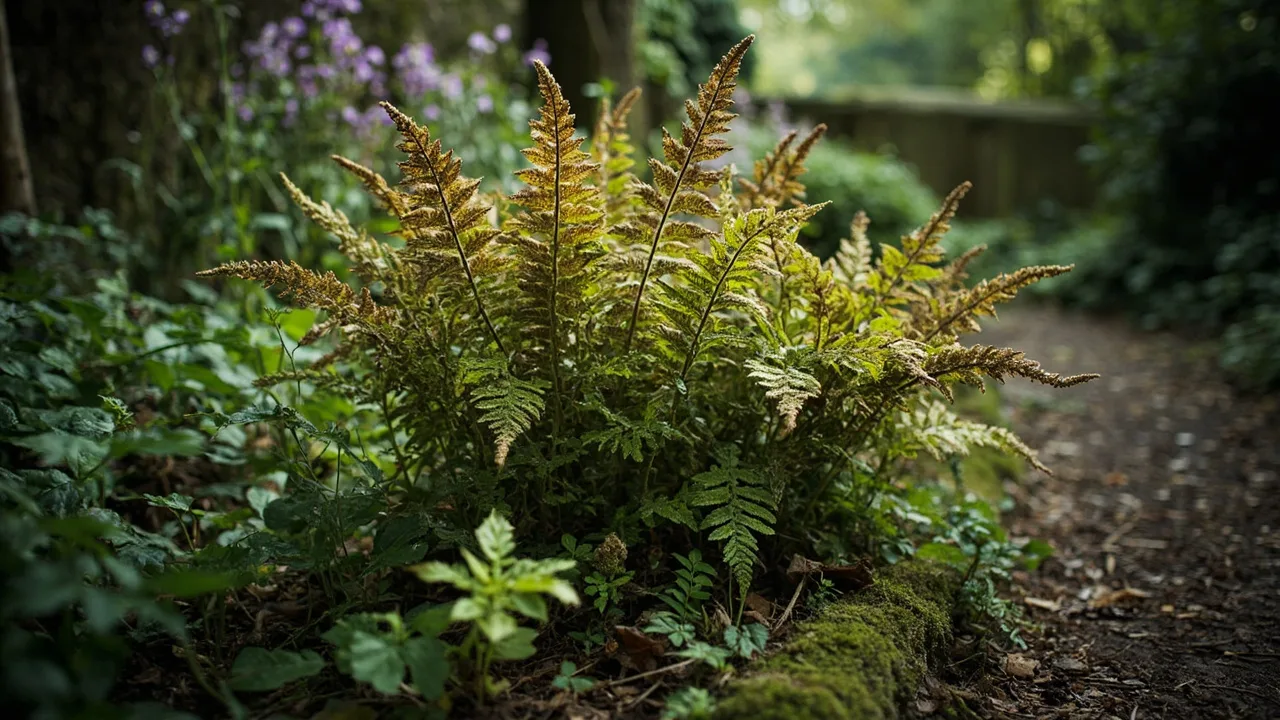
Winter damage to evergreen fronds is common in cold, exposed gardens. Fronds may turn brown or lie flat after hard frost or desiccating wind. This is not a disease; the damaged fronds can be cut out at the base in late February or early spring, and the new season's growth will quickly replace them. Where possible, site the fern where it is sheltered from the worst of the winter wind.
Crown rot can occur in cold, wet, heavy clay where the rhizome sits in saturated soil for long periods. Affected plants collapse, the crown turns soft and brown, and recovery is unlikely. Lift and dispose of rotted material, improve drainage across the whole planting area with organic matter and grit, and replant only when the ground no longer holds winter water.
Few problems are serious where plants receive humus-rich, well-drained soil and a mulch of leaf mould each spring. Regular inspection catches mollusc damage and rust before they spoil the whole crown, and well-timed division every four or five years keeps the plant vigorous. The GardenWizz problem solver can help compare symptoms when several disorders look similar.
Popular Varieties
Cultivars differ chiefly in frond form, cresting, vigour and scale colour. Availability changes between seasons, so verify current stock with UK nurseries and buy plants with a full botanical label. The following selections are established in the RHS plant records and are genuine named forms rather than invented trade names.
- 'Cristata' is the classic crested scaly male fern, widely sold as 'The King'. Each pinna and the frond tip carries a small fork, giving the entire crown a ruffled, almost floral outline. It holds the RHS Award of Garden Merit and is the most commonly available crested selection.
- 'Cristata Angustata' is a more compact crested form with notably narrow pinnae. The result is a finer, more divided texture than 'Cristata' and a smaller mature size, useful where a large fern would be out of scale.
- 'Pinderi' is a narrow, upright, vigorous form with particularly bright golden scales on the stipe and rachis. It is one of the best selections for a more formal planting or a narrow border where a tall, slim silhouette is wanted.
- 'Stableri' is a tall, vigorous form with broad, well-filled pinnae, often attaining 120-150 cm in good soil. It is sold by several UK specialist nurseries and is a useful choice for a large woodland border.
- Dryopteris affinis subsp. borreri is the most commonly encountered subspecies in older UK plantings, sometimes sold simply as Dryopteris borreri. It is generally tighter in growth than the type and retains its fronds well into winter in milder districts.
Choose a cultivar to match the scale of the planting rather than colour alone. A crested form is the natural choice for a focal position beside a path or doorway, while a vigorous upright form is better for a large woodland border. Whatever the name, give the same essential conditions: humus-rich, moisture-retentive soil and shade from the hottest midday sun.
Sources and further reading
- RHS: Dryopteris affinis subsp. affinis plant profile, accessed 2026-07-24.
- RHS: Dryopteris affinis 'Cristata' plant profile, accessed 2026-07-24.
- RHS: Dryopteris affinis 'Cristata Angustata' plant profile, accessed 2026-07-24.
- RHS: Dryopteris affinis 'Pinderi' plant profile, accessed 2026-07-24.
- RHS: vine weevil advice, accessed 2026-07-24.
- Woodland Trust: scaly male fern, accessed 2026-07-24.
- Kew Plants of the World Online: Dryopteris affinis, accessed 2026-07-24.
Pests and Diseases
| Problem | Symptoms | Management |
|---|---|---|
| Slugs and snails | Irregular holes chewed in young fronds or entire plants consumed overnight. | Use copper tape barriers, hand-pick at night, or apply iron phosphate pellets. |
| Vine weevil | Notched leaf margins on potted specimens and root damage causing wilting. | Apply systemic insecticide granules to the compost in autumn and spring. |
| Fern rust | Clusters of brown or orange spore cases (sori) on the undersides of fronds. | Remove affected fronds and improve air circulation; usually cosmetic. |
| Root rot | Fronds turn yellow and collapse due to waterlogged, poorly drained soil. | Ensure well-drained planting sites and avoid overwatering in winter. |
| Desiccation | Frond tips brown and crisp up during dry spells or hot winds. | Mulch heavily with organic matter to retain moisture around the crown. |
For step-by-step help, read Dealing with Slugs and Snails. Or browse the full plant problem solver to diagnose an issue by symptom.
Recommended Products
GardenWizz earns a commission from qualifying purchases made through affiliate links on this page (including links within the article) — as an Amazon Associate, and from Thompson & Morgan via the Awin network. This does not affect the price you pay. See our disclaimer for details.