White Echeveria
Echeveria cante
The Gardening Year
Best months in UK gardens · full planting calendar →
🖨 Printable care card (PDF)At a Glance
| Botanical name | Echeveria cante |
|---|---|
| Common name(s) | White Echeveria |
| Family | Crassulaceae |
| Plant type | succulent |
| Height × Spread | 10–50 cm × 10–50 cm |
| Position | Full sun |
| Soil | Well-drained |
| Flowering | June–July |
| Toxicity | — |
| Native range | northwestern Zacatecas state in Mexico |
Echeveria cante is a distinctive, slow-growing rosette succulent valued for its broad, powder-blue leaves and attractive pink-edged colouring. It is best grown under glass or as a carefully managed houseplant in the UK, where cool, wet winters can quickly damage its roots. Excellent drainage, strong light and restrained watering are the foundations of a healthy specimen.
Overview
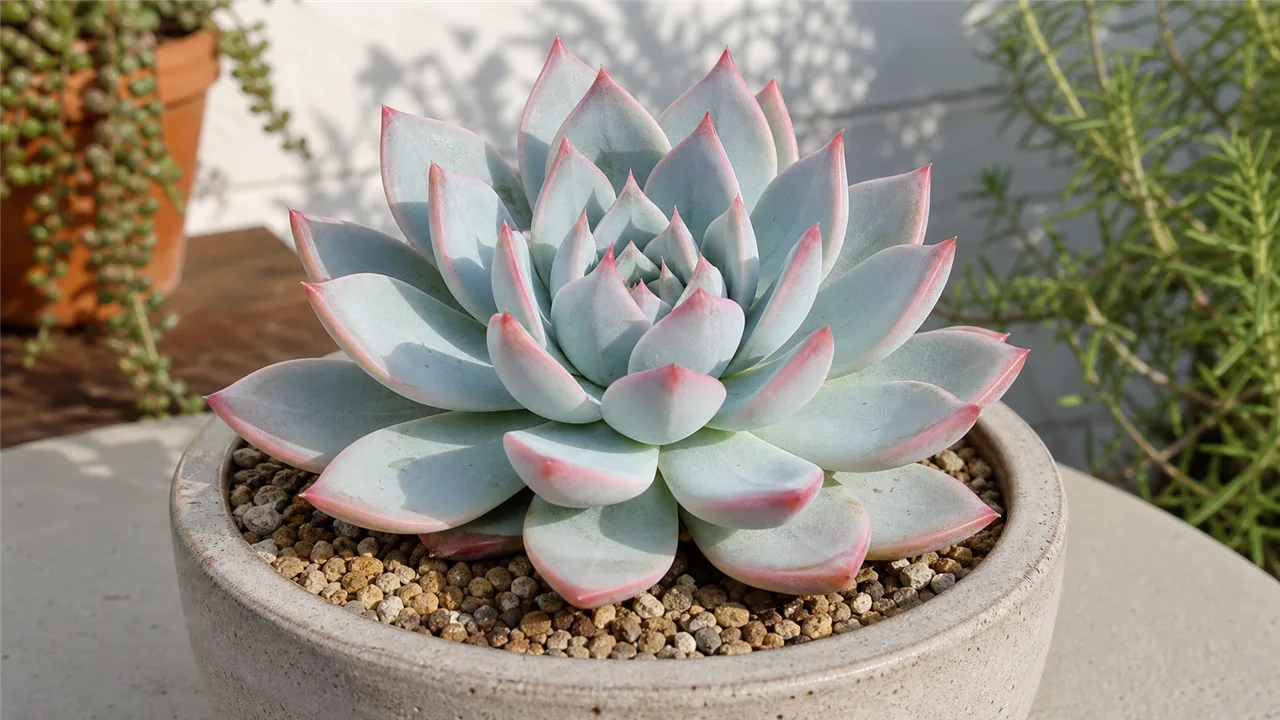
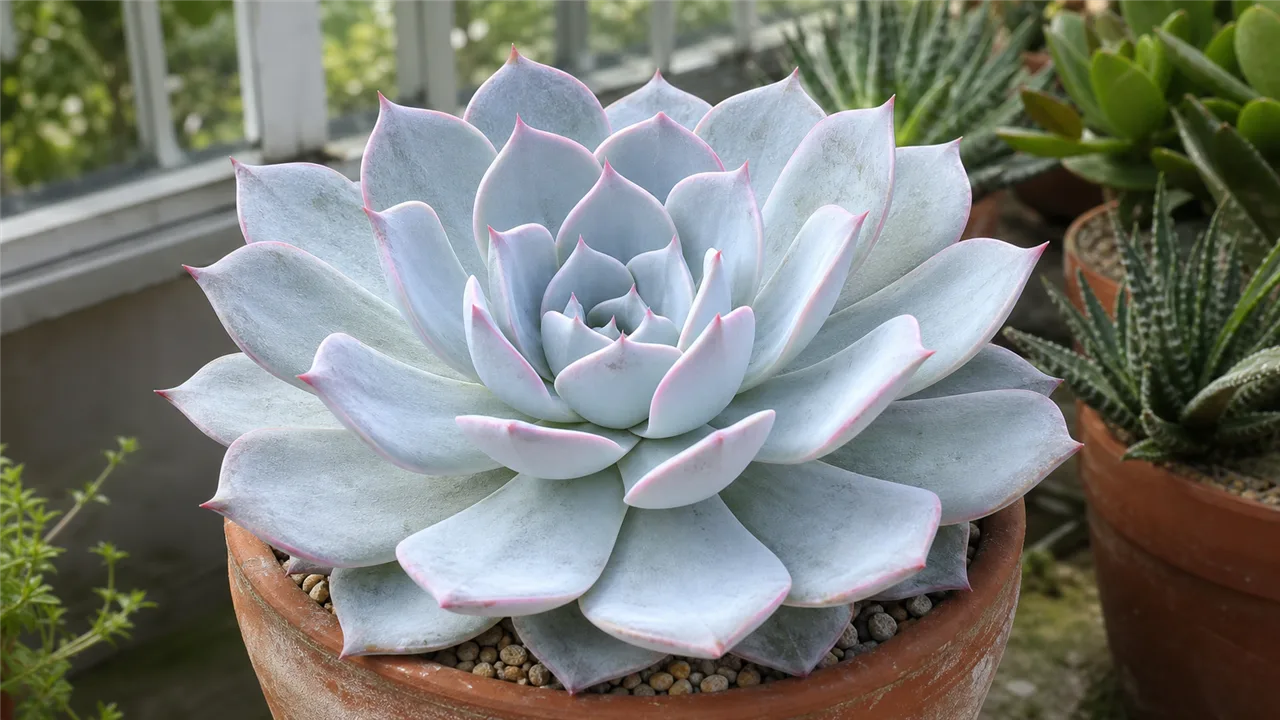
Echeveria cante is a Mexican species in the Crassulaceae family. It forms a compact, symmetrical rosette rather than a branching shrub, and its leaves are covered by a pale, powdery bloom called farina. This natural coating helps reflect strong sunlight and gives the plant its characteristic silvery-blue appearance. It should not be rubbed off, as damaged farina does not regenerate evenly.
In Britain, Echeveria cante is generally most reliable in a bright conservatory, greenhouse, porch or indoor position beside a sunny window. It may spend summer outdoors in a sheltered spot, but it must be brought under cover before cold, persistently wet weather arrives. The plant is not suited to heavy garden soil or a border that remains damp.
Growth is most active from spring into summer. During the darker months, it naturally slows down and needs much less water. A dry winter rest, combined with good ventilation, reduces the risk of rotting and stretched, weak growth. Its slow pace means that a well-formed specimen can be worth maintaining for many years.
Appearance
The main feature is the broad, fleshy foliage arranged in an overlapping spiral. Leaves are usually blue-grey to pale grey-green, with a rounded or slightly pointed tip and a smooth, powdery surface. Strong light can bring out pink or reddish margins, particularly when the plant is grown cool and bright without being stressed by drought. Colour varies with season, light, temperature and the individual plant.
A healthy rosette remains close and balanced. Insufficient light causes the leaves to spread and the stem to elongate, while frequent watering in poor light can produce soft, vulnerable growth. Keep containers where the rosette has room to develop without being touched repeatedly; fingerprints and water marks are especially visible on the farina.
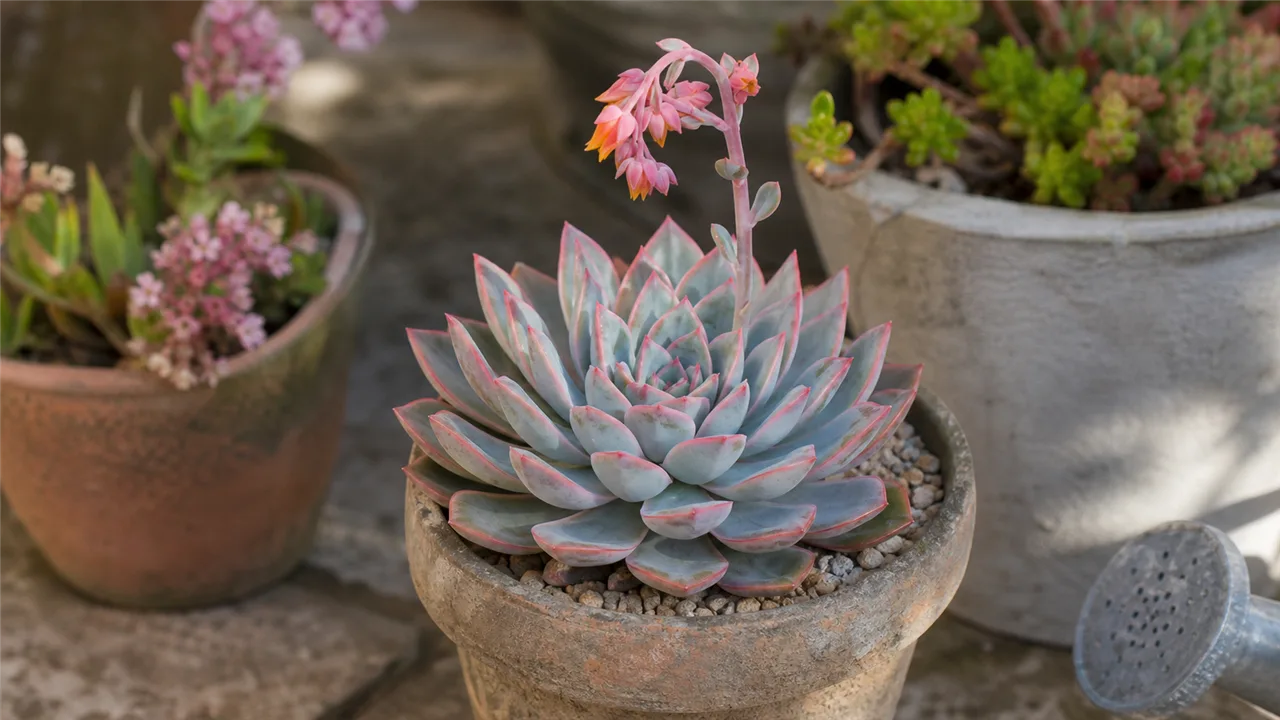
Mature plants can produce an arching flower stem from the centre or side of the rosette. The flowers are typically pendant, bell-shaped and warm-toned, with pink, coral or orange colouring outside and paler yellow interiors. Flowering is less important than the foliage, and young plants may need several seasons before they bloom. Remove a finished flower stem cleanly once it has dried or faded.
Growing Conditions
Light is the most important factor indoors. Give Echeveria cante a bright, unobstructed windowsill, ideally with several hours of sunlight. A south- or west-facing window can work well in the UK, although newly purchased plants should be acclimatised gradually to strong sun. Behind glass, summer heat can become excessive, so provide ventilation and use light shading during the hottest part of the day if leaves show scorch.
Use a porous container with a drainage hole and a gritty compost. A commercial cactus mix can be improved with extra horticultural grit, pumice or perlite if it stays wet for too long. The aim is a root zone that drains quickly and contains air spaces. Never allow the pot to stand in a saucer of water. A terracotta pot can help the compost dry between waterings, particularly in a cool greenhouse.
Water thoroughly during active growth, then allow the compost to dry almost completely before watering again. Pour onto the soil rather than into the centre of the rosette, where trapped moisture can encourage decay. In spring and summer the interval may be around one to several weeks, but there is no fixed schedule: temperature, light, pot size and compost determine how quickly the mix dries.
Reduce watering sharply in autumn and winter. In a cool, dim room, the plant may need only occasional small drinks, or none for extended periods, depending on the condition of the leaves and compost. Avoid watering frozen or very cold plants. Good airflow is useful, but do not place the plant directly beside a strong heat source, which can cause rapid dehydration and poor growth.
Planting and Care
Repot in spring, preferably only when the container is full of roots or the compost has broken down. Choose a pot just slightly larger than the root ball; an oversized pot holds excess moisture around the roots. Handle the plant by its root ball or wear gloves, avoiding the leaves. Allow any disturbed roots to dry briefly before watering, then resume a cautious regime once the plant has settled.
Feed sparingly during spring and summer with a balanced, low-strength liquid fertiliser formulated for succulents, following the product label. Feeding too often can result in lush, weak leaves and a less compact rosette. Do not fertilise during the winter rest or immediately after repotting.
Routine pruning is minimal. Remove dead lower leaves and faded flower stems with clean, sharp scissors. Do not strip healthy leaves to tidy the plant, and avoid cutting into the crown. If the rosette becomes tall because of poor light, it may be possible to behead and reroot the top in dry succulent compost, but this is a propagation technique rather than routine pruning. The remaining stem can sometimes produce offsets, although results vary.
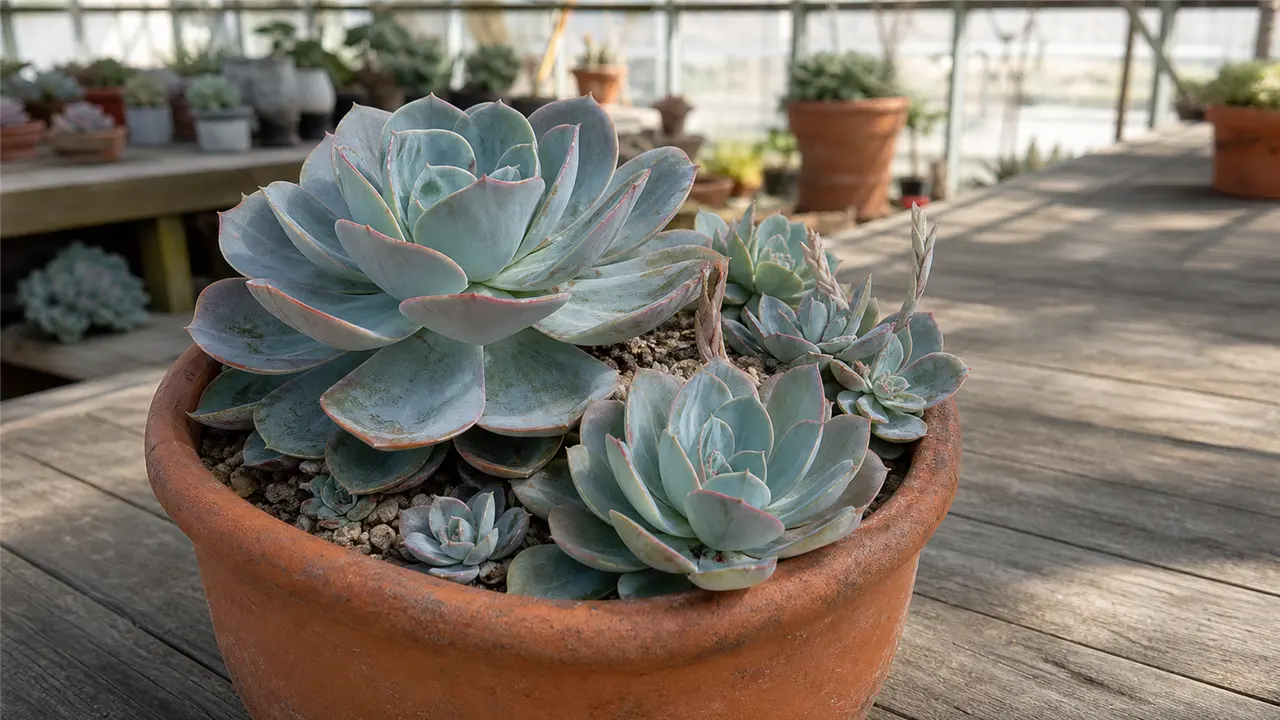
Propagation is most commonly by offsets or leaves, where viable material is available. Detach an offset with a clean tool, leave the wound to callus for several days, then place it on or just in gritty, barely moist compost. For leaf propagation, remove a healthy leaf completely without tearing it, allow the cut end to dry, and lay it on suitable compost in bright, indirect light. Not every leaf roots or produces a plant, so this method requires patience. Seed propagation is possible but slow and generally used by specialist growers.
Seasonal care is particularly important in Britain. From March to May, increase light and watering gradually as growth resumes, repot if necessary and begin light feeding. From June to August, water deeply only after drying, ventilate greenhouses and give outdoor plants shelter from prolonged rain. In September and October, reduce watering and bring the plant under cover before cold nights and wet weather. From November to February, keep it bright, dry and ventilated, checking occasionally for pests or shrivelling without automatically watering.
Common Problems
Root or stem rot is the most serious risk. It is usually associated with cold, wet compost, poor drainage or water collecting in the rosette. Soft, translucent leaves, a collapsing centre or a dark stem are warning signs. Stop watering, remove the plant from its pot and inspect the roots. Cut away affected tissue with a sterile blade, allow healthy cuts to dry and reroot in fresh, dry, gritty compost. Severely damaged plants may not recover.
Leaf drop can follow overwatering, sudden temperature changes or physical damage. Lower leaves naturally age and dry, but rapid loss from the centre indicates stress. Check the roots, drainage and light before watering again. Shriveled leaves during active growth usually indicate that the compost has stayed dry too long, though watering a compromised root system will not solve the problem until healthy roots are present.
Pale, stretched growth is a light problem. Move the plant gradually to a brighter position rather than placing a shade-grown specimen immediately in intense sun. Brown patches can indicate sun scorch, especially after a sudden move behind hot glass; damaged tissue will not recover, but new growth can remain healthy when exposure is adjusted.
Mealybugs may hide between leaves or around roots, while aphids can gather on flower stems. Inspect regularly, isolate affected plants and remove visible insects with a cotton bud or suitable labelled treatment. Avoid leaving dense, wet foliage overnight, and maintain airflow. Persistent infestations often indicate that plants are crowded or stressed.
Popular Varieties
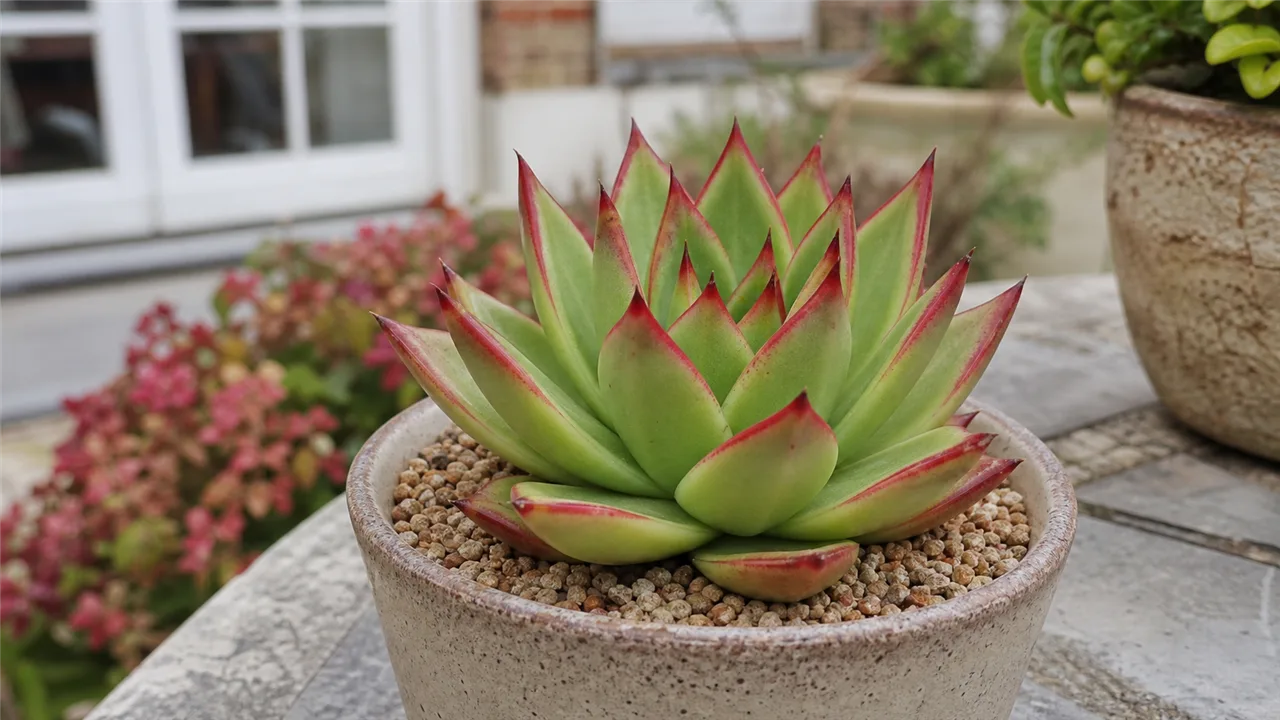
Echeveria cante itself is the species and is often sold simply under that botanical name. Named plants in this group must be identified accurately, because similar blue-leaved Echeveria hybrids and species are frequently confused in retail collections. Do not assume that a nursery label is a confirmed cultivar without reliable provenance.
Related names that collectors may encounter include Echeveria cante ‘Hidalgo’, Echeveria ‘Morning Beauty’ and Echeveria ‘Blue Bird’; these are distinct named plants rather than interchangeable names for the species. Their appearance, vigour and final size can vary, and some names are used inconsistently in the trade. Check the label and supplier details before buying if a particular cultivar is required.
For a reliable Echeveria cante, prioritise a plant with an intact, symmetrical rosette, firm leaves, clean growth and no unexplained darkening at the base. A well-drained pot and a bright growing position matter more than a decorative container. With restrained watering and protection from British winter wet, this slow-growing succulent can retain its sculptural form for many seasons.
Pests and Diseases
| Problem | Symptoms | Management |
|---|---|---|
| Root rot | Leaves become soft, mushy, and translucent, often starting from the base. | Water only when soil is completely dry and ensure pots have excellent drainage. |
| Mealybugs | White, cottony clusters appear in leaf axils and on stems. | Isolate plant and treat with insecticidal soap or a cotton bud dipped in alcohol. |
| Sunburn | Brown, bleached, or scorched patches develop on leaves exposed to intense light. | Acclimate gradually to bright light and avoid direct midday summer sun. |
| Overwatering | Leaves swell, turn yellow, and drop off easily while the soil remains wet. | Reduce watering frequency and use a gritty, fast-draining succulent compost. |
Or browse the full plant problem solver to diagnose an issue by symptom.
Recommended Products
GardenWizz earns a commission from qualifying purchases made through affiliate links on this page (including links within the article) — as an Amazon Associate, and from Thompson & Morgan via the Awin network. This does not affect the price you pay. See our disclaimer for details.