Lipstick
Echeveria agavoides
The Gardening Year
Best months in UK gardens · full planting calendar →
🖨 Printable care card (PDF)At a Glance
| Botanical name | Echeveria agavoides |
|---|---|
| Common name(s) | Lipstick |
| Family | Crassulaceae |
| Plant type | succulent |
| Height × Spread | 8–12 cm × 7–15 cm |
| Position | Full sun |
| Soil | well-drained |
| Flowering | June–August |
| Toxicity | — |
| Native range | Central Mexico |
Overview
Echeveria agavoides is a compact, stemless succulent from the semi-desert uplands of central Mexico (Hidalgo, Guanajuato, Querétaro), where it grows on rocky slopes. A member of the Crassulaceae, it is one of the most recognisable echeverias in UK cultivation, prized for crisp, agave-like leaves tipped with vivid coral-red. The species name agavoides — "resembling an agave" — refers to the pointed, fleshy leaves arranged in tight rosettes, which give the plant its common names "wax agave" and "lipstick echeveria."
In UK conditions, E. agavoides is treated as a tender ornamental grown as a houseplant on bright windowsills, in conservatories, and on sheltered summer patios. It survives short cold spells only if kept dry and is not reliably hardy outdoors anywhere in Britain; bring it inside before the first autumn frosts. Individual rosettes reach 8–20 cm across and the plant flowers reliably each spring or early summer. The species has been in British glasshouse cultivation since the nineteenth century, with selected forms distinguished by the colour and intensity of the leaf-tip flush.
Appearance
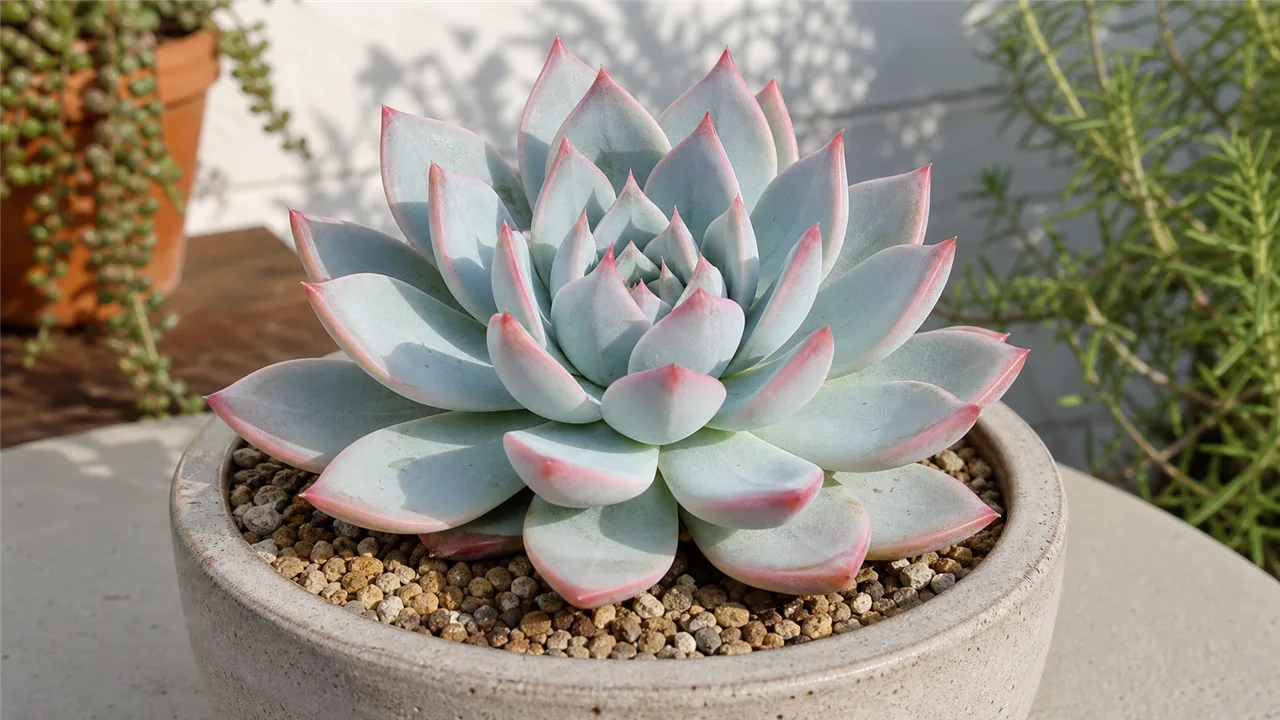
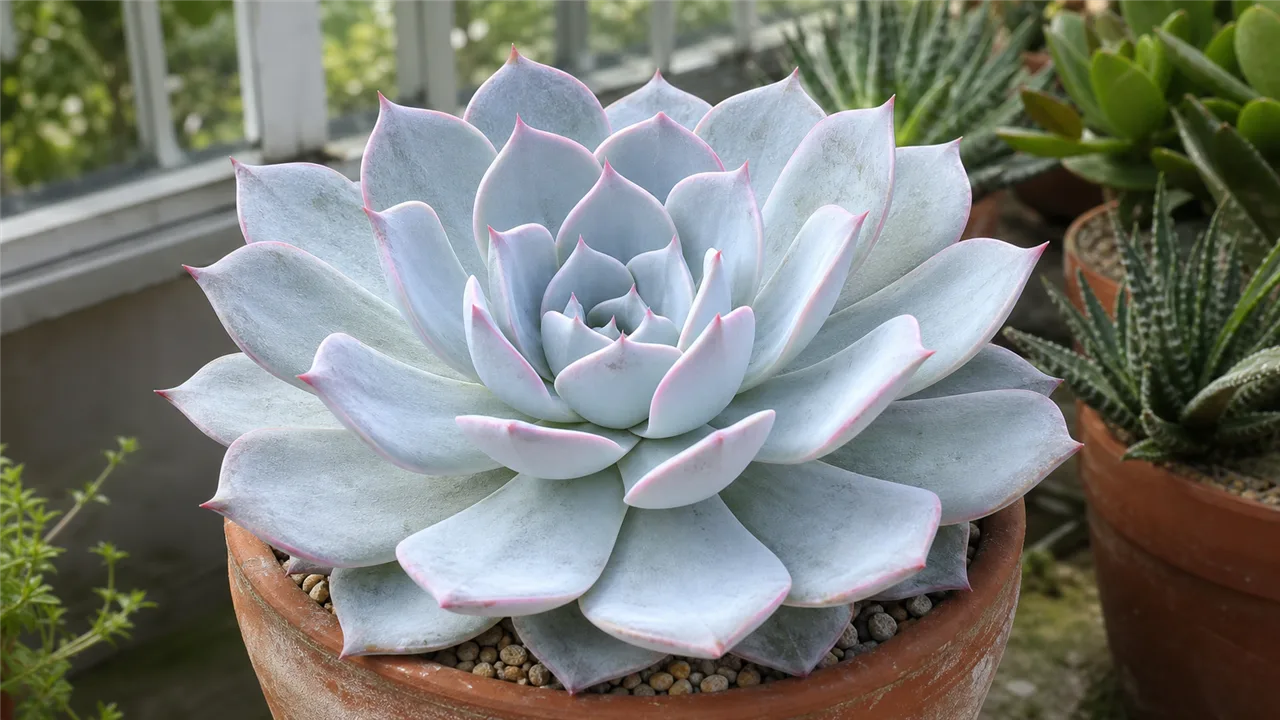
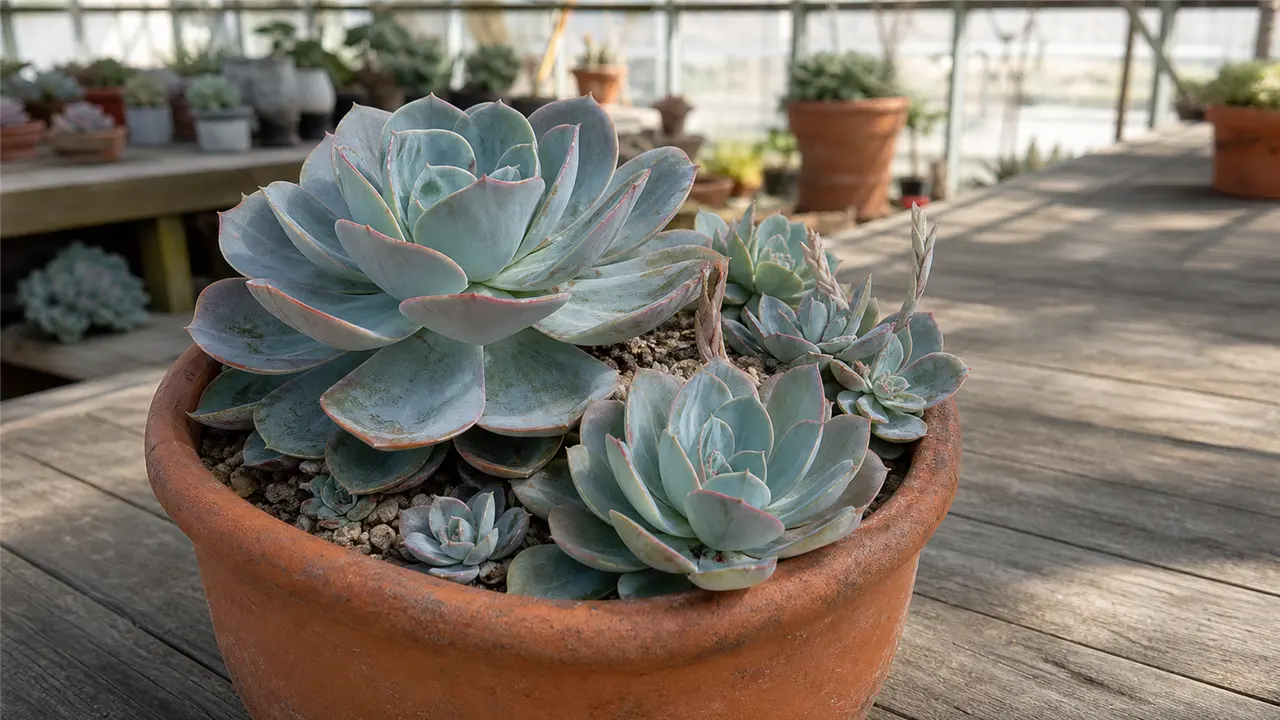
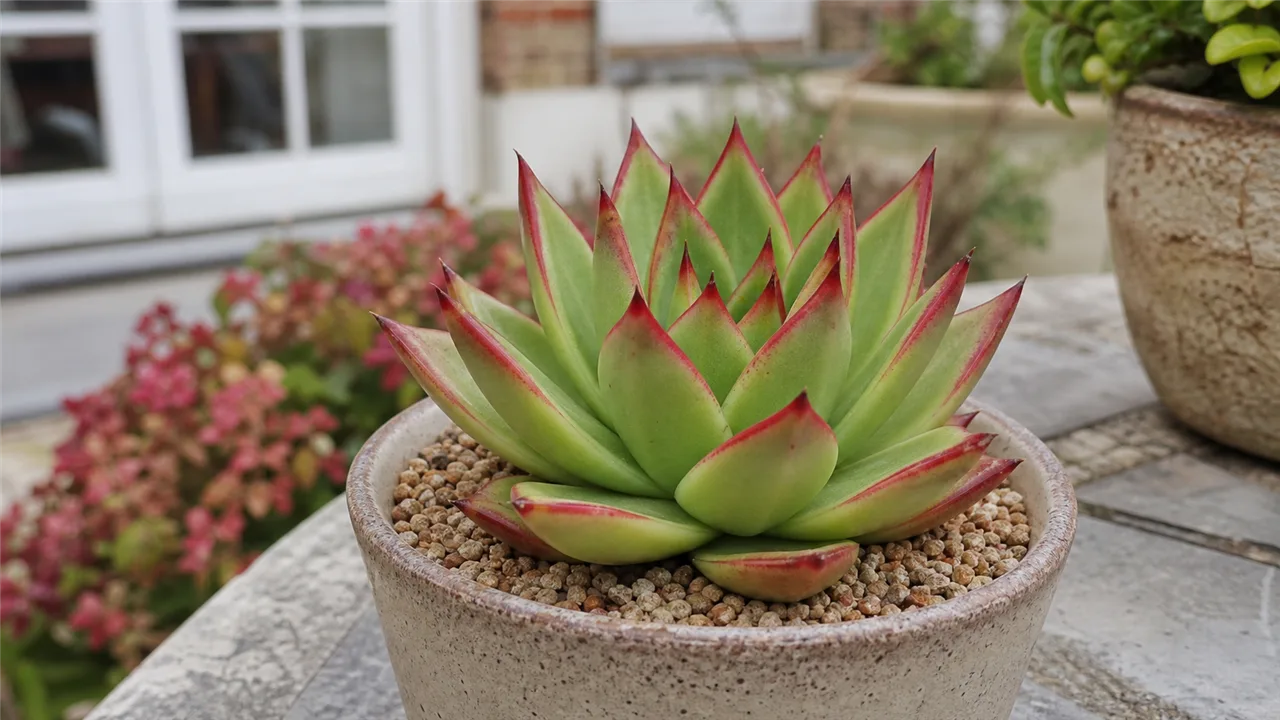
Echeveria agavoides forms a tight, stemless rosette of stiff, fleshy leaves arranged in a near-perfect spiral. Rosettes grow slowly to 8–20 cm across, leaves 5–10 cm long and 3–4 cm wide at the base. The plant clumps gently with age, producing offsets (pups) at the base to form a small colony rather than a single rosette.
The leaves are the main ornamental feature. They are deltoid to lance-shaped — narrower at the base and tapering to a sharp, slightly upturned point — and a pale, waxy green to yellowish-green at the centre of the rosette. In good light, the outer half of each leaf and especially the tip flushes a vivid coral-red to deep pink; in strong, unfiltered summer sun the entire leaf can take on a pinkish-red cast, while in low light the colour drains away, leaving plants wholly green and softer in outline. A fine, waxy cuticle gives the leaves a slight bloom and contributes to the "wax agave" name.
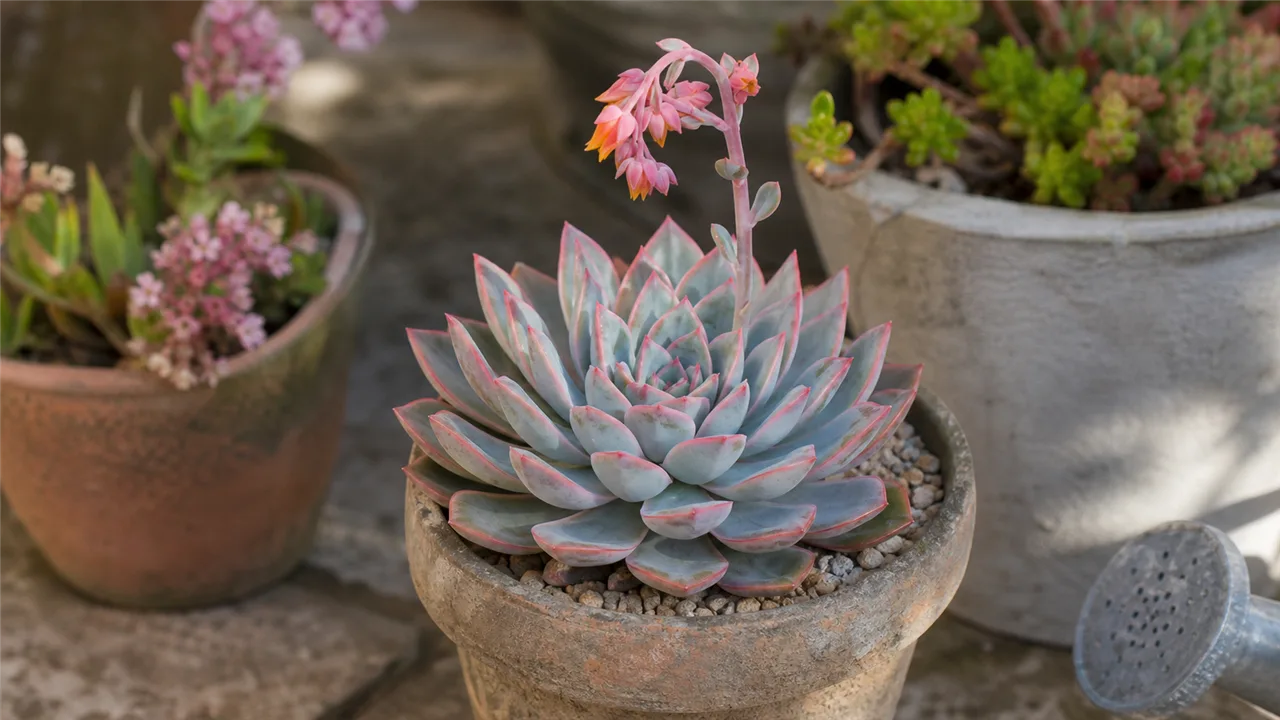
Flowering occurs in the UK from April or May into July. A slender, arching flower stem up to 30 cm tall rises from the centre of mature rosettes, carrying small, pendulous, bell-shaped blooms. Each flower is coral-pink to reddish outside with a yellow tip on the inner petals, and the inflorescence can persist for several weeks.
Growing Conditions
Echeveria agavoides needs three things above all else: very bright light, an extremely well-drained growing medium, and protection from prolonged cold and wet. In the UK these are most easily met in a pot that can be moved with the seasons.
Aspect and light. A full sun position suits mature plants during the UK growing season, though very intense midday sun in a south-facing window through midsummer can scorch leaves. A bright east- or west-facing windowsill, or a south-facing position with light shading in the hottest part of the day, is ideal. Outdoors in summer a sunny, sheltered patio suits the plant well. Insufficient light produces pale, leggy growth — known as etiolation — and the leaf-tip flush is lost.
Soil and compost. Use a very gritty, free-draining cactus and succulent compost. A workable DIY mix is one part John Innes No. 2 to one part horticultural grit or perlite (roughly 50/50); many growers push this to 60% grit for safety in damp UK conditions. Standard multipurpose compost holds too much moisture and quickly rots the roots.
Temperature. Through the active season, ideal temperatures lie between roughly 18 °C and 27 °C. Through winter keep the plant above about 5 °C, lower only if it is also kept almost dry. It will tolerate brief dips near freezing if the compost is bone dry, but it is not reliably frost-hardy anywhere in Britain. The plant carries a hardiness rating displayed in its badge; refer to that rather than the body text.
Water. The single most important rule is to water only when the compost has dried out completely, then water thoroughly so that excess drains from the pot. In the UK growing season this typically means a deep soak every 10–14 days for a plant in active growth. In winter reduce watering to once a month or stop altogether. Never let the rosette sit in wet compost, and never water over the top of the rosette, where water trapped between the leaves can cause rot.
Planting and Care
When to pot. The best time to pot or repot is late spring to early summer — May or June in the UK — once active growth has resumed. Only repot when the rosette is visibly crowded, offsets are spilling over the rim, or the compost has become exhausted.
Container choice. Choose a pot only slightly larger than the rosette: over-potting keeps the compost wetter for longer and is a common cause of rot. Terracotta pots are particularly suitable because the porous walls help the compost dry out. The pot must have drainage holes; decorative cache pots without drainage are not suitable as the growing container.
Compost. A cactus and succulent compost, or a 50/50 blend of John Innes No. 2 and horticultural grit, is appropriate. A top dressing of coarse gravel or grit keeps the crown dry and deters basal rot.
Watering in detail. Use the "soak and dry" method. Water thoroughly until it runs from the drainage holes, then allow the compost to dry fully before watering again. Through the UK growing season this usually means watering every 10–14 days for a plant in a terracotta pot in a bright, warm position. In late autumn and winter, water very sparingly — perhaps once a month, or not at all if the plant is kept cool and bright. Always water the compost, not the rosette.
Feeding. Not a hungry plant. Apply a half-strength liquid cactus and succulent fertiliser once a month through the active season (April–August). Do not feed in autumn or winter.
Grooming. Remove fully dried, papery lower leaves by hand. They pull away cleanly, and removing them both tidies the rosette and reduces the number of places pests can hide.
Propagation. Three methods work well. Leaf cuttings — whole, healthy leaves pulled cleanly from the mother plant, calloused for two to three days in dry air, then laid on the surface of dry cactus compost — root in two to four weeks and form small plantlets at the base. Offset division is straightforward: separate pups from the mother in spring, allow the cut surfaces to callous, and pot each offset individually into dry gritty compost. Seed can be sown in warmth in spring, though seed-raised plants are slower and will not come true to a particular cultivar.
Seasonal care in the UK. Move plants outdoors to a sunny patio from late May (after the last frost) to early September, and bring them in well before the first autumn frosts — nights regularly dropping below about 5 °C are a reliable cue. Through winter, place the plant in the brightest, coolest room available (a frost-free porch, conservatory, or unheated bedroom), water very sparingly, and do not feed. Resume normal watering and feeding when the days lengthen in spring and new growth is visible at the centre of the rosette.
Common Problems
Overwatering and root rot. The single most common cause of failure. Symptoms are soft, translucent, yellowish or blackened leaves at the base, and loss of turgidity in the rosette. If caught early, lift the plant from its pot, trim away any dark, mushy roots, allow the cut surfaces to dry for a day, and re-pot into fresh dry gritty compost. Going forward, water less frequently and check the compost with a wooden probe before watering.
Mealybugs. The most frequent pest on echeverias in the UK. Look for small white, cottony tufts deep in the leaf axils and around the base of the leaves. Dab individual insects with a cotton bud dipped in rubbing alcohol (70% isopropyl), or apply a systemic insecticide labelled for ornamental houseplants. Quarantine affected plants while treatment is in progress.
Vine weevil. Adult beetles chew shallow, rounded notches into leaf edges, particularly on plants overwintered in a cool porch or conservatory. Soil-dwelling larvae can chew roots and cause sudden wilting. Biological control with nematodes (Steinernema kraussei), applied in late summer or early autumn when soil temperatures are above about 12 °C, is effective in pots. Heavy infestations may need a labelled chemical drench.
Fungal leaf spots and basal rot. Blackened or scabby patches on leaves, or a darkened, mushy crown, are usually signs of a fungal infection encouraged by humid, stagnant conditions and wet foliage. Improve air movement, water only the compost, and remove badly affected leaves with a clean blade. Repot into dry, sterile compost if the crown is affected.
Etiolation (stretching). Pale, leggy, open rosettes with elongated leaves indicate insufficient light. Move the plant gradually — over a week or two — to a brighter position to avoid sun shock. Existing stretched growth will not recover in shape, but new growth at the centre of the rosette will adopt the compact form once light levels are adequate.
Frost and cold damage. Brown or blackened patches after a cold night indicate frost damage. The rosette often recovers if the centre and crown remain firm and green; cut back to healthy tissue with a clean blade and withhold water until new growth resumes. The species is not reliably frost-hardy in the UK and should be overwintered indoors or in a frost-free glasshouse.
Popular Varieties
Several named forms of Echeveria agavoides are widely available in the UK, distinguished primarily by the extent and intensity of the red flush on the leaves. Growers occasionally encounter slight regional variations in naming; a few are sold under multiple labels.
- 'Lipstick' — the most widely grown form, with a strong coral-red margin along the outer half of each leaf and a clear green centre. The classic "lipstick echeveria."
- 'Maria' — similar in habit to 'Lipstick' but with a heavier, more reliable flush through the cooler months and into winter under glass.
- 'Red Edge' — a selection distinguished by a defined red border rather than a diffuse flush; the leaf centres remain an even pale green.
- 'Ebony' — a darker selection in which the red pigmentation extends more deeply into the leaf, giving the plant a richer, almost mahogany cast in strong light.
- 'Corderoyi' — a slightly larger, more open form historically attributed to the Corderoy collection, with broader rosettes and a softer red flush.
Beyond these widely-traded cultivars, growers will encounter seedlings and unnamed selected forms sold under the plain E. agavoides name. Treat these as "type" plants and propagate by leaf cuttings or offset division rather than by seed if consistent leaf colour is desired.
Pests and Diseases
| Problem | Symptoms | Management |
|---|---|---|
| Root rot | Leaves become soft, translucent and mushy while the stem may blacken or collapse. | Ensure sharp drainage with gritty compost and water only when dry, keeping plants almost dry in winter. |
| Mealybugs | White, cottony wax-like clusters appear in leaf axils and on stems, often accompanied by sticky honeydew. | Isolate the plant and treat infestations with a systemic insecticide or dab spots with alcohol-soaked cotton. |
| Vine weevil | Semi-circular notches appear on leaf edges while larvae feed on roots, causing wilting and poor growth. | Use nematode treatments in the soil during warm months or apply a systemic insecticide to prevent larval damage. |
| Aphids | Small green or black insects cluster on new growth and flower stalks, secreting sticky honeydew. | Knock off pests with a strong jet of water or apply a suitable insecticidal soap or systemic treatment. |
| Leaf burn | Leaf tips and margins turn brown, crispy, or develop dark spots due to chemical sensitivity. | Water with rainwater instead of tap water to avoid damage from fluoride and other dissolved salts. |
For step-by-step help, read Controlling Aphids Naturally. Or browse the full plant problem solver to diagnose an issue by symptom.
Recommended Products
GardenWizz earns a commission from qualifying purchases made through affiliate links on this page (including links within the article) — as an Amazon Associate, and from Thompson & Morgan via the Awin network. This does not affect the price you pay. See our disclaimer for details.