Scarlet-Plume
Euphorbia fulgens
The Gardening Year
Best months in UK gardens · full planting calendar →
🖨 Printable care card (PDF)At a Glance
| Botanical name | Euphorbia fulgens |
|---|---|
| Common name(s) | Scarlet-plume |
| Family | Euphorbiaceae |
| Plant type | shrub (deciduous) |
| Height × Spread | 100–150 cm × 50–100 cm |
| Position | Full sun, Partial shade |
| Soil | peat-free, loam-based compost with added bark and leafmould; well-drained |
| Flowering | January, February, December |
| Toxicity | IRRITANT to skin/eye harmful if eaten |
| Native range | Mexico |
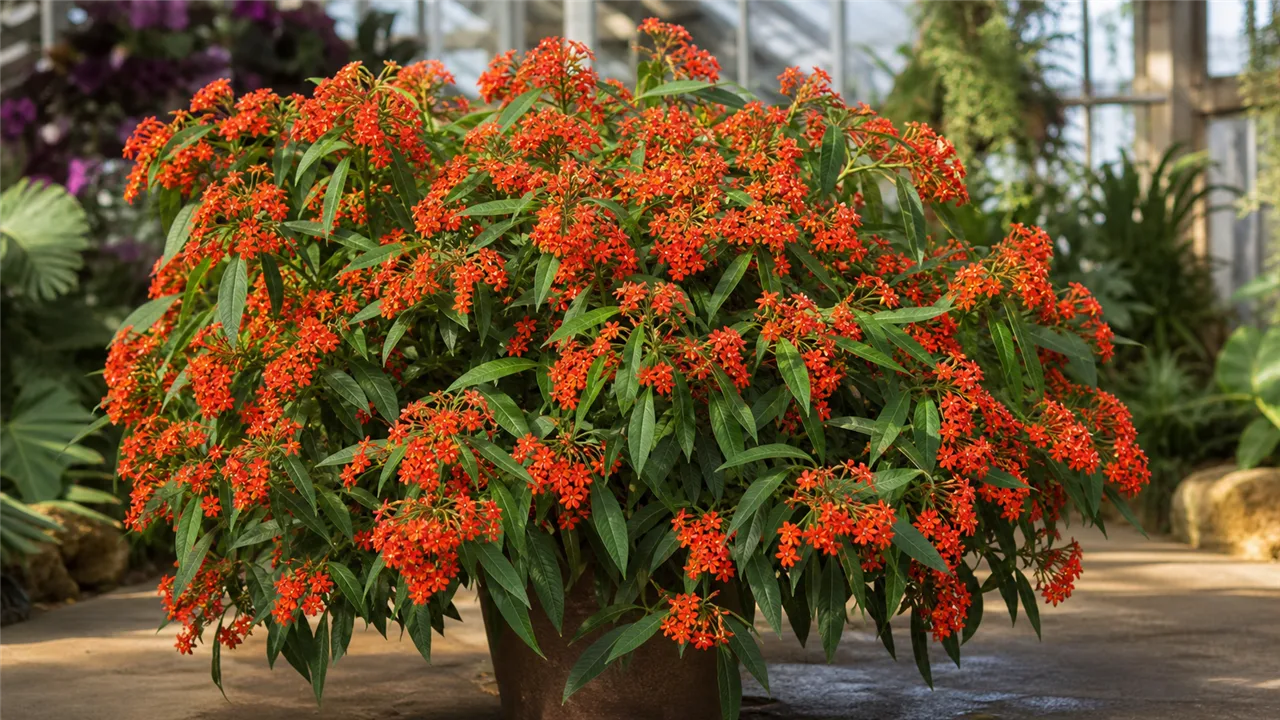
Euphorbia fulgens is a graceful Mexican spurge valued for its slender stems and vivid winter bracts. In Britain it is principally a conservatory or houseplant, although specialist growers also raise it under glass for long-lasting cut stems.
Overview
Euphorbia fulgens belongs to the Euphorbiaceae and is native to Mexico. Unlike the low, mound-forming spurges familiar in British borders, it develops a woody base and a loose framework of upright to arching branches. Its species name means shining or gleaming, an apt reference to the brilliant floral display arranged along the upper stems. Scarlet plume is an occasional common name, but the botanical name is more widely used in cultivation and the cut-flower trade.
This is a specialist plant for protected cultivation in the UK. A heated greenhouse, warm conservatory or bright indoor room provides the steady warmth it needs; an unheated greenhouse or an exposed summer border is unsuitable as a permanent home. Plants can spend a settled part of summer outside in a sheltered, bright position, but only while conditions remain reliably warm. Bring them under cover well before cold autumn nights and avoid subjecting the roots to a sudden change from warm, moist compost to cold, wet conditions.
The winter display makes the species useful where colour is wanted during the darker months. Flowering stems also last well when cut, which explains its importance to commercial growers. All parts contain the milky latex typical of spurges. The sap can irritate skin and eyes, and plant material is harmful if eaten, so site the pot away from children and pets and wear gloves when cutting, repotting or taking cuttings.
Appearance
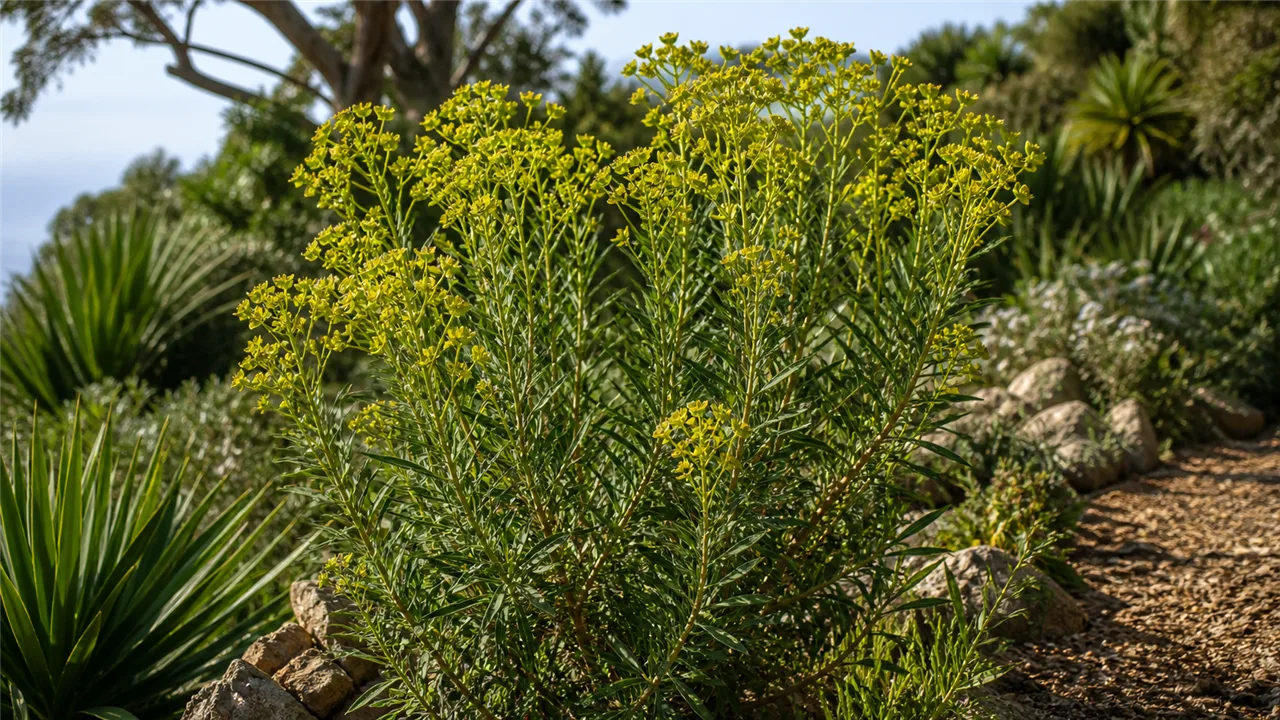
The plant forms an open, branching shrub with slim stems that are initially green and become woodier with age. Young shoots are mostly upright, then arch under the weight of their leaves and flower clusters. A mature container plant commonly reaches 1–1.5 m in height and 0.5–1 m across, although pruning and pot size influence its final proportions. Its light structure is part of its appeal: the coloured stems can be seen individually rather than merging into a dense block.
Narrow, lance-shaped leaves are arranged along the shoots. They are fresh to mid-green and provide a clean background for the bright display. The foliage may thin or fall after flowering or when growing conditions change, so the species should not be judged by the dense, evergreen appearance of many conventional houseplants. Cold, low light, drought or waterlogged compost can all cause more leaf loss than the normal seasonal response.
As in other euphorbias, the true flowers are tiny and grouped in specialised cup-like structures called cyathia. Their impact comes from the surrounding bracts. Numerous cyathia and bracts line the upper portions of the curved stems, producing the characteristic plume effect. The wild colour is usually described as orange-red to scarlet, while cultivated selections extend the range through orange, yellow, cream and white. Under well-managed protected conditions, the main UK display falls from December to February.
Growing Conditions
Give Euphorbia fulgens abundant light. A bright conservatory or greenhouse position with some direct sun encourages sturdy growth and good bract colour. Behind glass, however, intense midday summer sun can scorch foliage and overheat the root ball, so provide light shading or move the pot back from the glass when necessary. In a room, choose the brightest practical window and turn the pot occasionally to maintain even growth. Weak, widely spaced shoots and reluctant flowering usually indicate insufficient light.
Warmth should be consistent rather than extreme. Keep the plant frost-free, away from cold draughts, frequently opened winter doors and glass that becomes very cold at night. Equally, avoid placing it immediately above a radiator, where hot, dry air encourages rapid water loss and spider mites. Moderate humidity and regular air movement are preferable to either a parched atmosphere or a closed, steamy greenhouse. Ventilate on mild days without exposing the plant to a sharp chill.
Use a fertile, free-draining medium. A peat-free loam-based compost opened with horticultural grit, perlite or fine composted bark gives a useful balance of moisture retention and aeration. The container must have clear drainage holes; a decorative outer pot should be emptied after watering. This species dislikes stagnant, saturated compost, particularly when growth slows. A slightly root-restricted plant often flowers well, so increasing pot size too quickly is less helpful than maintaining an evenly aerated root ball.
Planting and Care
Pot or repot from March to May, when increasing light supports new root growth. Move up by only one container size and keep the original planting depth. Tease out circling roots gently, settle fresh compost around them and water once to remove large air pockets. Repot only when roots have occupied most of the existing container; in other years, replace the loose surface compost with fresh mix. Tall or arching specimens may need a discreet cane or ring support, inserted without damaging the main root mass.
During active growth, water thoroughly and allow excess to drain, then wait until the compost surface has begun to dry before watering again. Check the root ball rather than following a rigid weekly timetable: light, warmth, pot material and plant size all alter demand. Never leave the container standing in water. After flowering, reduce the frequency as growth quietens, but do not leave the entire root ball bone dry for prolonged periods. Resume more generous watering as fresh spring growth becomes evident.
Apply a balanced liquid houseplant fertiliser at the maker's recommended dilution during active growth. Feeding modestly at regular intervals is safer than using a strong dose on dry compost. Reduce or stop feeding when growth slows and do not use fertiliser to force a stressed or recently repotted plant. Excess nitrogen can produce soft, elongated stems at the expense of a balanced framework and good flowering.
After the display has finished, shorten flowered stems to strong buds or side shoots to encourage branching and keep the shrub manageable. Also remove dead, damaged or crossing growth. There are no populated calendar months for pruning this plant, so respond to the end of flowering rather than pruning by an arbitrary date. Wear gloves and eye protection, cover nearby furnishings, and allow the latex flow to stop before disposing of trimmings. Clean secateurs afterwards and never touch the face while working.
Propagate from healthy stem-tip or softwood cuttings in spring or early summer. Cut below a node with a clean blade, remove the lower leaves and place the base briefly in cool water, or otherwise allow the latex to stop flowing. Insert into a small pot of free-draining propagation compost and keep it warm in bright, indirect light. Enclose only if condensation can be controlled: excessive humidity around a wounded cutting invites rot. Rooting can be variable, so several cuttings provide a better chance of success.
Seasonal care centres on continuity. In summer, shade from fierce glasshouse sun, monitor watering and maintain ventilation. During autumn, check for pests before moving any outdoor-summered plant inside. Through the winter flowering period, give maximum useful light, stable warmth and careful watering. Once the display ends, tidy the framework, reduce water and wait for active growth before repotting or restoring the full feeding programme.
Common Problems
Root and stem rots are most often associated with persistently wet compost, blocked drainage or cool conditions. Early signs include yellowing, wilting despite damp compost and darkening at the stem base. Remove the plant from standing water, improve warmth and airflow, and let the surface dry appropriately. If roots are already soft and brown, remove affected material and repot viable growth into fresh, free-draining compost; taking healthy cuttings may be the safest way to preserve a badly affected plant.
Glasshouse red spider mite thrives in warm, dry rooms. Fine pale speckling, dull leaves and delicate webbing beneath the foliage indicate an established attack. Inspect regularly with a hand lens, especially near radiators, and isolate affected pots. Improving humidity around the plant, while retaining ventilation, makes conditions less favourable. Mealybugs gather as white, waxy deposits at nodes and leaf joints; scale insects resemble fixed brown bumps; whitefly rise from the leaves when disturbed. Early removal and repeated checks are more effective than waiting for a heavy infestation.
Grey mould can colonise fading flowers, fallen leaves or damaged stems in humid, stagnant air. Remove spent and infected material promptly, keep the bench or windowsill clean and increase gentle ventilation. Avoid splashing the upper growth late in the day. Poor flowering is more commonly cultural than pathological: low light, erratic watering, excessive nitrogen feeding or abrupt temperature changes can each weaken the display. Leaf drop may likewise follow chilling, drought, waterlogging or a sudden move, so review the whole environment before treating for disease.
Popular Varieties
Cultivar availability is more common through specialist nurseries and the cut-flower trade than through ordinary UK garden centres. The following are recorded cultivated selections of Euphorbia fulgens; naming can vary between suppliers, so buy labelled stock from a reputable source rather than relying on colour alone.
- 'Orange King' is selected for an orange-toned display and retains the species' elegant, bract-lined stems.
- 'Sunny King' is one of the named King-series selections and broadens the choice beyond the familiar scarlet-orange forms.
- 'White King' provides a pale-flowered alternative for conservatory displays and floral work.
- 'Yellow King' is a yellow-toned selection suited to growers seeking a brighter, less red colour range.
- Other verified names include 'Ahrku Orange', 'Ahrku White', 'Ahrku Yellow', 'Beatrix', 'Marisda', 'Scara' and 'Victoria'. Detailed habit and colour descriptions are not consistently available for all of them, so their names should not be treated as guarantees of performance under different growing regimes.
Whichever selection is chosen, the basic requirements remain those of the species: bright light, steady warmth, an aerated root medium and disciplined watering. A healthy, accurately labelled plant is more valuable than an unusual name attached to weak or poorly rooted material.
Pests and Diseases
| Problem | Symptoms | Management |
|---|---|---|
| Mealybugs | White, cottony wax patches appear on stems and leaf axils, often accompanied by sticky honeydew. | Isolate the plant and treat with a systemic insecticide or wipe affected areas with alcohol-dampened cotton buds. |
| Grey mould (Botrytis) | A fuzzy grey fungal growth develops on damp foliage, stems, or flowers, causing tissue rot. | Improve air circulation, reduce humidity, and remove infected plant parts; apply a fungicide if severe. |
| Root rot | Foliage turns yellow and wilts despite moist soil, often due to waterlogged conditions in containers. | Ensure pots have adequate drainage and allow the compost to dry out between waterings, especially in winter. |
| Red spider mites | Fine webbing appears on leaves with stippled yellowing or bronzing of the foliage surface. | Increase ambient humidity around the plant and treat with a suitable miticide or horticultural oil spray. |
| Scale insects | Small, immobile, shield-like bumps attach to stems and leaves, weakening the plant over time. | Scrape off visible scales manually and apply a systemic insecticide for persistent infestations. |
Or browse the full plant problem solver to diagnose an issue by symptom.
Recommended Products
GardenWizz earns a commission from qualifying purchases made through affiliate links on this page (including links within the article) — as an Amazon Associate, and from Thompson & Morgan via the Awin network. This does not affect the price you pay. See our disclaimer for details.