Melon Spurge
Euphorbia meloformis
The Gardening Year
Best months in UK gardens · full planting calendar →
🖨 Printable care card (PDF)At a Glance
| Botanical name | Euphorbia meloformis |
|---|---|
| Common name(s) | Melon spurge |
| Family | Euphorbiaceae |
| Plant type | succulent |
| Height × Spread | 1–10 cm × — |
| Position | Full sun |
| Soil | Very free-draining cactus or succulent compost |
| Flowering | — |
| Toxicity | — |
| Native range | Cape Provinces of South Africa |
A compact, ribbed stem gives Euphorbia meloformis the look of a small green melon. In Britain it is best treated as a tender pot-grown succulent, kept in bright light under glass or indoors and protected from cold, wet conditions.
Overview
Euphorbia meloformis, commonly called melon spurge, is a slow-growing succulent in the spurge family, Euphorbiaceae. It is native to South Africa's Cape Provinces, where its low, water-storing stems are adapted to seasonal dryness and exposed conditions. The accepted botanical name is Euphorbia meloformis Aiton.
For UK gardeners, this is a conservatory, greenhouse or bright indoor specimen rather than a permanent outdoor plant. It can spend warm summer days outside in a sheltered position, but a British winter combines cold with persistent damp, exactly the conditions most likely to damage its roots and stem. A small pot, sharply drained compost and disciplined watering are more important than elaborate care.
The plant's geometric form makes it especially effective as a single specimen among other compact succulents. It grows slowly and remains manageable, so it suits a sunny windowsill where larger euphorbias would become awkward. Its spineless appearance should not be mistaken for complete harmlessness: damaged tissue releases the irritant milky latex characteristic of euphorbias. Wear gloves, protect the eyes and place the pot where children and pets cannot handle it.
Appearance
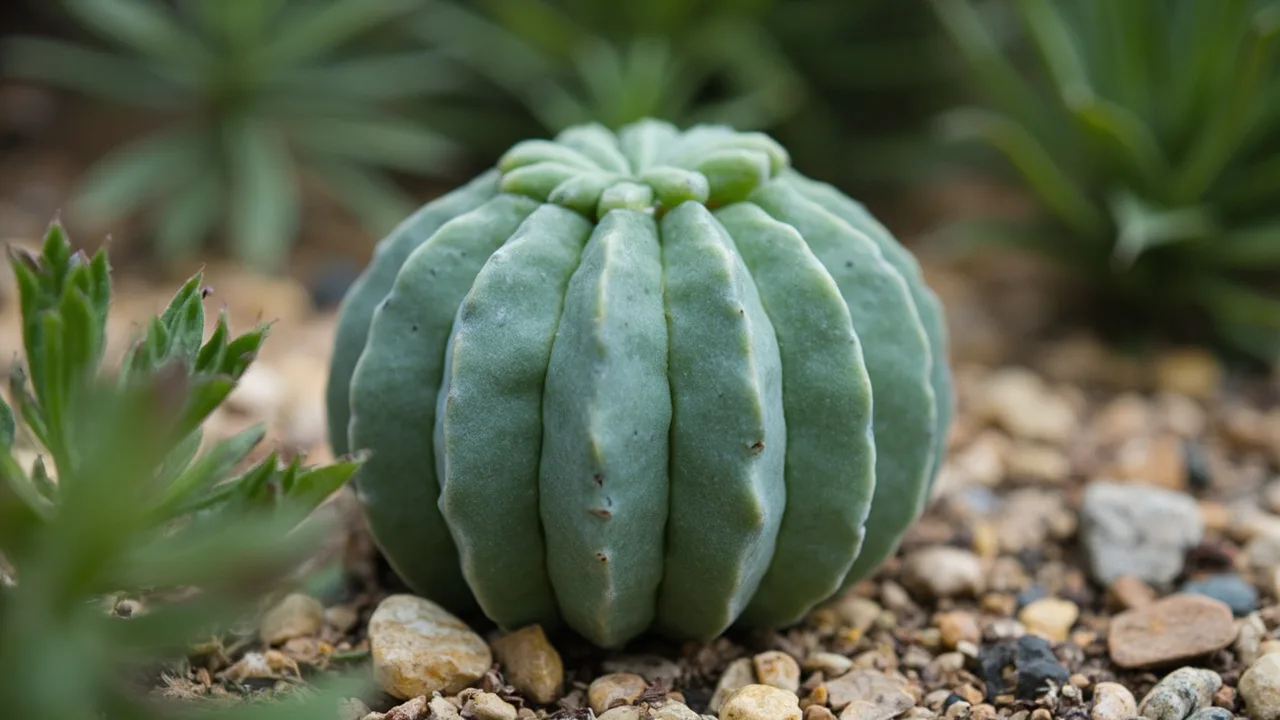
Young plants usually begin as a single rounded stem, later becoming dome-shaped or short-cylindrical and sometimes producing offsets around the base. Each firm, green body is divided into regular vertical ribs, creating the melon-like outline behind the common name. Individual stems are generally no more than about 10cm tall and may reach approximately 12.5cm in diameter, although age, light and cultivation affect their proportions.
The plant is leafless in its familiar mature appearance and lacks the formidable spines associated with many cactus-like succulents. Subtle bands, grooves and changes of green across the ribs give the body much of its ornamental interest. Plants grown in inadequate light may lose their compact shape and stretch towards the window, while those moved abruptly into strong sunshine can develop pale or scorched patches. Balanced, even light helps preserve the symmetrical profile.
Its flowers are not conventional blooms with showy petals. Like other euphorbias, it produces tiny specialised flower structures called cyathia. These appear on fine, often persistent stalks from the crown of the stem and can rise conspicuously above the rounded body. Their delicacy contrasts with the solid ribbed stem, although flowering can be modest in indoor conditions and should not be the sole reason for choosing the plant.
Clumps develop when offsets are retained, producing several rounded heads of different ages. This natural variation is preferable to forcing rapid growth with rich feeding, which can lead to soft, poorly proportioned tissue. Dust may collect between the ribs; remove it gently with a soft dry brush rather than washing the crown or risking damage to the skin.
Growing Conditions
Provide the brightest practical position, such as a sunny conservatory, frost-protected greenhouse or south- to west-facing windowsill. Full sun under glass is suitable for an acclimatised plant, but introduce a recently purchased or overwintered specimen gradually over one or two weeks. A sudden move from subdued winter light into intense April or May sunshine can scorch the exposed ribs. Turn an indoor pot by a quarter turn periodically so growth remains even.
Drainage is fundamental. Use proprietary cactus or succulent compost, improved where necessary with a generous proportion of clean horticultural grit, pumice or another coarse mineral component. The mixture should accept water readily and then drain without remaining sodden around the roots. Avoid ordinary multipurpose compost used alone: its fine organic structure can retain moisture too long, particularly in a cool British house during autumn and winter.
Choose a container with an unobstructed drainage hole. Terracotta dries more quickly and can help cautious growers, although plastic is usable when watering is well controlled. Do not put a layer of gravel beneath dense compost as a substitute for a free-draining mixture, and never allow the pot to stand in a saucer or decorative cover filled with water. A top dressing of grit can keep the stem base clean, but it must not conceal wet compost or be piled against the plant.
Good air movement helps moisture evaporate and discourages pests, yet cold draughts and rain should be avoided. Under glass, ventilate on warm spring and summer days without exposing the plant to prolonged chilly conditions. Outdoors, choose a bright, rain-sheltered position after settled warm weather arrives, then return the plant under cover well before autumn nights become cold and damp. The exact hardiness information should be taken from GardenWizz's structured badge rather than repeated in prose.
Planting and Care
Repot in spring as active growth resumes, normally only when roots fill the container, drainage has deteriorated or the compost has broken down. Select a pot just one size larger; an oversized container holds a disproportionate volume of wet compost. Handle the root ball gently, set the stem at its previous depth and keep compost away from the crown. After disturbing roots, allow minor damage to dry before beginning normal watering rather than immediately saturating the new mixture.
During spring and summer, water thoroughly enough for surplus to leave the drainage hole, empty the saucer, and wait until the compost has dried before watering again. Do not give frequent token splashes: these wet only part of the root ball and make moisture difficult to judge. Test below the grit with a wooden label or assess the pot by weight. Watering frequency varies with pot material, sunlight, ventilation and weather, so a fixed weekly schedule is unreliable.
Reduce water sharply as growth slows in autumn. In winter the aim is to keep the plant on the dry side in bright, protected conditions, not to compensate for weak light with extra water. A cool, waterlogged root ball is the main route to rot. Slight temporary contraction of a firm stem is less alarming than a soft, darkened base. Resume watering cautiously when brighter spring conditions encourage active growth.
Feed sparingly during active growth, using a dilute cactus fertiliser according to its label rather than a high-nitrogen general feed. One light application every four to six weeks in late spring and summer is ample for a plant in fresh compost; omit feeding after late summer and do not feed a stressed, newly repotted or dormant specimen. Slow, compact growth is normal and should not be accelerated.
Pruning is unnecessary. Remove only completely dead flower stalks or damaged material, using a clean blade and gloves. Keep milky latex away from skin and eyes, wash tools after use and allow any cut surface to callus in a dry, airy place. Never trim a healthy stem merely to reshape it.
Propagation is possible from fresh seed sown on a sandy, sharply drained medium in warm, bright conditions. Keep the medium lightly moist rather than saturated and provide ventilation once seedlings emerge. Offsets, where present, offer a simpler route: detach a sufficiently developed offset with a clean blade, allow the wound and latex to dry fully, then place it in dry or barely moist gritty compost until roots form. Not every specimen offsets freely, and seed-raised plants naturally vary.
Inspect the pot at least monthly, especially before moving it between greenhouse and house. Quarantine new acquisitions from an established succulent collection for several weeks. Spring is the best time to correct compacted compost, improve drainage and increase watering; summer brings active care and possible outdoor display; autumn is the signal to reduce water and return plants under cover; winter demands restraint.
Common Problems
Root and stem rot usually begin with excess water, blocked drainage or a large pot of moisture-retentive compost. Warning signs include a dark, soft stem base, loss of firmness, an unpleasant smell or a plant that becomes unstable in its pot. Stop watering, isolate the plant and inspect the roots. Remove rotten material with a sterilised blade only if sound tissue remains, let cuts dry, and restart in fresh gritty compost. Advanced basal rot may be impossible to reverse, making prevention far more dependable than treatment.
Mealybugs shelter in rib grooves, around flower stalks and at the stem base. Look for white, cottony deposits, sticky residue and distorted or weakened growth. Isolate the plant immediately, inspect neighbouring pots and remove small colonies carefully with a cotton bud. Persistent infestations should be managed with a control currently authorised for the intended UK setting, following the label exactly. Repeated inspection matters because concealed eggs and young insects can survive one treatment.
Root mealybugs are easier to miss. They may reveal themselves as white deposits around drainage holes, waxy material on roots or unexplained decline despite apparently sensible watering. Unpot the plant, discard contaminated compost securely, clean the container and examine the roots before repotting. Keep the affected plant separate until fresh growth confirms recovery.
Red spider mites may become troublesome in hot, dry, sheltered indoor conditions. Fine mottling or bronzing, tiny moving specks and delicate webbing are typical clues. Improve ventilation, isolate the plant and confirm the pest before applying any treatment; damage caused by sun scorch can appear similar but will not spread or produce mites. Avoid routinely misting the succulent, because persistently wet crevices introduce a different risk without reliably controlling an infestation.
Sun scorch produces pale, yellow-brown or corky areas on the side facing the glass. Damaged skin will not return to green, but subsequent growth can remain healthy. Move the pot out of harsh midday exposure and reintroduce stronger light gradually. By contrast, elongated, tapered or leaning growth usually indicates insufficient light. Improve the position progressively rather than making an abrupt move that adds scorch to the original problem.
Shrivelling requires careful interpretation. A dry, slightly contracted but firm plant may need water during active growth; a soft plant in wet compost must not be watered again. Check compost moisture, roots and seasonal conditions before acting. This distinction prevents the common mistake of treating rot-induced collapse as thirst.
Popular Varieties
Named cultivars of Euphorbia meloformis are not widely documented, and it would be misleading to invent a list to meet an arbitrary number. Most UK plants are sold simply as the species. Their natural differences in rib count, stem colour, markings and tendency to offset still give collectors useful choice, but ordinary variation should not be presented as a cultivar.
The one form regularly offered by specialist UK succulent nurseries is the variegated plant, sold under labels such as Euphorbia meloformis 'Variegata', E. meloformis f. variegata or simply "variegated". It combines green tissue with cream or yellow sectors and may show pinkish tones in stronger light. These labels are not always applied consistently, so buy the plant in front of you rather than assuming every seller's stock represents a formally established cultivar.
Variegated specimens contain less chlorophyll and may grow more slowly than green plants. Give them excellent light to retain their pattern, but acclimatise them especially carefully because pale areas can scorch. Avoid plants with soft patches, damaged crowns or weak graft unions, and check the ribs and roots for mealybugs before adding any purchase to a collection.
The standard green species remains the most dependable choice. It usually keeps its compact melon-like shape with less risk of scorch and displays the fine flower stalks clearly against its ribbed body. Clump-forming examples are sometimes sold separately from solitary young plants, but "cluster" describes their growth habit rather than a verified cultivar. Likewise, differences in flower-stalk colour or stem banding should be treated as individual variation unless accompanied by reliable provenance.
When buying, favour a specialist nursery that provides the correct botanical name and cultivation history. Nursery propagation is preferable to plants of uncertain origin, particularly for a South African species affected by habitat pressure. A firm, symmetrical stem in dry, clean compost is a better indicator of value than an unsupported rare-variety label.
Sources and further reading:
- Royal Horticultural Society, Euphorbia meloformis plant profile: https://www.rhs.org.uk/plants/115159/euphorbia-meloformis/details (accessed 22 July 2026).
- Royal Horticultural Society, Euphorbia growing guide: https://www.rhs.org.uk/plants/euphorbia/growing-guide (accessed 22 July 2026).
- South African National Biodiversity Institute, PlantZAfrica, Euphorbia meloformis: https://pza.sanbi.org/euphorbia-meloformis (accessed 22 July 2026).
- Royal Botanic Gardens, Kew, Plants of the World Online search for Euphorbia meloformis: https://powo.science.kew.org/results?q=Euphorbia%20meloformis (accessed 22 July 2026).
- Euphorbia International, pests and diseases: https://euphorbia-international.org/pests-and-diseases/ (accessed 22 July 2026).
- Surreal Succulents, UK listing for Euphorbia meloformis 'Variegata': https://surrealsucculents.co.uk/products/euphorbia-meloformis-variegata (accessed 22 July 2026).
Pests and Diseases
| Problem | Symptoms | Management |
|---|---|---|
| Root rot | Stem becomes soft, mushy and discoloured, often starting at the base. | Ensure well-draining soil and allow to dry completely between waterings. |
| Mealybugs | White, cottony wax-like masses appear in leaf axils and on stems. | Isolate plant and treat with insecticidal soap or alcohol-dipped swabs. |
| Spider mites | Fine webbing and stippled yellowing leaves, especially in dry conditions. | Increase humidity and spray with water or use a miticide if infestation is severe. |
| Scale insects | Small, immobile brown or white bumps attached to stems and leaves. | Scrape off manually or apply horticultural oil during the growing season. |
Or browse the full plant problem solver to diagnose an issue by symptom.
Recommended Products
GardenWizz earns a commission from qualifying purchases made through affiliate links on this page (including links within the article) — as an Amazon Associate, and from Thompson & Morgan via the Awin network. This does not affect the price you pay. See our disclaimer for details.