Carmena's Pincushion Cactus
Mammillaria carmenae
The Gardening Year
Best months in UK gardens · full planting calendar →
🖨 Printable care card (PDF)At a Glance
| Botanical name | Mammillaria carmenae |
|---|---|
| Common name(s) | Carmena's Pincushion Cactus |
| Family | Cactaceae |
| Plant type | succulent |
| Height × Spread | 8–10 cm × 15 cm |
| Position | Full sun |
| Soil | standard cactus compost |
| Flowering | March–May |
| Toxicity | — |
| Native range | Tamaulipas state, in eastern central Mexico |
Mammillaria carmenae is a compact Mexican cactus valued for its dense covering of fine, pale spines and its ring of delicate flowers. In Britain it is best grown in a pot, where a sunny greenhouse, conservatory or windowsill can provide the light, drainage and winter shelter it needs.
Overview
Native to Tamaulipas in north-eastern Mexico, Mammillaria carmenae comes from rocky, limestone-influenced habitat. It belongs to a large cactus genus distinguished by tubercles: the stem is divided into nipple-like projections rather than ribs. Flowers develop from the axils between these tubercles and often make a neat ring close to the crown.
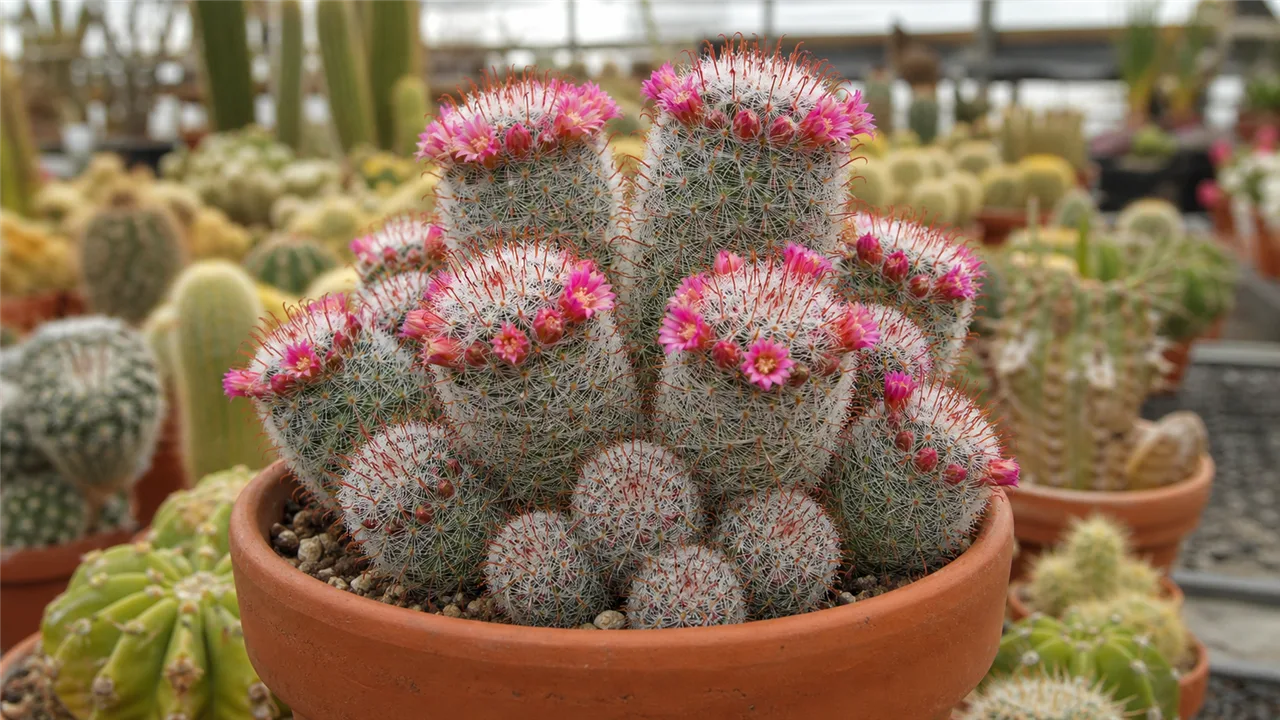
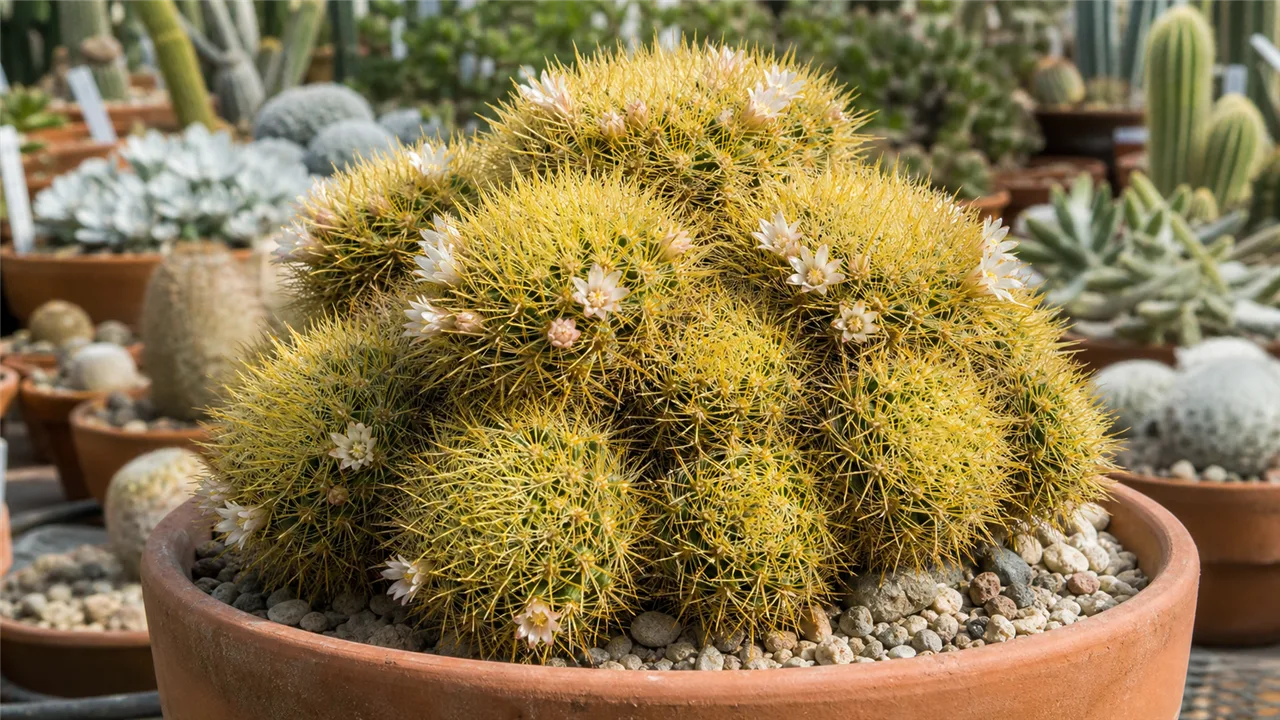
This species is particularly attractive at close range. Its many fine radial spines interlace over the green stem, giving it a soft, almost feathery appearance, although the spines should still be handled cautiously. A young plant may have a single rounded stem, but offsets commonly develop around the base and eventually form a compact colony.
UK conditions make container cultivation the reliable choice. The plant is not suited to an open border, where winter rain, frost and fluctuating moisture are difficult to control. A bright glasshouse, conservatory or sunny indoor sill allows the pot to be moved, turned and watered appropriately through the year. It also keeps the crown visible for regular pest and rot checks.
Growth is slow to moderate and naturally compact. The aim is not to force rapid enlargement, but to maintain firm, well-spined stems. Strong light, restrained feeding and a distinct drier winter rest help preserve the characteristic shape and support flowering.
Appearance
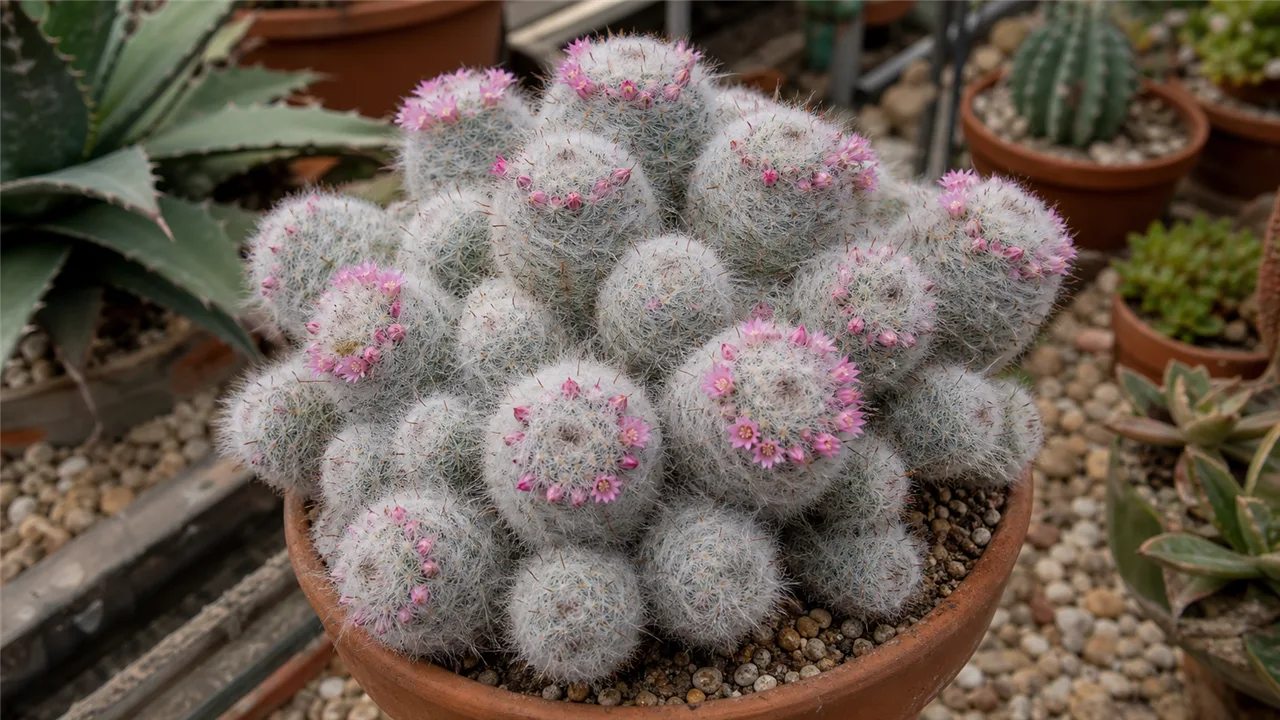
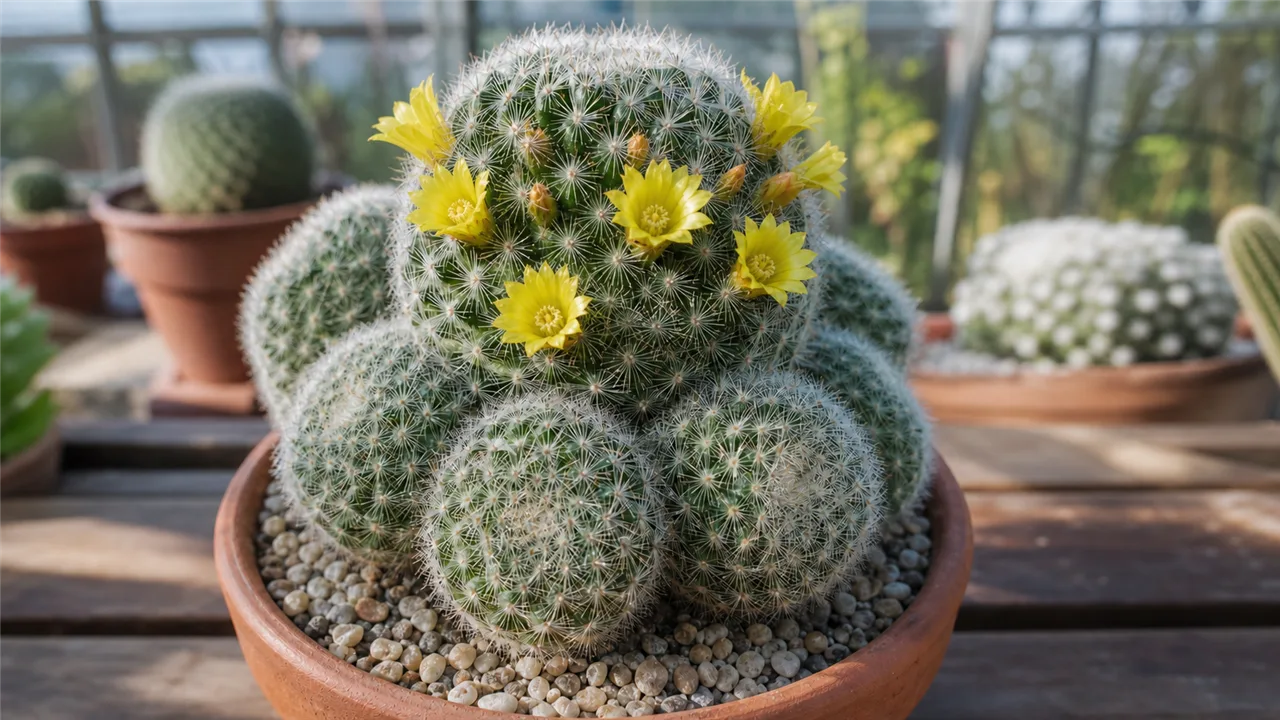
The stems are globose when young and may become short-cylindrical with age. Prominent tubercles run in spirals around each stem. From each areole emerges a dense star of slender white, cream or pale yellow radial spines. These overlap those on neighbouring tubercles, partly hiding the green surface. Conspicuous central spines are normally absent, which enhances the plant's even, delicate texture.
Established specimens often offset freely, producing a low mound of separate but closely packed heads. The exact height and spread depend on age, provenance and cultivation, so nursery measurements should be treated as indicative rather than fixed. A broad cluster may eventually need a wider, heavier pot for stability, but it remains a manageable plant for a shelf or windowsill.
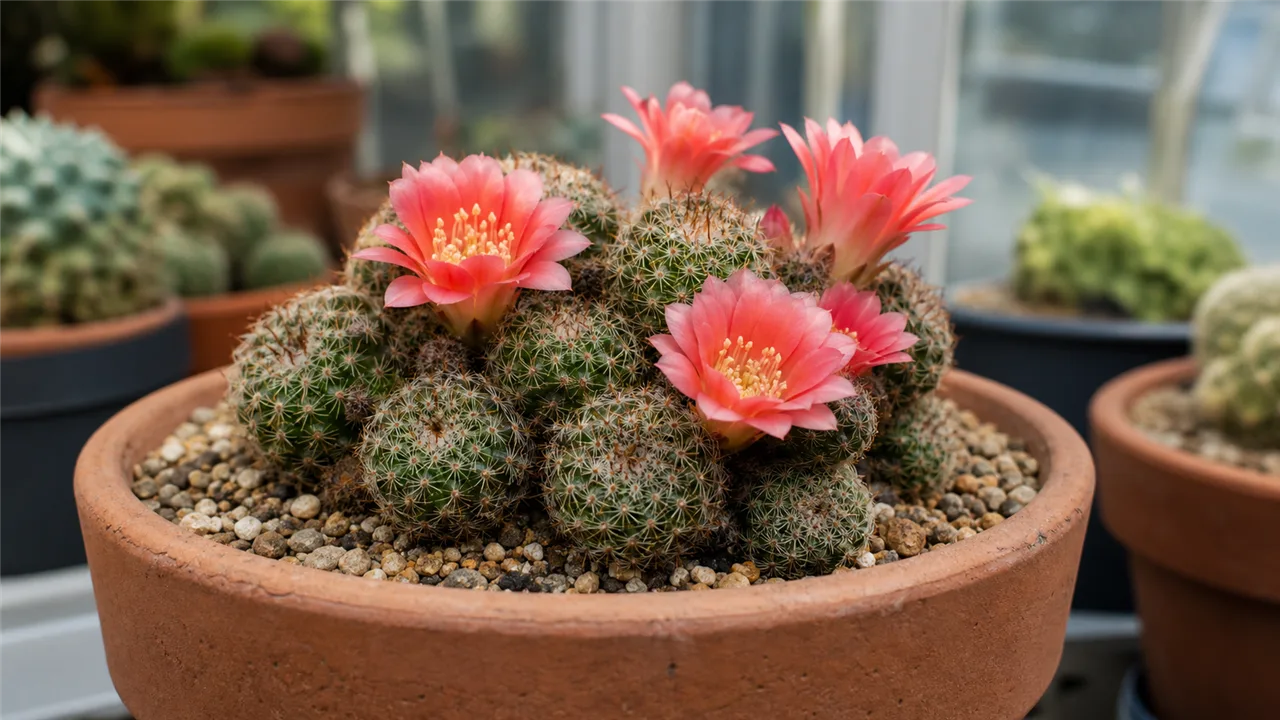
Small funnel-shaped flowers emerge around the upper stem, commonly in cream, whitish or soft pink shades. Petals may show a deeper pink mid-stripe. A well-grown head can carry several flowers at once, forming the characteristic Mammillaria ring. Fruits, when produced, also arise between the tubercles.
New growth should remain broad and densely armed. A narrow, pale or leaning apex is etiolation caused by insufficient light, not a normal change in habit. Because the spine cover conceals much of the epidermis, inspect between tubercles and around the base rather than judging health from a distance.
Growing Conditions
Provide the brightest position available. Greenhouse or conservatory plants appreciate abundant light and good air movement; indoors, a sunny south- or west-facing sill is often appropriate. Turn an indoor pot periodically so growth remains even. Plants kept in subdued winter light must be introduced gradually to stronger spring sunshine, as an abrupt move can bleach or scorch the surface.
Drainage is fundamental. Use a proprietary cactus compost amended generously with pumice, horticultural grit or another clean, porous mineral material. The finished mix should wet readily but release excess water quickly and contain enough air spaces around the roots. Avoid dense, peat-heavy compost that stays wet for long periods. Every container must have clear drainage holes, and water must never collect in a saucer or decorative outer pot.
From roughly April, as light and warmth increase and fresh growth becomes evident, water thoroughly enough to moisten the root ball. Allow the compost to dry substantially before watering again. This wet-then-dry rhythm is safer than frequent small splashes, which may leave the lower compost persistently damp while failing to wet all the roots. Water the compost directly and avoid repeatedly soaking the dense spines.
Reduce watering progressively in autumn. Through the quieter winter period, keep the plant much drier, particularly in cool conditions, giving only enough moisture to prevent damaging prolonged shrivelling if the plant clearly needs it. Cold, wet compost is the most dangerous combination. Ventilate in warm weather, but avoid placing the plant in a stagnant, humid corner.
Feed sparingly during active spring and summer growth with a dilute, low-nitrogen cactus fertiliser. Two or three light applications may be sufficient in fresh compost. Excess nitrogen, especially alongside warmth and weak light, produces soft, stretched tissue that is more vulnerable to damage.
Planting and Care
Repot in spring when roots have filled the container, drainage has slowed or the compost has broken down. Choose a clean pot only slightly larger than the root system; too much unused compost remains wet unnecessarily. Shallow pots suit modest roots, while an older spreading colony may need a broad, stable container. Set the stem bases at compost level and add a dry mineral top-dressing to keep moisture away from the necks.
Unpot carefully using folded paper, soft cactus tongs or protective gloves so the fine radial spines are not crushed. Remove exhausted compost gently and inspect the roots. Cut away dead or rotted material with a sterilised blade. If roots have been damaged, leave the plant dry for several days after repotting before resuming cautious watering, allowing wounds to callus.
Routine pruning is unnecessary. Remove only dead, badly damaged or rotting tissue, cutting back to clean, firm material and sterilising tools before and after use. A leaning or etiolated stem cannot be restored by trimming; correct the light so subsequent growth is compact. Do not remove sound offsets merely to create a symmetrical plant, as clustering is part of the species' natural character.
Propagation is most straightforward from established offsets. Separate an offset carefully in late spring or summer, preferably with some roots attached. Allow any cut surface to dry and callus, then place it in a small pot of sharply drained cactus compost. Keep it bright but out of harsh midday sun while it establishes, and water very cautiously until roots are active. Seed propagation is possible in warm, bright conditions. Seedlings need finer control of moisture and ventilation than mature plants and must not be allowed to sit in saturated compost.
Seasonal care follows the plant's growth rather than a rigid outdoor calendar. In March and April, increase ventilation and light exposure gradually, then begin watering only when growth resumes. During summer, check drying frequently because small pots can dry quickly, while still allowing a proper interval between waterings. In September and October, reduce water as days shorten. Winter care centres on strong light, shelter and dryness. The GardenWizz outdoor Gardening Year strip is not used for this succulent class.
Common Problems
Root or basal rot is the principal threat. Affected tissue becomes soft, dark or collapses, often after waterlogging, blocked drainage or watering during cool weather. Isolate the plant, unpot it and remove decayed tissue promptly. Healthy tissue is firm. If the base is lost but upper growth remains sound, a healthy offset may sometimes be saved, allowed to callus and rooted separately. Prevention through porous compost and restrained watering is much more reliable than rescue.
Mealybugs hide between tubercles, beneath the spine mesh and around offsets. Look for white waxy deposits and distorted or stalled growth. Root mealybugs live below compost level and may be revealed by white residue around roots or the inside of the pot. Isolate an affected plant, inspect nearby cacti and use an appropriate control repeatedly according to its label, since concealed insects and later hatchlings may survive one treatment.
Glasshouse red spider mite can cause pale stippling, bronzing or fine scarring, particularly in warm collections where symptoms go unnoticed. Examine suspicious areas with a hand lens. Improve monitoring and ventilation and use a suitable control if required; do not try to prevent mites by keeping the compost or plant continuously damp.
Sun scorch appears as bleached, straw-coloured or corky patches after a sudden increase in light. Damage is permanent, although healthy new growth can cover it gradually as the plant enlarges. Acclimatisation is the key precaution. Etiolation produces a tapered, weak apex when warmth and water continue without enough light, especially in winter. Increase light and correct the seasonal routine rather than feeding the plant.
Firm brown corking restricted to the oldest stem bases can be a natural consequence of age. Rapidly spreading brown tissue, an unpleasant smell or any softness indicates a more serious problem. Also inspect the root system whenever a plant stops growing unexpectedly, because the dense spines can conceal early symptoms above ground.
Popular Varieties
Named cultivars of Mammillaria carmenae are not consistently documented in authoritative horticultural references, and trade labels are sometimes applied loosely. The species itself, with white to creamy radial spines and pale flowers, is the dependable choice and the name most commonly encountered in UK cactus collections.
Red- or copper-spined plants are sometimes sold as Mammillaria carmenae 'Rubrispina', or under similar varietal wording. This is best understood as a cultivated colour form unless a supplier provides a reliable provenance; the spelling and rank used in catalogues are not consistent. Pale yellow- and nearly white-spined seed-raised plants also occur, but should not automatically be treated as distinct cultivars.
When choosing a plant, prioritise a firm, compact specimen with evenly developed spines, healthy roots and an accurate species label over an unsupported cultivar name. Natural variation among seedlings offers useful differences in spine colour and flower tone without requiring invented names. Specialist nurseries or cactus societies are the best sources when a particular documented clone or provenance is important.
Pests and Diseases
| Problem | Symptoms | Management |
|---|---|---|
| Mealybugs | White, cottony masses appear in the axils and crevices of the plant body. | Isolate the plant and treat with a systemic insecticide or dab spots with alcohol-soaked cotton. |
| Vine weevil | Notches on leaf margins (if present) or sudden collapse due to root damage by grubs in compost. | Check new arrivals for grubs and use nematodes or systemic drenches as preventive control. |
| Root rot | The stem becomes soft, mushy, and discoloured, often starting at the base. | Ensure well-draining compost and avoid overwatering, especially during the dormant winter period. |
| Scale insects | Small, immobile, brown or white bumps attached to the stem surface. | Remove manually with a soft brush or treat with horticultural oil or systemic insecticide. |
| Sunburn | Bleached, yellow, or brown patches on the side of the plant exposed to intense light. | Acclimatise gradually to bright light and avoid placing in direct midday sun initially. |
Or browse the full plant problem solver to diagnose an issue by symptom.
Recommended Products
GardenWizz earns a commission from qualifying purchases made through affiliate links on this page (including links within the article) — as an Amazon Associate, and from Thompson & Morgan via the Awin network. This does not affect the price you pay. See our disclaimer for details.