Silver Wattle
Acacia dealbata
The Gardening Year
Best months in UK gardens · full planting calendar →
🖨 Printable care card (PDF)At a Glance
| Botanical name | Acacia dealbata |
|---|---|
| Common name(s) | Silver wattle |
| Family | Fabaceae |
| Plant type | tree |
| Height × Spread | 30 m × 2.5–4 m |
| Position | Full sun |
| Soil | well drained, neutral to acidic |
| Flowering | July–November |
| Toxicity | — |
| Native range | south-eastern mainland Australia |
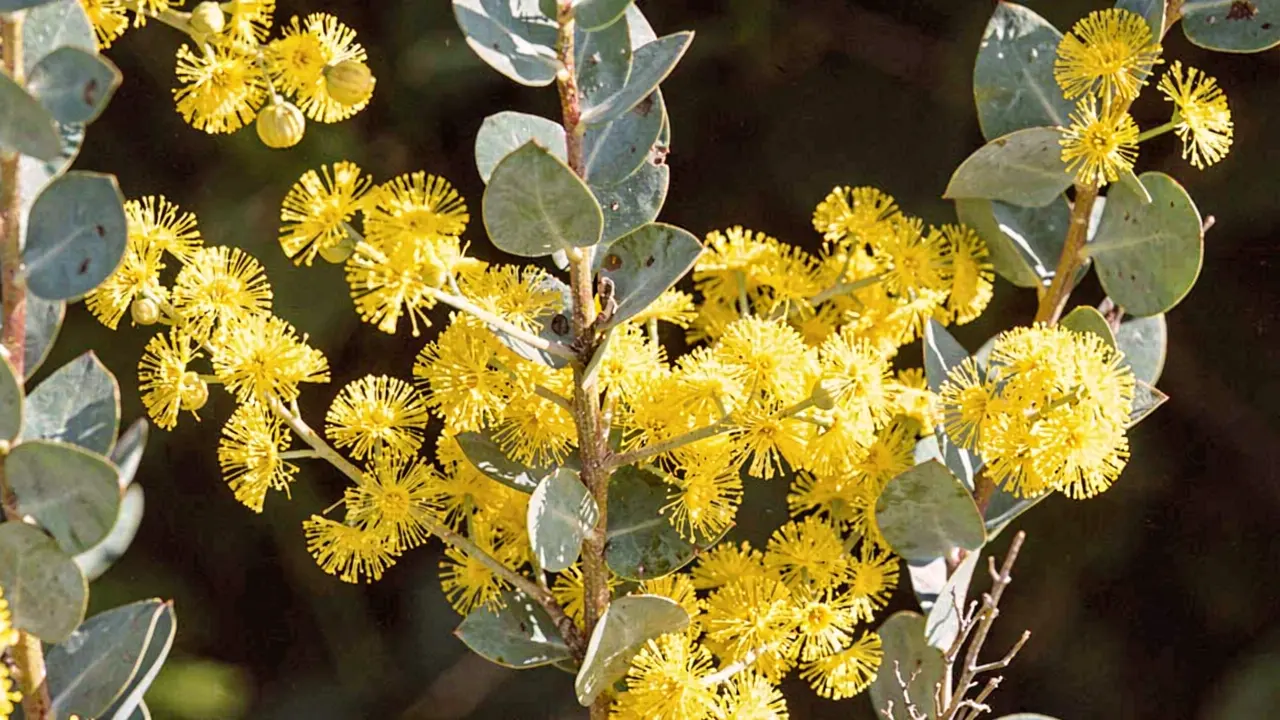
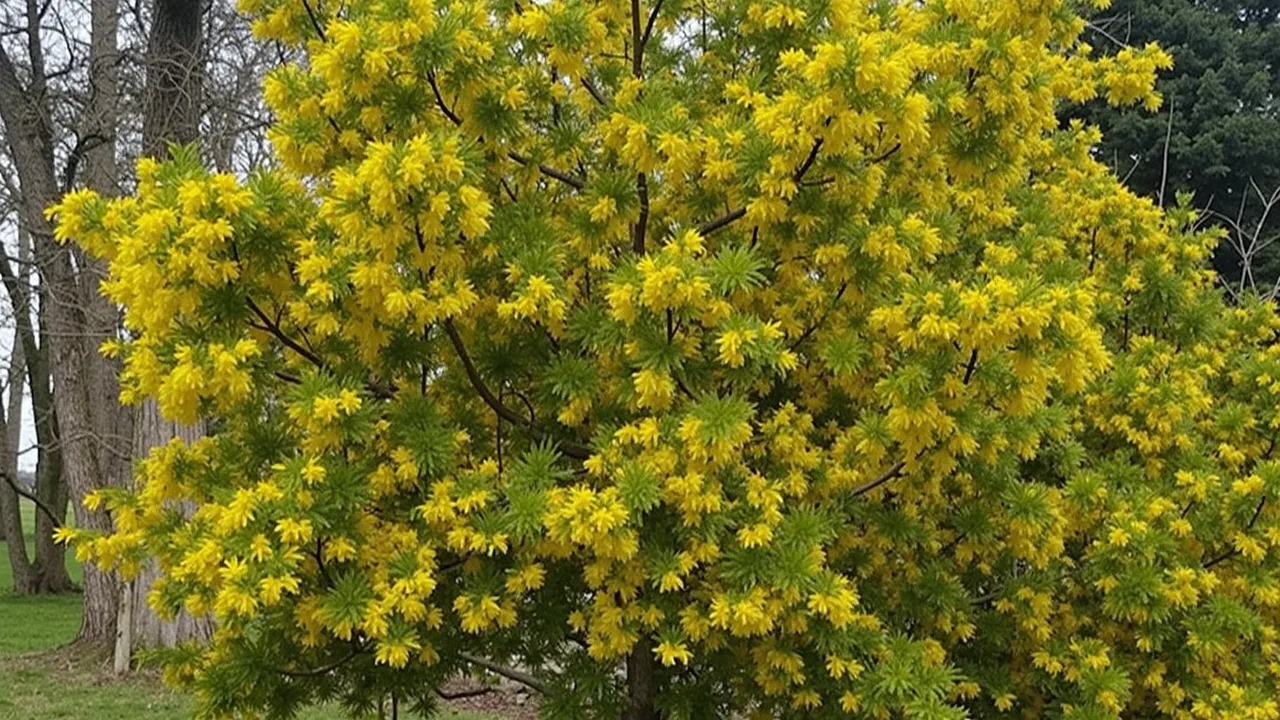
Acacia dealbata — commonly known as the Golden Wattle, Silver Wattle, or Blue Wattle — is a fast-growing evergreen tree from southeastern Australia. It is widely grown across the UK as a specimen tree or large shrub, prized for its profuse, fragrant golden-yellow flower heads in late winter and early spring, and for its finely divided silvery-green foliage.
Overview
Acacia dealbata belongs to the family Fabaceae (Leguminosae), the legume or pea family, and is one of around 1,000 species in the genus Acacia sensu lato. In its native range it is found across New South Wales, Victoria, and Tasmania, where it forms part of dry sclerophyll forest and colonises disturbed ground. It has been introduced widely beyond Australia and is now naturalised in parts of southern Europe, South Africa, and South America.
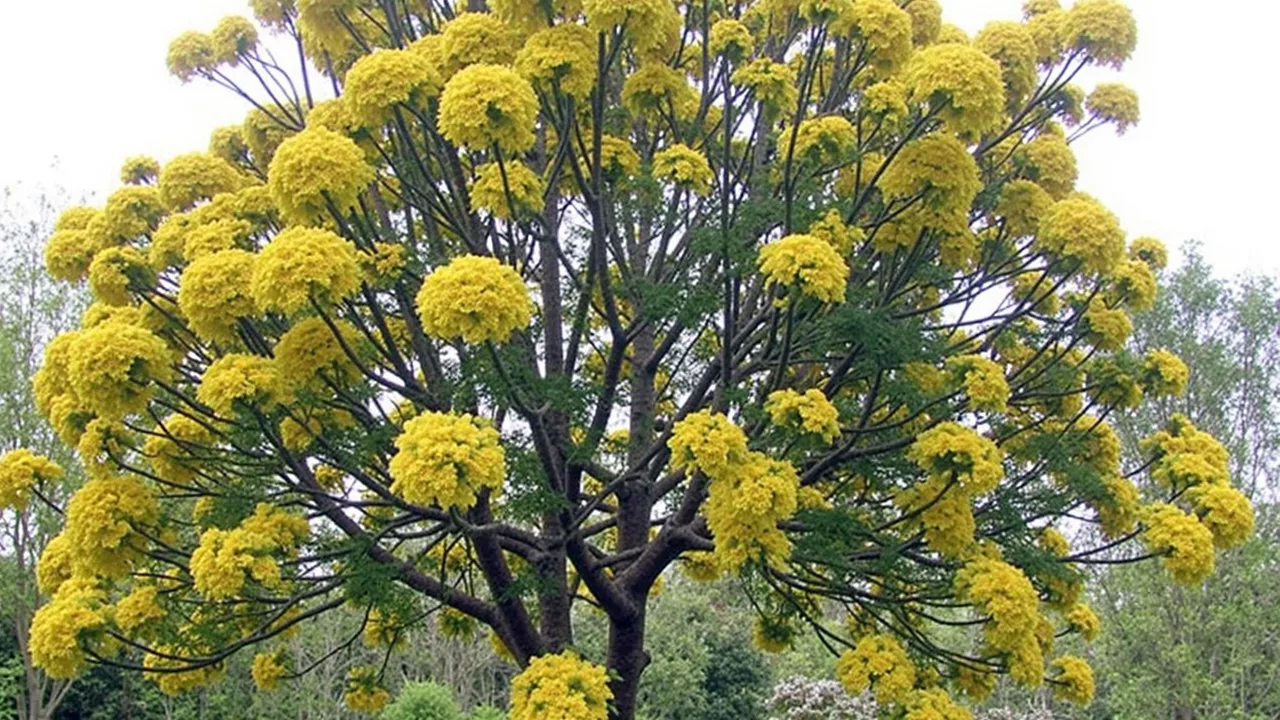
In the UK it has been cultivated since the early nineteenth century and is a familiar sight in mild coastal and urban gardens of southern England, the Isles of Scilly, and parts of Ireland. It is the national floral emblem of Australia and is closely associated with Wattle Day on 1 May. It should not be confused with the unrelated Albizia julibrissin, the silk tree, which is sometimes sold as "pink mimosa" but is only distantly related.
Its principal garden value lies in the bright, sweetly scented winter flowers, which appear when little else is in bloom, and in its tolerance of poor, free-draining soils where other flowering trees struggle.
Appearance
Acacia dealbata is a fast-growing evergreen that, in the wild, can reach 30 m in height. In British cultivation it rarely exceeds 5–12 m and is more often seen as a large, multi-stemmed shrub of 4–8 m, particularly where hard winters cut it back.
The bark is dark grey-brown and smooth on young trees, becoming deeply fissured and somewhat platy with age. The crown is typically domed and spreading, with widely spaced main branches bearing finely textured foliage at the tips.
The leaves are bipinnate (twice-divided), 7–12 cm long, with 13–24 pairs of leaflets per pinna. Each leaflet is small, narrow, and grey-green to distinctly silvery-blue-green, which gives the tree its "silver" or "blue" common names. Botanically, some authors treat the leaf-like structures of mature Acacia species as phyllodes (flattened leaf stalks) rather than true leaves, though in A. dealbata they are unambiguously bipinnate foliage.
The flowers are the plant's signature feature. They are bright golden-yellow, fluffy, and spherical, around 4–7 mm across, and borne in dense axillary racemes or panicles that may carry dozens of heads. Each head is composed of many tiny individual flowers with prominent stamens, giving the characteristic powder-puff appearance. In the UK the main display falls between late February and early April, though sheltered specimens in the south-west can flower as early as January and are sometimes cut back by hard frost.
The seed pods that follow are flat, pale brown, 5–10 cm long, and constricted between the seeds. They turn woody when ripe and split along both seams to release hard-coated black seeds. Mature trees can flower and set seed freely in favourable summers.
Growing Conditions
In the UK, Acacia dealbata is classified as RHS hardiness rating H3. In practice this means it tolerates short drops to around -5 °C without damage and, in sheltered coastal or urban microclimates, may survive -10 °C once established. Hardiness improves with age; young plants are noticeably more vulnerable than mature specimens. The tree is best treated as half-hardy in inland, northern, or exposed gardens, where it benefits from a south- or west-facing wall, fleece wrapping in severe weather, or overwintering in a frost-free greenhouse when grown in a container.
Sunlight is the single most important cultural factor. The tree requires full sun for dependable flowering; in shade it becomes leggy, with sparse foliage and few or no flowers. It copes with coastal wind and salt spray better than most broadleaf evergreens, which is why it thrives in seaside gardens.
Soil should be well drained. Acacia dealbata performs well on light, sandy, or loamy soils and tolerates both acidic and mildly alkaline conditions (pH 5.5–7.5). It will not tolerate heavy clay or winter waterlogging, where root rot (see Common Problems) becomes a serious risk. Once established it is drought-tolerant.
Planting and Care
Plant Acacia dealbata in spring, between March and early May, once the risk of hard frost has passed. Site choice matters more than aftercare: pick the warmest, sunniest, most sheltered spot available, ideally against a south-facing wall. Dig a planting hole two to three times the width of the rootball and the same depth, mixing a little well-rotted compost into the backfill on poor soils. Set the plant so the top of the rootball sits level with the surrounding soil, firm in, and water thoroughly. Space trees 4–8 m apart depending on the size you intend them to reach; container-grown specimens can be planted at any time the soil is workable, though spring is still preferable.
Watering is most important in the first two growing seasons. Water deeply once a week during dry spells from spring through early autumn, then reduce watering as the plant establishes. Mature trees in the ground generally need no supplementary watering.
Feeding is rarely necessary. On very poor soils a single light application of a balanced general fertiliser in spring, during the first three to five years, will support establishment. Over-feeding produces lush foliage at the expense of flowers and should be avoided.
Pruning is best kept light. In the first three to five years carry out formative pruning to develop a balanced framework, removing competing leaders and badly placed laterals. On mature specimens remove dead, damaged, or crossing branches immediately after flowering. Acacia dealbata resents hard cutting into old wood; regrowth from bare stems is slow and often unsuccessful. If size reduction is essential, restrict it to shortening the current season's growth immediately after flowering.
Propagation is most reliable from seed. The hard seed coat requires scarification — either a brief nick with a file, or pouring just-boiled water over the seeds and leaving them to soak for 12 hours — before sowing in a free-draining seed compost at around 18–21 °C. Germination typically takes two to four weeks. Named cultivars are propagated from semi-hardwood cuttings taken in mid to late summer, treated with a rooting hormone and rooted under mist or in a propagator.
Container cultivation is possible for the first few years using a loam-based (John Innes No. 3) compost. Containers must be moved into a frost-free greenhouse or conservatory for winter, as the roots are more vulnerable than the top growth.
Common Problems
Frost damage is the principal limitation on UK cultivation. Late winter or early spring frosts below about -5 °C can blacken and cut back soft new growth; established trees usually recover from lower stems in the following spring, but badly affected specimens may die to the ground and reshoot from the base.
Mimosa webber (Thaumetopoea pityocampa), more familiar as a pest of pines in continental Europe, can also affect Acacia. Caterpillars spin conspicuous silken webs over terminal shoots and feed inside them, defoliating whole branches. Small infestations can be removed by hand; larger outbreaks may need a biological control containing Bacillus thuringiensis.
Scale insects, particularly waxy brown soft scale and cottony cushion scale, colonise stems and reduce vigour. Treat with horticultural oil applied in winter while the plant is fully dormant, or with insecticidal soap during the growing season.
Root rot caused by Phytophthora species is the most serious disease risk and is almost always linked to poor drainage. Symptoms include yellowing foliage, dieback, and sudden collapse. There is no chemical cure once the fungus is established; affected plants should be removed and the site improved with grit and organic matter before replanting.
Powdery mildew, showing as a white coating on the leaves, can occur in humid, crowded, or shaded conditions. Improve air circulation by thinning surrounding vegetation and avoid overhead watering.
Popular Varieties
Named cultivated varieties of Acacia dealbata are relatively few in UK trade, and the species itself is most often sold as seed-raised stock. Where selections are offered, they tend to differ in hardiness, foliage colour, or flowering time rather than in growth habit. The brief available to this article does not list named cultivars, so the following are described from general horticultural knowledge of selections that appear in European nursery lists; availability varies year to year and gardeners should check current catalogues.
- Acacia dealbata 'Gaulois Astier' — a French selection widely sold across the Channel; reported to be more cold-tolerant than typical seed-raised plants, with slightly larger, deeper yellow flower heads. Often grown as a cut-flower crop in southern France.
- Acacia dealbata 'Pendula' — a weeping or strongly pendulous form occasionally offered by specialist nurseries; useful where a smaller, sculptural specimen is wanted. Its exact parentage and hardiness are not well documented in UK sources.
- Acacia dealbata 'Kambah Karpet' — a low-growing, ground-covering selection raised at the Kambah Native Garden in Canberra; listed primarily in Australian catalogues and rarely seen in the UK. Its UK hardiness has not been independently confirmed.
In addition, several seed-raised strains marketed simply as "hardy mimosa" or "improved A. dealbata" appear in continental trade and may offer better cold tolerance than unselected seedlings. Where an AGM-rated clone or a formally named UK-hardy selection becomes available, it should be preferred for borderline sites; this article makes no such recommendation because no specific UK trial rating was available at the time of writing.
Pests and Diseases
| Problem | Symptoms | Management |
|---|---|---|
| Glasshouse red spider mite | Fine webbing on foliage with stippled, yellowing leaves that may drop prematurely. | Increase humidity around the plant and treat with a suitable horticultural oil or biological control. |
| Mealybugs | White, cottony wax-like masses on stems and leaf joints accompanied by sticky honeydew. | Wipe off infestations with a damp cloth dipped in methylated spirit or apply insecticidal soap. |
| Fluted scale | Small, immobile brown scales on stems and leaves causing yellowing and weakening of the plant. | Scrape off visible scales and treat with a systemic insecticide or horticultural oil in spring. |
| Honey fungus | General decline, wilting foliage, and white fungal growth under the bark at the base of the stem. | Improve drainage and remove infected roots; severe cases may require removing the plant. |
| Frost damage | Blackened, mushy stems and leaves following exposure to freezing temperatures. | Plant in a sheltered location and provide winter protection or grow under glass in colder areas. |
Or browse the full plant problem solver to diagnose an issue by symptom.
Recommended Products
GardenWizz earns a commission from qualifying purchases made through affiliate links on this page (including links within the article) — as an Amazon Associate, and from Thompson & Morgan via the Awin network. This does not affect the price you pay. See our disclaimer for details.