Ochre Rhododendron
Rhododendron ochraceum
The Gardening Year
Best months in UK gardens · full planting calendar →
🖨 Printable care card (PDF)At a Glance
| Botanical name | Rhododendron ochraceum |
|---|---|
| Common name(s) | Ochre Rhododendron |
| Family | Ericaceae |
| Plant type | tree (evergreen) |
| Height × Spread | 2–6 m × 1.5–2.5 m |
| Position | Partial shade |
| Soil | moist but well-drained, acid soil |
| Flowering | March–May |
| Toxicity | poisonous to grazing animals because of a toxin called grayanotoxin in their pollen and nectar; extremely toxic to horses |
| Native range | Chongqing (Nanchuan), southern Sichuan, and northeastern Yunnan, China |
A dense, upright evergreen tree or large shrub native to the mountains of southern and central China, Rhododendron ochraceum is prized in British gardens for its vivid apricot-orange to yellow spring trusses and dark, leathery foliage. It was first described by botanists working in the Nanchuan district of Chongqing and remains one of the more striking orange-flowered species within the genus. Although less commonly offered than its better-known hybrids, it is a worthwhile specimen for acidic woodland gardens where shelter and dappled light can be provided.
Quick-Care Table
Overview
Rhododendron ochraceum belongs to the heather family, Ericaceae, and was collected originally from forested mountain slopes in the Nanchuan region of Chongqing, with further records from southern Sichuan and northeastern Yunnan. In the wild it grows as a small, often multi-stemmed tree in cool, humid oak and rhododendron forest, typically at moderate elevations where summers are mild and winters cool but not severely dry. Its tolerance of dappled shade and cool, moist root runs makes it well suited to much of the British Isles, particularly gardens in the west and north, the Atlantic seaboard, and any site that already suits other woodland rhododendrons.
In cultivation it is regarded as a connoisseur's plant rather than a mainstream landscape shrub. Mature specimens carry heavy crops of flower trusses each spring and reward the gardener who can maintain consistently acidic, humus-rich soil and avoid exposure to cold, drying wind. All rhododendrons contain grayanotoxins in their nectar, pollen and foliage, and the plant should be regarded as poisonous to grazing animals; it is particularly hazardous to horses and should not be planted where livestock can reach it.
Appearance
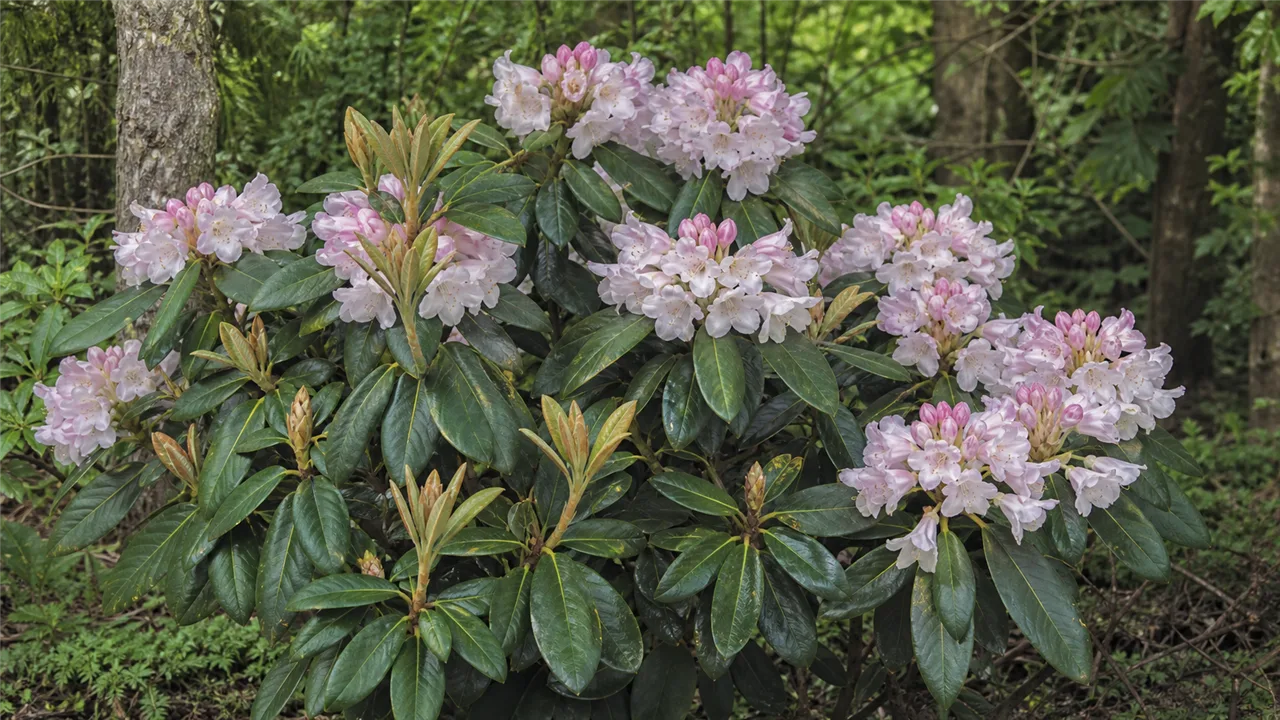
Rhododendron ochraceum develops an upright, often somewhat open habit, eventually making a small tree or large shrub between 2 and 6 metres tall with a similar spread. The bark is dark grey and smooth on young growth, becoming slightly rougher and lightly fissured with age. Stems are sturdy and well clothed with foliage, lending the plant a solid presence in the garden even when out of flower.
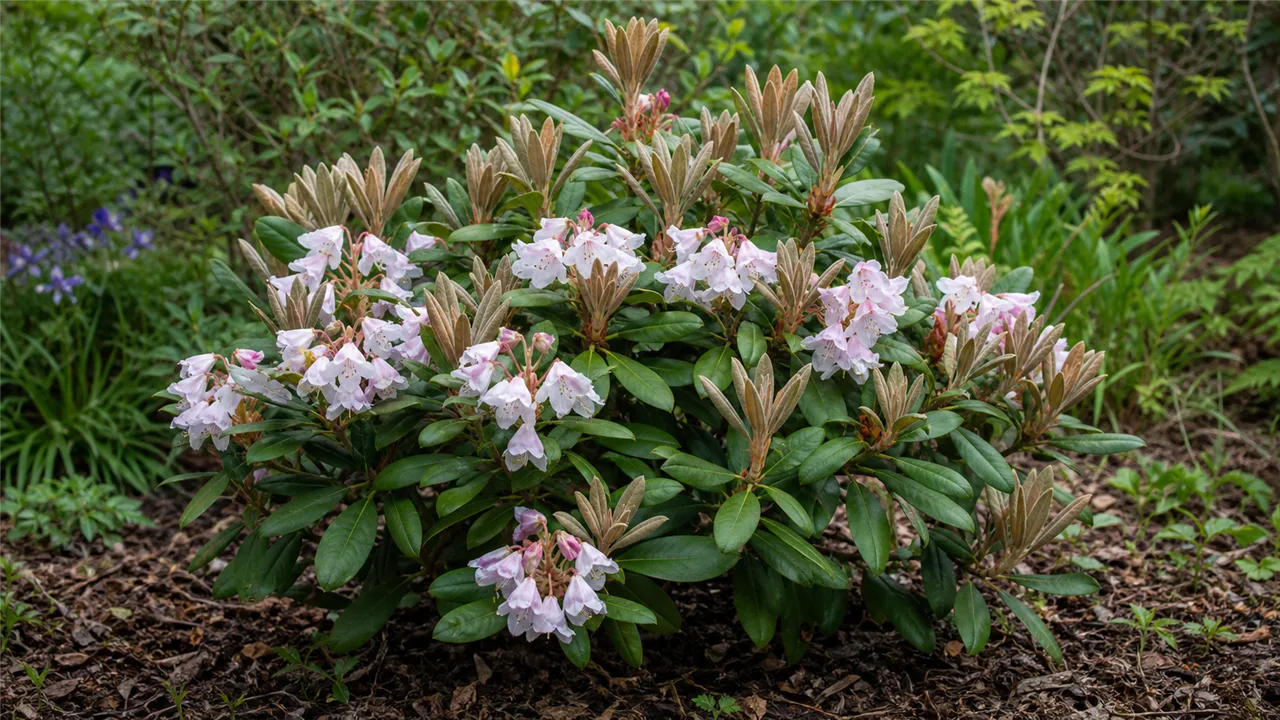
The leaves are the most useful identification feature alongside the flower colour. They are dark green and glossy on the upper surface, leathery in texture, and typically 10 to 20 cm long. The underside carries a distinctive rusty-brown or ochre felted indumentum — the woolly covering that gives the species both its botanical and common name. This indumentum is a key difference from many of the more familiar hybrid rhododendrons, which generally lack it or carry it only on young growth.
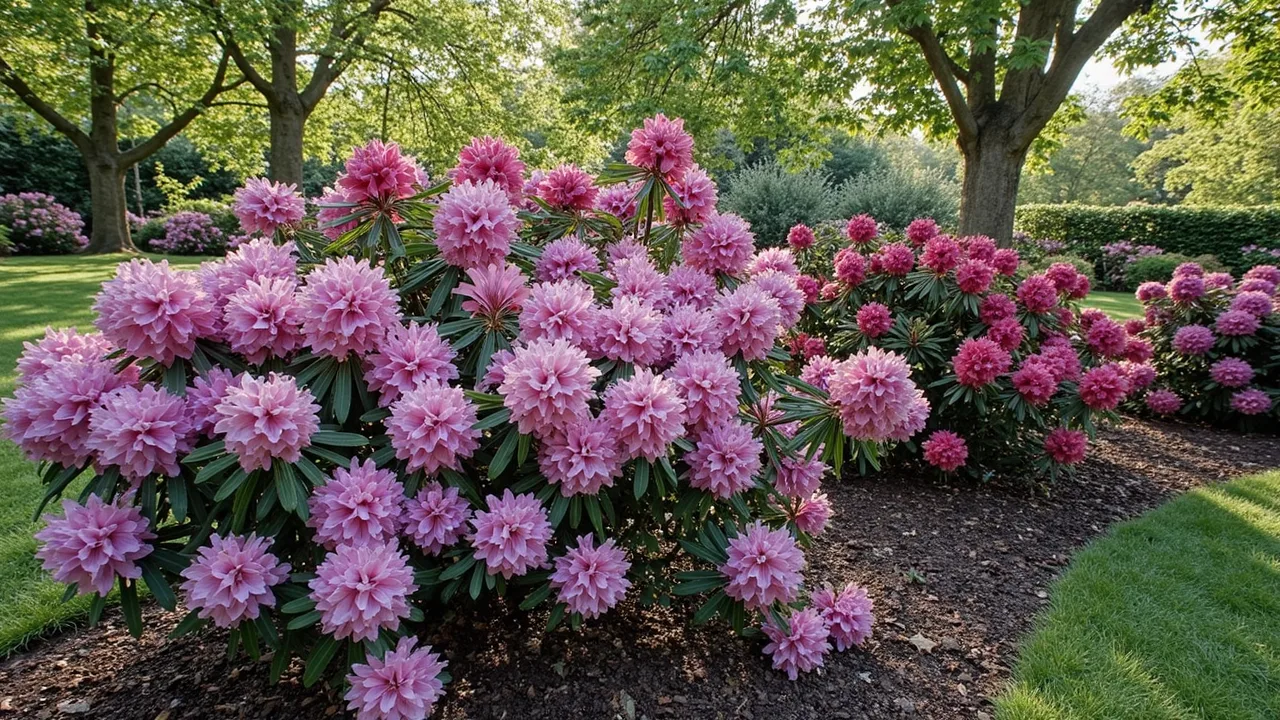
Flowers are borne in dense, rounded trusses roughly 10 to 15 cm across in spring, usually from March into May. Individual blooms are funnel- to bell-shaped and range from a soft apricot-orange through to clear yellow, very often with a deep crimson or burgundy blotch on the upper lobe. The combined effect of warm-toned flowers against dark, leathery leaves is striking, and a well-grown plant in full flower is conspicuous from a considerable distance.
Growing Conditions
This species performs best in partial shade. Dappled light beneath deciduous canopy, or a position that receives morning sun and shade through the hottest part of the day, closely mirrors its native woodland habitat. Deep shade reduces flowering, while open, sunny, exposed sites stress the foliage and scorch the flowers in late frosts.
Soil is the single most important factor. Rhododendron ochraceum demands a moist but free-draining, humus-rich, acidic medium with a pH between roughly 4.5 and 6.0. It will not thrive on chalk or limestone, where chlorosis is almost inevitable. Improving the planting position with generous quantities of ericaceous compost, leaf mould, or well-rotted pine bark is usually essential, particularly on heavier or more mineral soils. Mulching annually with bark or leaf mould helps to conserve moisture, suppress weeds, and gradually maintain acidity at the root zone.
The plant carries an RHS hardiness rating (rendered on the species page badge) that places it within the range suitable for most of the UK. Gardeners in colder inland districts, exposed upland sites, or the far north should still provide shelter from cold, drying winter winds, ideally by siting the plant on the leeward side of a wall, fence, or evergreen hedge. A position that avoids early morning sun reduces damage to frosted buds in spring.
Planting and Care
The best months for planting are March, April, September and October, when the soil is workable, moist and warm enough to encourage quick root establishment. Avoid planting into frozen, waterlogged, or parched ground; container-grown plants from garden centres can be planted at any time of year provided the soil conditions are suitable and the plant is kept well watered through the first growing season.
Watering is the most critical aftercare task. Rhododendrons have shallow, fibrous root systems that suffer rapidly in dry conditions, especially on lighter soils. Water freely during dry spells in the first two to three years, ideally with rainwater rather than hard tap water, and continue to irrigate during prolonged droughts once the plant is established. A thick annual mulch of pine bark, leaf mould, or ericaceous compost applied in spring helps to lock in moisture and keep root temperatures cool.
Feeding should be light and targeted. A proprietary ericaceous fertiliser applied once in spring, just as new growth begins, is sufficient for most gardens. Avoid high-nitrogen lawn or general-purpose feeds, which can damage fine roots and force soft, vulnerable growth.
Pruning is not routinely required. The traditional practice of deadheading — snapping off spent flower trusses carefully at the base by twisting and pulling once the blooms have faded — keeps the plant tidy and channels energy into next year's buds rather than seed. Avoid hard cutting into old wood, which this species resents and from which it does not reliably recover.
Propagation is generally from semi-ripe cuttings taken in mid to late summer, or from seed sown under cool, controlled conditions. Cuttings root slowly but reliably when given bottom heat and a free-draining, acidic cutting compost. Layering of low branches is also possible but slow.
Common Problems
The most frequent complaint on alkaline or chalky soils is chlorosis, in which leaves turn pale yellow while veins remain green. The cause is nutrient lock-out, particularly of iron and manganese. Correcting soil pH is the long-term answer; in the short term, applications of sequestered iron can green up foliage.
Petal blight, caused by the fungus Ovulinia azaleae, produces brown, water-soaked spots on open flowers during cool, wet springs. Affected trusses should be removed and disposed of promptly; there is no effective amateur spray treatment.
Powdery mildew appears as a dull white coating on leaf surfaces, particularly during dry summers when plants are drought-stressed. Improving watering and air circulation is the best response.
Various fungal leaf-spot diseases can produce small brown or black marks on foliage. These are usually cosmetic; gathering and disposing of fallen leaves in autumn reduces carry-over of inoculum.
Honey fungus is the most serious threat, causing rapid wilting and collapse. There is no cure once it is established in the root zone, and affected plants should be lifted along with as much of the root ball as practicable. Avoid replanting susceptible Ericaceous species in the same spot, and maintain good garden hygiene to reduce spread.
Vine weevil adults chew notched edges from leaves, but the more damaging stage is the soil-dwelling grub, which feeds on roots and can kill container-grown plants. Biological control with nematodes is effective in pots; in open ground the damage is usually tolerable.
Popular Varieties
True Rhododendron ochraceum is rarely offered as named clonal selections in British nurseries, and most plants in cultivation are grown from seed or from controlled crosses. Where the species itself is unavailable, gardeners seeking similar apricot-orange to yellow trusses with a blotch often choose from the following well-established hybrids and related species, all of which share its preference for acidic soil and partial shade.
Rhododendron 'Tortoiseshell Orange' is an older, vigorous hybrid with large trusses of warm orange flowers, slightly later in the season than the species. It is widely available and considerably easier to establish than the true species.
Rhododendron 'Goldsworth Orange' carries softer apricot blooms and is valued for its comparatively compact habit, making it suitable for medium-sized gardens.
Rhododendron campylocarpum (the bell-flowered rhododendron) is a related yellow-flowered species with rounded, bell-shaped trusses and a similar woodland character. It is a useful companion to R. ochraceum in the same border.
Rhododendron 'Malahide' is an Irish-raised hybrid with apricot to pale orange flowers of good size, valued for its tolerance of cool maritime conditions.
Gardeners sourcing Rhododendron ochraceum itself should obtain plants only from specialist rhododendron nurseries, where propagation material can be traced, and should expect young plants to take several years to reach flowering size.
Pests and Diseases
| Problem | Symptoms | Management |
|---|---|---|
| Powdery mildew | White powdery fungal growth on leaves, buds, and shoots, potentially causing distortion. | Improve air circulation and avoid overhead watering; tolerate mild infections. |
| Bud blast | Flower buds turn brown, shrivel, and fail to open due to fungal infection or cold damage. | Remove and destroy infected buds promptly if practical for the plant size. |
| Silver leaf | Leaves show silvery patches on the underside with dark fruiting bodies at the stem base. | Prune out affected branches well below the infection site and burn them. |
| Budworm | Buds are chewed, webbed together, or fail to open due to caterpillar feeding inside. | Apply biological controls like nematodes in spring or prune out infested buds. |
| Vine weevil | Notched leaf margins and root damage causing wilting in container-grown plants. | Use biological nematodes on soil surface in autumn and spring to control larvae. |
For step-by-step help, read Treating Powdery Mildew. Or browse the full plant problem solver to diagnose an issue by symptom.
Recommended Products
GardenWizz earns a commission from qualifying purchases made through affiliate links on this page (including links within the article) — as an Amazon Associate, and from Thompson & Morgan via the Awin network. This does not affect the price you pay. See our disclaimer for details.