Freeman Maple
Acer freemanii
The Gardening Year
Best months in UK gardens · full planting calendar →
🖨 Printable care card (PDF)At a Glance
| Botanical name | Acer freemanii |
|---|---|
| Common name(s) | Freeman Maple |
| Family | Sapindaceae |
| Plant type | tree (Deciduous) |
| Height × Spread | 20 m × 8 m |
| Position | Full sun, Partial shade |
| Soil | fertile, moist but well-drained soil; tolerates most soils except those prone to waterlogging; pH Acid, Alkaline, Neutral |
| Flowering | March |
| Toxicity | — |
| Native range | eastern North America |
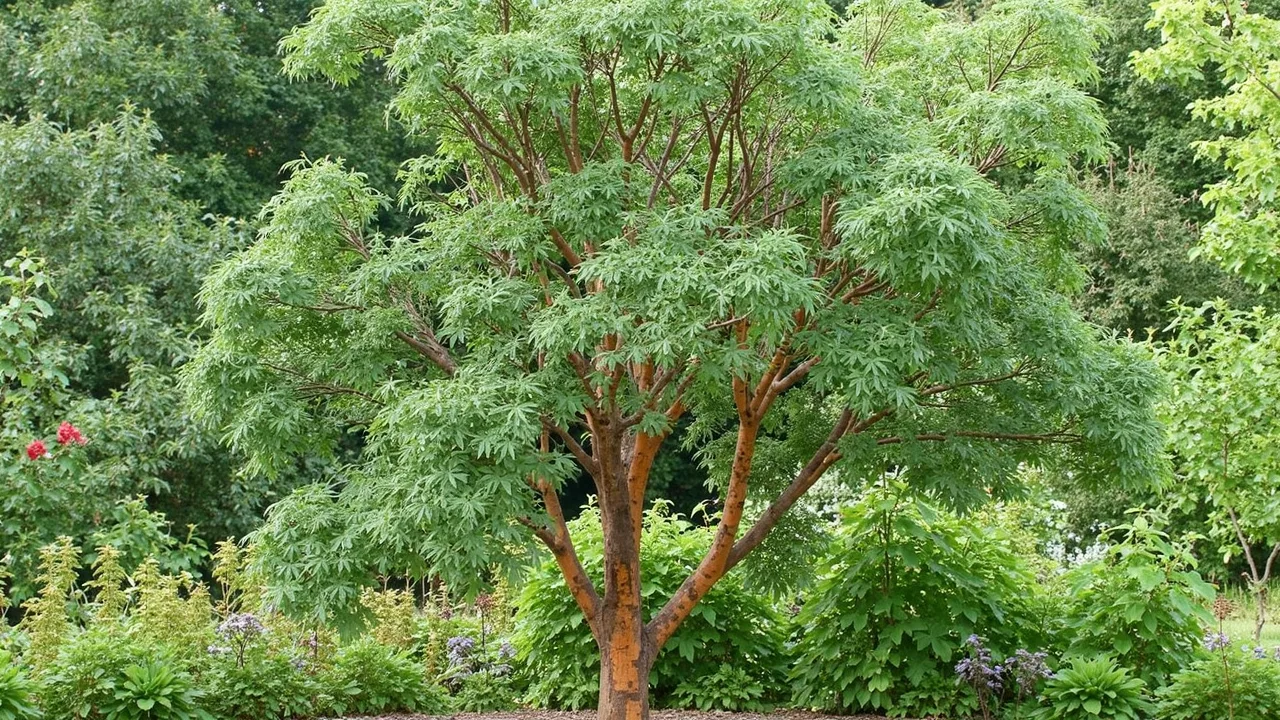
Acer freemanii, commonly known as Freeman's Maple, is a vigorous deciduous hybrid between the North American red maple (Acer rubrum) and the sugar maple (Acer saccharum). Bred for the reliable, vivid autumn colour of its red maple parent combined with the sturdier constitution and broader soil tolerance of its sugar maple parent, it has become one of the most valued large maples for UK gardens, parks, and arboreta. The Royal Horticultural Society recognises its garden worth with an Award of Garden Merit (AGM), confirming its performance in British conditions.
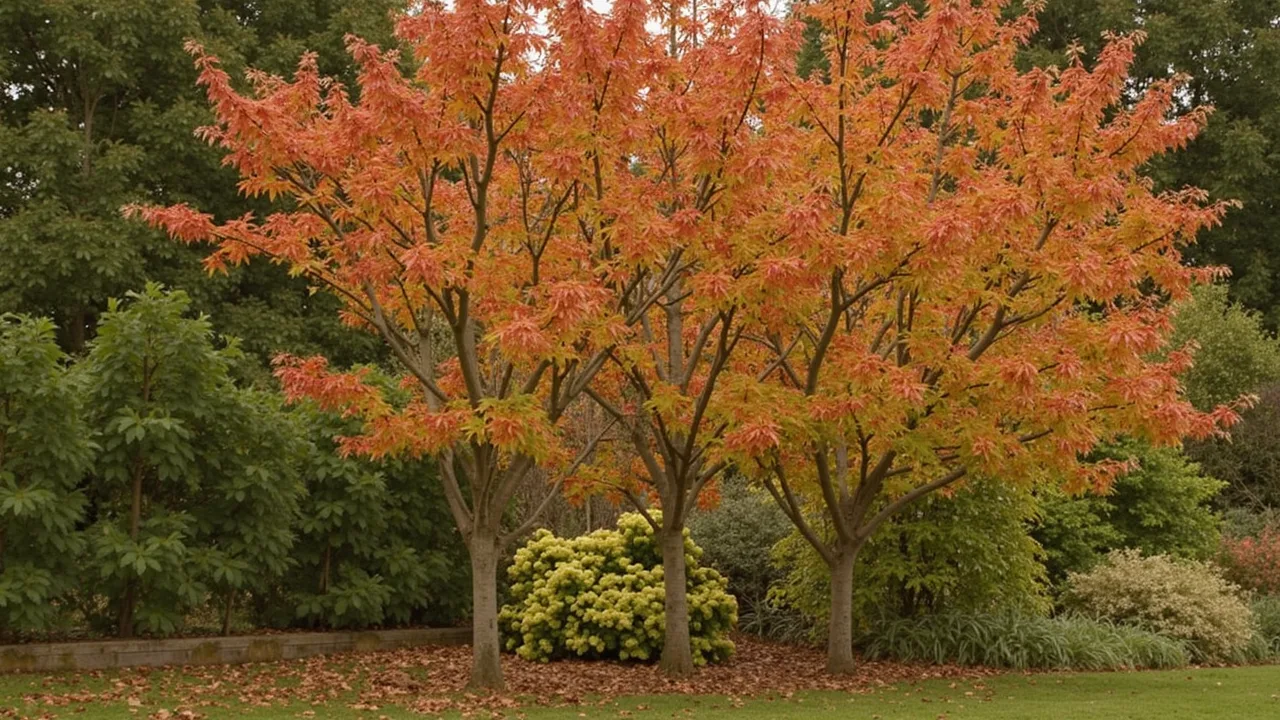
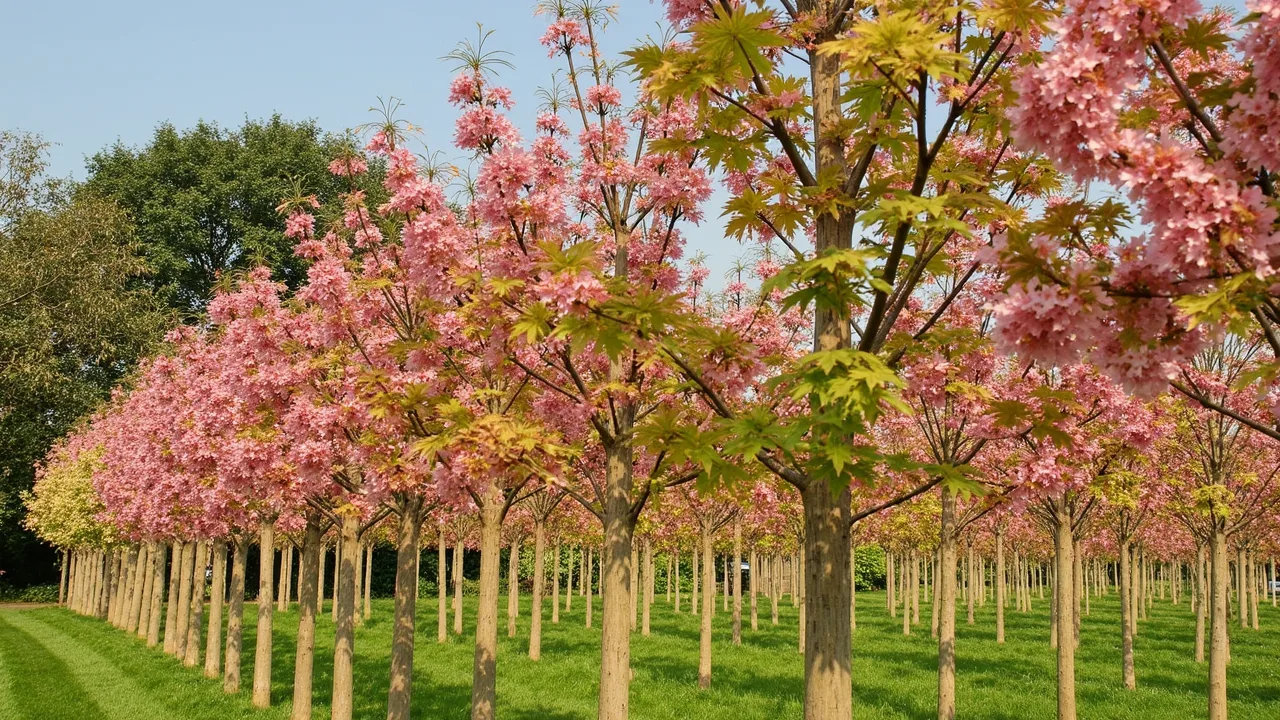
Although it grows to a substantial size — ultimately 15–20 m tall — its broadly upright, oval crown makes it a practical choice for medium-to-large plots and an excellent avenue or street tree where space allows. Its main ornamental asset is its autumn foliage: a sustained display of orange, scarlet, and crimson that reliably outperforms many other large maples in cool UK summers, when Japanese maples can colour unevenly.
Overview
Acer freemanii is a man-made hybrid that first arose in the United States in the 1930s, where plant breeders were seeking a faster-growing maple with the fiery autumn colour of Acer rubrum but the stronger wood and wider soil tolerance of Acer saccharum. The result is a hardy, adaptable tree that has subsequently been planted across temperate regions of the world, including the UK.
In British cultivation it sits between the more familiar Japanese maple (Acer palmatum), which is a shrub-scale specimen plant, and the native field maple (Acer campestre), which is much smaller and slower-growing. Freeman's Maple occupies the upper garden tier — a tree for the larger lawn, parkland fringe, or street planting — and is increasingly specified by landscape architects as a robust alternative to Acer rubrum, which can scorch badly on thin UK soils in dry summers.
The combination of reliable autumn colour, upright crown shape, urban tolerance, and RHS AGM recognition makes it one of the safest choices for gardeners wanting a low-maintenance, large ornamental maple.
Appearance
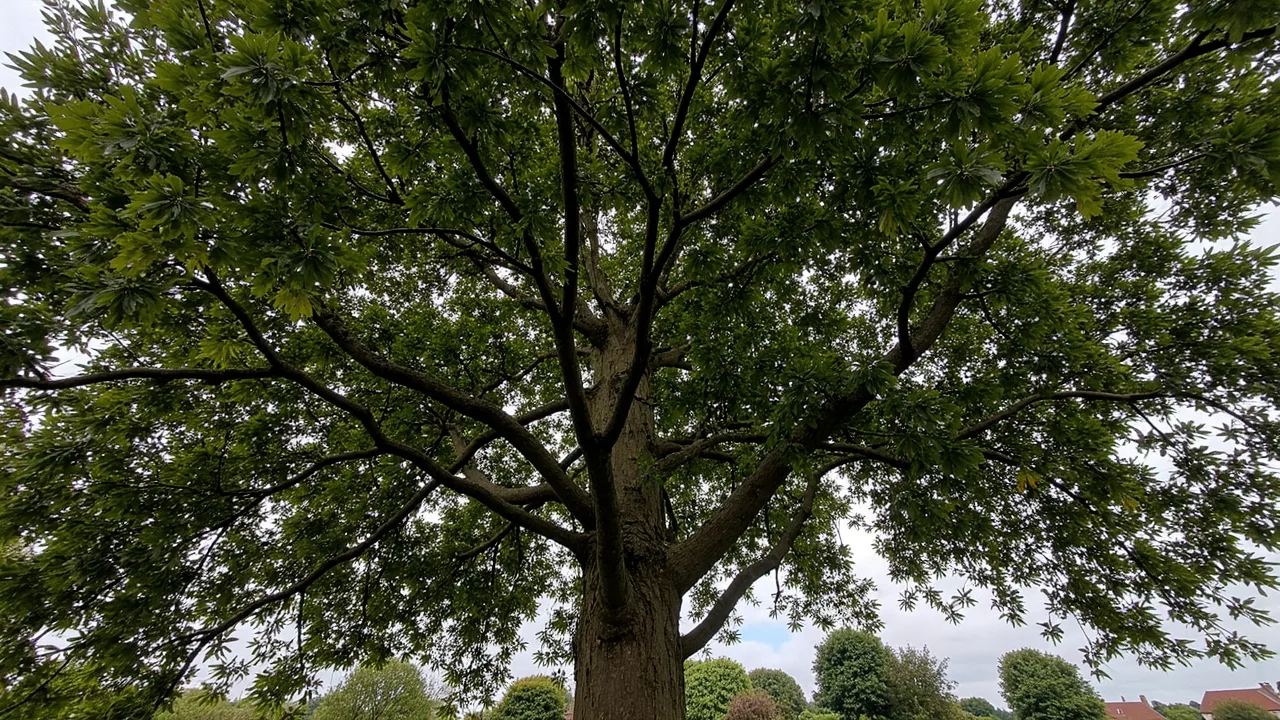
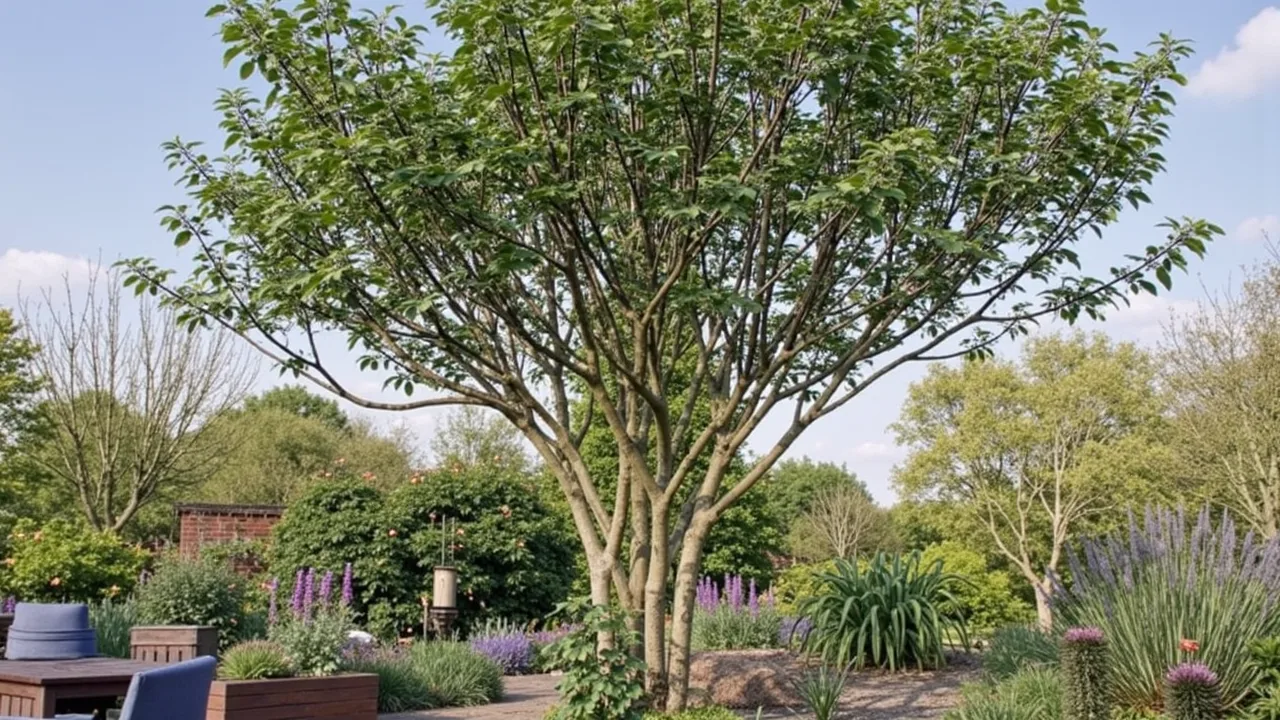
Acer freemanii develops a strong central leader with an upright, broadly oval crown that broadens with age. Young trees are notably fast-growing, putting on 60–90 cm of height per year in good conditions, before slowing as the framework matures. Mature specimens typically reach 15–20 m in height, with exceptional trees growing to 25 m. The crown spreads 6–10 m across, narrower than Acer platanoides and considerably narrower than the sugar maple parent, which makes the tree well suited to avenue planting.
The bark is smooth and grey-brown on young trees, gradually becoming shallowly fissured and slightly darker with age. The young shoots are a characteristic reddish or orange-red, inherited from Acer rubrum, and remain a useful identification feature in winter when the tree is bare.
The leaves are the headline. Each leaf is 8–14 cm across, palmate, with three main lobes (intermediate between the deeply five-lobed sugar maple leaf and the more shallowly lobed red maple leaf). The lobes are sharply pointed, and the leaf base is roughly heart-shaped. Summer foliage is a fresh bright green, held on long, slender petioles that allow the leaves to tremble visibly in light wind, much like an aspen.
In autumn the leaves turn vivid shades of orange, scarlet, and crimson, often all three colours appearing on the same tree and sometimes on the same leaf. The display typically begins in mid-October in southern England and lasts several weeks, holding well even after the first light frosts. Colour intensity is markedly better in full sun and on trees that have not suffered summer drought stress.
Flowers are small, yellowish-green, and borne in dense clusters in early spring before the leaves emerge. They are ornamentally insignificant but a useful early pollen source for bees. The fruits are paired samaras (the familiar winged "helicopter" seeds) 2–3 cm long, pale brown when ripe, produced in modest clusters; they ripen in late spring and are eaten by some birds.
Growing Conditions
Acer × freemanii has an RHS hardiness rating of H6, indicating tolerance of winter temperatures between approximately −20 °C and −15 °C. It performs reliably across much of the UK, although in the warmest, driest south-eastern gardens it benefits from some shelter and supplementary watering during prolonged drought.
Soil-wise it prefers a moist, well-drained, moderately fertile loam. It is more tolerant of heavy clay than Acer palmatum or Acer rubrum, owing to its sugar maple parentage, but it will not thrive in waterlogged ground or in very thin, stony soils over chalk. The ideal pH is slightly acidic to neutral, in the range 5.5–7.0; very alkaline chalk soils can cause chlorosis (yellowing of the leaves) and should be avoided or improved with generous organic mulches before planting.
Full sun produces the best autumn colour and the most upright growth, although light dappled shade is tolerated. The tree is moderately wind-tolerant once established, but young specimens benefit from shelter, particularly from cold easterly winds in spring which can scorch newly emerged leaves. It is more tolerant of urban pollution and road salt than Acer palmatum, making it suitable for street and avenue planting where the smaller Japanese maple would struggle.
Planting and Care
The best planting time for bare-root and root-balled stock is during the dormant season, from November through to early March, when the soil is workable and not frozen. Container-grown trees can be planted at any time of year, but summer planting requires diligent watering for the first two growing seasons.
Dig a planting pit roughly twice the width of the root ball and the same depth, loosening the surrounding soil to encourage rapid root establishment. Position the tree so that the root flare sits just at soil level — burying it too deep is a common cause of decline. Backfill with the excavated soil improved with well-rotted garden compost or leaf mould, firm gently, and water deeply. Stake only if the site is exposed, using a short, low stake that allows the trunk to flex; remove the stake after two years.
Spacing depends on the intended use. As a specimen tree, allow 6–8 m from the nearest building or other large tree so the crown can develop freely. In avenues, trees can be planted at 8–10 m intervals; the relatively narrow crown allows closer spacing than Acer platanoides.
Watering is the most important maintenance task in the early years. Water deeply once a week during dry spells from spring through to autumn for the first two to three years, applying enough to wet the soil to the full depth of the root ball. A 5–8 cm mulch of well-rotted bark, garden compost, or leaf mould, applied in early spring over the rooting area (but kept clear of the trunk), helps conserve moisture and suppress weeds.
Feeding is rarely necessary in reasonably fertile garden soil. Where growth appears weak, apply a light dressing of a general-purpose organic fertiliser such as blood, fish, and bone in early spring.
Pruning should be minimal. Acer freemanii develops a strong natural framework and should not be hard pruned. Remove any crossing, damaged, or dead branches in late summer — typically August — when sap bleed is lowest. Avoid heavy pruning in late winter or early spring, when maples bleed sap heavily from cuts.
Propagation is normally by semi-ripe cuttings in midsummer or by grafting onto Acer rubrum rootstocks for named cultivars. Home gardeners will find cuttings slow and unreliable; for specific cultivars, purchase from a reputable nursery.
Seasonal care centres on mulching in spring, deep watering in any dry summer, and a light tidy of damaged wood in late summer. Once established, the tree largely looks after itself.
Common Problems
Acer freemanii is generally healthy in UK conditions but is not entirely problem-free.
Aphids — particularly the maple aphid (Periphyllus species) — may colonise young foliage in late spring, causing slight leaf curl and sticky honeydew. Attacks are rarely severe enough to require treatment; a strong jet of water or encouragement of natural predators is usually sufficient. Persistent infestations can be controlled with a winter wash applied to the bark.
Leaf scorch is the most common cosmetic issue, particularly on young trees. It shows as browning of the leaf margins in hot, dry, or windy weather, and is worsened by shallow watering. Deep watering, mulching, and shelter from the prevailing wind resolve most cases.
Verticillium wilt, caused by the soil-borne fungus Verticillium dahliae, is the most serious disease threat. Symptoms include sudden wilting and die-back of branches, often on one side of the tree, and dark streaking visible in the wood when an affected branch is cut. There is no cure; affected trees should be removed and the soil not replanted with maples or other susceptible species for several years.
Powdery mildew can appear as a white dusty coating on leaves in humid, still summers, particularly on younger trees. Improve air circulation by avoiding overhead watering and remove badly affected leaves; fungicide treatment is rarely warranted.
Scale insects are occasionally reported but rarely reach damaging levels in the UK on this species.
The tree is moderately salt-tolerant and tolerates urban air pollution better than Acer palmatum, but it is still preferable to avoid planting directly adjacent to heavily salted main roads.
Popular Varieties
Several cultivars of Acer freemanii have been selected in North America for particularly intense or reliable autumn colour, and a number are available from specialist UK nurseries. As with all named cultivars, plant performance can vary with soil, climate, and aspect, and the descriptions below reflect typical rather than guaranteed performance.
'Autumn Blaze' (sometimes sold as 'Jeffersred') is the most widely planted cultivar. It has a strongly upright, broadly oval crown and reliably vivid orange-red autumn colour that holds well into November. It reaches around 15–18 m in height and is widely used as a street tree in North America; UK specimens are performing well in milder regions.
'Celebration' is a more upright, narrowly columnar selection, growing to roughly 15 m tall with a crown only 5–6 m wide. It is particularly useful in tighter planting situations such as drives or restricted avenues, and its autumn colour is a clear bright red.
'Marmo' is valued for its more strongly conical crown and the distinctive blend of green, red, and purple-maroon shades that develop simultaneously in autumn, giving a multi-toned effect unusual among maples. It matures at around 18 m tall.
'Sienna' is a slower-growing cultivar with a more compact crown (around 12–15 m tall) and intense scarlet autumn colour; it is often recommended for medium-sized gardens where the species itself would be too large.
Where named cultivars are not available, seed-raised Acer freemanii trees are perfectly garden-worthy and considerably cheaper; their autumn colour is reliable even if not quite as predictable as the best clonal selections.
Pests and Diseases
| Problem | Symptoms | Management |
|---|---|---|
| Acer gall mite | Small, green, bladder-like galls form on the undersides of leaves. | Prune out affected branches in winter; severe infestations may require horticultural oil. |
| Verticillium wilt | Sudden wilting and browning of leaves on one side or branch, often with no external pests. | Remove and burn infected wood; avoid replanting maples in the same soil for several years. |
| Aphids | Clusters of small soft-bodied insects on new growth, causing sticky honeydew and curled leaves. | Encourage natural predators like ladybirds or use a strong jet of water to dislodge them. |
| Horse chestnut scale | Small, brown, shield-like insects on stems and branches, leading to sooty mould and leaf drop. | Apply horticultural oil in winter or summer depending on the life stage; prune heavily infested areas. |
| Honey fungus | General decline, dieback of branches, and white fungal growth under bark at the base. | Improve drainage and avoid deep planting; remove infected roots and treat with registered fungicides. |
| Acer leaf scorch | Browning and drying of leaf margins, particularly during dry or windy periods. | Ensure consistent watering in summer and mulch to retain soil moisture. |
For step-by-step help, read Controlling Aphids Naturally. Or browse the full plant problem solver to diagnose an issue by symptom.
Recommended Products
GardenWizz earns a commission from qualifying purchases made through affiliate links on this page (including links within the article) — as an Amazon Associate, and from Thompson & Morgan via the Awin network. This does not affect the price you pay. See our disclaimer for details.