Komine Maple
Acer micranthum
The Gardening Year
Best months in UK gardens · full planting calendar →
🖨 Printable care card (PDF)At a Glance
| Botanical name | Acer micranthum |
|---|---|
| Common name(s) | Komine Maple |
| Family | Sapindaceae |
| Plant type | tree (Deciduous) |
| Height × Spread | 6–10 m × 2.5–4 m |
| Position | Full sun, Partial shade |
| Soil | moist but well-drained, neutral or acid |
| Flowering | June |
| Toxicity | — |
| Native range | Japan (Honshū, Kyūshū and Shikoku) |
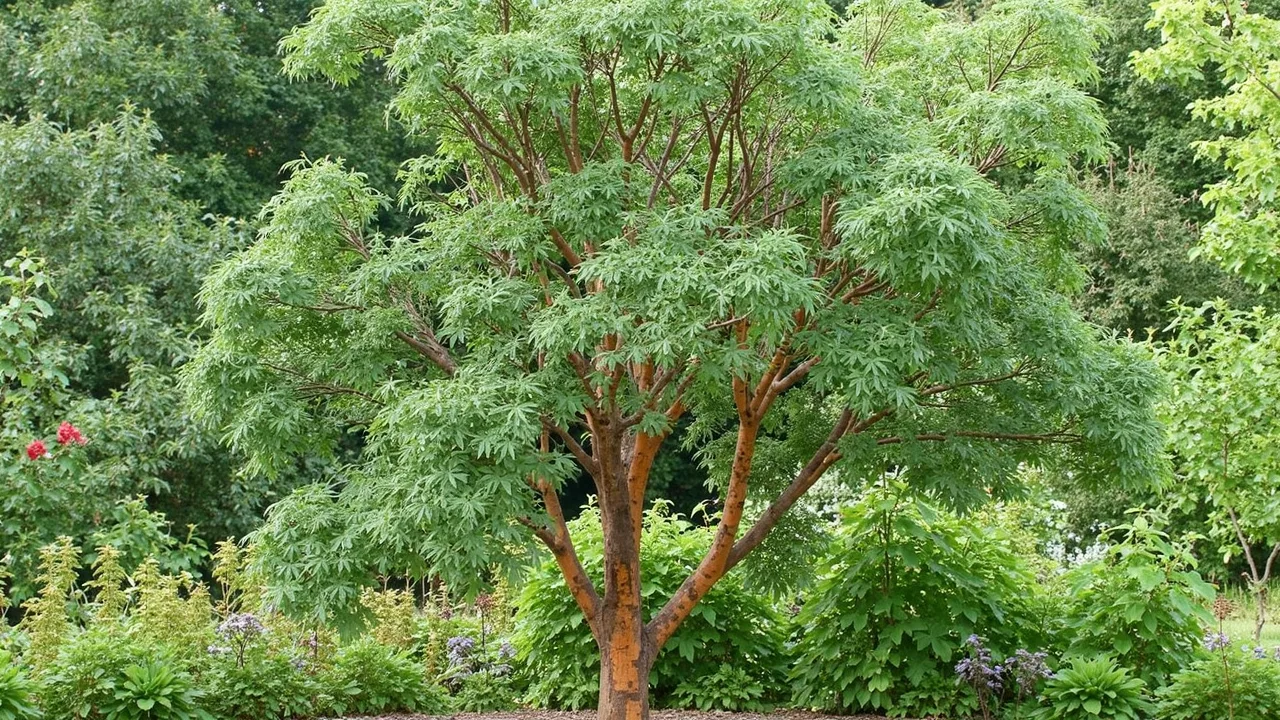
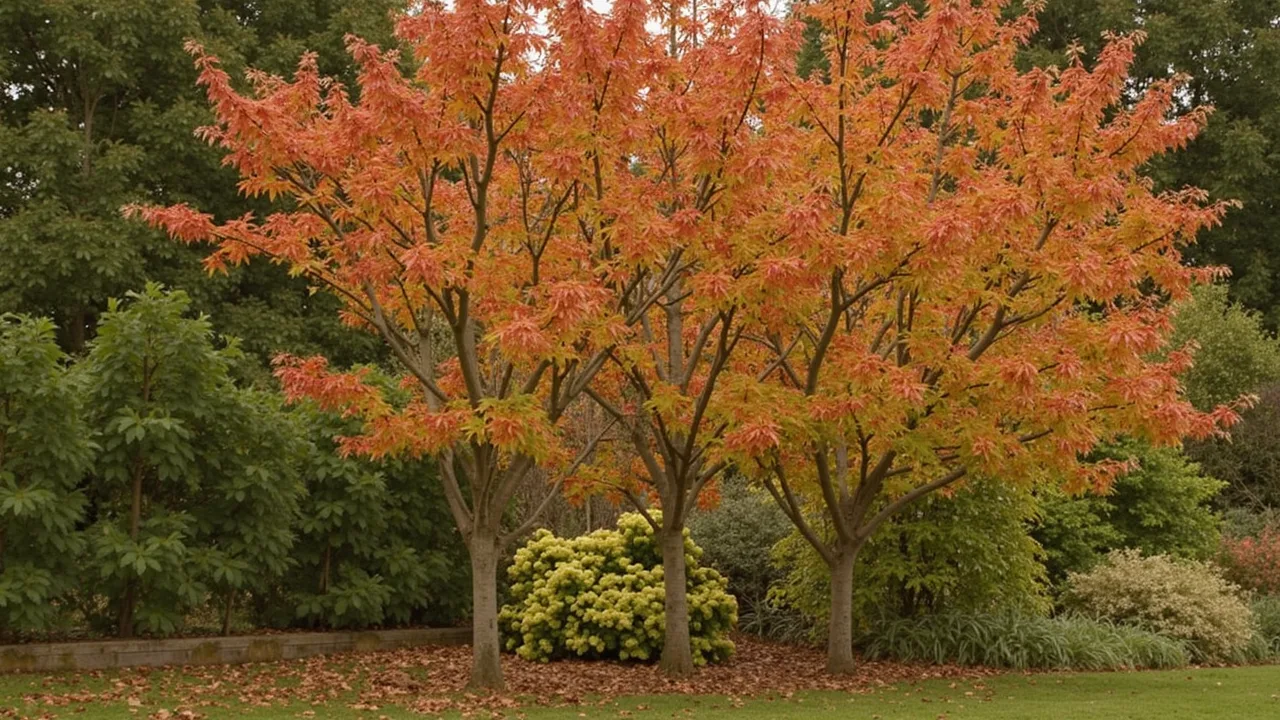
Acer micranthum is a deciduous Japanese maple of restrained habit, prized in the UK for its finely cut foliage and reliably brilliant autumn colour. It holds the Royal Horticultural Society's Award of Garden Merit and occupies a useful middle ground in the genus between the dwarf cultivars of Acer palmatum and the larger snakebark maples. Compact enough for a small garden but tall enough to make a statement, it suits sheltered borders, woodland edges and large containers in cool, moist corners.
Overview
Acer micranthum belongs to the section Palmata of the genus Acer, in the family Sapindaceae, and shares its closest affinities with Acer palmatum, the Japanese maple of everyday garden centres. Where A. palmatum has been heavily selected into hundreds of named cultivars, A. micranthum has remained comparatively under the radar in British horticulture — a quiet species whose virtues are increasingly recognised by collectors of maples and designers of cool, naturalistic planting schemes.
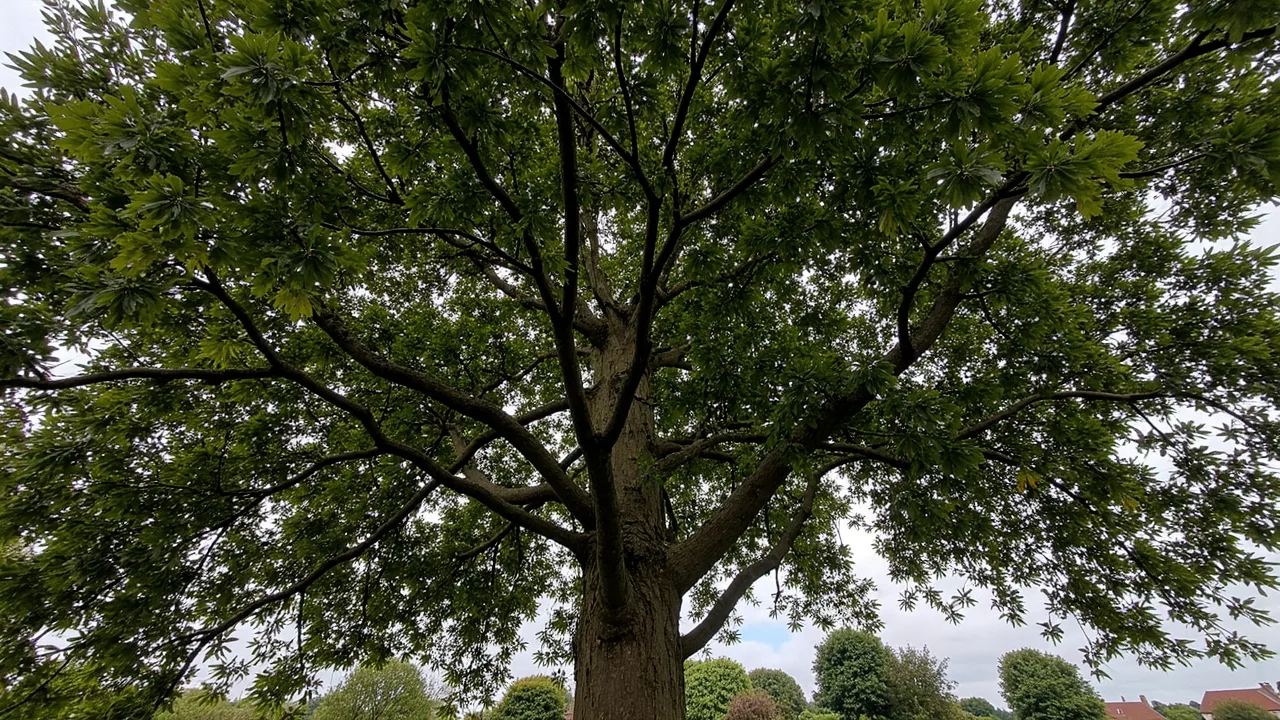
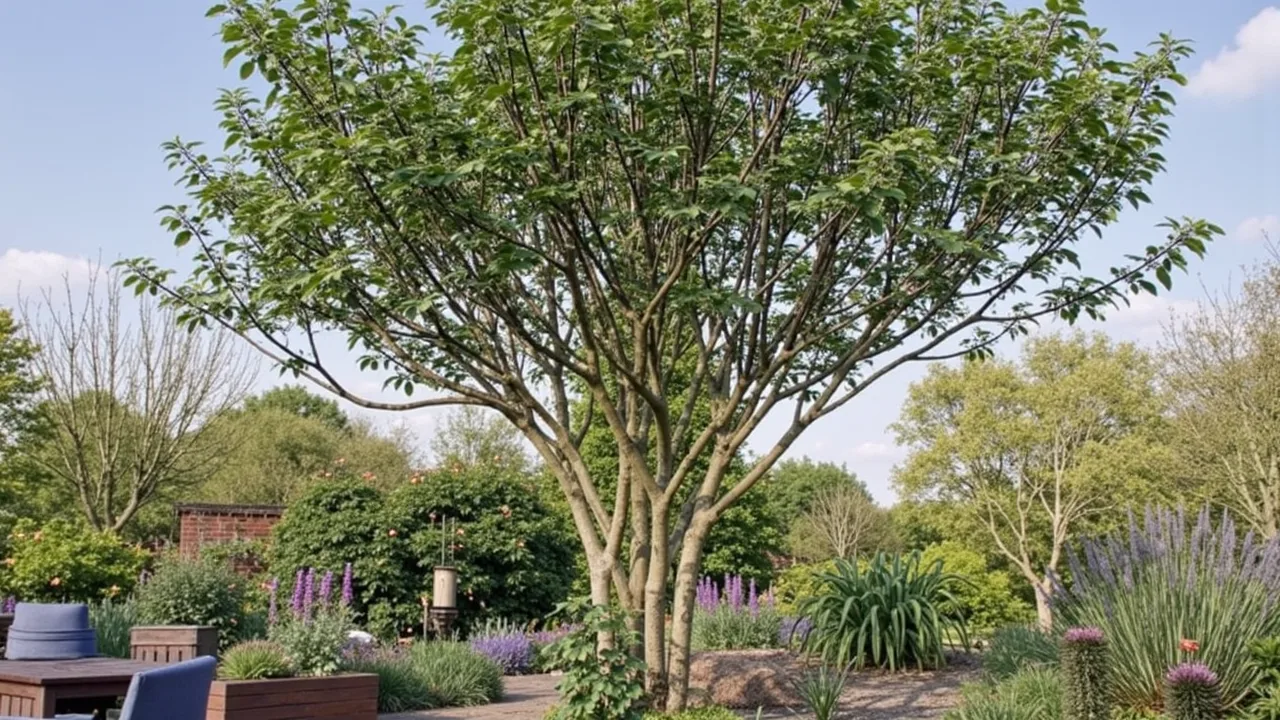
In UK cultivation it is fully hardy in all but the most exposed inland districts, performing reliably in southern and central England, much of Wales, and lowland Scotland. It tolerates urban pollution reasonably well and is not particularly prone to the wind-rock that troubles more brittle maples. Its modest ultimate size — typically 3 to 5 metres in height with a similar spread after twenty or thirty years — makes it a natural focal point in gardens where a full-sized Acer palmatum would eventually overpower neighbouring plants.
The species name micranthum means "small-flowered", referring to the relatively inconspicuous reddish blooms carried in spring. The visual reward of the plant is the foliage and the autumn display rather than the flower.
Appearance
The foliage is the principal ornamental feature. Leaves are small for the genus, usually 3 to 7 cm across, palmately lobed with five to nine narrow, pointed lobes and finely serrated margins. They emerge a fresh, light green in mid-spring, deepen to a clean mid-green through summer, and develop the saturated oranges, scarlets and crimsons that mark the species' autumn climax.
Growth habit is broadly upright when young, broadening into a rounded, slightly tiered shrub or small tree with age. Bark on young shoots is greenish-brown and smooth; on older wood it becomes faintly striated and warmer in tone. Twigs are slender and carry the leaves on short reddish petioles, which adds to the delicate visual texture.
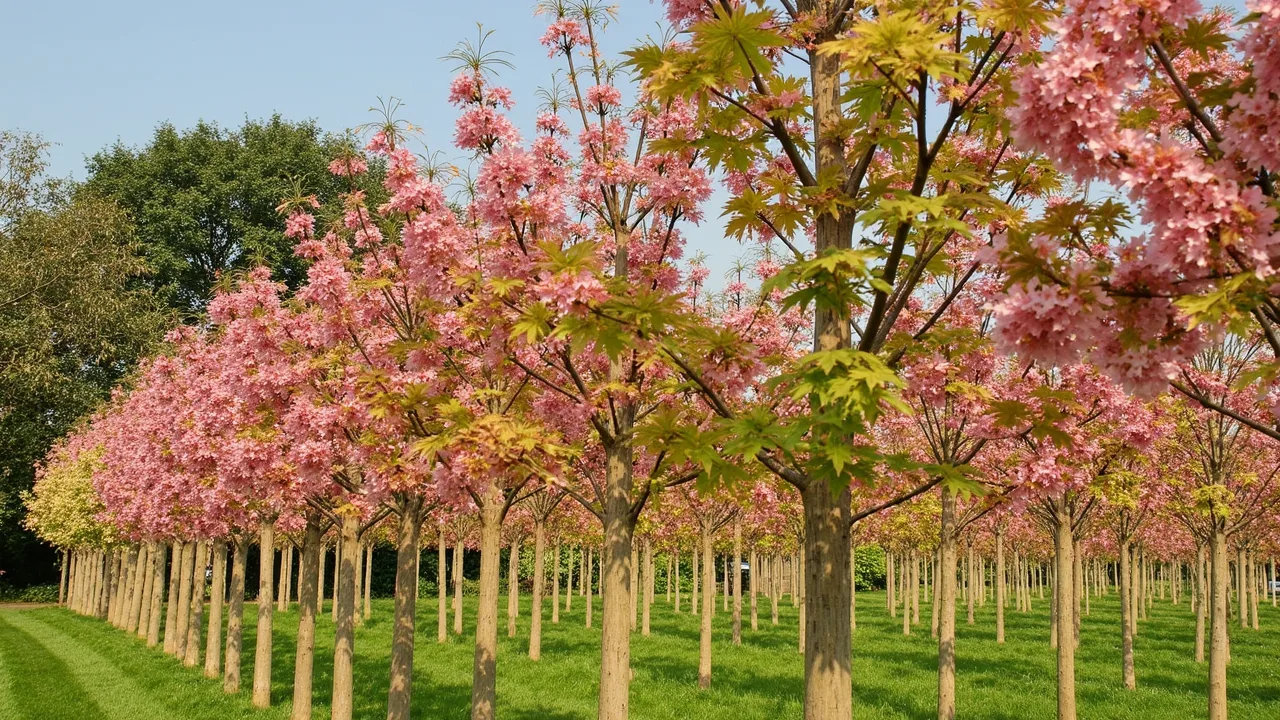
Flowers appear with the new leaves in late April or May. They are small, red to purplish, and held in short drooping clusters; individually unremarkable but attractive at close range and useful to early-flying pollinators. When pollinated — neighbouring maples of compatible flowering time can cross-pollinate it — they give way to the paired winged samaras typical of the genus, each pair roughly 1.5 to 2.5 cm long, ripening through summer and often persisting on the plant well into autumn alongside the coloured leaves.
Growing Conditions
Acer micranthum performs best in the conditions that suit its close relatives in the Palmata section: cool, moist, leafy soil and a position out of the strongest midday sun.
Soil should be humus-rich, moisture-retentive but freely drained. Neutral to slightly acid pH is ideal; it will grow acceptably on mildly alkaline soils provided organic matter is worked in generously at planting. Heavy clay can be improved with leaf-mould, well-rotted garden compost and, where drainage is suspect, a coarse grit working into the planting pit. Light sandy soils are tolerated once established but benefit from regular mulching to conserve moisture.
Light is best described as dappled or partial shade, such as the high shade cast by mature deciduous trees, an east- or north-facing aspect, or a courtyard that does not see harsh afternoon sun. In deeper shade the plant still grows but produces fewer leaves and a thinner canopy, and the autumn colour, while still vivid, develops a week or two later than in better-lit positions.
Shelter matters. The leaves are thin and finely divided, and exposure to cold spring winds or persistent westerlies will tatter the foliage and dull the autumn show. A position behind a hedge, fence or shrub border, or at the margin of a woodland, gives the best results.
Across the UK the species is reliably hardy in RHS hardiness ratings H5 to H6 territory. Established plants tolerate winter lows of around –15 °C without injury. Late spring frosts can blacken the first flush of new growth; sites on higher ground or in known frost pockets should have fleece ready for the first cold nights of April or May.
Planting and Care
Planting is best done between October and March, when the soil is workable and the plant is dormant. Container-grown specimens from garden centres can go in at almost any time of year provided the ground is not frozen or waterlogged; autumn planting is preferred because it gives the roots a full cool season to establish before the demands of summer.
Dig a planting pit at least twice the width of the rootball and to the same depth. Tease out circling roots from pot-bound plants and set the tree so the top of the rootball sits level with the surrounding soil. Backfill with the excavated material improved with a generous forkful of leaf-mould or well-rotted compost, firm gently, and water in thoroughly. Stake only where the position is exposed; a low, flexible stake for the first year is sufficient.
Watering is the most important task in the first two to three growing seasons. Water deeply during dry spells rather than little and often, aiming to keep the soil moist but not saturated. Once established the plant tolerates short dry periods, but chronic drought will cause early leaf drop and a thin summer canopy.
Mulching should be done each spring, applying a 5 to 7 cm layer of organic matter — leaf-mould, composted bark or well-rotted garden compost — over the root area but kept clear of the trunk itself. This conserves moisture, feeds the soil biology and keeps the surface roots cool.
Feeding needs are modest. A light top-dressing of a slow-release tree and shrub fertiliser in early spring is sufficient on reasonably fertile soils; on thin soils a second, lighter application in early summer helps support the autumn colour.
Pruning is minimal. The natural habit is graceful and any hard cutting back typically ruins the form. In late winter, remove any dead, damaged or crossing branches back to a healthy bud or to the parent stem. If size needs to be controlled, light shaping of the previous summer's growth can be done in mid-summer, but heavy pruning is not recommended.
Propagation is most reliably carried out by softwood cuttings taken in early summer, treated with a rooting hormone and rooted under mist or in a closed propagator at about 20 °C. Seed can be sown fresh in autumn after a brief warm/cold stratification, though named forms (where they exist) will not come true. Grafting onto Acer palmatum rootstocks is the technique used by specialist nurseries for clonal material.
Seasonal care is light. Spring is the moment to mulch, feed and watch for late frosts. Summer calls for watering attention in dry years. Autumn is the reward — the season this species is grown for. Winter is largely hands-off, with any structural pruning carried out in February before bud movement.
Common Problems
The species is generally healthy, but a small set of issues is worth anticipating.
Late spring frost damage is the single most common setback, particularly in northern and inland gardens. A sudden cold night after the leaves have emerged will blacken and distort them. Affected growth usually pushes a second flush, but the display that year is diminished. Ready-made fleece or a few sheets of horticultural fleece draped over the canopy on cold nights prevents most damage.
Leaf scorch shows as brown, papery margins and tips from midsummer onwards. The usual cause is a combination of strong sun, drying wind and insufficient moisture at the roots. Corrective action is cultural: improve mulching, water more thoroughly during dry weather and, where practical, provide afternoon shade.
Aphids, particularly the maple aphid, can colonise young shoot tips in late spring, causing leaf curl and sticky honeydew. They are generally controlled by natural predators in established gardens, but a strong infestation can be dealt with by a wash of insecticidal soap or a strong jet of water.
Verticillium wilt is rare but serious when it occurs. Symptoms include sudden wilting of one or more branches, often on one side of the plant, and dark staining visible when an affected stem is cut across. There is no chemical cure; affected wood should be cut out to well below the discoloured area and the prunings disposed of in household waste rather than composted.
Leaf spot fungi may appear in persistently wet summers as small brown or black spots on the foliage. Damage is usually cosmetic and rarely warrants treatment; affected leaves can be raked up in autumn to reduce overwintering inoculum.
Popular Varieties
Named cultivars of Acer micranthum are scarce in British and continental nursery trade, and the species is most often grown as the straight species or as a seedling raised form. Gardeners selecting material should look for clearly labelled, grafted specimens from specialist maple nurseries rather than chance seedlings, and should expect the species-type rather than a catalogue of named clones.
Where variety is desired within the same horticultural group, related taxa in section Palmata offer a wider palette: Acer palmatum 'Bloodgood' for deep purple foliage, Acer palmatum 'Sango-kaku' for coral winter stems, and Acer shirasawanum 'Aureum' for golden spring colour. These are not forms of A. micranthum but they share its cultivation requirements and combine well with it in mixed plantings.
Pests and Diseases
| Problem | Symptoms | Management |
|---|---|---|
| Acer gall mite | Small, green, bladder-like galls form on the undersides of leaves. | Prune out affected shoots in winter or apply a horticultural oil spray in early spring. |
| Verticillium wilt | Sudden wilting and browning of leaves on one side of the tree, often leading to branch dieback. | Remove and burn infected wood; avoid replanting maples in the same soil for several years. |
| Aphids | Clusters of small soft-bodied insects on new growth, accompanied by sticky honeydew. | Wash off with a strong jet of water or treat with insecticidal soap if infestations are heavy. |
| Horse chestnut scale | White, cottony patches on stems and branches that weaken the tree over time. | Scrape off visible scales by hand or apply a systemic insecticide in spring. |
| Leaf scorch | Browning and crisping of leaf margins, particularly during hot, dry spells. | Ensure consistent watering and mulch the base to retain soil moisture. |
For step-by-step help, read Controlling Aphids Naturally. Or browse the full plant problem solver to diagnose an issue by symptom.
Recommended Products
GardenWizz earns a commission from qualifying purchases made through affiliate links on this page (including links within the article) — as an Amazon Associate, and from Thompson & Morgan via the Awin network. This does not affect the price you pay. See our disclaimer for details.