Sycamore
Acer pseudoplatanus
The Gardening Year
Best months in UK gardens · full planting calendar →
🖨 Printable care card (PDF)At a Glance
| Botanical name | Acer pseudoplatanus |
|---|---|
| Common name(s) | Sycamore |
| Family | Sapindaceae |
| Plant type | tree (deciduous) |
| Height × Spread | 20–35 m × 8 m |
| Position | Full sun, Partial shade |
| Soil | fertile, moist but well-drained soil; tolerates almost any conditions; drains freely |
| Flowering | May–June |
| Toxicity | Seeds and seedlings cause atypical myopathy in horses, often fatal — keep horses away from sycamore seeds and saplings; not considered harmful to people. (RHS / equine sources.) |
| Native range | Central Europe and Western Asia; ranging from France eastward to Ukraine, northern Turkey and the Caucasus, and southward to the mountains of Italy and northern Iberia |
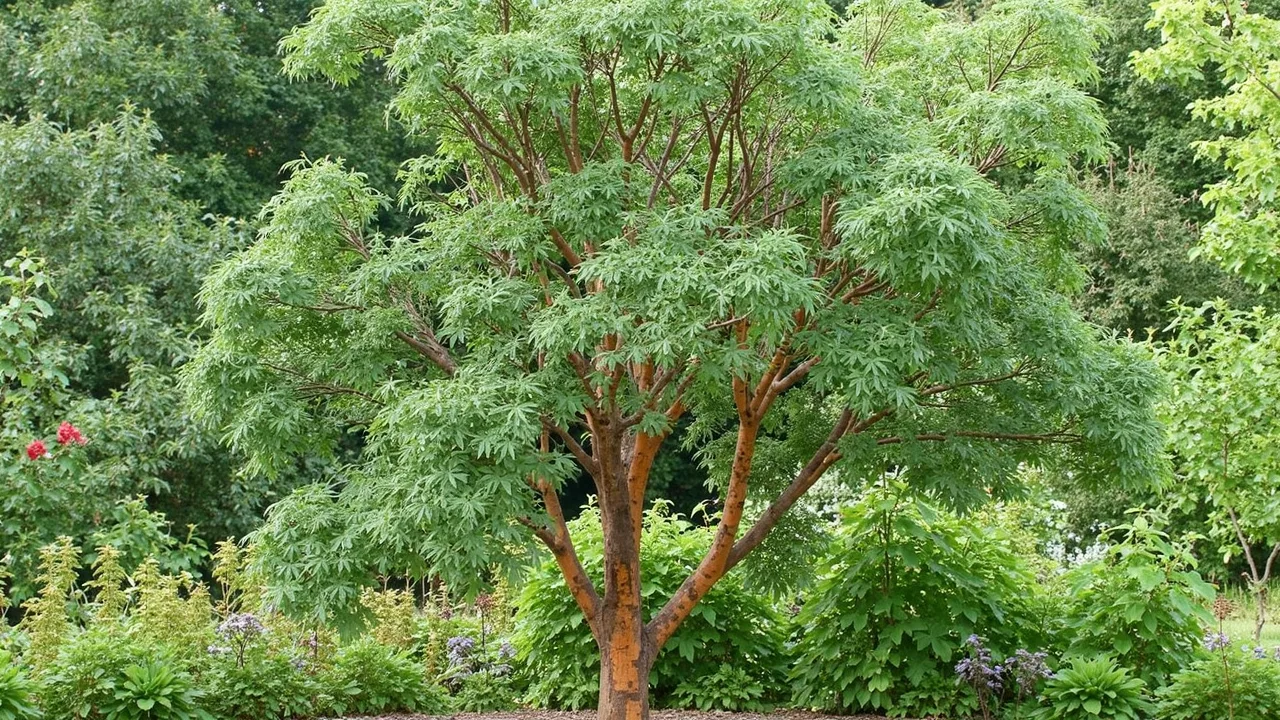
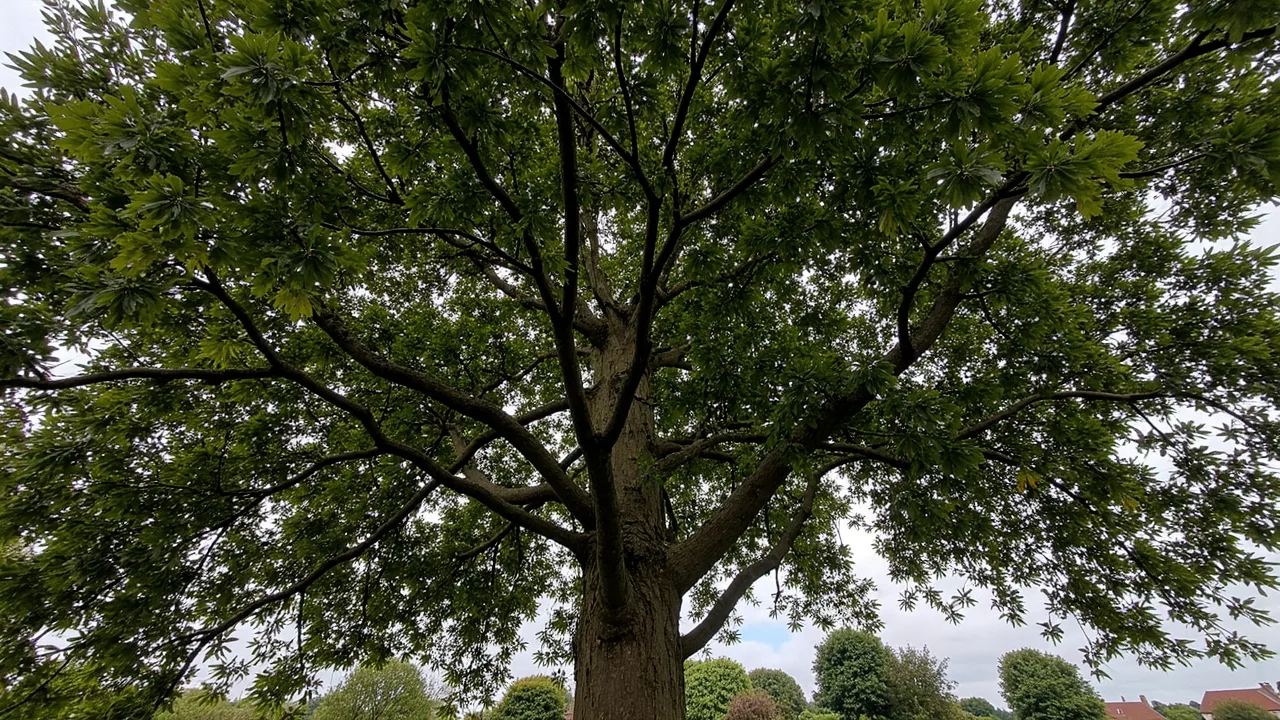
A stately, fast-growing deciduous tree widely planted across the British Isles, the sycamore is one of the most recognisable large trees in UK parks, hedgerows, streetscapes and gardens. Long naturalised here, it is often mistaken for a native and remains a workhorse of the landscape for its tolerance, rapid growth and dense summer canopy. It also has a reputation for self-seeding freely, lifting paving, and seeding into neighbouring gardens, so it suits gardeners who can give it the space it eventually needs.
Quick-Care
Overview
Sycamore (Acer pseudoplatanus) is a deciduous broadleaf tree in the family Sapindaceae (the soapberry family). It is sometimes called the sycamore maple or planetree maple, names that reflect both its maple-like foliage and its superficial resemblance to the unrelated plane tree. Native to central and southern Europe, it has been naturalised in Britain since at least the 15th century and is now thoroughly established across lowland England, Wales, Ireland and much of Scotland.
Mature specimens reach 20–35 m in height, with occasional trees approaching 40 m on deep soils. They form broad, rounded to oval canopies that cast dense summer shade, and they grow rapidly when young — often 40–60 cm a year — before slowing with age. Sycamores are fully hardy across the UK (RHS hardiness rating H7, tolerating winter lows of around –20 °C) and tolerate exposed and coastal positions, compacted ground, and urban pollution, which is why they remain a mainstay of street and avenue planting.
The species is wind-firm, long-lived for a broadleaf (typically 150–300 years, occasionally more) and ecologically useful: the spring flowers feed early pollinators, the paired winged seeds are eaten by birds and small mammals, and the dense canopy provides nesting sites for a range of birds.
Appearance
Sycamore bark is one of its most useful identification features. On young trees it is smooth and pale grey-brown; with age it flakes off in irregular plates, leaving a patchy surface rather like a plane tree — a quality that gives the tree its American nickname of "false plane". The trunk is typically straight and sturdy, broadening into heavy scaffold limbs in open-grown specimens.
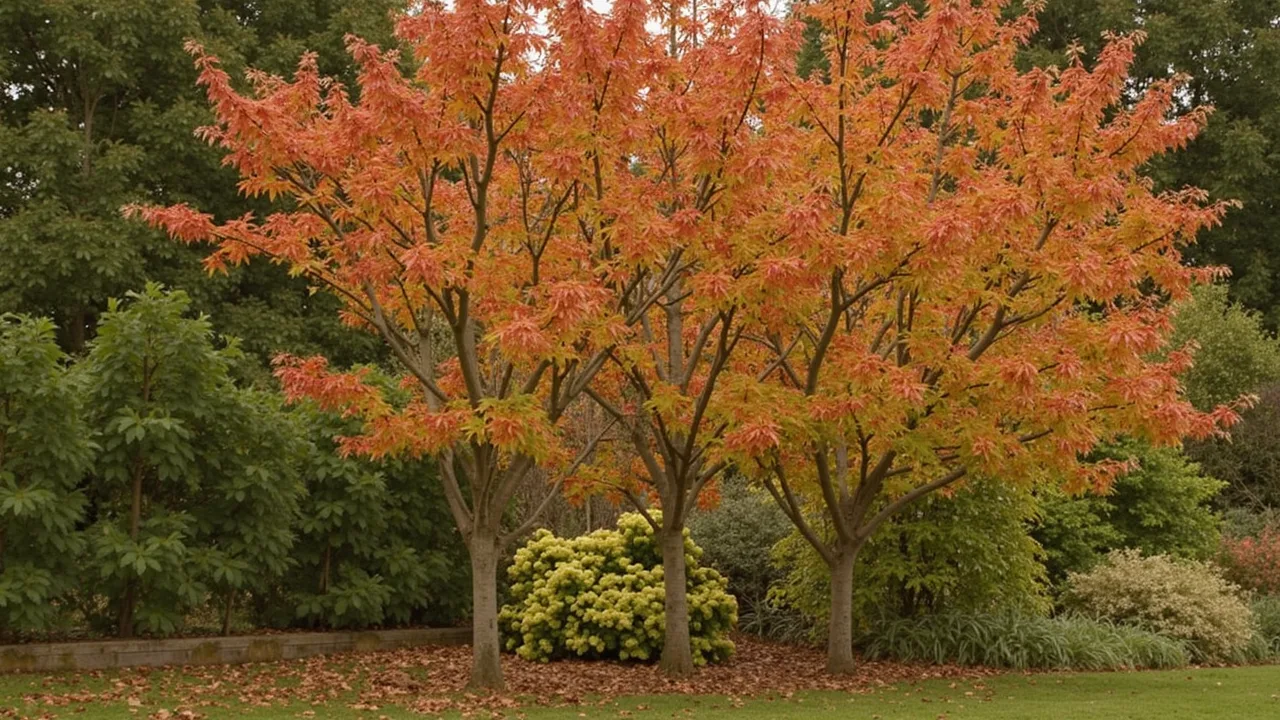
The leaves are opposite and palmate, with five coarsely toothed lobes and a length and breadth of roughly 10–20 cm. Upper surfaces are a dull, dark green; undersides are paler, often with a faint bloom. Leaf stalks do not contain milky sap (unlike the closely related Norway maple, Acer platanoides), which is a reliable point of distinction in summer. In autumn the foliage turns a smoky yellow-brown, occasionally flushed with pink, before falling.
Flowers appear from April into May, in drooping yellow-green panicles 5–10 cm long, emerging with or just after the leaves. They are individually small and not showy, but produced in profusion and a useful early-season nectar source. The fruits are the familiar paired samaras — "winged keys" — joined at an acute angle, each 3–5 cm long, ripening from green to pale brown in autumn and spinning away on the wind.
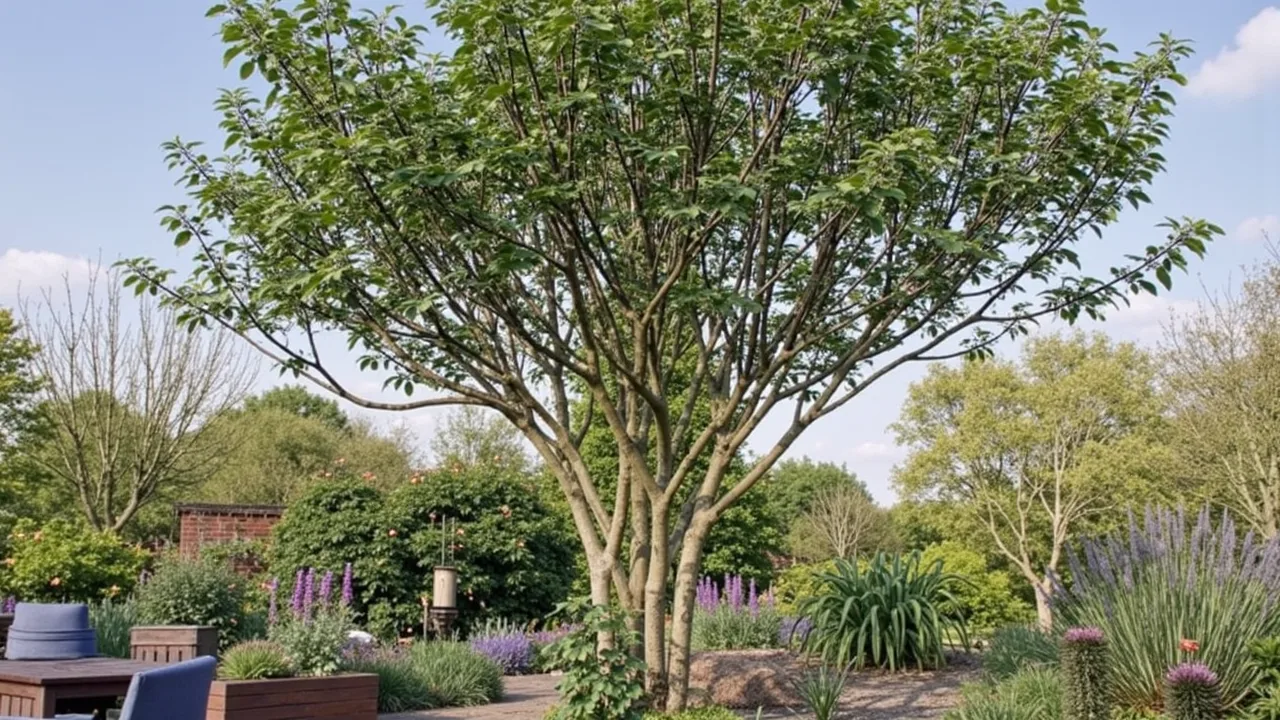
In open situations the canopy forms a broad dome; in woodland competition, sycamores grow tall and straight with crowns set high. Gardeners should plan for the eventual footprint rather than the size at planting.
Growing Conditions
Sycamore is among the most adaptable of large trees. It succeeds on clay, loam, sand and chalk, and tolerates both drought-prone and occasionally waterlogged soils once established, although it performs best on moist, well-drained ground. Soil pH from slightly acidic to neutral (about 5.5–7.5) is ideal.
It grows in full sun or partial shade. In dense shade the canopy thins and the tree becomes drawn up; in full sun, growth is stockier and the canopy denser. Sycamore handles exposed, windswept sites and coastal locations well, and it tolerates salt spray and atmospheric pollution — which is why it features so often in coastal shelter belts and inner-city streetscapes.
In the UK it is rated RHS hardiness H7, hardy down to roughly –20 °C. It is not suitable for the smallest gardens; allow at least 10–15 m from buildings, paving and drains, more if you want it to develop its full rounded crown without conflict with neighbouring trees. Sycamore is also shallow-rooted for its size, and roots close to the surface can lift paving and crack drives over decades, so site it with this in mind.
Planting and Care
When to plant. Bare-root whips and transplants are best planted from November to March, during the dormant season, when ground is workable and not frozen. Container-grown stock can be planted at any time of year, though autumn and early spring remain preferable because watering demand is lower.
Planting method. Dig a hole two to three times the width of the root ball and only as deep as the roots. Backfill with the excavated soil — sycamore is not fussy about compost or improvers, though a forkful of well-rotted organic matter in the backfill helps on very poor or sandy ground. Position the root flare at or just above soil level, firm gently, and water thoroughly to settle the soil around the roots. On exposed sites, stake low and loose for the first two to three years; remove stakes once the trunk has thickened.
Watering. Water generously through the first two growing seasons, particularly in dry spells — a bucketful or two once a week is far more useful than a sprinkle every day. Once established, sycamore is largely self-sufficient under normal UK rainfall and only needs additional irrigation during prolonged drought.
Feeding. A spring mulch 5–8 cm deep of well-rotted bark, garden compost or leaf mould, kept clear of the trunk, conserves moisture, suppresses weeds and slowly feeds the tree. Supplementary fertiliser is rarely needed on reasonable garden soil.
Pruning. Sycamore needs little routine pruning. Remove dead, damaged, diseased or crossing branches in late summer (July–August), when cuts heal quickly and the tree is less prone to bleeding sap. Avoid heavy pruning in winter and early spring, when sap flow can cause persistent bleeding from cut surfaces. Always cut just outside the branch collar.
Propagation. Seed is the usual route: collect ripe samaras in autumn as they begin to brown, sow immediately outdoors in a seed bed, or stratify for a winter and sow in spring. Named cultivars are propagated by grafting onto seedling rootstocks, which is a job for specialist nurseries rather than home gardeners.
Seasonal care. Apart from the late-summer prune and the spring mulch, sycamore is essentially maintenance-free. Rake up fallen leaves in autumn to reduce overwintering inoculum of sycamore tarspot (see below), and check stakes and ties on young trees each spring.
Common Problems
Sycamore is generally healthy, but a handful of issues recur on UK trees.
Sycamore tarspot (Rhytisma acerinum) is the most familiar: glossy, raised black blotches on the upper leaf surface in late summer. Despite its alarming appearance, it is purely cosmetic — heavily affected leaves may drop a little early, but the tree is not harmed. Raking up and disposing of fallen leaves reduces next year's inoculum; no fungicide is justified.
Sap-feeding aphids are common in late spring and early summer, producing sticky honeydew that coats leaves, paving and parked cars beneath. The sooty moulds that follow darken the sticky coating. The damage is cosmetic; the tree will not suffer, and a strong jet of water or a wash with the autumn rains clears most of it. Encourage natural predators (ladybirds, lacewings, hoverflies) before reaching for insecticides on a tree of this size.
Powdery mildew can coat leaves in a white bloom during hot, dry summers, particularly on stressed or crowded trees. Improve air circulation by removing competing vegetation, pick off badly affected leaves, and water in prolonged drought.
Verticillium wilt (Verticillium dahliae) is rare but serious: leaves scorch and wilt on one side of the tree, and individual branches die back. There is no cure. Remove and destroy (do not compost) affected trees, and avoid replanting susceptible species — including many other maples — in the same spot.
Sirococcus shoot blight causes blackened, withered shoot tips in wet springs. Prune back into healthy wood during dry weather and dispose of the prunings.
Shallow roots are a structural rather than pathological issue: as the tree matures, surface roots can lift paving, kerbs and patio slabs. Plan siting carefully, and consider a root-barrier or alternative species if space is tight.
Popular Varieties
True Acer pseudoplatanus is a single species, and named cultivars are uncommon in UK garden centres, where the species itself and its purple-leaved relative Acer pseudoplatanus 'Atropurpureum' are the forms most often encountered. The brief below lists the established, widely available selections rather than speculating on unfamiliar names.
'Atropurpureum' is the best-known cultivar. Its leaves emerge green in spring and progressively darken through summer to a deep burgundy or purple on the upper surface, with the underside remaining greenish — a striking two-tone effect when the foliage moves in the wind. It reaches a similar size to the species and is typically grafted, so any green-leaved revertant growth from the rootstock or below the graft should be removed promptly.
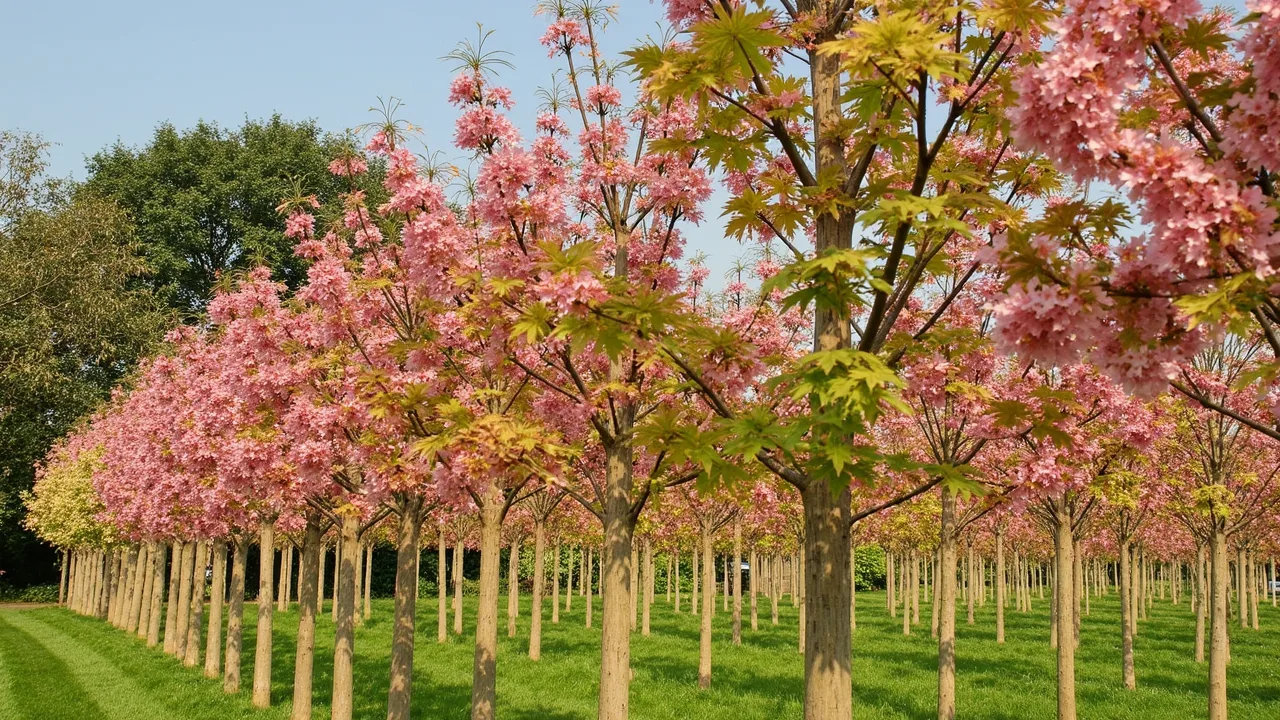
'Brilliantissimum' is a smaller, slower-growing form, usually sold as a top-worked standard reaching 4–6 m. Its spring foliage opens a shrimp-pink or salmon, softening through yellow-green to the normal mid-green of summer. It is the classic "small garden" sycamore for patios and front gardens where the species would be far too large.
'Nizetii' has leaves variably blotched and striped with white, pink and purple on a green ground, with the underside a striking purplish red. It is grafted and tends to revert; remove any plain green shoots at the graft union.
'Esk Sunset' (also sold as 'Eskimo Sunset') is a relatively recent New Zealand-raised selection with leaves heavily splashed and freckled with pink, cream and white, and purple undersides. It is best in partial shade, where the pale leaf markings scorch less readily in strong sun, and it grows more slowly than the species.
Several other names — including forms with variegated or finely cut leaves — appear in specialist nursery lists; availability in the UK varies year to year and is worth checking with a reputable tree nursery before ordering. Gardeners wanting the species' character on a smaller footprint should also look at Acer pseudoplatanus 'Brilliantissimum', which delivers sycamore foliage in a garden-scaled package.
Cultivars and Varieties
| Cultivar | Height | Flower | Notes | AGM |
|---|---|---|---|---|
| 'Brilliantissimum' | — | — | RHS AGM (H7) | ✓ |
Pests and Diseases
| Problem | Symptoms | Management |
|---|---|---|
| Tar spot | Large, shiny black spots with yellow margins appear on leaves in summer. | Sweep up and dispose of fallen leaves to reduce spores; no chemical control is available. |
| Honey fungus | Tree decline, dieback, or white fungal growth at the base of the trunk. | Improve drainage and avoid planting susceptible species in infected soil. |
| Verticillium wilt | Sudden wilting and browning of leaves on one side or branch of the tree. | Remove and burn affected branches; avoid replanting maples in the same spot. |
| Horse chestnut scale | Small, white, cottony patches on stems and undersides of leaves. | Scrape off scales by hand or use a horticultural oil spray in winter. |
| Leaf scorch | Brown, crispy edges on leaves due to exposure to strong sun or wind. | Plant in partial shade or provide shelter from harsh winds and intense sunlight. |
For step-by-step help, read Tackling Black Spot on Roses. Or browse the full plant problem solver to diagnose an issue by symptom.
Recommended Products
GardenWizz earns a commission from qualifying purchases made through affiliate links on this page (including links within the article) — as an Amazon Associate, and from Thompson & Morgan via the Awin network. This does not affect the price you pay. See our disclaimer for details.