Paperbark Maple
Acer griseum
The Gardening Year
Best months in UK gardens · full planting calendar →
🖨 Printable care card (PDF)At a Glance
| Botanical name | Acer griseum |
|---|---|
| Common name(s) | Paperbark Maple |
| Family | Sapindaceae |
| Plant type | tree (deciduous) |
| Height × Spread | 6–10 m × 5–10 m |
| Position | Full sun, Partial shade |
| Soil | moist but well-drained soil; Acidic / Chalky / Alkaline / Clay / Heavy / Moist / Well Drained / Light / Sandy |
| Flowering | March–May |
| Toxicity | No reported toxicity |
| Native range | central China (Gansu, Henan, Hubei, Hunan, Shaanxi, Shanxi and Sichuan) |
Acer griseum, commonly known as the paperbark maple, is a small to medium-sized deciduous tree prized above all for its extraordinary bark. Introduced to western cultivation from central China by the plant hunter Ernest Henry Wilson in 1901, it has become a connoisseur's favourite in British gardens, where its cinnamon-brown, peeling bark carries colour and texture through the winter months and its foliage turns fiery red and orange each autumn.
Overview
Acer griseum belongs to the family Sapindaceae and is one of the most sought-after ornamental maples in British horticulture. It holds the Royal Horticultural Society's Award of Garden Merit (AGM), a recognition reserved for plants of outstanding excellence for garden use in UK conditions. The species is native to the mountains of central China, where it grows as an understorey tree on well-drained slopes.
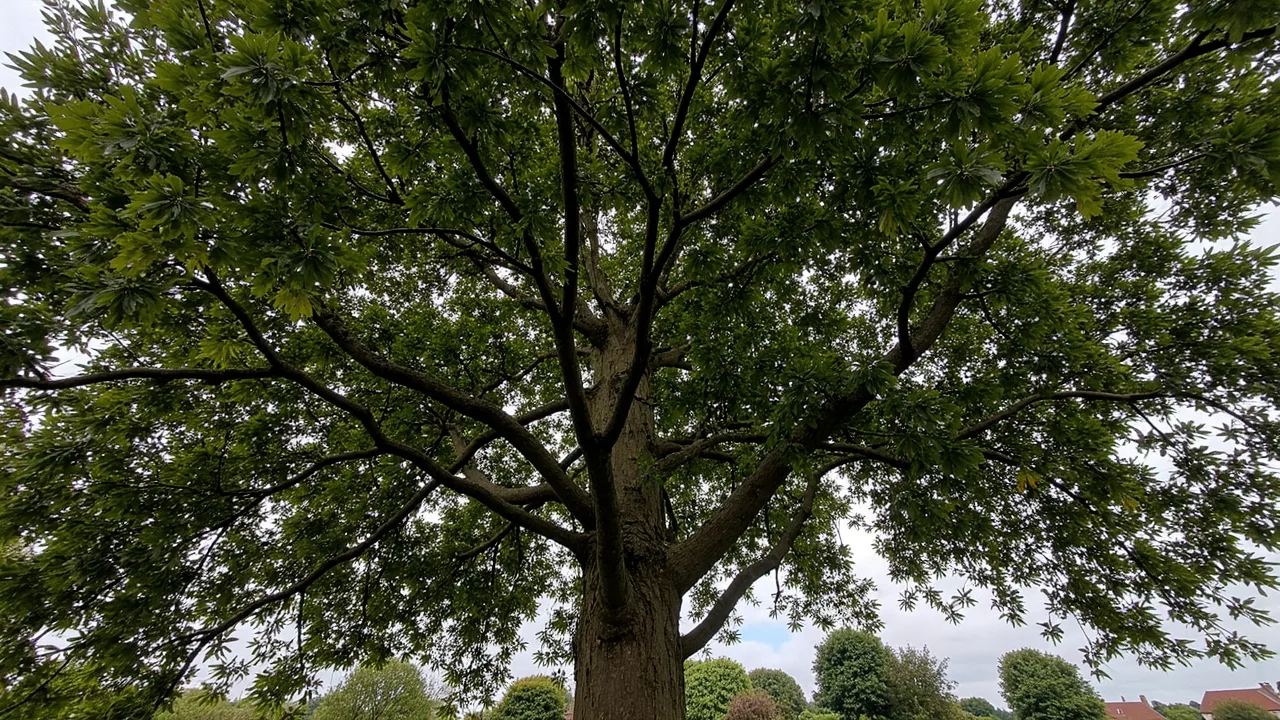
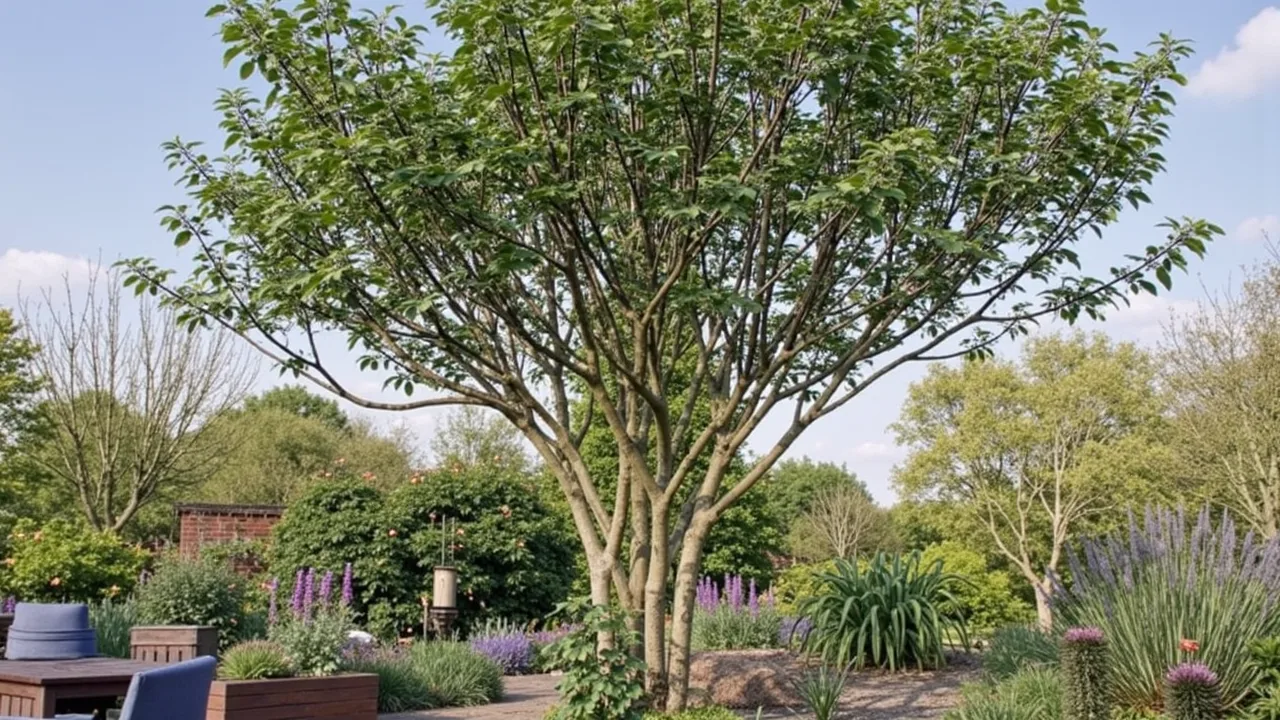
Its slow growth rate is part of its appeal for domestic gardens: a paperbark maple will typically reach only 4–6 m after twenty years, eventually attaining 8–12 m in height with a spread of 4–8 m at maturity. Because of its modest stature, ornamental value and tolerance of most UK soils, it is frequently planted as a specimen tree in lawns, courtyards and winter-interest borders. The species also copes well in large containers, provided the pot is at least 60 cm in diameter and the compost is kept reliably moist.
Appearance
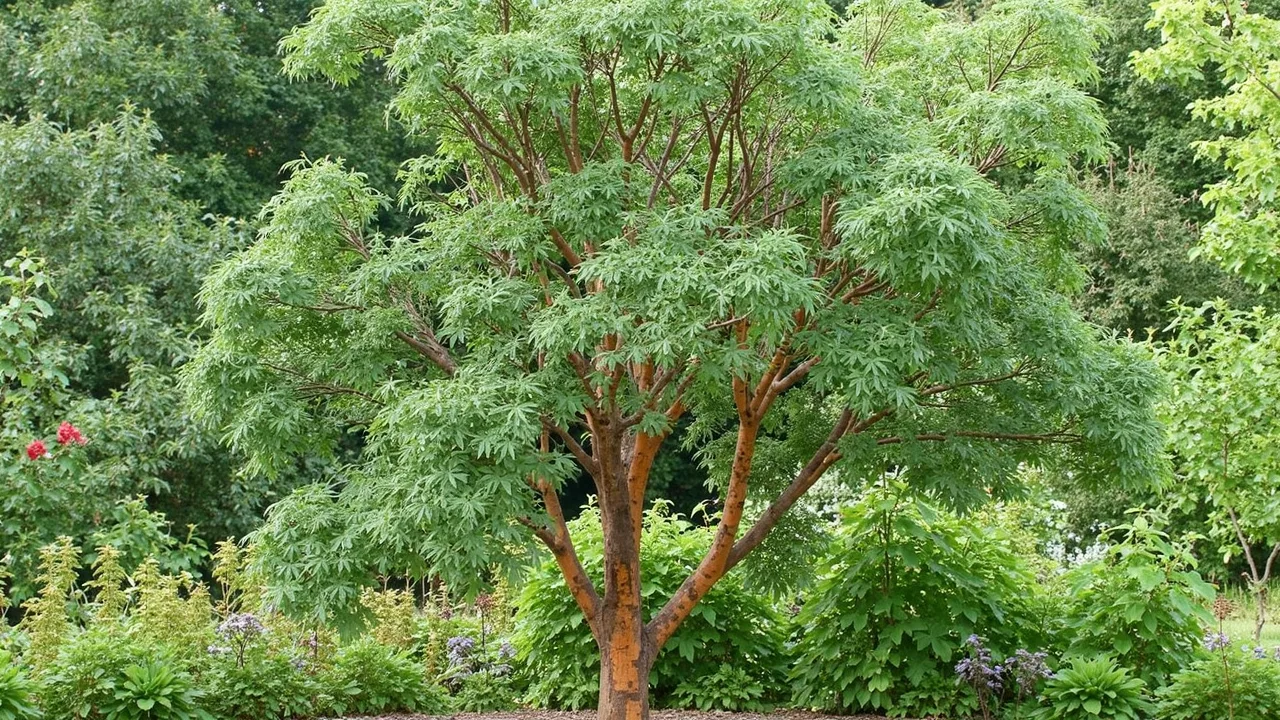
The defining feature of Acer griseum is its bark. As the tree matures, the outer bark exfoliates in thin, papery curls to reveal fresh cinnamon-brown to orange-brown layers beneath. The effect intensifies with age: young trees show only modest peeling, while established specimens display sheets of bark flaking away from the trunk and main branches. In winter, when the tree is bare, this bark is its principal ornamental feature, glowing warmly in low sunlight and contrasting strikingly with evergreen companions such as Viburnum tinus or witch hazel (Hamamelis).
The leaves are trifoliate, made up of three coarsely toothed lobes, dark green above and paler, almost glaucous, beneath. They are held opposite one another along the branches, a typical maple arrangement. In April and May, small yellow-green flowers appear in pendant clusters, followed by winged seeds (samaras) that ripen in late summer.
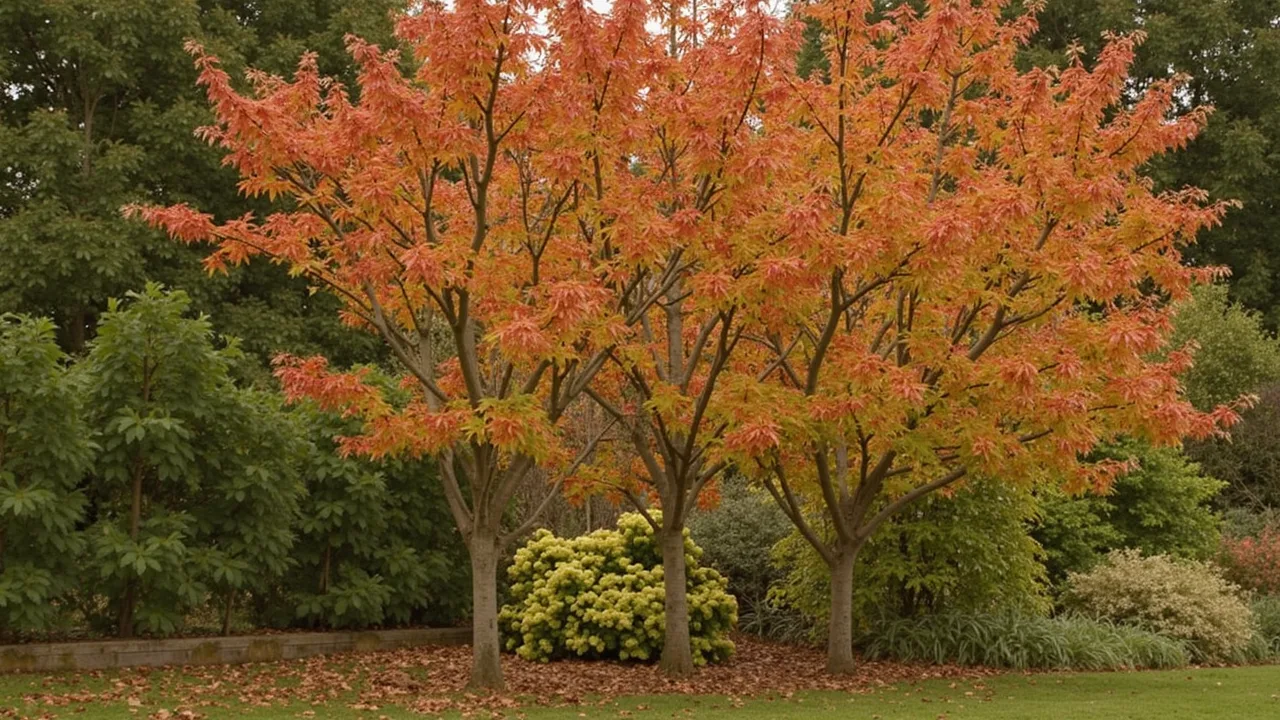
The autumn colour is widely regarded as the finest of any maple. Leaves turn through shades of bronze and orange before settling on rich reds and scarlets, often with several colours visible on the same tree at once. The display is most reliable on specimens grown in open, sunny positions; in deeper shade the colours tend to be more muted, leaning towards yellow and amber.
Growing Conditions
Acer griseum is hardy across the whole of the UK, rated H5 by the Royal Horticultural Society, which means it tolerates winter temperatures down to around –15 °C without injury. It performs reliably from the Scottish borders southwards and in most of Ireland, although in the coldest, most exposed upland sites it benefits from a sheltered corner.
The tree prefers a moist but well-drained soil of moderate fertility. Loam is ideal, but it tolerates clay and sandy soils equally well, provided they do not waterlog in winter. It grows best in neutral to slightly acidic conditions, but will accept slightly alkaline soils; shallow, very chalky soils are less suitable, as they tend to dry out in summer and can cause leaf scorch. Incorporating well-rotted organic matter at planting will help buffer moisture levels on either extreme.
For position, full sun produces the strongest autumn colour and the most vigorous peeling bark. The species also tolerates light, dappled shade, particularly in the south of England where summer sun can be intense. Choose a site sheltered from cold easterly and northerly winds, which can scorch foliage in spring and damage the delicate branching habit.
Planting and Care
Bare-root and container-grown specimens are best planted during the dormant season, from November through to March, provided the ground is neither frozen nor waterlogged. Dig a hole roughly twice the width of the rootball and the same depth, teasing out any circling roots on container-grown plants. On poor soils, work a bucketful of well-rotted garden compost or leafmould into the backfill. Position the tree so the soil mark on the stem sits level with the surrounding ground, backfill, firm gently with your heel and water in thoroughly. Staking is only necessary on exposed sites; a short stake left in place for two growing seasons is plenty.
Watering is the most important aftercare task during the first two to three years. Soak thoroughly once a week during dry spells rather than sprinkling lightly every day, as this encourages roots to seek moisture deeper in the soil. A 5–8 cm mulch of bark or composted leaves, kept clear of the trunk, will conserve moisture and suppress weeds.
Feeding is rarely needed on reasonably fertile soils. On thin or sandy ground, a light top-dressing of blood, fish and bone in early spring is sufficient; avoid high-nitrogen feeds, which produce soft growth susceptible to frost damage and aphid attack.
Pruning should be kept to a minimum, as Acer griseum has an inherently elegant, often slightly open habit. Remove any dead, damaged or crossing branches in late summer (July to early September). Maples bleed sap freely if cut in late winter or early spring, and this can weaken the tree, so avoid the temptation to tidy up at that time. Any formative shaping should also be done in summer.
Propagation is most reliable from seed, although germination is slow and often irregular. Collect samaras in autumn as they turn brown, sow fresh in a cold frame, and expect seedlings over one to two springs. Semi-ripe cuttings taken in mid-summer can be rooted under mist with bottom heat, but success rates are modest; many gardeners therefore buy grafted plants from specialist nurseries to be sure of named forms.
Seasonal care is straightforward. In spring, watch for late frosts that may damage the emerging foliage; fleece is only worthwhile on very small specimens. In summer, deep watering during drought is the priority. In autumn, simply enjoy the colour. In winter, mulch renewal and a check on stakes and ties round off the year.
Common Problems
Acer griseum is generally a healthy, trouble-free tree when grown in suitable conditions, but a small number of issues are worth knowing.
Verticillium wilt (Verticillium dahliae) is the most serious. It causes sudden wilting and browning of leaves, often on one side of the tree or on individual branches, and can kill a specimen within a single season. There is no chemical cure: affected trees should be removed and the soil avoided for replanting with maples or other susceptible species such as Acer palmatum or Catalpa.
Acer scale insect (Pulvinaria regalis) is becoming more widespread in the UK. The soft scales excrete sticky honeydew that drips on to leaves, paving and furniture below, where it is colonised by black sooty mould. Treat small infestations by scrubbing the bark with a soft brush and soapy water in winter; for heavier outbreaks, apply horticultural oil or an organic insecticidal soap in early summer when the young crawlers are active.
Leaf scorch shows as brown, papery margins in mid to late summer. It is usually caused by a combination of dry soil, hot sun and wind rather than disease. Mulching and deep watering during drought will prevent most cases; in persistently dry gardens, transplanting to a more shaded, sheltered site may be the long-term answer.
Painted maple aphid (Drepanosiphum acerinum) is a familiar sight, causing leaf distortion and honeydew on the undersides of leaves. It rarely does serious damage and is part of the wider garden ecosystem; treat only if unsightly, by spraying with a strong jet of water or applying insecticidal soap.
Popular Varieties
In practice, named cultivars of Acer griseum are few and uncommon in general cultivation; the species itself is what is usually grown.
Several forms of Acer griseum are available in the UK trade, although the species itself is so distinct that most gardeners plant the type and are content.
Acer griseum (the type) is by far the most widely grown. Most trees sold under this name are seed-raised, which produces some natural variation in bark quality and autumn colour; choosing a specimen in person at a specialist nursery in autumn is the surest way to pick a fine form.
Named clonal selections are scarcer and tend to be offered by specialist nurseries rather than garden centres. Acer griseum 'JFS KW22AGRS', sold under the trade name Copper Pearl, is a selection from the J. Frank Schmidt nursery in the United States, noted for vigorous growth and consistent exfoliation of the bark from an early age. It is occasionally available in the UK from specialist growers and is worth seeking out for the quality of its bark display.
Interspecific hybrids that include Acer griseum in their parentage have been raised, and Acer griseum × nikoense hybrids are recorded in horticultural literature. Availability of these in the UK is, however, limited and gardeners wanting guaranteed peeling bark are usually best served by a well-chosen seedling of the type.
Pests and Diseases
| Problem | Symptoms | Management |
|---|---|---|
| Verticillium wilt | Sudden wilting, yellowing and dieback of branches or the entire tree. | Remove and burn infected wood; avoid replanting maples in the same soil. |
| Honey fungus | General decline, stunted growth and white fungal growth at the base of the trunk. | Improve drainage and air circulation; remove infected roots if possible. |
| Acer leaf scorch | Browning and drying of leaf margins, often following dry or windy periods. | Water deeply during droughts and mulch to retain soil moisture. |
| Aphids | Clusters of small soft-bodied insects on new growth causing sticky honeydew. | Wash off with a strong jet of water or use insecticidal soap if severe. |
| Acer gall mite | Small blister-like galls forming on the undersides of leaves. | Rake up and dispose of fallen leaves to reduce overwintering populations. |
For step-by-step help, read Controlling Aphids Naturally. Or browse the full plant problem solver to diagnose an issue by symptom.
Recommended Products
GardenWizz earns a commission from qualifying purchases made through affiliate links on this page (including links within the article) — as an Amazon Associate, and from Thompson & Morgan via the Awin network. This does not affect the price you pay. See our disclaimer for details.