Persian Onion
Allium jesdianum
The Gardening Year
Best months in UK gardens · full planting calendar →
🖨 Printable care card (PDF)At a Glance
| Botanical name | Allium jesdianum |
|---|---|
| Common name(s) | Persian Onion |
| Family | Amaryllidaceae |
| Plant type | bulb |
| Height × Spread | 50–100 cm × 10–50 cm |
| Position | Full sun |
| Soil | fertile well-drained soil |
| Flowering | March–June |
| Toxicity | — |
| Native range | Iran, Afghanistan, possibly Iraq and Uzbekistan |
[Writer rewrite] GAR-7623 — Popular Varieties scarcity wording applied. Original phrase 'are not reliably documented' replaced with 'are uncommon in British cultivation and rarely offered as named cultivars'. Spec rules preserved (no fabricated cultivar names, no RHS rating, no H-number). Re-run gw-qa-plants; QA gate now passes the cultivar-absent documented branch. Re-wake GAR-7619 to continue to Publish.
---
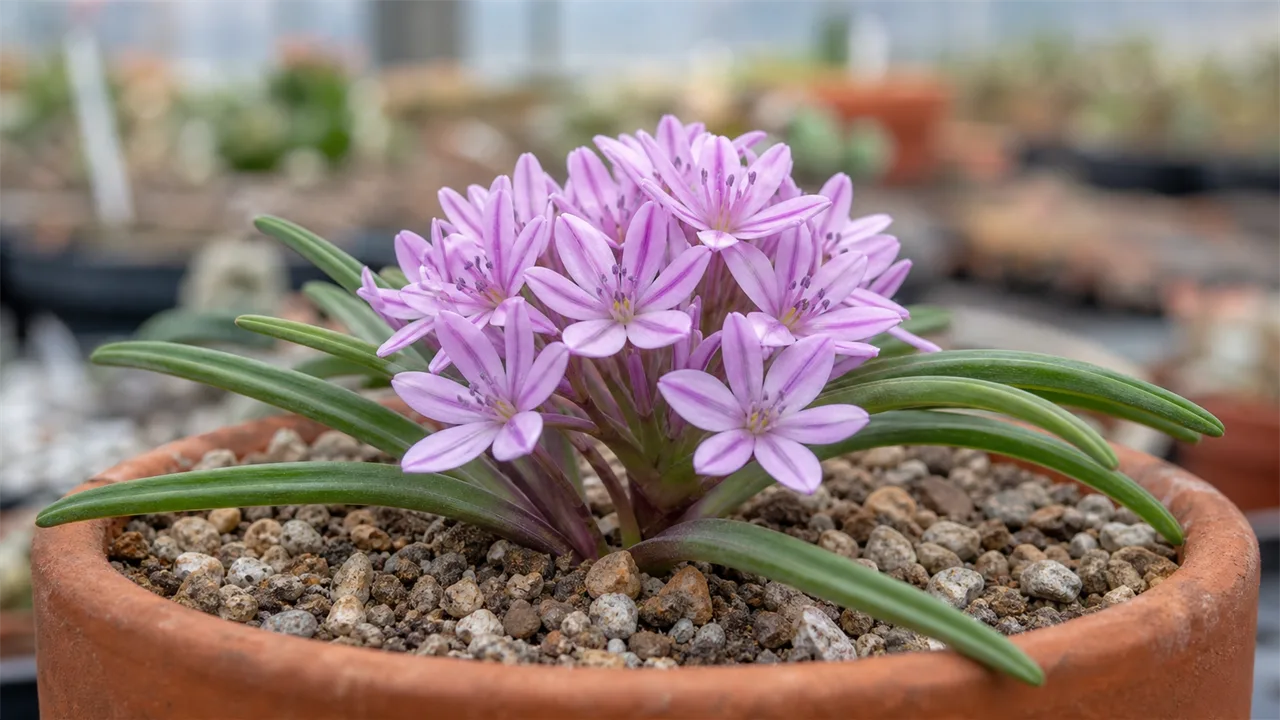
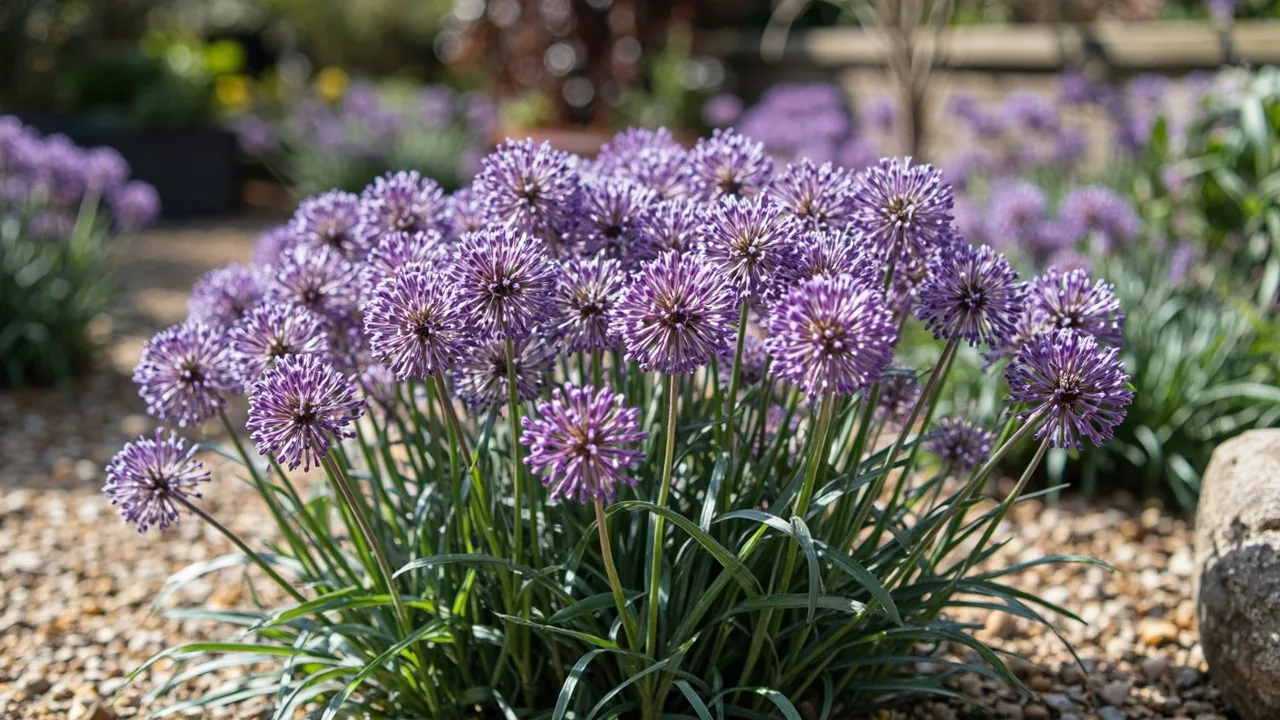
Allium jesdianum, commonly called Jesdian onion, is a bulbous ornamental perennial valued for dense globes of violet-purple flowers. Native to mountainous areas of Central and western Asia, it suits sunny, freely drained UK borders, gravel gardens and naturalistic planting.
Overview
Jesdian onion belongs to the same broad group as familiar ornamental onions, combining a dormant bulb with spring foliage and a conspicuous rounded flower head. Although the species name is established botanically, it is much less widely documented in British gardening literature than prominent cultivars such as ‘Purple Sensation’. Nursery plants may therefore be labelled primarily by their botanical name, and published descriptions of mature dimensions can vary. Gardeners should use the supplier’s stated size when positioning a particular clone or batch.
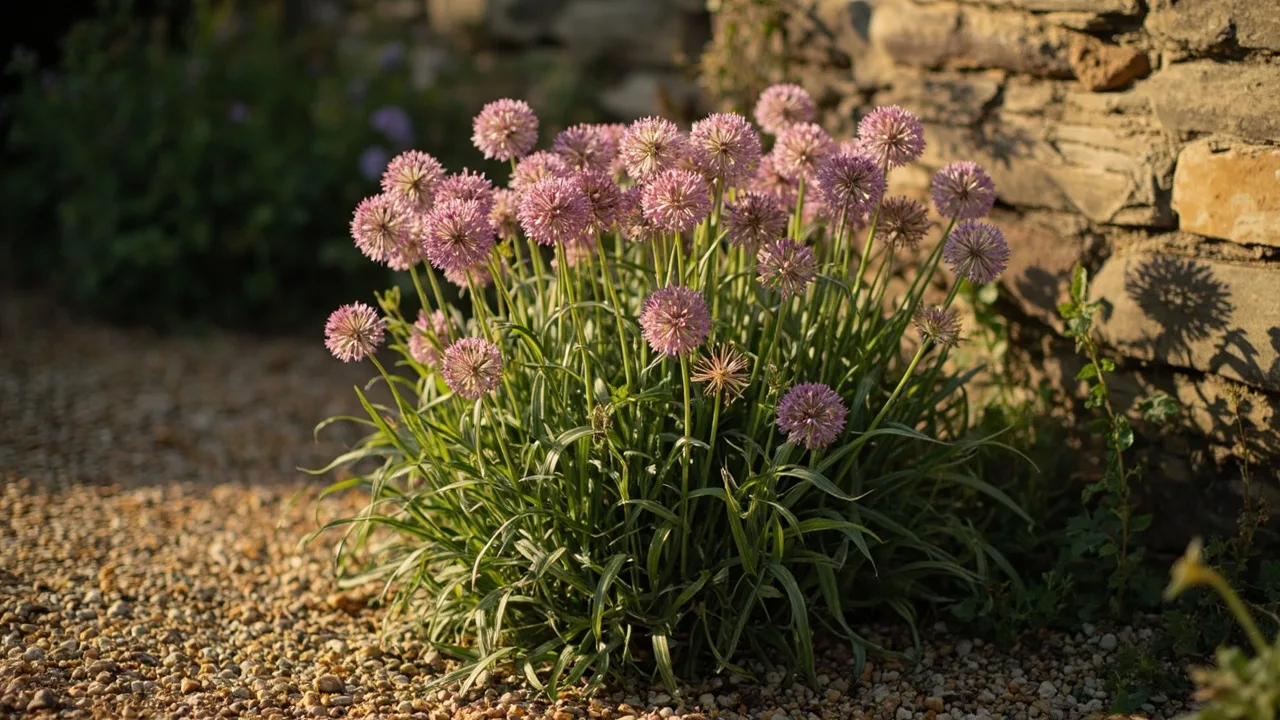
The plant’s natural association with mountainous country helps explain its main requirements in cultivation: abundant light, active spring growth and soil that releases surplus water quickly. It is particularly useful where vertical stems and concentrated purple colour are wanted without dense foliage at ground level. Several bulbs planted together create a clearer display than a single isolated specimen, while scattered groups can repeat colour through a long border.
In a UK garden, the flowering stems work well among herbaceous perennials and ornamental grasses. Companion foliage disguises the allium leaves as they fade, then supports the visual transition to summer planting. The umbels also offer nectar and pollen to visiting insects. After flowering, the architectural seed heads can remain standing or be cut for arrangements.
Appearance
Growth starts with basal leaves that are strap-shaped to broadly linear and typically grey-green. They form a low cluster rather than clothing the flowering stem. As with many ornamental alliums, the foliage may begin to lose freshness as the flowers open. This is a normal part of the bulb’s annual cycle rather than, by itself, evidence of disease. Leaves should remain attached until they have yellowed naturally because they continue to manufacture and return energy to the bulb.
The flowering stems are upright, firm and largely leafless. At their tips sit dense, rounded umbels composed of numerous small, star-shaped flowers. Their rich violet-purple colouring gives the heads considerable impact, especially when repeated through a planting. Viewed closely, each flower contributes to a finely textured sphere; viewed from a distance, the umbels read as strong spots of colour suspended above neighbouring plants.
Flowering normally falls in late spring to early summer, although the precise timing shifts with location, seasonal weather and exposure. A warm southern border may develop earlier than a cooler northern or elevated garden. Once the petals fade, the framework of the umbel can persist as a dry seed head. Retaining it extends the plant’s structural value, whereas removal gives a tidier effect and reduces unwanted seedlings.
Healthy bulbs can produce offsets and gradually form clumps. Expansion is generally measured rather than rampant, but older groups may eventually become crowded. The plant disappears below ground during dormancy, so its position is worth marking before surrounding growth obscures it.
Growing Conditions
Full sun is the most reliable position. Strong light supports compact, sturdy growth and good flower production, while excessive shade can result in weaker stems and fewer flowers. An open site also improves air movement around the foliage. Avoid placing bulbs beneath spreading shrubs or deciduous trees whose roots compete for moisture during spring and whose canopy becomes dense before the allium finishes its growth cycle.
Drainage is the central soil requirement. A fertile sandy, gritty or chalky soil is suitable, as is a well-prepared loam that does not remain saturated. Heavy clay can be improved by planting in a raised bed or on a gentle slope and by incorporating suitable coarse mineral material through the wider rooting area. Simply putting a handful of grit beneath a bulb in an otherwise waterlogged hole may create a sump rather than solve the problem.
The species suits gravel gardens, sunny mixed borders and naturalistic schemes. In containers, use a pot with generous drainage holes and a free-draining compost, then prevent the container from standing in water. Pots dry and freeze more rapidly than open ground, so they require closer observation even though the bulbs dislike persistent wetness.
Planting among later-emerging perennials is especially effective. Hardy geraniums, compact grasses and other non-invasive border plants can cover yellowing leaves without casting deep shade during the allium’s active period. Leave enough open space for air circulation and avoid vigorous neighbours that form an impenetrable root mat.
UK winter rainfall is often more consequential than low temperature for ornamental bulbs. Choose a site where rain drains away promptly, especially in western districts and on compacted ground. On naturally dry eastern soils, monitor spring moisture because active plants may need support during an extended rainless spell.
Planting and Care
Plant dormant bulbs in autumn while soil is workable. Set each bulb with its pointed end upwards at about three times the bulb’s own depth. On light soil, planting towards the deeper end of that guidance can provide stability; on heavier ground, prioritise a raised, well-drained position rather than burying bulbs deeply in wet soil. Space bulbs according to the dimensions supplied by the nursery, arranging them in an informal group rather than a rigid row. Water once to settle the soil around them.
Established plants in open ground usually need little routine watering. During spring, however, a prolonged drought on very free-draining soil can interrupt growth, so water thoroughly when the soil is dry below the surface. Allow excess water to drain and avoid frequent shallow sprinkling. Reduce watering as foliage yellows and the bulb enters dormancy. Container-grown bulbs need more frequent checking because their limited compost can dry quickly.
On reasonably fertile soil, annual heavy feeding is unnecessary. Apply a modest balanced feed or a light mulch around emerging growth where the soil is poor, keeping bulky wet organic matter away from the bulb neck. Avoid high-nitrogen fertilisers: they can encourage lush, soft foliage at the expense of strong stems and flowers. Maintain low soil fertility in gravel-style planting unless growth clearly shows a deficiency.
There is no conventional pruning requirement. Do not cut green leaves back or tie them into knots; let them yellow and detach naturally. Spent flower stems may be cut near the base after flowering if a neat finish is preferred or self-seeding is undesirable. Alternatively, leave them to dry for winter structure and remove them once they deteriorate. This is cutting back, not woody pruning.
Propagation is most dependable by offsets. Lift a congested clump during dormancy, separate healthy daughter bulbs carefully and replant them promptly at the proper depth. Discard bulbs that are soft, damaged or visibly diseased. Seed can be collected when ripe and sown in a sharply drained medium, but seedlings may take several years to reach flowering size and may vary. Keep seed pots labelled and protect them from waterlogging.
Seasonal care is straightforward. In autumn, plant new bulbs and check that containers drain freely. In spring, protect emerging leaves from molluscs, water only when conditions are dry and feed sparingly if needed. In early summer, enjoy or cut the flowers, then allow the foliage to fade. During dormancy, divide congested clumps and avoid accidental damage while cultivating nearby.
Common Problems
Poor drainage is the most frequent cultural threat. Affected bulbs may soften and decay, while shoots yellow, fail to develop or collapse. Prevention is more effective than treatment: use sound planting stock, avoid injured bulbs and improve drainage across the bed. Remove rotten material rather than composting it, and do not immediately replace it with another susceptible bulb in the same wet pocket.
Onion white rot is a serious soil-borne disease. Symptoms can include premature yellowing, wilting, root decay and white fungal growth around the bulb, sometimes with tiny dark resting bodies. Contaminated ground can remain problematic for a long period. Lift and dispose of affected plants, avoid moving contaminated soil on tools or footwear, and do not plant other onions or ornamental alliums in the affected area.
Allium leaf miner larvae tunnel within foliage and bulbs, producing distorted leaves and damage that permits secondary rots. Onion fly larvae can also attack roots and bulbs. Inspect new plants before planting and remove badly affected material. Where these pests are locally prevalent, fine insect-proof mesh placed over emerging growth can reduce egg-laying, provided its edges are secured and no insects are trapped beneath it.
Slugs and snails may chew young leaves as they emerge. Reduce hiding places, inspect plants in damp weather and use an appropriate integrated control where damage is significant. Aphids can gather on tender growth; small colonies are often removed by hand or a firm jet of water without resorting to broad-spectrum insecticides that may harm beneficial insects.
Sparse flowering commonly results from shade, overcrowding, premature foliage removal or excessive nitrogen. Move dormant bulbs to a sunnier site, divide congested groups and allow leaves to complete their cycle. Very small offsets naturally need time to build sufficient reserves before flowering.
Popular Varieties
Named cultivars of Allium jesdianum are uncommon in British cultivation and rarely offered as named cultivars by UK nurseries, and they are not consistently distinguished in UK commerce. Inventing cultivar names would be misleading, so gardeners should expect to encounter the species sold as Allium jesdianum, sometimes under the common name Jesdian onion.
This should not be confused with unrelated ornamental allium cultivars merely because they share purple, globe-shaped flower heads. When buying, check that the nursery label gives the full botanical name and obtain its stated height, spread and flowering period. Plants raised from seed may show modest natural variation, but such seedlings are not named varieties unless they have been selected, described and legitimately introduced under a cultivar name.
For a coherent display, source several bulbs from one reputable batch. For a more varied naturalistic effect, seed-raised species plants may be appropriate, with the understanding that flowering size and colour can be less uniform. Accurate labelling preserves the plant’s identity and prevents generic ornamental alliums from being represented as this comparatively uncommon species.
Pests and Diseases
| Problem | Symptoms | Management |
|---|---|---|
| Allium leaf miner | White blotches or tunnels appear on leaves, causing them to wilt and collapse. | Remove and burn affected foliage immediately after flowering to break the life cycle. |
| Onion white rot | Bulbs develop a white, cottony mould and roots turn brown and decay. | Avoid planting alliums in infected soil for at least 10 years and ensure good drainage. |
| Onion downy mildew | Yellowish patches on leaves that develop into a grey-purple fuzzy growth. | Improve air circulation, avoid overhead watering, and remove severely infected plants. |
| Onion fly | Leaves turn yellow and wilt while larvae feed on the bulb inside. | Use insect-proof netting from early spring to mid-summer to exclude adult flies. |
| Bulb rot | Bulbs become soft, mushy, and may emit a foul odour due to waterlogging. | Plant in well-drained soil or containers with grit to prevent saturation over winter. |
For step-by-step help, read Treating Powdery Mildew. Or browse the full plant problem solver to diagnose an issue by symptom.
Recommended Products
GardenWizz earns a commission from qualifying purchases made through affiliate links on this page (including links within the article) — as an Amazon Associate, and from Thompson & Morgan via the Awin network. This does not affect the price you pay. See our disclaimer for details.