Bear's Breech
Acanthus mollis
The Gardening Year
Best months in UK gardens · full planting calendar →
🖨 Printable care card (PDF)At a Glance
| Botanical name | Acanthus mollis |
|---|---|
| Common name(s) | Bear's Breech |
| Family | Acanthaceae |
| Plant type | perennial |
| Height × Spread | 100–150 cm × 100–150 cm |
| Position | Full sun, Partial shade |
| Soil | moist but well-drained soil |
| Flowering | June–August |
| Toxicity | No specific toxicity is listed by the RHS. This is not a guarantee of safety — check with a vet or the ASPCA before pets or children eat any plant. |
| Native range | Mediterranean Europe |
Acanthus mollis is one of the most architecturally dramatic herbaceous perennials available to UK gardeners. Its bold, deeply lobed leaves and tall, statuesque flower spikes give it a presence that few border plants can match, and a history in art and architecture that goes back to the ancient Greeks. The following entry covers everything a UK gardener needs to know to grow, manage and enjoy this striking Mediterranean native.
Overview
Acanthus mollis, most often known in Britain as Bear's Breech or Bearsfoot, is an evergreen to semi-evergreen herbaceous perennial in the family Acanthaceae. It is native to the Mediterranean basin — Portugal and Spain eastwards through southern Europe and into North Africa — and has long been naturalised in parts of southern England following garden introductions. It is grown primarily for two features: the imposing basal rosette of glossy, deeply cut foliage, and the tall flower spikes that rise above it in mid to late summer. The leaf shape famously inspired the carved capitals of Corinthian columns in classical architecture, a heritage that gives the plant an immediate sense of antiquity in any planting scheme.
In UK gardens, Acanthus mollis is hardy across most of the country and reliable in milder regions, but it must be sited with care because of its vigorous spreading habit. Once established, it forms large colonies via thick underground rhizomes and self-seeds freely where conditions suit. For smaller gardens or for gardeners concerned about spread, container growing or sterile cultivars offer practical alternatives.
Appearance
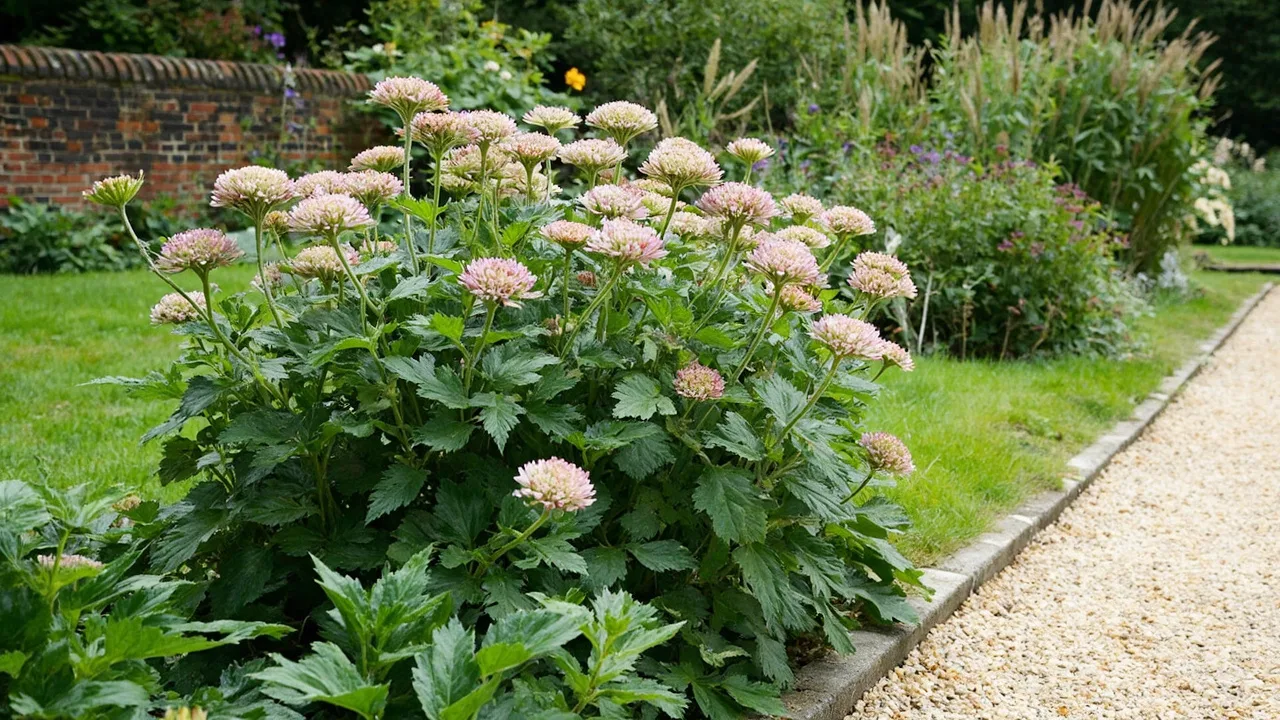
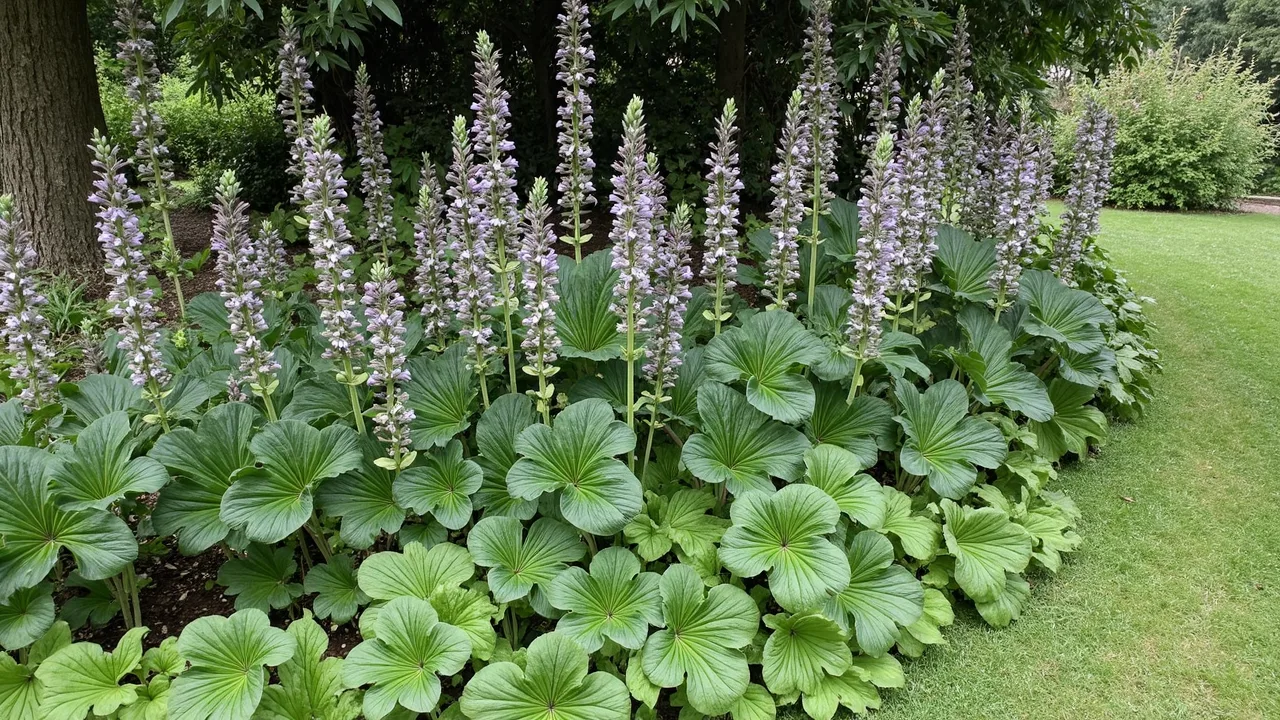
The defining feature of Acanthus mollis is its basal rosette of large, glossy, dark green leaves. Each leaf is deeply pinnatifid — cut almost to the midrib — with soft, broad lobes and a slightly wavy margin. Leaves can reach up to 1 m long on mature, well-grown plants, and the rosette sits low and flat to the ground, which makes the plant ideal for the front of a border where its architectural line can be appreciated.
From this rosette, the flowering stems emerge in early to mid summer. They are stout, erect and largely unbranched, carrying dense vertical ranks of tubular flowers. Each flower is shielded by a tough, spiny bract; the bract is green at first, then flushed purple, while the actual flower is creamy white with a pinkish-purple hood. The combination of white flowers and purple-marked bracts gives the spike its characteristic two-tone appearance. A well-grown spike can reach 1.5–2 m in height, with multiple spikes from a single established clump.
Flowering typically runs from July into August in the UK. The spikes are excellent for cutting and can be used fresh or dried; the dried bracts in particular hold their shape and colour well in arrangements. After flowering, plants may set seed in small, leathery capsules. Self-sown seedlings appear readily in mild areas and can be lifted and potted on, or hoed off where unwanted.
Growing Conditions
Acanthus mollis performs best in full sun, where the foliage develops its deepest colour and the flowering stems reach their full height. It tolerates partial shade, particularly in hotter southern UK gardens where midday shade prevents leaf scorch, but flowering is generally more prolific with at least half a day's direct sun.
Soil requirements are modest. The plant thrives in well-drained loam but copes with average garden soil, including clay-based soils provided winter drainage is reasonable. It dislikes sitting in cold, wet ground, which can cause crown and rhizome rot. Soil pH in the range 6.0–7.5 suits it well. Once established, Acanthus mollis is notably drought-tolerant — a useful trait given the increasingly dry UK summers of recent years.
Acanthus mollis has a hardiness rating of H6, indicating tolerance of winter temperatures between approximately −20 °C and −15 °C. In exposed sites the foliage may still be cut back by cold, but established rhizomes usually resprout in spring. The plant's main geographical caveat is its vigorous spread: it expands by rhizome and can self-seed, so allow it sufficient space and avoid planting close to sensitive habitats. Container growing or a less-vigorous selection is sensible in smaller gardens.
Planting and Care
Plant Acanthus mollis in spring or early autumn, when the soil is workable and the plant can establish before either summer heat or winter cold. Space plants 60–90 cm apart to allow room for the mature foliage rosette. Set the crown at, or only just below, soil level, and firm the soil well — the plant's relatively shallow root plate can rock in winter wind on loose ground.
Watering needs are modest. Water thoroughly after planting and during the first growing season, then rely on rainfall for established plants. In prolonged summer drought, an occasional deep soak will keep the foliage in good condition, but routine irrigation is unnecessary.
Feeding is rarely required. A light mulch of well-rotted compost in spring is usually sufficient and has the added benefit of conserving moisture and suppressing weeds around the shallow roots. Avoid high-nitrogen feeds, which can encourage lush foliage at the expense of flowering.
Pruning is straightforward. Cut away any remaining dead or damaged foliage in late winter or early spring, just before new growth emerges. Remove spent flower spikes after flowering if self-seeding is a concern; leave them in place if the dried bracts are wanted for cutting or for winter structure, or if some seedling recruitment is welcome.
Propagation can be carried out in three ways:
- Seed: sow in autumn or spring in a cold frame; germination is generally reliable, though seedlings will vary.
- Root cuttings: take thick sections of rhizome in winter and lay them horizontally in trays of cuttings compost.
- Division: lift and split established clumps in spring; this is the quickest way to increase a stock of a named cultivar.
In containers, use a large pot — minimum 45 cm diameter — with a free-draining loam-based compost such as John Innes No. 3. Top-dress annually with fresh compost and water moderately during the growing season.
Common Problems
The single most important issue with Acanthus mollis in UK gardens is its invasive potential. Rhizome fragments readily regenerate, and seed is produced freely in mild summers. Responsible garden management — deadheading spent spikes, containing clumps at the boundary, and disposing of unwanted rhizome material through normal green-waste collection rather than composting — goes a long way. Where containment is impractical, sterile cultivars such as 'Rue Ledan' offer a sensible alternative.
Acanthus leaf miner (the larva of a small fly, Phytomyza species — taxonomy in the brief is uncertain and may merit verification from a current RHS source) causes distinctive winding, pale tunnels across the leaf surface. Damage is generally cosmetic and rarely affects plant vigour; affected leaves can simply be removed and destroyed.
Powdery mildew can mark the foliage in warm, dry spells following humid weather, particularly on crowded plants. Improving air circulation by thinning surrounding growth is the most effective long-term measure.
Aphids occasionally cluster on young flower stems in late spring. A strong jet of water usually dislodges them; treatment is only needed if infestations are severe.
Slugs and snails are the main threat to fresh spring growth, attacking the young leaves as they emerge. Standard controls — night-time picking, wildlife-friendly pellets, or copper rings around prized clumps — are effective.
Finally, gardeners in cold districts should mark the position of dormant clumps in winter: the crown can be slow to reappear in spring and is easily damaged by digging or hoeing if its location has been forgotten.
Popular Varieties
A small number of cultivars are reliably available in the UK trade, though the range is narrower than for many popular perennials. The following are well-established names; gardeners should confirm current availability and stockist claims before purchase.
- Acanthus mollis — the species form, with the largest leaves and the tallest flower spikes. The default choice for architectural impact in a spacious border.
- Acanthus mollis 'Rue Ledan' — a sterile selection that sets little or no seed, valued where self-seeding would be a problem. Slightly more restrained in habit than the species.
- Acanthus mollis 'Tasmanian Angel' — a variegated form with leaves marked and splashed in white and cream. Less vigorous than the species and best grown in a partly shaded, sheltered position to prevent leaf scorch. Note: variegated cultivars can revert; rogue out any green revertant shoots promptly.
- Acanthus spinosus — frequently planted alongside A. mollis and sometimes confused with it, but a distinct species with narrower, more sharply spined leaves and a slightly more compact habit. Worth considering where a less overwhelming foliage effect is wanted.
Beyond these, named cultivars circulate in specialist nurseries from time to time; for any cultivar not listed above, verify its established name, habit and parentage with the supplier before purchase, as cultivar mis-labelling is not uncommon in the trade.
Cultivars and Varieties
| Cultivar | Height | Flower | Notes | AGM |
|---|---|---|---|---|
| 'Rue Ledan' | — | — | RHS AGM (H6) | ✓ |
Pests and Diseases
| Problem | Symptoms | Management |
|---|---|---|
| Powdery mildew | A white, dusty fungal growth appears on the leaves and stems. | Improve air circulation around plants and apply a suitable fungicide if severe. |
| Slugs and snails | Irregular holes are eaten in the young foliage, often accompanied by slime trails. | Use physical barriers like copper tape or apply slug pellets around the base of the plant. |
| Root rot | The plant wilts and collapses despite moist soil due to waterlogged conditions. | Ensure the soil is well-drained and avoid planting in heavy, water-retentive clay. |
| Vine weevil | Notches appear on leaf margins while larvae damage roots underground. | Apply a systemic insecticide to the soil or use nematodes to control larvae. |
For step-by-step help, read Dealing with Slugs and Snails and Treating Powdery Mildew. Or browse the full plant problem solver to diagnose an issue by symptom.
Recommended Products
GardenWizz earns a commission from qualifying purchases made through affiliate links on this page (including links within the article) — as an Amazon Associate, and from Thompson & Morgan via the Awin network. This does not affect the price you pay. See our disclaimer for details.