Palm-Leaf Begonia
Begonia carolineifolia
The Gardening Year
Best months in UK gardens · full planting calendar →
🖨 Printable care card (PDF)At a Glance
| Botanical name | Begonia carolineifolia |
|---|---|
| Common name(s) | Palm-leaf begonia |
| Family | Begoniaceae |
| Plant type | perennial |
| Height × Spread | 50–100 cm × 10–50 cm |
| Position | Partial shade |
| Pet safety | Toxic to dogs and cats if ingested; soluble calcium oxalates can cause vomiting and salivation. Underground parts are the most toxic. Seek veterinary advice if eaten. |
| Soil | well-drained, neutral to slightly acid, peat-free, loam-based compost |
| Flowering | June–August |
| Toxicity | Do not eat. Begonia sap may irritate human skin, so wear gloves when handling and wash after contact. Keep away from children and pets. If a person eats any part, seek medical advice and do not induce vomiting. Begonia ingestion is toxic to dogs and cats; soluble calcium oxalates can cause vomiting and salivation, with underground parts the most toxic. Seek veterinary advice if eaten. |
| Native range | central and southern Mexico and northern Central America |
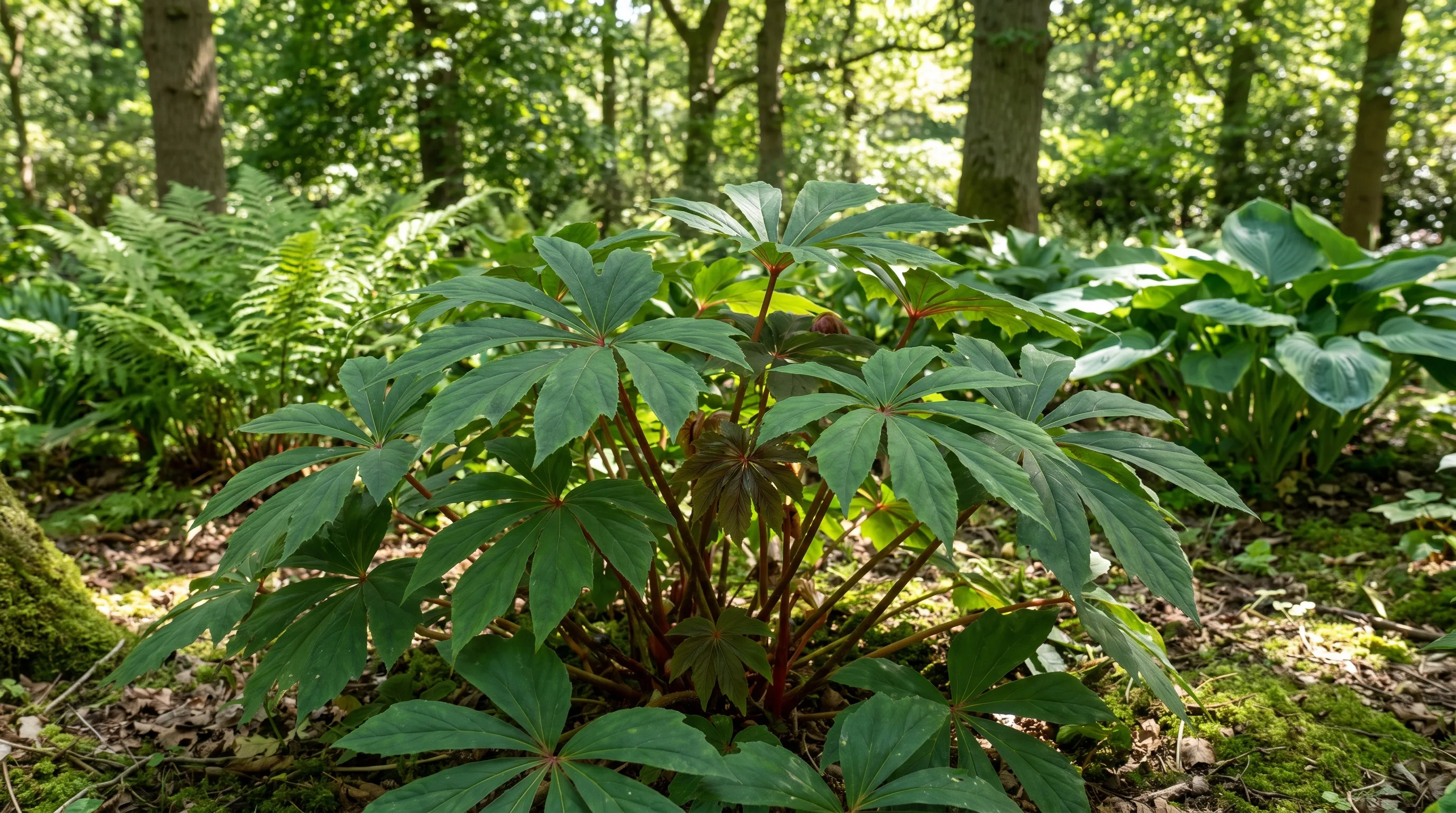
Palm-leaf begonia is a distinctive evergreen foliage plant with a thick, branching stem and palmate leaves divided into 6–10 lance-shaped leaflets. Native from central and southern Mexico through Guatemala to Honduras, it is best grown in the UK as a houseplant or as a specimen for a heated conservatory or greenhouse, where its architectural shape can develop in protected conditions.
Overview
Begonia carolineifolia belongs to the Begoniaceae and is an unusual member of a very varied genus. Unlike compact bedding begonias or cane begonias with tall, bamboo-like stems, it grows from a stout, upright, branching rhizome. The older stem can look woody, but its thickened, jointed structure reflects the plant's rhizomatous habit. Palmate leaves, each made up of 6–10 narrow leaflets, cluster towards the ends of the branches, giving an established specimen a sparse but striking, almost tree-like outline.
The species is native from central and southern Mexico through Guatemala to Honduras. British gardeners should therefore regard it as a protected indoor plant rather than a permanent garden perennial. A bright room, warm greenhouse or heated conservatory provides the stable warmth and filtered light it needs. A container also makes it easier to control drainage, which is important because the fleshy stems and fine roots are vulnerable in waterlogged compost.
Palm-leaf begonia is grown principally for foliage. Its radiating leaflets and branching framework work well as a single focal specimen because the silhouette remains clear when the plant is not crowded by other foliage. Its flowers are smaller and less conspicuous than the leaves, but their pale colour and airy arrangement soften the bold framework. Growth is usually most active from spring into early autumn in UK homes, while shorter winter days may bring a marked slowdown.
Appearance
The defining feature is the palmate leaf. Each leaf is divided into 6–10 distinct lance-shaped leaflets that radiate from the end of the leaf stalk like fingers from a palm. These are leaflets of a compound leaf, not lobes cut into a single continuous blade. Individual leaflets are long and narrow, dark green and may have gently toothed or slightly uneven margins. Long petioles hold the compound leaves away from the stem, allowing light to reach the layered canopy.
Young plants may have a fairly simple upright form. As the rhizome-like stem matures, it thickens, develops prominent leaf scars and branches, producing several crowns of foliage. Each crown carries palmate arrangements of narrow leaflets, reinforcing the plant's characteristic palm-like appearance. This sculptural framework is one reason the species remains attractive even when flowering is modest. Mature plants are about 50–100 cm high and 10–50 cm wide, although their exact proportions depend on age, container size and growing conditions.
Loose flower clusters rise above or between the leaves. Individual flowers are pale pink to whitish, about 1 cm across, and have the characteristic begonia form rather than the dense display associated with tuberous hybrids. Male and female flowers are borne separately on the same plant. Indoor flowering varies with light, warmth and the maturity of the specimen, and should be treated as a seasonal bonus rather than the plant's chief purpose.
Growing Conditions
Provide bright, indirect light. An east-facing window, filtered south- or west-facing light, or a bright position set back from strong glazing is often suitable. Harsh midday sun can bleach or scorch the narrow leaflets, particularly behind glass, while deep shade produces stretched petioles, smaller leaves and an open, weak habit. Turn the pot by a quarter-turn every week or two if light comes from one direction, unless a deliberately asymmetric specimen is preferred.
Use a peat-free houseplant compost opened up with fine orchid bark and perlite or fine horticultural grit. The mixture should hold enough moisture to prevent rapid wilting yet drain freely and contain air after watering. A pot must have clear drainage holes; a decorative cachepot is suitable only if any collected water is emptied promptly. A container only slightly larger than the root system is safer than an oversized pot, which stays wet for too long.
Steady indoor warmth suits this tropical species. Keep it away from cold draughts, frequently opened winter doors and direct blasts from radiators. Moderate to raised humidity helps to prevent crisp leaflet margins, but continually wet foliage and stagnant air invite fungal problems. Grouping plants, using a pebble tray without standing the pot in water, or running a room humidifier is preferable to frequent misting. Gentle ventilation is useful, especially in a conservatory.
The plant may be moved to a sheltered, shaded outdoor position during a settled warm spell in summer. Acclimatise it gradually over a week, protect it from wind and slugs, and bring it back inside well before autumn nights turn cold. Because this is an indoor-grown houseplant, an outdoor sowing, planting or pruning calendar is not appropriate.
Planting and Care
Repot in spring when roots fill the pot, water runs straight through a congested root ball, or growth becomes difficult to maintain. Move up by only one pot size. Set the thickened stem at its existing depth rather than burying it, firm the compost lightly and water thoroughly. A heavy ceramic pot can steady an older, top-heavy specimen. Avoid routine annual repotting if the roots still have room; replacing the upper few centimetres of compost may be sufficient.
Water when the surface layer of compost has dried slightly. Apply water evenly until a little drains from the base, then empty the saucer or outer pot. Do not keep the mix permanently saturated, but do not allow the entire root ball to remain bone dry: both extremes can damage fine roots and lead to leaf loss. Watering frequency should follow the plant rather than a fixed timetable. Check more often during bright summer growth and reduce watering as growth slows in late autumn and winter.
Feed every three to four weeks during active growth with a balanced liquid houseplant fertiliser diluted according to its label. Do not feed dry compost, and withhold fertiliser when the plant is making little growth. An occasional flush with plain water helps prevent fertiliser salts accumulating, especially in hard-water areas.
Pruning is limited to shaping and hygiene. Remove yellow, damaged or diseased leaves with clean secateurs, cutting the petiole near its base without injuring the stem. An elongated or awkward branch can be shortened in spring, just above a sound node or growing point, to encourage a more compact framework. Avoid removing much foliage from a stressed plant. Faded flower stalks can be cut away once their display has finished.
Propagate in spring or early summer from sections of rhizome. Take a healthy section with at least one viable growing point, allow a wet cut surface to dry briefly, and insert it shallowly into an airy propagation mix. Maintain warmth, bright filtered light and high humidity, while ventilating regularly to discourage rot. A branching plant may also be divided during repotting if each piece has its own roots and a viable growing point. Work gently because brittle stems and roots are easily damaged. Leaf cuttings and seed are also possible, although they are generally slower routes to an established architectural specimen.
Begonia sap can irritate human skin, so wear gloves when pruning or taking cuttings and wash after handling. Keep the plant away from children, dogs and cats because ingestion can be harmful; seek medical advice after human ingestion or veterinary advice if a pet eats it, and do not induce vomiting.
In autumn, inspect the plant before closing windows or bringing a summered specimen indoors. Remove dead material and check leaflet undersides, petiole junctions and stem crevices for pests. Through winter, maximise filtered daylight, keep the foliage clear of cold glass and water less often without imposing a complete dry rest. Resume stronger watering and feeding only when fresh growth becomes evident in spring.
Common Problems
Softening at the stem base, blackened roots or a sour smell from the compost usually points to excess water, poor drainage or low-light conditions combined with wet compost. Remove the plant from its pot, cut away affected tissue with a sterile blade and repot viable sections into fresh, open compost. Severe stem or rhizome rot may be best managed by saving healthy sections above the damage.
Brown, crisp leaflet margins commonly result from dry air, irregular watering, excess sun or accumulated fertiliser salts. Review the whole growing environment rather than automatically increasing watering. Pale, scorched patches on the side facing a window suggest excessive direct sun, whereas long petioles and widely spaced leaves suggest insufficient light. Sudden leaf drop may follow a cold draught, a move to very different conditions or prolonged root stress.
Mealybugs hide in leaf axils and stem joints, while aphids may cluster on soft new growth and flower stems. Thrips can cause silvery scarring and distorted young leaflets. Fine mottling and webbing in warm, dry conditions can indicate glasshouse red spider mite. Vine weevil larvae may damage roots in containers, while adults notch foliage. Isolate an affected plant, inspect neighbouring plants and repeat an appropriate houseplant treatment as directed, because eggs and concealed insects often survive a single application. Fungus gnats are encouraged by persistently damp compost; better drainage and allowing the surface to dry slightly disrupt their breeding conditions.
Powdery mildew, botrytis and bacterial or fungal leaf spots are more likely where foliage stays wet and air movement is poor. Remove affected material, keep it out of compost debris and improve spacing and ventilation. Clean tools between plants. Avoid splashing diseased leaves during watering, and do not propagate from suspect tissue.
Popular Varieties
No widely established named cultivars of Begonia carolineifolia are consistently documented in mainstream UK horticulture. Plants are normally sold under the species name, and unverified trade names should not be treated as cultivars. Differences in leaflet size, number or spacing, overall stature or stem branching may reflect age, growing conditions or seed-grown variation rather than a stable named selection.
Gardeners comparing similar architectural begonias may encounter Begonia luxurians, which also has compound palmate leaves but usually carries a greater number of narrower leaflets, creating a more feathery effect. Begonia aconitifolia has deeply cut or lobed leaf blades on cane-like stems, while Begonia heracleifolia is a rhizomatous species with large lobed leaves. The latter two illustrate the important distinction between a single blade divided into lobes and the 6–10 separate lance-shaped leaflets of B. carolineifolia. All three are separate species, not varieties of palm-leaf begonia, and their mature size and care requirements should be checked independently.
For an authentic palm-leaf begonia, buy a plant labelled with the botanical name Begonia carolineifolia rather than relying on the common name alone. Check for a thick, erect, branching rhizome and compound palmate leaves in which 6–10 lance-shaped leaflets radiate from a common point. A plant offered as B. carolineifolia but showing only a single continuous blade cut into several lobes does not match this defining morphology and should be queried with the supplier. Specialist begonia nurseries are more likely than general retailers to provide a reliable identification.
Pests and Diseases
| Problem | Symptoms | Management |
|---|---|---|
| Vine weevil | Semi-circular notches on leaf edges and wilting caused by larvae feeding on roots. | Apply nematodes to the compost in spring and autumn or use a systemic insecticide. |
| Powdery mildew | White, dusty fungal growth appears on leaves and stems, often in humid conditions. | Improve air circulation and treat with a sulphur-based fungicide or biological spray. |
| Red spider mites | Fine webbing and stippled yellowing on leaves, worsening in dry, warm indoor air. | Increase humidity around the plant and spray with water or a horticultural oil. |
| Mealybugs | White, cottony clusters of insects found in leaf axils and on stems. | Wipe off infestations with a cloth dampened in methylated spirit or insecticidal soap. |
| Grey mould | Soft, grey-brown rot affecting leaves, flowers, or stems, often after misting. | Avoid wetting foliage and ensure good ventilation to prevent fungal buildup. |
For step-by-step help, read Treating Powdery Mildew. Or browse the full plant problem solver to diagnose an issue by symptom.
Recommended Products
GardenWizz earns a commission from qualifying purchases made through affiliate links on this page (including links within the article) — as an Amazon Associate, and from Thompson & Morgan via the Awin network. This does not affect the price you pay. See our disclaimer for details.