Fern-Leaved Begonia
Begonia foliosa
The Gardening Year
Best months in UK gardens · full planting calendar →
🖨 Printable care card (PDF)At a Glance
| Botanical name | Begonia foliosa |
|---|---|
| Common name(s) | Fern-leaved Begonia |
| Family | Begoniaceae |
| Plant type | shrub |
| Height × Spread | 100 cm × — |
| Position | Partial shade |
| Soil | well-drained |
| Flowering | June–September |
| Toxicity | — |
| Native range | Colombia and Venezuela |
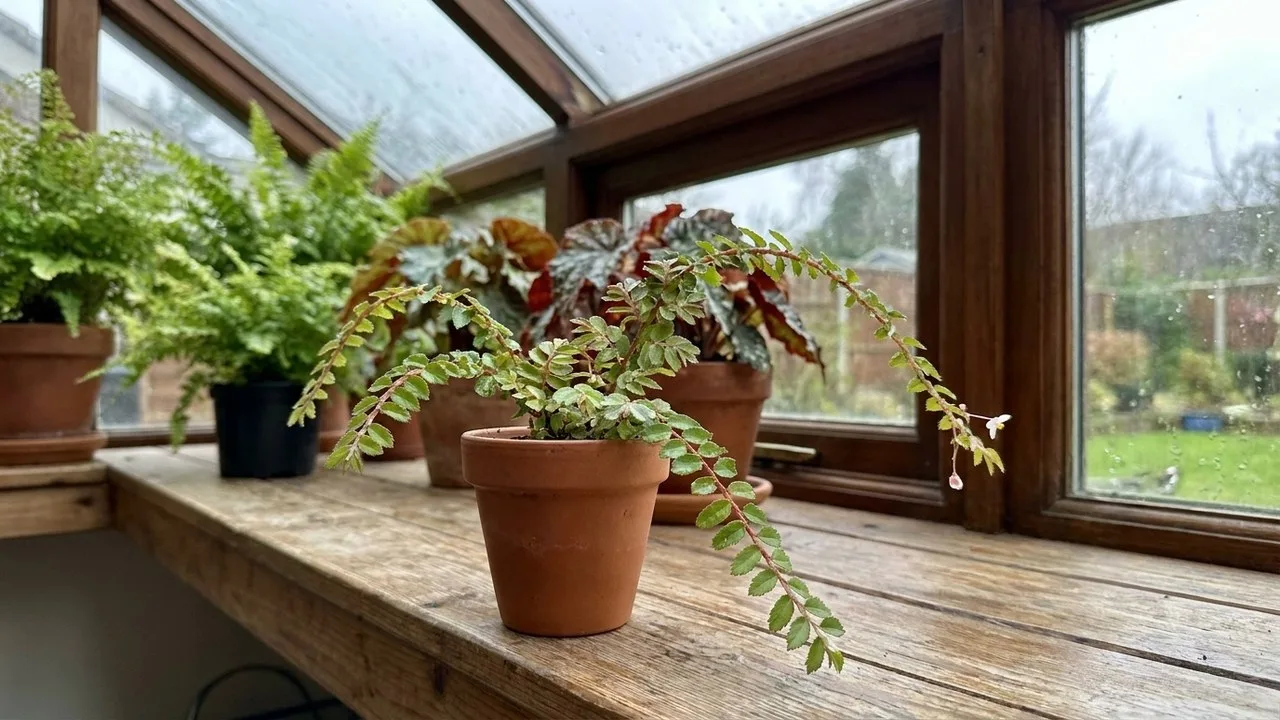
Begonia foliosa is an evergreen, shrubby begonia prized for its unusually fine-textured foliage. Its small leaves line slender, arching stems in two ranks, creating a fern-like effect quite unlike the broad leaves of many familiar begonias. In Britain it is grown primarily as a houseplant or warm-conservatory specimen.
Overview
Begonia foliosa belongs to the Begoniaceae and is native to Colombia, Ecuador and Venezuela, where it occurs in the humid environments of the northern Andes. The specific name comes from the Latin foliosus, meaning leafy, an apt description of the dense growth that gives the plant its distinctive character. It is sometimes sold as fern-leaf begonia or Brazilian lady's earring, although the botanical name is the most reliable way to identify it.
Unlike tuberous bedding begonias, this species forms persistent, branching stems that can become woody near the base. Mature shoots arch outwards and may take on a semi-climbing or trailing appearance. The plant therefore works well as a raised pot specimen, where its stems can fall naturally, or as part of a foliage display in a bright room.
UK conditions generally require permanent protection from cold. It suits a bright indoor position or heated conservatory throughout the year and may spend summer outside in a sheltered, shaded place. Indoor culture also makes it easier to provide the consistent moisture and moderate humidity associated with its cloud-forest origins. Given stable conditions, the plant remains evergreen and can provide year-round structure even when few flowers are present.
Appearance
The foliage is the principal attraction. Each leaf is glossy, deep green and usually about 2–4 cm long, with a narrowly oval to lance-shaped outline, a finely toothed margin and the asymmetric base typical of begonias. The leaves sit on short stalks and are arranged along either side of the thin stems. Seen as a whole, each leafy shoot resembles a small fern frond, although the plant is a flowering begonia rather than a fern.
Young stems are green to reddish and lightly branched. As they lengthen, they bend under the weight of their foliage, producing a loose, graceful outline. Older specimens can reach about 60–90 cm in height and spread when grown in containers, but size depends on pot volume, light and shaping. Pinching the tips produces a denser plant; allowing selected stems to extend creates a more cascading habit.
The flowers are much smaller than those of showy tuberous begonias. White to pale pink blooms, generally only 5–8 mm across, are carried in drooping clusters on fine reddish stalks. Male and female flowers occur in the clusters, with the female flowers distinguished by the winged ovary beneath the tepals. Pollinated flowers can develop the three-winged seed capsules characteristic of the genus. Flowering is attractive but secondary to the finely divided visual effect of the foliage.
Growing Conditions
Bright, indirect light gives the best balance of compact growth and flowering. An east- or west-facing window is often suitable, provided strong afternoon rays are softened by a sheer curtain. The species tolerates lower indoor light better than many begonias, but growth may become sparse and flowering less frequent. Direct midday sun can bleach or scorch the small leaves, especially behind glass.
Use a free-draining, peat-free houseplant compost. Adding perlite, fine bark or another coarse material helps maintain air around the roots while retaining enough moisture for steady growth. A loam-based mix can also work if excess water escapes freely. The pot must have drainage holes, and water should never be left standing in a cachepot or saucer.
Keep the compost evenly moist from spring to early autumn, allowing only the surface to become slightly dry between waterings. Saturated compost excludes air and encourages root damage, whereas repeated complete drying causes leaf loss and crisp margins. Water less frequently during the darker months, when growth slows, but do not let the entire rootball dry out. Tepid rainwater or other low-lime water is useful in hard-water districts, and applying it directly to the compost avoids marks on the foliage.
Moderate to high humidity supports clean growth, particularly in centrally heated homes. Grouping plants or standing the pot above, rather than in, a tray of damp pebbles can improve the immediate environment. Good air movement remains important: persistently wet leaves and stagnant air encourage fungal disease. Keep the plant away from radiators, cold draughts and abrupt changes in temperature.
Planting and Care
Pot a young plant into a container only slightly wider than its rootball, commonly around 12–14 cm across. Excess compost around a small root system stays wet for too long. Repot in late March or April as active growth resumes, moving up by one pot size and replacing as much tired compost as practical without damaging the fine roots. Established plants may need this annually or every second year; a slightly snug root system often supports steadier flowering.
Water thoroughly, then allow surplus water to drain. From spring until early autumn, apply a balanced liquid houseplant feed at half the manufacturer's recommended strength every two to three weeks. Feed only moist compost to avoid root damage. Stop or greatly reduce feeding in winter, when lower light limits growth, and resume after new shoots become active in spring.
Pinch soft growing tips in April or May to encourage branching. Leggy older stems may be shortened to a healthy node, from which fresh shoots normally develop. Remove dead, damaged or diseased material promptly with clean tools. This shaping is best treated as indoor plant maintenance rather than an outdoor gardening-calendar event, because the houseplant calendar is governed by room conditions rather than the seasons alone.
Stem-tip cuttings provide the simplest propagation method. In spring or early summer, cut an 8–10 cm non-flowering shoot just below a node, remove the lowest leaves and insert it into moist, free-draining propagation compost. Keep it in bright, indirect light with gentle warmth and raised humidity, but ventilate a clear cover to prevent rotting. Cuttings may also root in water, though transferring them to compost while the roots are still short reduces transplant stress. Leaf cuttings are possible, but stem cuttings reproduce the shrubby habit more directly.
Plants may be placed outdoors in a shaded, sheltered position from late May or early June once nights are reliably mild. Acclimatise them gradually to brighter light and wind. Bring them inside during September, before cool nights threaten the foliage. From October to February, maintain a bright position, water more sparingly and keep the plant away from cold window glass. Indoor warmth without adequate light can produce weak, stretched shoots, so avoid unnecessary feeding during this period.
Common Problems
Yellow leaves, soft stems and sudden leaf drop usually point to overwatering, poor drainage or a cold shock. Check that drainage holes are open, empty standing water and allow the compost surface to dry slightly before watering again. Dry, crisp leaf edges more often indicate insufficient moisture, low humidity or hot air from a radiator. Pale, bleached patches suggest exposure to strong direct sun.
Grey mould, or botrytis, produces soft decay and fuzzy grey growth, particularly where dead flowers or damaged leaves remain in cool, humid air. Remove affected material, isolate badly infected plants and improve ventilation. Powdery mildew appears as pale, powdery patches and is favoured by stressed foliage and stagnant conditions. More even watering, adequate spacing and moving air are preferable to repeatedly wetting the leaves.
Mealybugs shelter in leaf axils and appear as white, cottony deposits. Small colonies can be removed carefully with a cotton bud moistened with rubbing alcohol, followed by regular inspection. Spider mites thrive in hot, dry rooms, causing fine stippling, bronzed foliage and delicate webbing. Isolate the plant, wash both leaf surfaces and improve humidity without sacrificing ventilation. Repeat treatment according to the label of any product used.
Vine-weevil larvae can damage container roots, causing an apparently watered plant to wilt or collapse. Inspect the rootball when symptoms have no obvious cause and replace badly infested compost. Biological nematode controls can be used when the compost temperature is suitable for the chosen product. Routine quarantine and close inspection of new plants help prevent all three pests from entering an established collection.
Popular Varieties
Named cultivars of Begonia foliosa are not well established in mainstream UK horticulture. Most plants offered by specialist nurseries and collectors are the true species, and unverified cultivar names should not be used as substitutes for botanical identification. Variation in leaf size or stem colour may reflect growing conditions, natural seedling variation or mislabelling rather than a recognised cultivar.
The name Begonia foliosa var. miniata occurs in older horticultural and botanical literature, but its taxonomic treatment is not consistent across authorities, and it may be treated as a synonym rather than as a currently accepted variety. Gardeners buying a plant under that name should retain the supplier's label while checking it against an up-to-date botanical database.
Hybrids influenced by B. foliosa may occasionally be described informally as foliosa-type or fern-leaved begonias. Such descriptions indicate appearance or parentage, not varieties of the species itself. For an authentic plant, seek material labelled simply Begonia foliosa from a reputable specialist and compare its narrow, two-ranked leaves, arching shrubby stems and small pendent flowers with the species description.
Pests and Diseases
| Problem | Symptoms | Management |
|---|---|---|
| Vine weevil | Irregular notches on leaf margins and wilting caused by larvae feeding on roots. | Apply biological control products containing nematodes to the compost in late summer. |
| Powdery mildew | White, dusty fungal growth appears on leaves and stems, often causing distortion. | Improve air circulation and treat with a suitable fungicide or potassium bicarbonate spray. |
| Mealybugs | Clusters of white, cottony wax-like masses found in leaf axils and on stems. | Wipe off infestations with a damp cloth dipped in methylated spirit or use insecticidal soap. |
| Red spider mites | Fine webbing and stippled, yellowing leaves caused by tiny pests feeding on sap. | Increase humidity around the plant and spray with a horticultural oil or miticide. |
| Grey mould | Soft, grey-brown fuzzy rot developing on stems, leaves, or flowers in humid conditions. | Remove affected parts immediately and ensure good ventilation to reduce humidity. |
For step-by-step help, read Treating Powdery Mildew. Or browse the full plant problem solver to diagnose an issue by symptom.
Recommended Products
GardenWizz earns a commission from qualifying purchases made through affiliate links on this page (including links within the article) — as an Amazon Associate, and from Thompson & Morgan via the Awin network. This does not affect the price you pay. See our disclaimer for details.