Striped Begonia
Begonia listada
The Gardening Year
Best months in UK gardens · full planting calendar →
🖨 Printable care card (PDF)At a Glance
| Botanical name | Begonia listada |
|---|---|
| Common name(s) | Striped begonia |
| Family | Begoniaceae |
| Plant type | shrub |
| Height × Spread | 50 cm × — |
| Position | Partial shade |
| Soil | well-drained growing medium that is neither constantly wet nor allowed to dry out completely |
| Flowering | June–August |
| Toxicity | potentially toxic in large quantities due to the prevalence of oxalic acid |
| Native range | Brazil |
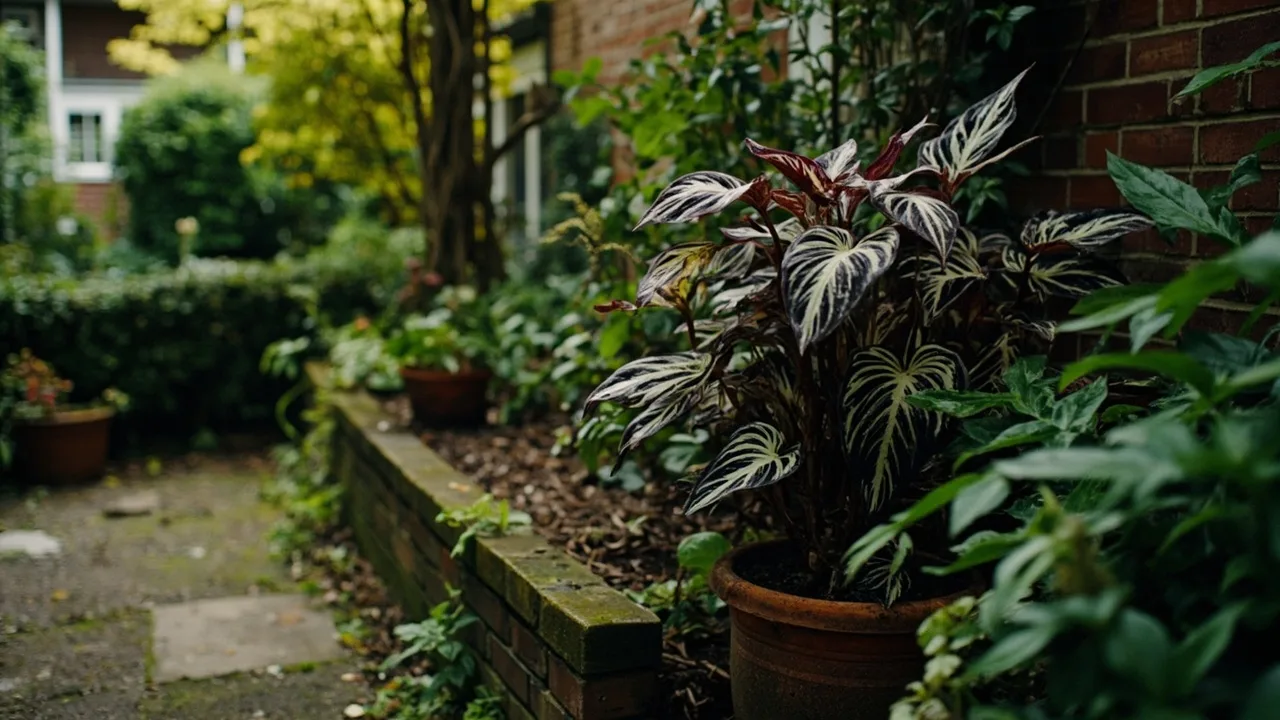
The lime-green stripe down the centre of every leaf is what makes Begonia listada instantly recognisable, and it is the reason collectors have grown this compact South American species since the 1980s. In a UK home it is essentially a foliage houseplant, happiest in a warm, bright room away from harsh sun.
Overview
Begonia listada L.B.Sm. & Wassh. is a compact, shrubby evergreen begonia in the family Begoniaceae, valued primarily for its patterned leaves rather than its flowers. Kew's Plants of the World Online records its accepted native range as Paraguay, though it is also reported from neighbouring parts of southern Brazil; some popular sources still cite Brazil alone. In cultivation it reaches roughly 50 cm tall and forms a bushy mound of softly hairy, elongated leaves. In the UK it is grown almost exclusively as a houseplant or warm conservatory specimen, because it is a tender tropical species that does not tolerate frost.
Appearance
The species gets its common name "striped begonia" from the distinctive pale lime-green band that runs along the midrib of each leaf. The leaf blade itself is dark green, velvety to the touch, and typically around 10 cm long and 2.5–4.5 cm wide, with a contrasting red underside that flashes when the plant is moved or brushed. The stems are slender and branching, producing a dense, slightly tangled habit rather than a single upright stem.
The flowers are small and understated: white with a faint pink flush, carried in modest clusters at the stem tips. They appear intermittently through the warmer months, but in most UK collections they are secondary to the foliage. Specialist begonia nurseries list flowering as roughly May to November under good conditions, with the heaviest flush in summer.
Growing Conditions
In the UK, Begonia listada is grown as a tender indoor plant. It needs bright, indirect light — an east- or west-facing windowsill, or a spot a metre or two back from a south-facing window, tends to suit it well. Direct midday sun scorches the velvety leaves; deep shade makes the stems stretch and the stripe fade.
Use a free-draining, peat-free houseplant compost mixed with a little perlite or orchid bark for aeration. The substrate should hold moisture without staying sodden: water when the top 2 cm feels dry to the touch, then water thoroughly and let the excess drain away. Empty any outer pot or saucer after twenty minutes so the roots are not sitting in water. Moderate to high humidity (around 50–60%) keeps the leaf edges from crisping, and gentle air movement discourages fungal disease. UK kitchens and bathrooms with bright light work well; a grouped display of tropical plants also helps stabilise humidity.
Although the plant is tender, opinions on its lower temperature limit vary between growers. Treat it as a tender perennial: keep it above 10 °C in winter, and avoid leaving it on a cold windowsill overnight or next to a single-glazed pane in a frost. It is worth noting that the structured hardiness rating on the GardenWizz record is not yet established, so any rating you see should be checked against the species profile, not given as a fixed number in this article.
Planting and Care
Start with a healthy potted plant rather than seed, which is slow and erratic in this species. Choose a container with drainage holes — a terracotta pot suits the plant's airy, well-drained preference. Repot only when the rootball fills the pot, going up by no more than 2–3 cm in diameter; over-potting keeps the compost wet for too long and encourages root rot. Keep the crown sitting just above the compost surface and never bury the stems.
Water by feel rather than by calendar. In active growth (roughly March to October) the plant wants the compost to dry slightly between waterings; in winter, when light levels drop, cut back so that the compost is only just kept from drying out completely. Always pour water onto the compost, not over the leaves, because persistently wet velvety foliage invites botrytis and powdery mildew. Feed lightly every three to four weeks in the growing season with a balanced liquid fertiliser at half strength; over-feeding produces weak, leggy growth and duller leaf colour.
Pinch out stem tips occasionally to keep the plant compact and bushy, and remove any faded leaves or spent flowers at the base. Begonia listada does not need routine pruning beyond this; if a stem becomes bare at the base, prune it back to just above a healthy leaf joint in spring.
Propagation is straightforward from stem cuttings. Take a healthy non-flowering stem of about 8–10 cm, trim just below a node, and remove the lower leaves. Insert into a small pot of moist, free-draining cutting compost, enclose in a clear plastic bag or propagator, and keep in bright indirect light at 18–22 °C. Roots usually form within three to four weeks; pot on once the new plant is growing away.
As with most begonias, the leaves and stems contain oxalic acid and can cause mild stomach upset if eaten in quantity, so place the plant out of reach of pets and children and wash hands after pruning.
There is no useful outdoor sowing, planting, flowering or harvesting calendar for this houseplant, so the structured month-fields on the GardenWizz profile are intentionally left empty.
Common Problems
Overwatering and root rot. Yellowing lower leaves, soft stems, and compost that smells sour are the classic signs. The fix is to unpot, remove any black or mushy roots, and repot into fresh, barely moist free-draining compost; thereafter water only when the top of the compost has dried.
Powdery mildew. A white, dusty coating on leaf surfaces usually appears in still, moderately humid air. Improve airflow, avoid wetting the foliage, and remove badly affected leaves. A sulphur-based houseplant fungicide can be used if the problem persists.
Botrytis (grey mould). Grey, fuzzy mould on leaves, stems, or spent flowers in cool, damp conditions. Pick off affected tissue, let the compost dry a little, and step up ventilation.
Mealybugs, aphids and thrips. White fluffy tufts in leaf joints, distorted new growth, or fine black specks on leaves all indicate sap-sucking pests. Isolate the plant, dab mealybugs with a cotton bud dipped in diluted rubbing alcohol, and use an insecticidal soap or neem oil for aphids and thrips, following the label.
Spider mites. Fine webbing and a sandy, stippled look on the underside of leaves, especially in dry winter air. Raise humidity, wash the foliage gently with tepid water, and repeat at weekly intervals until the mites are gone.
Popular Varieties
There are very few named cultivars of Begonia listada in general circulation, and the species itself is normally sold simply as Begonia listada or "striped begonia." A few selections are occasionally offered by specialist UK nurseries without formal cultivar names, but they are not widely established. GardenWizz does not list an AGM rating for this species in the structured record, and no RHS Award of Garden Merit can be cited here without verification — claims of an AGM should be checked against the current RHS plant finder before purchase.
If a UK gardener wants more foliage-patterned begonias with a similar look, the closest relatives in cultivation are Begonia bowerae (eyelash begonia), Begonia masoniana (iron cross), and the many Begonia rex cultivars, all of which share the same preference for bright indirect light, free-draining compost and high humidity. Real cultivar names worth looking for in those groups include Begonia rex 'Escargot', Begonia rex 'Curly Fireflush', and Begonia bowerae 'Tiger', all of which are stocked by UK specialists such as Dibleys and Happy Houseplants.
Sources & Further Reading
- Royal Horticultural Society: Begonia listada profile — https://www.rhs.org.uk/plants/47849/begonia-listada/details, accessed 2026-07-24.
- Royal Botanic Gardens Kew, Plants of the World Online: Begonia listada L.B.Sm. & Wassh. — https://powo.science.kew.org/taxon/urn:lsid:ipni.org:names:30710-2, accessed 2026-07-24.
- Royal Horticultural Society: Begonias as houseplants — https://www.rhs.org.uk/plants/begonias/houseplants, accessed 2026-07-24.
- American Begonia Society: Spotlight on Begonia listada (Don Miller) — https://www.begonias.org/spotlight-on-begonia-listada-by-don-miller/, accessed 2026-07-24.
- American Begonia Society: Pests and diseases in begonias — https://www.begonias.org/pests-and-diseases-in-begonias/, accessed 2026-07-24.
- Dibleys Nurseries (UK specialist): Begonia listada — https://www.dibleys-shop.com/products/listada, accessed 2026-07-24.
- Plant Proper: Begonia listada care guide — https://plantproper.com/blogs/plant-care-guides/begonia-listada-care, accessed 2026-07-24.
Pests and Diseases
| Problem | Symptoms | Management |
|---|---|---|
| Powdery mildew | White, dusty fungal growth appears on leaves and stems. | Improve air circulation and treat with a sulphur-based fungicide. |
| Root rot | Leaves yellow and wilt while the soil remains wet. | Water only when the topsoil is dry and ensure pots have drainage holes. |
| Aphids | Clusters of small insects on new growth causing distorted leaves. | Squash by hand or spray with insecticidal soap. |
| Red spider mites | Fine webbing and stippled yellowing on leaves in dry conditions. | Increase humidity and wash foliage with water to dislodge pests. |
For step-by-step help, read Controlling Aphids Naturally and Treating Powdery Mildew. Or browse the full plant problem solver to diagnose an issue by symptom.
Recommended Products
GardenWizz earns a commission from qualifying purchases made through affiliate links on this page (including links within the article) — as an Amazon Associate, and from Thompson & Morgan via the Awin network. This does not affect the price you pay. See our disclaimer for details.