Hairyflower Bellflower
Campanula chamissonis
The Gardening Year
Best months in UK gardens · full planting calendar →
🖨 Printable care card (PDF)At a Glance
| Botanical name | Campanula chamissonis |
|---|---|
| Common name(s) | hairyflower bellflower |
| Family | Campanulaceae |
| Plant type | perennial |
| Height × Spread | 10 cm × 10–50 cm |
| Position | Full sun, Partial shade |
| Soil | Moist but well-drained or Well-drained; Chalk Loam Sand; Acid or Alkaline or Neutral pH |
| Flowering | March–August |
| Toxicity | — |
| Native range | — |
Campanula chamissonis is a diminutive bellflower valued for its neat cushions of foliage and violet-blue bells. It is best treated as an alpine: a plant for troughs, rock gardens and raised crevices where its crown can remain cool, open and sharply drained.
Overview
Campanula chamissonis belongs to the Campanulaceae, the bellflower family. It is associated with the far north Pacific region, including the Russian Far East and Alaska, and has long appeared in alpine and rock-garden collections. Its compact proportions make it particularly useful where larger border campanulas would overwhelm neighbouring plants.
In UK gardens it is most successful in a trough, crevice garden, rock garden or raised bed. These positions provide the free drainage that the plant needs, especially through a wet winter. It can also grow between paving stones where there is no heavy foot traffic, or spill gently over the edge of a well-drained container. The small flowers are visited by bees and hoverflies, adding modest pollinator value during late spring and early summer.
The name requires some care when buying plants. Older horticultural literature has also used the form “chamissoniana”, while some plants distributed under C. chamissonis have been confused with Campanula cochlearifolia, the fairy thimble bellflower, or with hybrids. Campanula rotundifolia, the native harebell, is another superficially similar blue-flowered species but has a looser, taller habit. Purchase from a specialist alpine nursery if accurate identification matters.
Appearance
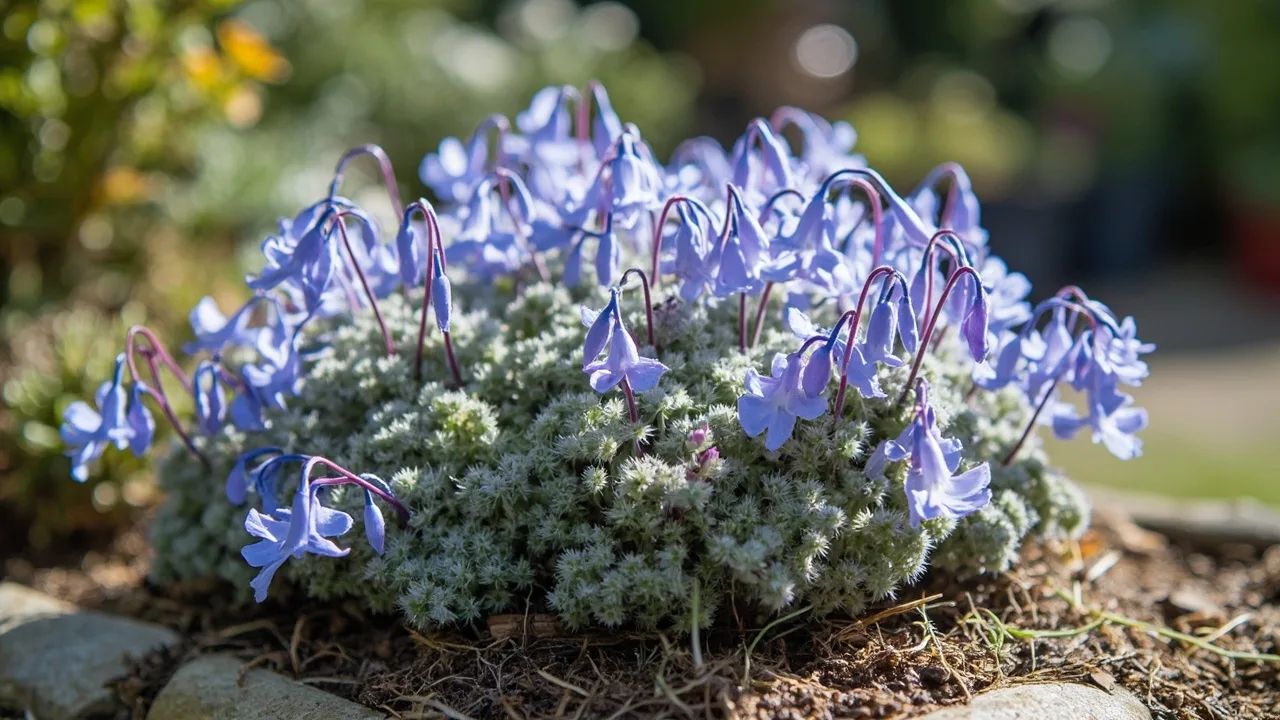
This bellflower forms a low, spreading mat composed of compact basal rosettes. The foliage usually stands only 5–10 cm high, while the flowering stems rise to approximately 10–15 cm. Given suitable conditions, the plant gradually widens into a soft-edged cushion that can fill a small pocket between stones without becoming coarse or bulky.
The basal leaves are small and rounded to kidney-shaped, often with subtly toothed margins. Leaves borne on the stems are fewer, narrower and less conspicuous. The close rosettes give the plant an attractive textural presence even when it is not flowering, although foliage condition depends on avoiding both drought stress and stagnant winter moisture.
Flowers are generally solitary and held nodding or semi-erect above the leaves. Each is bell- to thimble-shaped, approximately 1.5–2.5 cm long, and most commonly pale to mid-violet-blue. White-flowered forms are occasionally reported, but named selections should not be assumed without verified provenance. Short, broad calyx teeth surround the base of each flower.
The principal UK flowering period is May to July. Removing faded stems may encourage a lighter second display in late summer, though this depends on weather and growing conditions. After pollination, small capsules develop and release the fine seed typical of Campanula.
Growing Conditions
Full sun generally produces the most compact growth and generous flowering. In southern England and warm, sheltered Midlands gardens, however, some protection from fierce midday sun can prevent the shallow-rooted cushion from becoming scorched or excessively dry. Very light dappled shade is acceptable, but deep shade encourages sparse growth and fewer flowers.
Drainage is the decisive requirement. Use a gritty, humus-rich loam rather than rich, moisture-retentive compost. A practical trough mixture can be based on John Innes No. 2 with roughly one-quarter to two-fifths sharp horticultural grit or comparable mineral drainage material. The finished mix should absorb enough water to support spring growth but allow surplus rain to escape quickly. Neutral to slightly alkaline conditions are preferred, although the plant is reasonably tolerant of soil reaction.
In open ground, avoid heavy clay, hollows and any site where water collects around the crown. A raised crevice, sloping rockery pocket or raised-bed edge is much safer. Incorporating grit only into a small planting hole within impermeable clay can create a sump; improve drainage across the wider area or grow the plant in a container instead.
Maintain even moisture while the plant is actively growing, without keeping it saturated. Established plants in open UK gardens seldom require routine irrigation except during prolonged dry weather. Troughs and shallow pans dry more quickly and need regular checking from spring to early autumn. Water thoroughly, then allow excess moisture to drain rather than applying frequent small splashes.
Cold exposure is not the only winter concern: persistent wet around the crown is often more damaging. Gardens in exposed upland districts, including parts of the Scottish Highlands and northern Pennines, may experience winter losses. A rain-shadow position, sharply angled crevice or unheated alpine house can improve reliability without subjecting the plant to warm indoor conditions.
Planting and Care
Plant in spring or early autumn, spacing plants about 15–20 cm apart. Spring planting gives roots a full growing season to establish before winter. Set the crown at, or fractionally above, the surface of the surrounding grit; burying the rosette encourages moisture to lodge at the stem bases. Water after planting to settle the roots, then monitor until fresh growth shows establishment.
Apply a thin top-dressing of coarse horticultural grit around the rosettes after the worst winter rain has passed. This separates foliage from damp compost, sheds water away from the crown and makes the immediate surface less inviting to slugs. Renew it when soil or compost works through the grit, but do not heap material over the growing points.
Water moderately during establishment. Thereafter, irrigate open-ground plants only when dry conditions persist, preferably watering at soil level in the morning. Container plants need closer attention: raise troughs or pans on feet so drainage holes remain clear, and never leave them standing in saucers of rainwater. During prolonged winter wet, move portable containers beneath a transparent cover with open sides for ventilation.
Feeding should be restrained. In spring, a light application of a balanced, low-strength feed or a small amount of fresh loam around the edge of a container is sufficient. Excess nitrogen produces soft growth that is less compact and more vulnerable to mildew and rotting. Plants in reasonably fertile open soil may need no supplementary feed.
After the main flowering flush, remove spent flower stems close to the cushion without cutting into healthy rosettes. This keeps the mat tidy and can support a modest later flush. The plant does not require pruning. In autumn, remove only dead or diseased material; leaving sound low foliage intact helps preserve the cushion.
Divide congested plants in spring as growth resumes. Lift the mat carefully, tease apart rooted rosettes and replant them promptly into fresh gritty soil. Water lightly until established. Division is also useful when the centre becomes sparse. Basal cuttings taken in late spring can preserve a verified form: detach short non-flowering shoots with a small heel, place them around the edge of a gritty propagation mix, and keep them humid but well ventilated until rooted.
Seed may be sown fresh in autumn in pots of finely textured, free-draining compost. Leave pots in a sheltered cold frame and protect them from heavy rain while allowing seasonal temperatures to act on the seed. Germination and subsequent identification can be variable, and seedlings from garden-collected seed may not reproduce a particular form exactly.
Seasonally, inspect drainage and clear debris in February or March, divide established clumps from March to April, and plant from March to May or in September. Flowering normally extends from May into July. Deadhead after the main flush, maintain careful container watering during summer, and reduce watering as growth slows in autumn. Before winter, ensure drainage holes and surface grit are clear rather than wrapping or warming the plant.
Common Problems
Crown rot is the most serious problem in UK cultivation. A plant may collapse during or after winter when water remains trapped among the basal rosettes. Soft, darkened tissue and a loose crown indicate decay. Remove affected material, retain any healthy rooted sections, and correct the underlying drainage. Replanting into another pocket with the same wet conditions will repeat the problem.
Slugs and snails feed on the close rosettes, particularly during damp spring weather. Damage appears as irregular holes, grazed growing points and slime trails. Inspect beneath nearby pots and stones after dark, remove pests by hand, and maintain the coarse grit top-dressing. Beer traps or other garden controls may be used carefully, but protecting the small crown early is more effective than waiting until most leaves have disappeared.
Vine-weevil larvae are a particular risk in containers. The creamy, C-shaped grubs eat roots below the compost surface, sometimes causing a previously healthy cushion to wilt and detach suddenly. Examine roots when repotting and replace infested compost. Appropriate biological controls can be applied when compost temperatures suit the chosen nematode product.
Powdery mildew occasionally produces a pale, dusty coating on leaves during dry, crowded summer conditions. Improve air movement, avoid excessive nitrogen feeding and water the root zone before severe drought stresses the plant. Remove badly affected debris rather than leaving it lodged within the mat.
Aphids may cluster on tender flowering stems in late spring. Small infestations can be rubbed off or dislodged with water, taking care not to saturate the crown repeatedly. Natural predators often control them. Sparse flowering usually points to excessive shade, rich feeding or a poorly drained, weakened root system rather than a pest.
Popular Varieties
Verified named cultivars of Campanula chamissonis are not consistently documented in mainstream UK horticulture. Plants are most often offered simply under the species name, and white or differently coloured forms should not be given cultivar names unless their identity and provenance are confirmed. This limited cultivar record is preferable to attaching names belonging to other dwarf bellflowers.
Gardeners seeking alternatives can compare the species with Campanula cochlearifolia, commonly called fairy thimble bellflower. That separate species has several named cultivars in cultivation, but they are not varieties of C. chamissonis and should be labelled accordingly. Campanula rotundifolia, the harebell, is likewise a distinct, taller and airier species rather than a cultivar.
When selecting stock, look for dense, healthy rooted rosettes, accurate botanical labelling and no softness at the crown. A specialist alpine supplier is best placed to explain the origin of its material. Where a plant has been maintained under an informal colour description rather than a formally documented cultivar name, retain that distinction in garden records rather than presenting the description as an established cultivar.
Pests and Diseases
| Problem | Symptoms | Management |
|---|---|---|
| Powdery mildew | A white, dusty fungal growth appears on leaves and stems, potentially causing distortion. | Ensure good air circulation and water at the base to keep foliage dry; apply a fungicide if severe. |
| Rust | Orange or brown powdery pustules develop on the undersides of leaves, leading to yellowing. | Remove and destroy affected leaves immediately to prevent spore spread and improve airflow. |
| Root rot | The plant wilts and collapses despite moist soil, often with blackened or mushy roots. | Plant in sharply drained, gritty soil or containers to prevent waterlogging, especially in winter. |
| Slugs and snails | Irregular holes are eaten into leaves and young shoots, often accompanied by slimy trails. | Use physical barriers like copper tape or apply iron phosphate-based slug pellets around the base. |
| Winter wet damage | The plant rots at the crown during damp winters, failing to re-grow in spring. | Provide winter protection by growing in a scree garden or well-drained container with grit. |
For step-by-step help, read Dealing with Slugs and Snails and Treating Powdery Mildew. Or browse the full plant problem solver to diagnose an issue by symptom.
Recommended Products
GardenWizz earns a commission from qualifying purchases made through affiliate links on this page (including links within the article) — as an Amazon Associate, and from Thompson & Morgan via the Awin network. This does not affect the price you pay. See our disclaimer for details.