Corsican Crocus
Crocus corsicus
The Gardening Year
Best months in UK gardens · full planting calendar →
🖨 Printable care card (PDF)At a Glance
| Botanical name | Crocus corsicus |
|---|---|
| Common name(s) | Corsican crocus |
| Family | Iridaceae |
| Plant type | bulb (cormous perennial) |
| Height × Spread | 8–10 cm × 0–10 cm |
| Position | Full sun |
| Soil | equal parts loam, leaf mould and sharp sand or grit; gritty, poor to moderately fertile soil |
| Flowering | January–April |
| Toxicity | Ornamental bulbs - not to be eaten. Wear gloves and other protective equipment when handling. |
| Native range | Corsica and Sardinia |
The Corsican crocus (Crocus corsicus) is a diminutive spring-flowering corm valued for its pale lilac blooms, dark purple feathering and compact habit. Native to Corsica and Sardinia, it suits sunny rock gardens, alpine troughs and containers where sharp drainage can be maintained.
Overview
Crocus corsicus belongs to the iris family, Iridaceae. It grows from a corm: a swollen underground stem base wrapped in a dry, papery tunic. The corm stores the reserves that carry the plant through its summer dormancy and power the next season's leaves and flowers. Although crocuses are often loosely called bulbs, this distinction helps explain why waterlogged conditions are especially damaging around the solid corm.
This is a spring-flowering species, not one of the autumn-flowering crocuses associated with saffron. Growth usually begins in the cool part of the year, with flowers opening in late winter or early spring as the leaves develop. After flowering, the foliage continues to make food for the replacement corm. It then yellows and disappears, leaving the plant dormant below ground during summer.
In the UK, the Corsican crocus is best treated as an alpine rather than a lawn crocus for broad naturalised drifts. It can grow outside in sunny, exceptionally free-draining rock gardens, raised beds or gravel gardens. In wetter districts, a trough, pot, bulb frame or unheated alpine house protects dormant corms from excessive summer rain.
Kew recognises Crocus corsicus as an accepted species native to northern and central Corsica and Sardinia. Plants in cultivation are generally grown as the species rather than as named selections. Their restrained scale and intricately marked flowers make them especially suitable for collections of Mediterranean bulbs and alpines.
Appearance
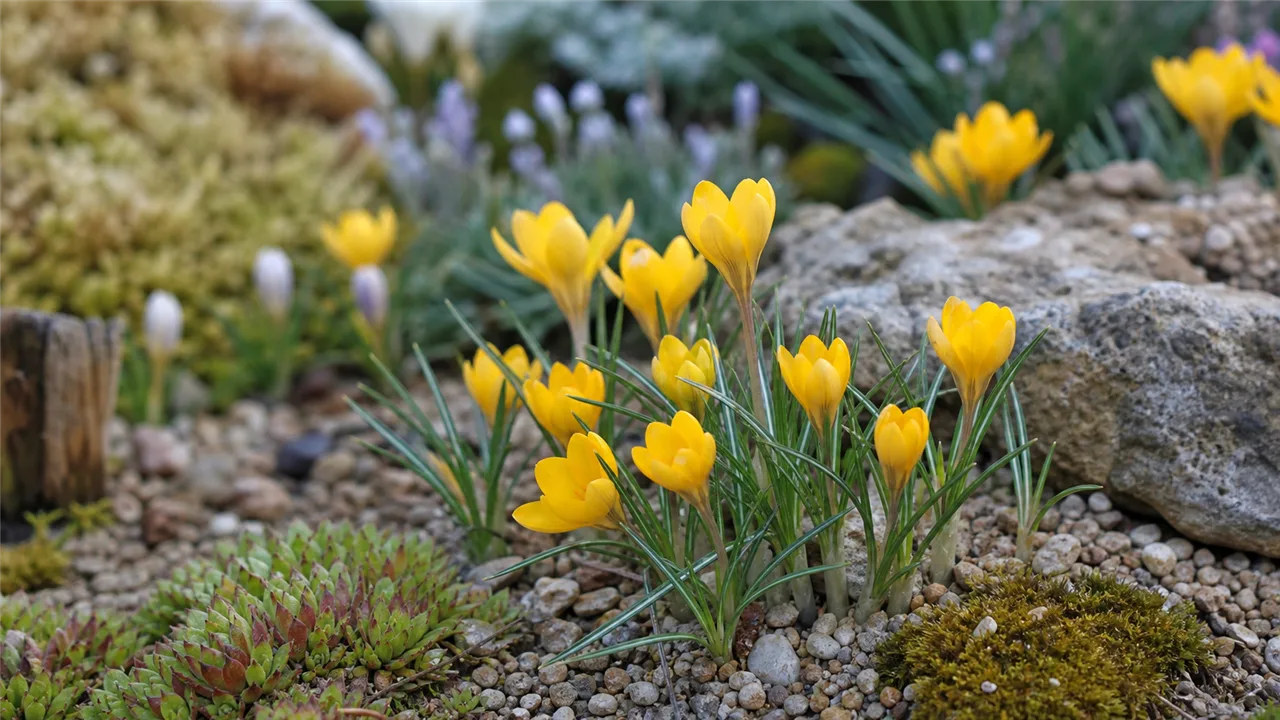
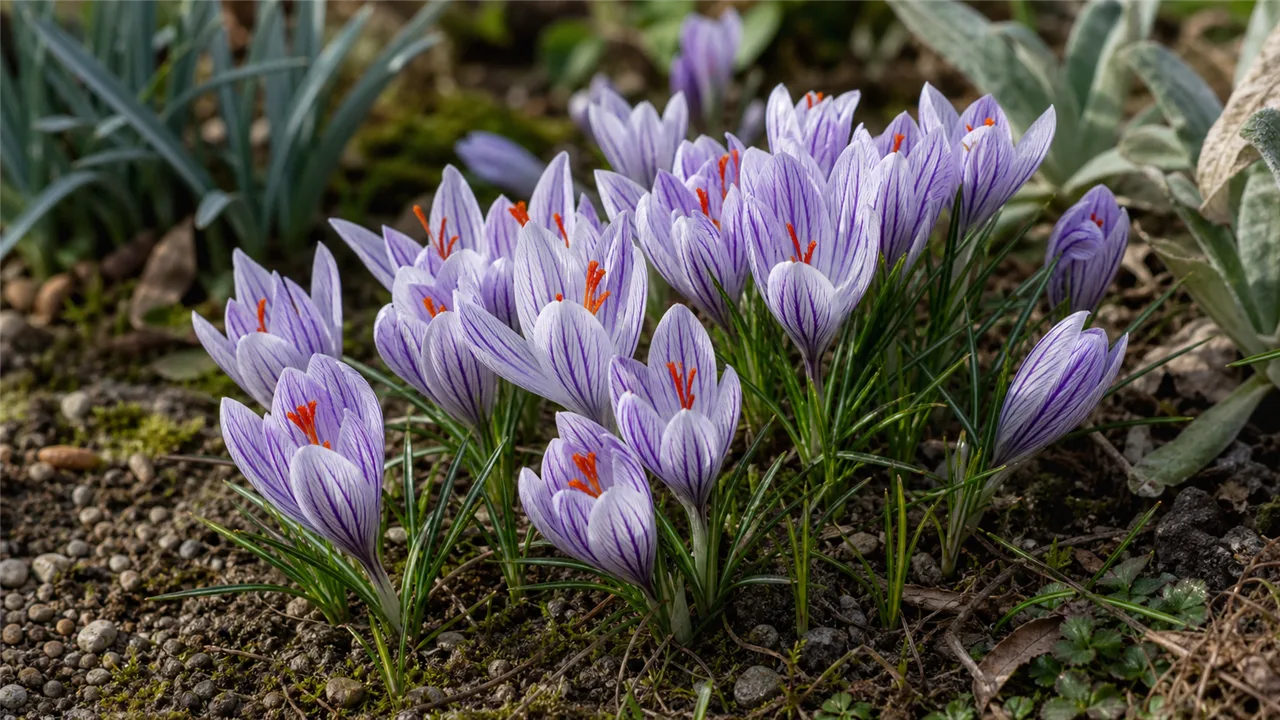
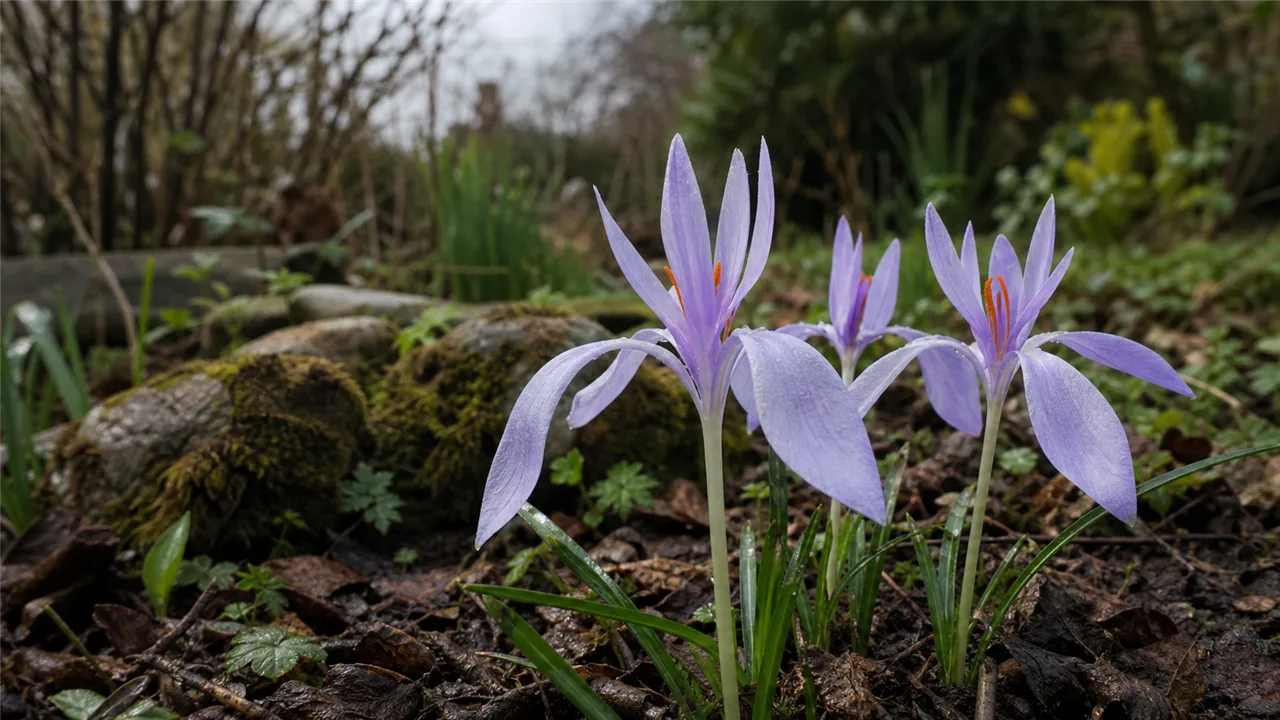
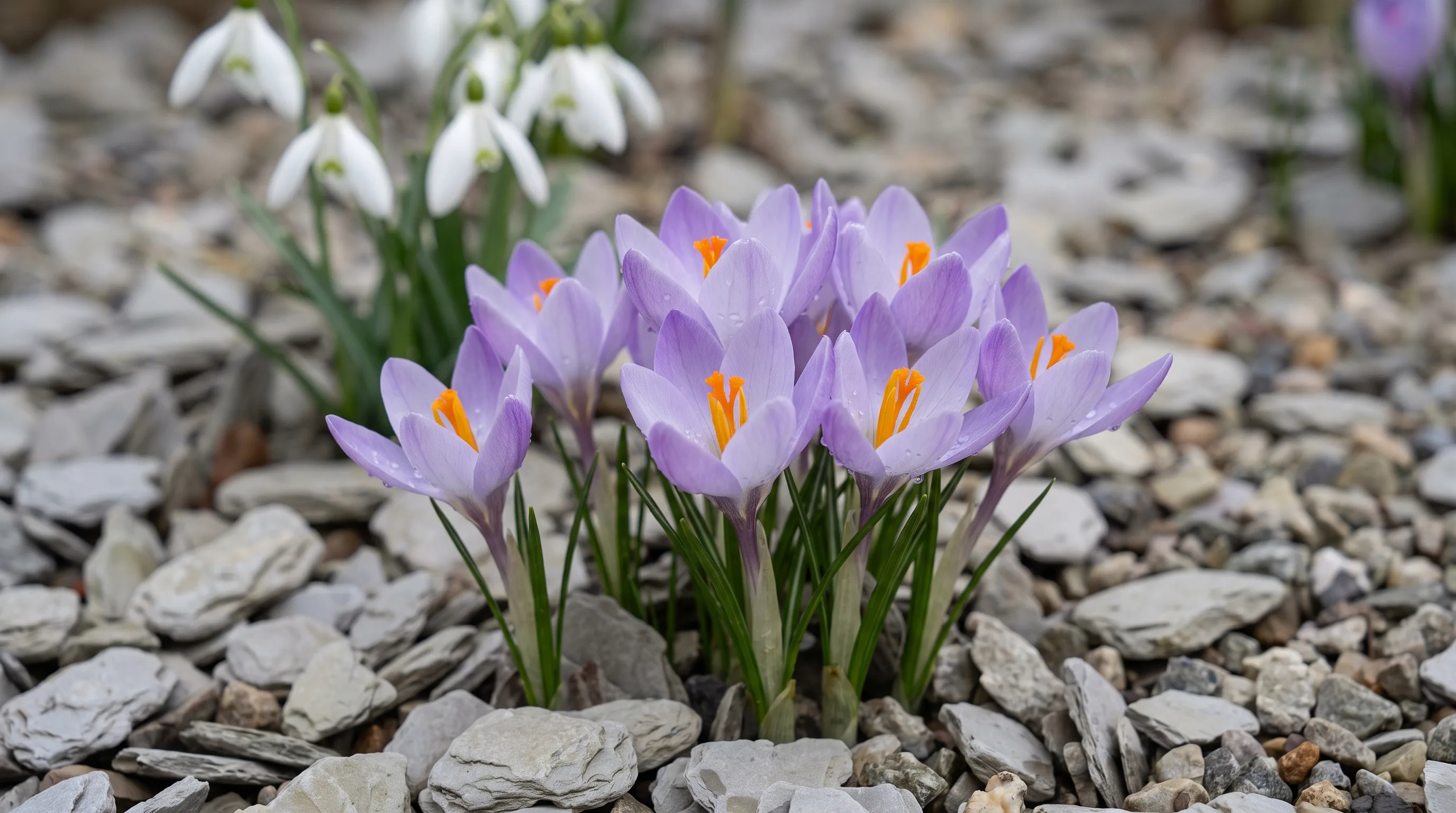
The flowers are goblet-shaped and carried close to the ground on slender floral tubes. Each bloom has six tepals. The inside is usually pale lilac to mauve around a warm yellow-orange throat. Outside, a creamy ground is streaked or feathered with deep purple, most conspicuously when the flower is closed or viewed from the side.
Individual tepals can reach around 3.5 cm long, while a mature plant remains only about 10 cm high. The blooms may be fragrant. They open most fully in bright conditions and close in dull weather or towards evening, so a sunny position improves both the display and the health of the corm.
The narrow, linear leaves emerge with the flowers and bear the pale central stripe characteristic of many crocuses. Several corms together create a clearer display, but enough space should remain for light and air to reach each plant.
As the flowers fade, the leaves lengthen and become the main visible growth. They must be allowed to yellow naturally. Cutting or tying green foliage reduces the leaf area available to replenish the corm and may lead to fewer flowers in the following year. By early summer the growth normally dies back completely.
Growing Conditions
Full sun is the most important positional requirement. A warm, open south-, east- or west-facing site helps flowers open and surface moisture evaporate. Protection from trampling and strong splashes of winter rain is useful because both flowers and foliage are small.
Drainage matters more than soil richness. A gritty, poor to moderately fertile soil is preferable to heavy ground enriched with moisture-retentive organic matter. Loam, sand, chalk and even clay can be suitable if the root zone drains freely; unmodified compacted clay is not. A raised planting pocket made with coarse grit and suitable mineral soil can improve conditions, but simply placing grit beneath a corm in a water-holding hole may create a sump.
The species tolerates a broad soil reaction, so acid, neutral and alkaline soils may all work. Structure is the deciding factor. Water should move through the planting zone quickly in winter, and the corms should not remain wet during summer dormancy. In high-rainfall western areas, container or covered cultivation is often more dependable than an exposed border.
For pots, use a free-draining loam-based compost amended generously with horticultural grit. Any frost-resistant container can succeed if its drainage holes remain clear and it never stands in water. In an alpine house or bulb frame, provide ventilation and bright light rather than warm indoor conditions.
Planting and Care
Plant dormant corms in early autumn, generally during September or October, so roots can establish before the main growing period. Set them about 5–8 cm deep, measuring from the soil surface to the corm base, and roughly 5 cm apart. Use the shallower end of the range in small containers and the deeper end in open ground. Plant with the pointed growth tip uppermost; if its orientation is unclear, place the corm on its side rather than delaying planting.
Water once after planting to settle the growing medium. Thereafter, autumn and winter rainfall is usually sufficient outdoors. Container-grown plants need closer observation: water when growth is active and the compost has begun to dry, but never keep it saturated. Reduce watering as the foliage yellows, then keep dormant pots dry or nearly dry through summer. Resume cautiously when fresh growth begins in autumn.
Feeding should be restrained. In open ground, the plant usually needs no routine feed in reasonably prepared soil. Pot-grown plants can receive a dilute, low-nitrogen fertiliser about once a month while leaves are actively growing. Excess nitrogen encourages soft foliage and may impair flowering, while strong feeds can damage roots in a small volume of compost. Stop feeding when the leaves begin to die down.
No pruning is required. Remove spent flowers only if seed is not wanted, taking care to retain every healthy leaf. Leave foliage untouched until it is completely yellow and comes away easily. Clear fallen debris from around dormant corms and check that gravel mulch has not become clogged with fine material. In wet gardens, move pots under cover after dieback so they receive summer air and warmth without repeated soaking.
Propagation is by separating cormlets or by seed. Lift a congested clump only when dormant, gently detach the offsets and replant them promptly at the original depth. Dividing every few years can prevent severe crowding, but undisturbed plants should not be lifted merely as an annual routine. Seed preserves natural variation and may be preferable for a species collection. Sow ripe seed in a pot of gritty compost, leave it in a cold frame to experience seasonal temperature changes, and expect seedlings to take several years to reach flowering size.
Common Problems
Corm rot is the principal cultural problem. Shoots that fail to appear, yellow prematurely or collapse at the base can indicate decay caused by persistently wet, airless compost. Discard soft or badly affected corms, improve drainage and allow containers to dry during dormancy. When storing lifted corms briefly, keep them dry, airy and clearly labelled rather than sealing them in plastic.
Grey mould may develop in cool, stagnant, humid conditions. Remove affected material, space pots for air circulation and ventilate frames on suitable days. Water the compost rather than repeatedly wetting flowers.
Slugs and snails can chew young leaves and petals, particularly where containers stand among dense vegetation. Inspect at dusk, remove hiding places and use a control appropriate to the garden if damage is persistent. Rodents, including mice, voles and squirrels, may eat or move newly planted corms. A securely fixed layer of wire mesh above the planting level can discourage digging without preventing shoots from emerging. Birds may sometimes disturb loose surface grit, while rabbits can graze accessible foliage.
Poor flowering is often linked to shade, overcrowding, excessive nitrogen or leaves removed before they have replenished the corm. Move dormant corms to a brighter site, separate a congested clump and review feeding rather than cutting back foliage. A flower that closes during dull weather is normal behaviour, not a sign of disease.
Popular Varieties
No widely documented named cultivars of Crocus corsicus are established in mainstream UK horticulture. Nursery plants are normally offered under the species name, and seed-raised plants may vary modestly in colour and markings. Such differences are not cultivars unless formally selected, named and propagated as distinct clones.
Older botanical literature may place the plant under synonyms, including Crocus insularis var. major and Crocus minimus subvar. corsicus. These are historical names for the same taxon, not separate garden varieties. Buyers seeking the true Corsican crocus should check the botanical label and use the accepted name Crocus corsicus rather than treating those synonyms as additional choices.
Unnamed “species crocus” mixtures cannot be assumed to include C. corsicus. A specialist nursery should confirm provenance, particularly for botanical collections or seed saving. Keeping this species apart from other crocuses reduces labelling errors and helps resulting seed remain true to type.
Pests and Diseases
| Problem | Symptoms | Management |
|---|---|---|
| Vine weevil | Notched leaf margins on seedlings and root damage causing sudden wilting or collapse. | Check pots for grubs before planting and use biological nematodes or chemical controls in autumn. |
| Corm rot | Soft, mushy corms with a foul smell, often accompanied by yellowing or failing foliage. | Ensure sharp drainage and keep completely dry during summer dormancy to prevent fungal attack. |
| Slugs and snails | Irregular holes chewed in emerging leaves and flowers, often with slimy trails visible. | Use slug pellets, beer traps, or hand-pick at night to protect tender new growth. |
| Powdery mildew | White, dusty fungal growth on leaves and flower stems, potentially causing distortion. | Improve air circulation and apply a fungicide if severe, though often cosmetic on crocuses. |
| Bird damage | Flowers stripped of petals or corms dug up from the soil surface by foraging birds. | Plant under low shrubs or use netting to protect emerging flowers and shallow-planted corms. |
For step-by-step help, read Dealing with Slugs and Snails and Treating Powdery Mildew. Or browse the full plant problem solver to diagnose an issue by symptom.
Recommended Products
GardenWizz earns a commission from qualifying purchases made through affiliate links on this page (including links within the article) — as an Amazon Associate, and from Thompson & Morgan via the Awin network. This does not affect the price you pay. See our disclaimer for details.