Wild Saffron
Crocus cartwrightianus
The Gardening Year
Best months in UK gardens · full planting calendar →
🖨 Printable care card (PDF)At a Glance
| Botanical name | Crocus cartwrightianus |
|---|---|
| Common name(s) | Wild Saffron |
| Family | Iridaceae |
| Plant type | bulb (cormous perennial) |
| Height × Spread | 10 cm × 0–10 cm |
| Position | Full sun |
| Soil | Chalk Clay Loam Sand Well-drained Acid or Alkaline or Neutral |
| Flowering | March, April, May, September, October, November |
| Toxicity | Potentially harmful Ornamental bulbs - not to be eaten |
| Native range | mainland Greece, Euboea, Crete, Skyros and some islands of the Cyclades |
Crocus cartwrightianus, known as Crete crocus, is a small autumn-flowering cormous perennial from the rocky, dry landscapes of Crete and the Aegean islands. In the UK it brings unusually late colour to a gravel garden, alpine trough or sunny border, flowering as many summer plants are fading. Its chief requirement is sharp drainage, particularly while the corm is dormant in summer.
Overview
Crete crocus is a geophyte: it survives unfavourable conditions as a dormant corm beneath the soil. It is endemic to Crete and the Aegean islands, where it occurs in rocky hillsides, phrygana scrubland and dry meadows. Those origins explain its contrasting seasonal rhythm. The plant grows and flowers in the cooler, wetter part of the year, then rests through a hot, dry summer.
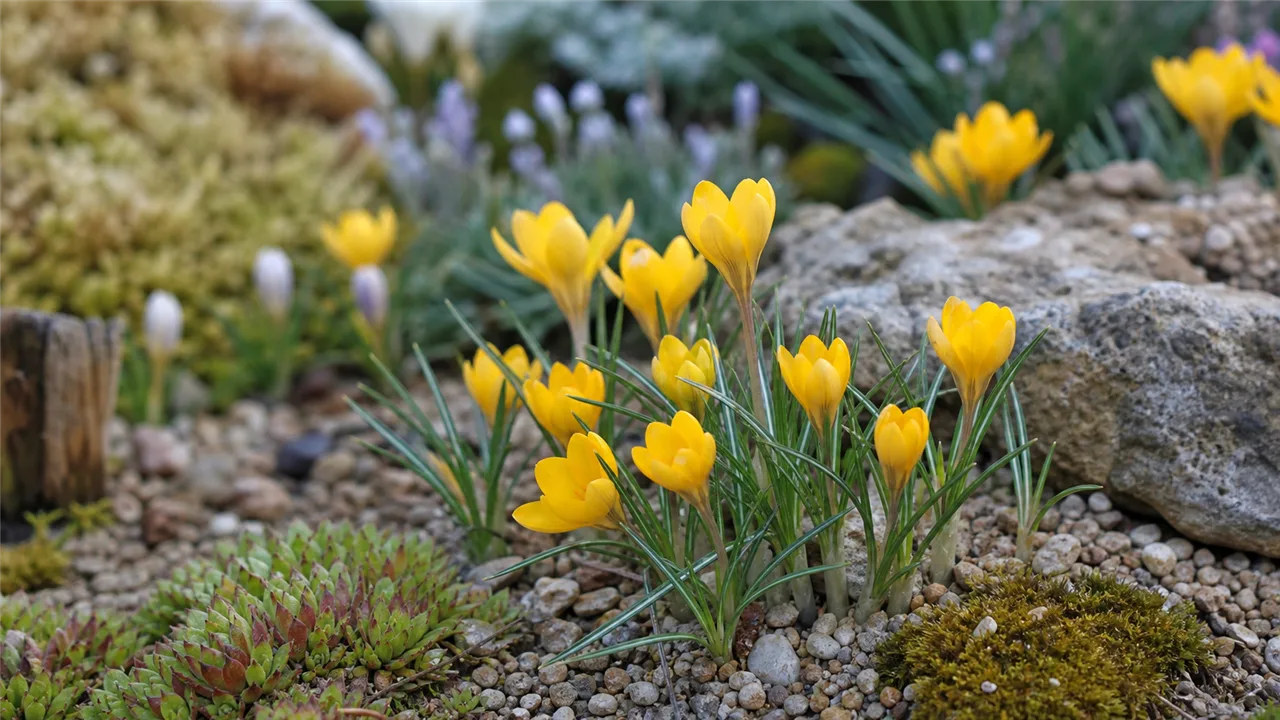
In a UK garden, the species is best treated as a specialist autumn bulb rather than as a lawn crocus. Plant it where its flowers can be seen at close range, such as the front of a border, a rock garden, an alpine trough or a gravel planting. It also suits a Mediterranean-style bed with thyme, oregano and other plants that prefer lean soil. A sunny site and free-draining ground are more important than rich soil or frequent feeding.
The species is one of the wild relatives associated with the history and origin of saffron crocus, Crocus sativus. It should not, however, be confused with saffron crocus: the two plants have different horticultural identities and uses. Crete crocus is grown primarily for its delicate autumn display and botanical interest.
Appearance
The corm is small and roughly globose, usually around 1–2 cm across, with a reticulate, net-like tunic. From each corm arise a few narrow, grass-like leaves. There are commonly three to five leaves, which appear with, or shortly after, the flowers. They are mid-green and marked by a paler central stripe, giving the plant a fine-textured appearance rather than the broad, substantial foliage of many summer bulbs.
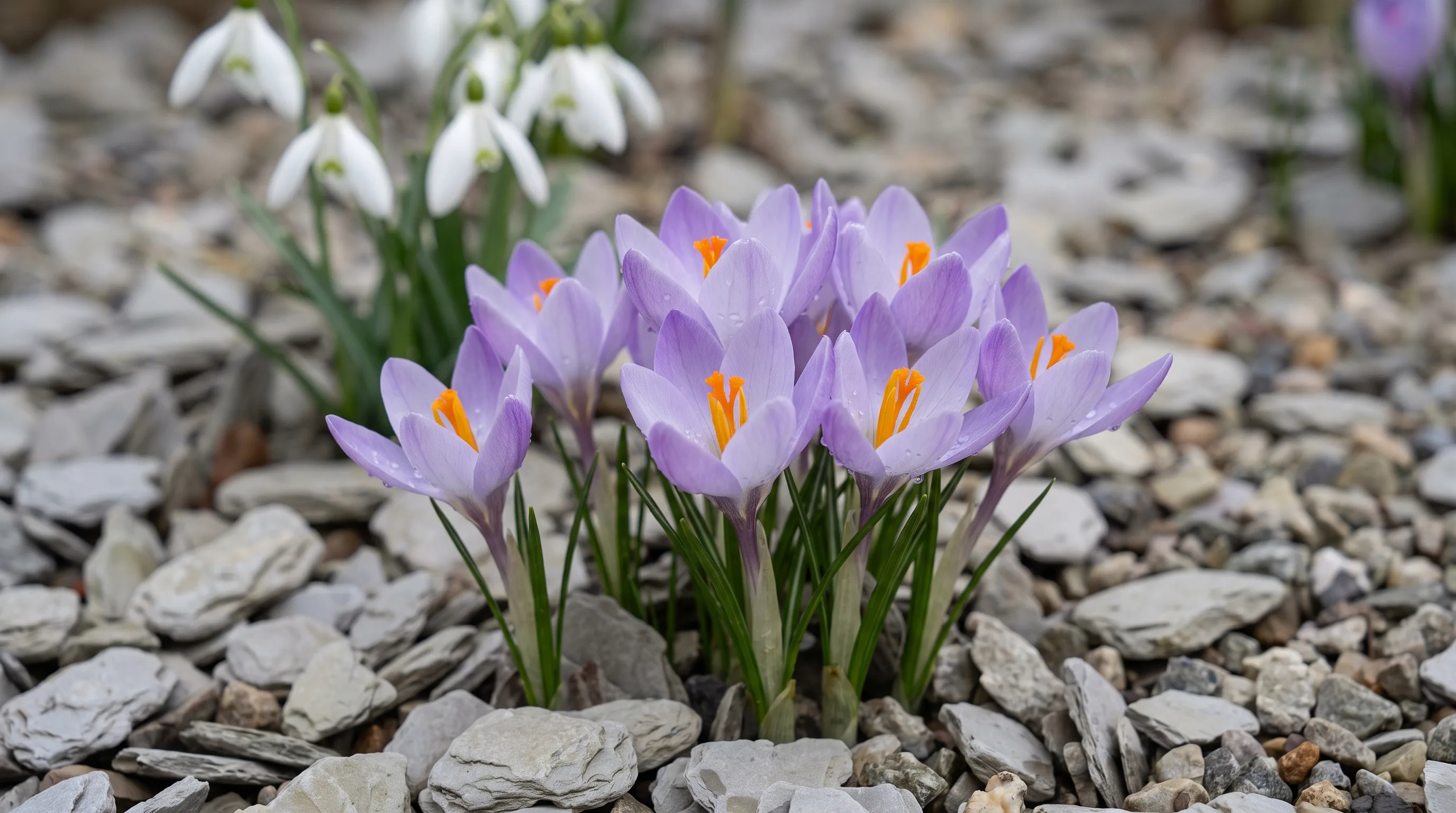
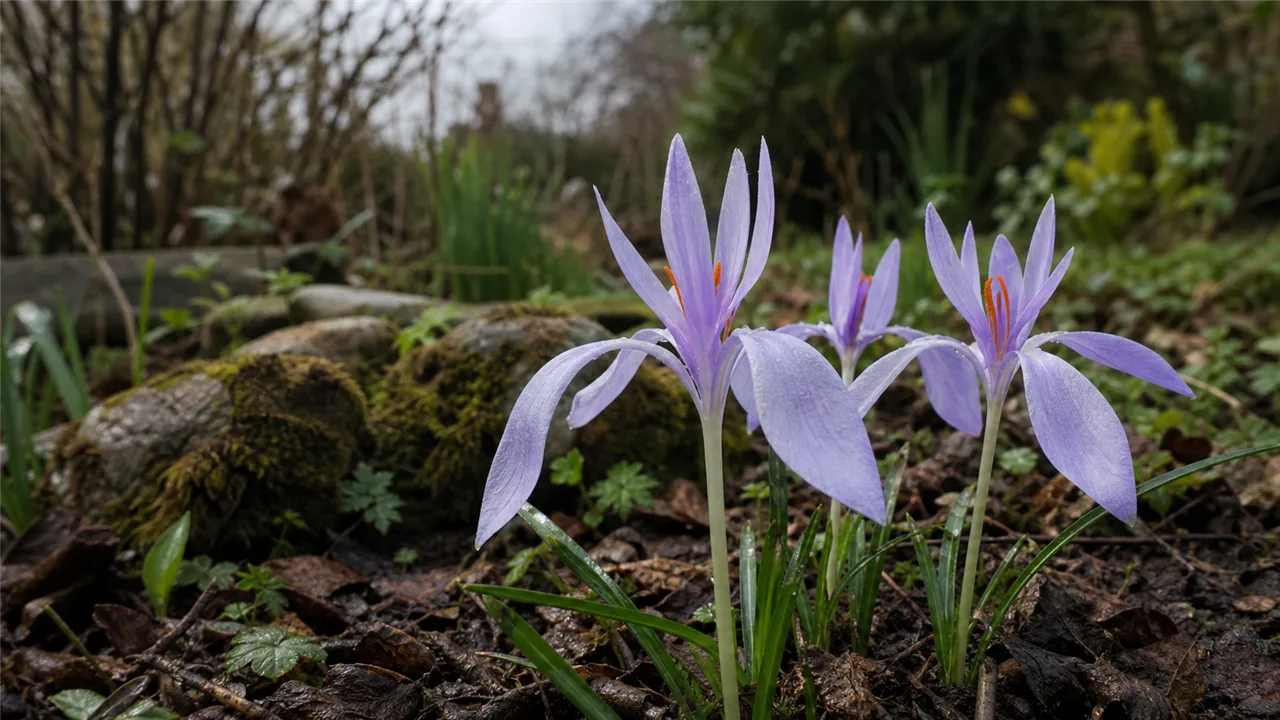
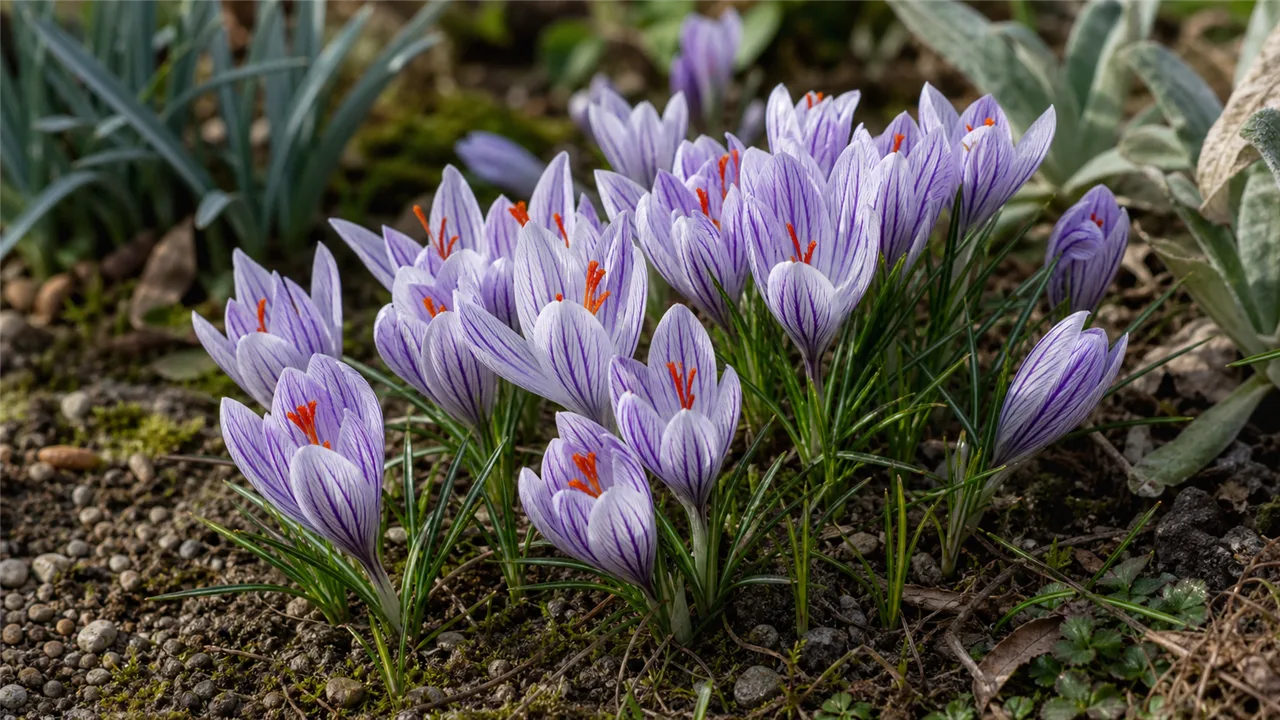
Flowers are usually produced from October into November in Britain, though the exact date depends on weather, aspect and local conditions. A corm may produce one to three flowers. The flower segments are lilac to deep purple, often with darker veining, and measure roughly 3–5 cm long. The prominent orange-yellow styles provide a strong contrast with the purple petals and are one of the most recognisable features of the species. The flowers are also fragrant, especially in mild, still weather.
At only 8–15 cm tall, the plant is easily overlooked when grown among vigorous perennials. It is more effective when planted in groups, where several corms create a concentrated patch of colour. The foliage remains modest and should be allowed to complete its growth after flowering before it disappears for the summer.
Growing Conditions
Choose the sunniest position available. Full sun encourages flowering and helps the soil dry after rain; light shade is tolerated, but dense shade beneath trees or shrubs is less suitable. A south-facing gravel bed, raised alpine area or sunny wall-side border can provide the warmth and drainage needed in a wetter UK garden.
Soil must be very well drained. Gritty or sandy ground is suitable, while heavy clay should be improved substantially with grit and organic-free mineral material, or avoided in favour of a raised bed or container. Neutral to alkaline soil reflects the species’ native conditions, although excellent drainage is the overriding consideration. Avoid sites that remain wet in winter or hold water around the corm during summer dormancy.
The plant does not need a rich soil. Poor to moderately fertile ground generally produces a more balanced plant, with enough growth to replenish the corm without encouraging soft, lush foliage. A layer of grit around the planting area can reduce splash, improve surface drainage and show off the low flowers.
UK weather can be less predictable than the Aegean climate. Prolonged summer rain is the principal cultural risk, so do not irrigate established plants routinely in July and August. In exposed gardens, shelter from strong winds helps preserve the short-lived flowers, but avoid placing the corms where surrounding plants will compete heavily for light and space.
Planting and Care
Plant sound, dry corms in late summer or early autumn, with September and October being the usual planting months for autumn-flowering stock. Set them approximately 8–10 cm deep and space them 5–8 cm apart. The pointed growing side should face upwards. In a container, use a free-draining bulb or alpine compost with extra grit, and ensure the pot has unobstructed drainage holes.
Newly planted corms may need a light watering when growth begins if the soil is exceptionally dry. Once established, watering should be restrained. Do not water routinely during the summer dormant period: dry soil is part of the plant’s natural cycle and reduces the risk of rot. In autumn, normal rainfall is usually sufficient. Container-grown plants may need occasional water during active growth, but the compost should never remain saturated.
Feeding is rarely necessary. In lean soil, a light application of a balanced bulb fertiliser as growth begins can be used, but heavy feeding is counterproductive. Excess nitrogen encourages leaves rather than flowers and can produce softer growth. Avoid adding rich manure directly around the corms.
After flowering, leave the leaves in place until they have yellowed and died back naturally, usually over six to eight weeks. They are replenishing the corm for the next season, so do not cut or pull them while they are still green. Once the foliage has completely collapsed, it can be removed carefully. A discreet marker can help prevent accidental disturbance while the plant is dormant.
Crete crocus is not normally lifted. Its corms benefit from remaining in the ground through the dry summer, provided the site is well drained. Established clumps can be left undisturbed for years. If a congested clump needs renewal, separate offsets while the plants are dormant in late spring or summer, handling the small corms carefully and replanting them promptly in gritty soil. Multiplication is relatively slow, and frequent division can reduce flowering before the offsets have reached flowering size. Seed is another possible method for a fertile population, but it is slower and plants raised from seed may take several seasons to mature.
Seasonal care is simple. Check drainage before autumn growth starts, keep competing ground cover away from the planting area, and watch for the first flowers from October. During winter, avoid covering the site with wet, compacted mulch. In spring, allow the fading leaves to finish naturally. Through summer, keep the dormant bed as dry as the UK climate permits and protect containers from persistent rain if necessary.
Common Problems
Corm rot is the most serious problem. Fusarium and Penicillium can affect corms kept in wet, poorly drained conditions, particularly during summer dormancy. Affected corms become soft and brown and may fail to produce growth. Prevention is more effective than treatment: plant at the correct depth, use gritty soil and stop unnecessary summer watering. Remove and discard rotted material rather than replanting it.
Squirrels and other rodents may dig up or eat corms, especially in newly planted beds and woodland-edge gardens. Firm planting, a temporary surface mesh and a gritty mulch can discourage disturbance while the corms establish. Inspect the planting after heavy animal activity and replace missing corms in the appropriate season.
Poor flowering commonly follows waterlogging, excessive planting depth, weak corms or premature division. Check that the site receives adequate light and that the corms are not buried below a settled layer of soil. Avoid moving established clumps unless there is a clear reason, and do not expect small offsets to flower immediately.
Aphids and glasshouse thrips are occasional rather than usual open-ground pests. Inspect emerging foliage and flowers, particularly on container plants or stock grown under protection. Encourage natural predators outdoors and use any control only when damage is significant and the product is suitable for the crop and setting.
Popular Varieties
The species itself is the principal choice for gardeners seeking the characteristic lilac flowers, orange-yellow styles and autumn flowering period of Crete crocus. Named forms and selected strains may appear in specialist bulb collections, but availability and naming can vary between suppliers. Cultivar identity should therefore be checked against a reputable nursery or specialist catalogue rather than assumed from a colour description.
Crocus cartwrightianus ‘Albus’ is a recognised white-flowered form associated with the species and is valued for the contrast between its pale flowers and orange-yellow styles. ‘Albus’ should be sourced from a specialist supplier, as stock may be limited and labels can vary.
Crocus cartwrightianus ‘Aperitif’ is another named selection encountered in specialist bulb listings. Its availability is not universal, so confirmation of the botanical identity and flowering characteristics is sensible when purchasing.
Wild-type plants remain an excellent option where the aim is a naturalistic group rather than a named colour form. Buy corms from a reputable source, plant several together, and allow the clump to settle. This approach is often more dependable than collecting a long list of poorly documented names, particularly for a small species whose flowers are best appreciated as a seasonal drift in gravel or a raised bed.
Pests and Diseases
| Problem | Symptoms | Management |
|---|---|---|
| Slugs and snails | Irregular holes in leaves and flowers, often accompanied by silvery slime trails. | Use beer traps, copper tape barriers, or hand-pick at night to reduce populations. |
| Vine weevil | Notched leaf margins from adults and sudden wilting or death due to larval root damage. | Apply nematode treatments in late summer or use biological controls for larvae. |
| Corm rot | Soft, mushy corms and yellowing foliage caused by waterlogged soil during dormancy. | Ensure sharp drainage with grit or sand and keep completely dry in summer. |
| Powdery mildew | White, dusty fungal growth on leaves and stems, potentially stunting growth. | Improve air circulation and apply a sulphur-based fungicide if severe. |
| Aphids | Clusters of small soft-bodied insects on new growth, causing distorted leaves. | Encourage natural predators like ladybirds or use insecticidal soap sprays. |
For step-by-step help, read Controlling Aphids Naturally, Dealing with Slugs and Snails and Treating Powdery Mildew. Or browse the full plant problem solver to diagnose an issue by symptom.
Recommended Products
GardenWizz earns a commission from qualifying purchases made through affiliate links on this page (including links within the article) — as an Amazon Associate, and from Thompson & Morgan via the Awin network. This does not affect the price you pay. See our disclaimer for details.