Hank Small Lady's Slipper Orchid
Cypripedium Hank Small gx
The Gardening Year
Best months in UK gardens · full planting calendar →
🖨 Printable care card (PDF)At a Glance
| Botanical name | Cypripedium Hank Small gx |
|---|---|
| Common name(s) | Hank Small lady's slipper orchid |
| Family | Orchidaceae |
| Plant type | perennial (terrestrial orchid with short robust rhizome; stems lack pseudobulbs) |
| Height × Spread | 15–60 cm × — |
| Position | — |
| Soil | leaf-mould rich, moist, free-draining |
| Flowering | March–May |
| Toxicity | — |
| Native range | Northern Hemisphere, including most of Europe and Africa (Algeria), Russia, China, Central Asia, Canada, the United States, Mexico, and Central America |
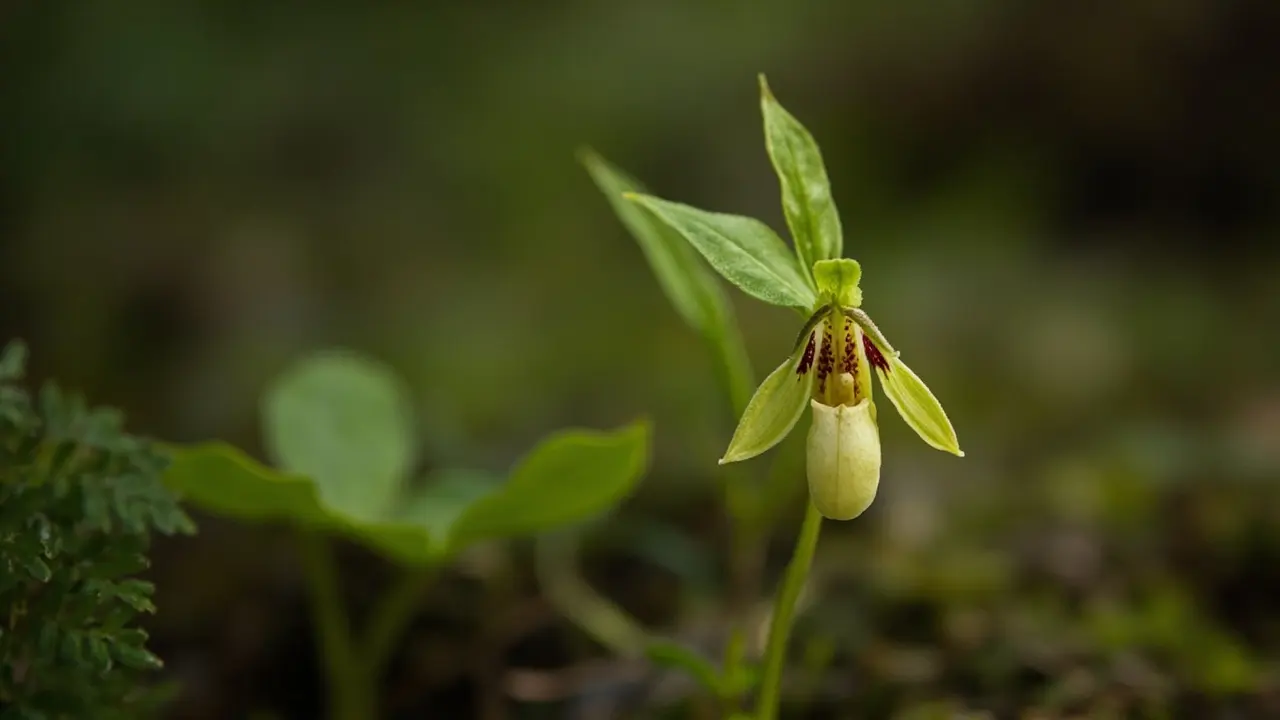
A hardy lady's slipper orchid for shaded UK gardens, Cypripedium Hank Small gx carries a clear yellow pouch backed by long, twisted, cinnamon-burgundy petals on stems around 30-45 cm tall. Raised in 1991 by Carson Whitlow, it is a primary hybrid between C. parviflorum and C. henryi and is one of the easier slipper orchids to establish in cool British conditions, provided the soil drains sharply and the rhizome is planted only just below the surface.
Overview
Pests and Diseases
| Problem | Symptoms | Management |
|---|---|---|
| Bud blast | Flower buds turn brown and drop off before opening. | Avoid temperature fluctuations and ensure consistent moisture during bud development. |
| Root rot | Leaves turn yellow and wilt while the crown becomes soft and mushy. | Ensure excellent drainage with gritty compost and avoid waterlogging. |
| Slugs and snails | Irregular holes chewed in leaves and slime trails on foliage. | Use physical barriers, iron phosphate pellets, or hand-pick at night. |
| Vine weevil | Notched leaf margins and damaged roots causing plant decline. | Apply nematodes to soil in autumn and spring; use systemic insecticides if severe. |
| Powdery mildew | White powdery fungal growth on leaves, often causing distortion. | Improve air circulation and apply a suitable fungicide if necessary. |
For step-by-step help, read Dealing with Slugs and Snails and Treating Powdery Mildew. Or browse the full plant problem solver to diagnose an issue by symptom.
Recommended Products
GardenWizz earns a commission from qualifying purchases made through affiliate links on this page (including links within the article) — as an Amazon Associate, and from Thompson & Morgan via the Awin network. This does not affect the price you pay. See our disclaimer for details.